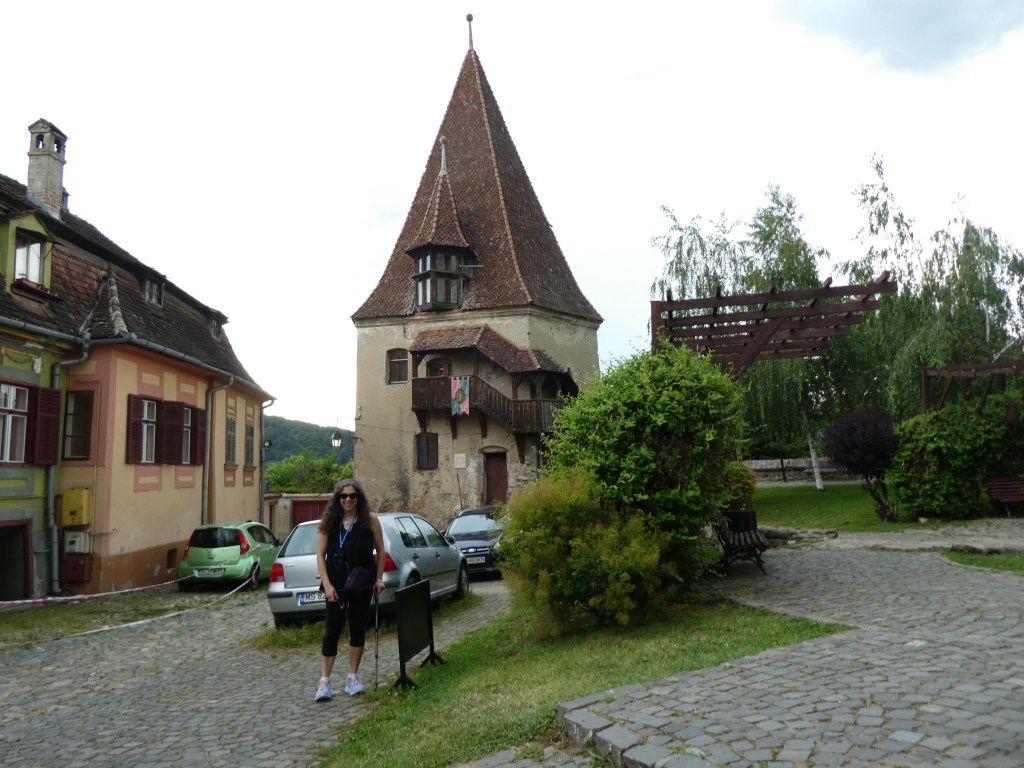
Okay, we are here in Sighişoara, birthplace of Dracula. And I’ll give you a few pictures from our initial walk in a minute but first I need to tell you something.
You know how I don’t really seem to appreciate art the way all of you do? Well, I aim to broaden my horizons in 2024 and I’ve booked an entire art tour of Spain for May (I am NOT kidding!)
But for 2023, I remain my ignorant self and I want you all to help me understand the art in our Sighişoara hotel room. This is the art:
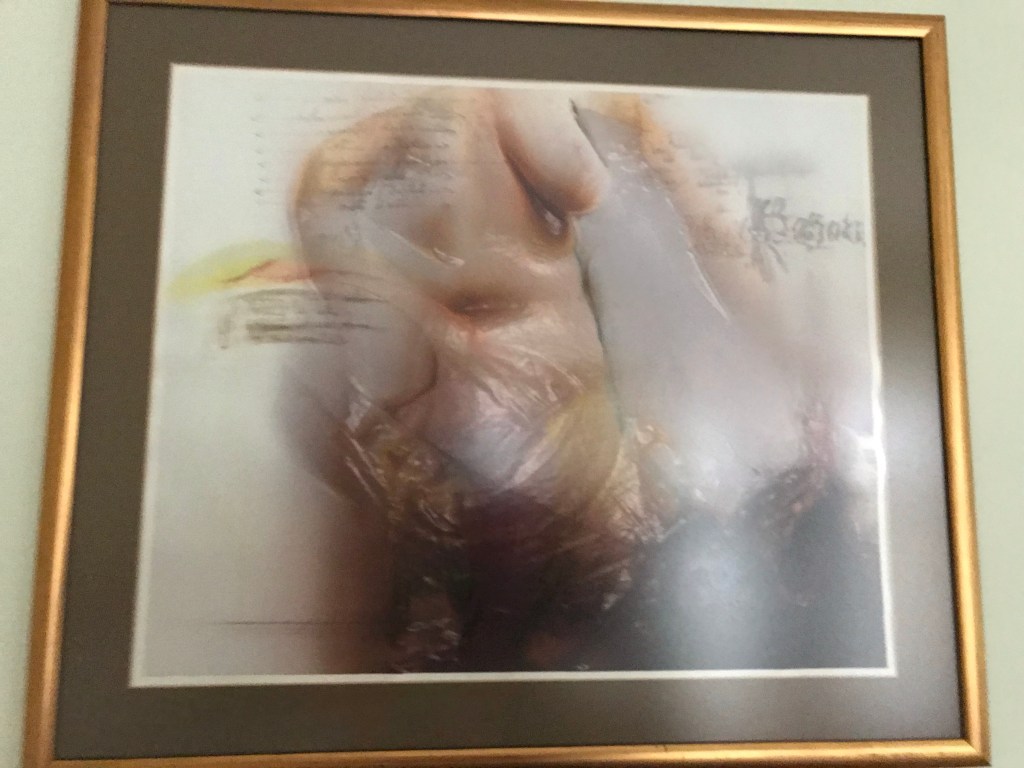
Is it a diseased liver? A naked woman’s torso covered in Saran Wrap? Is there a broader artistic theme I have missed? Please advise.
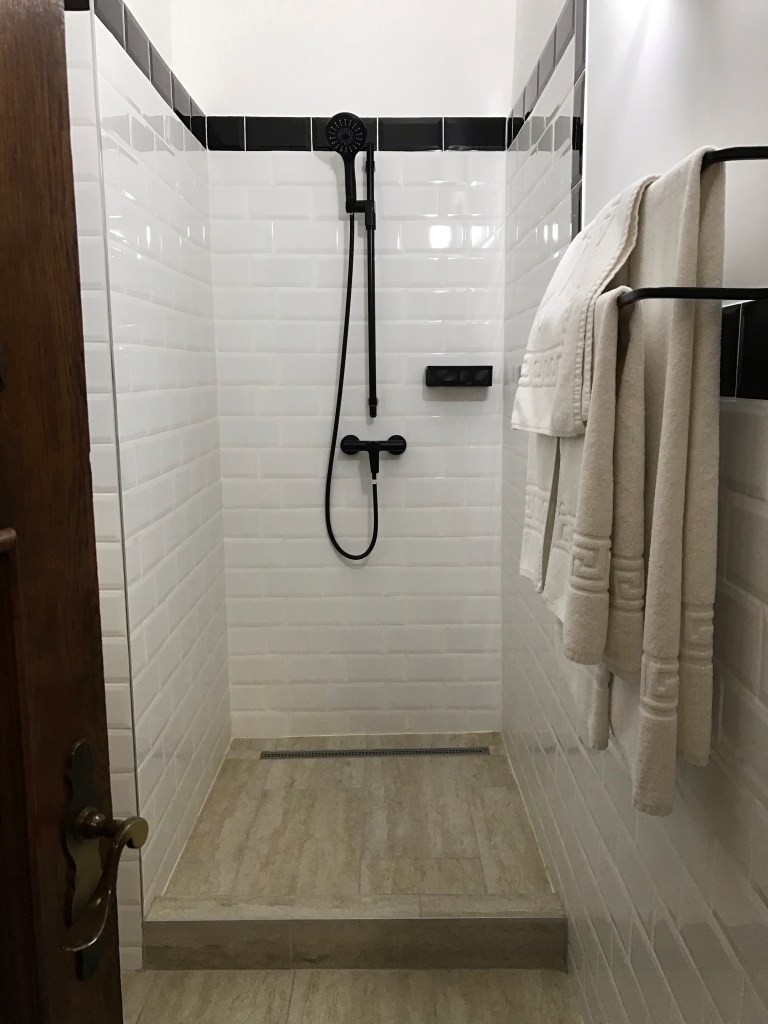
The worst thing about the “art” in our hotel room is that I think they blew the construction budget on it because our shower is simply open to the bathroom, no curtain, mini-wall, drain etc…the funding must have been depleted. It is as if they are strongly suggesting that – as we shower – we simultaneously wet mop the bathroom floor for them. (Additional note: now that we know our tour members better, we have queried the troops and everyone reports that they have a different bad shower: some have a tiny capsule you can’t turn around in, some have a super high old tub to fall out of…and you have to kind of admire the Hotel Sighişoara for their commitment to bathing impediments.
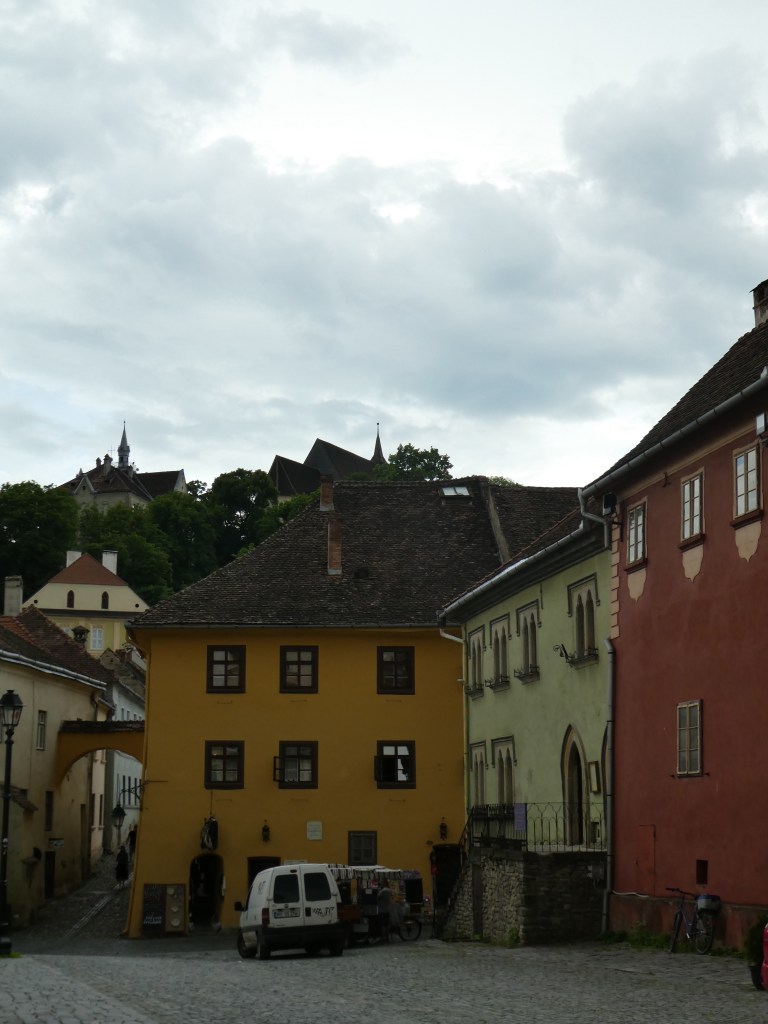
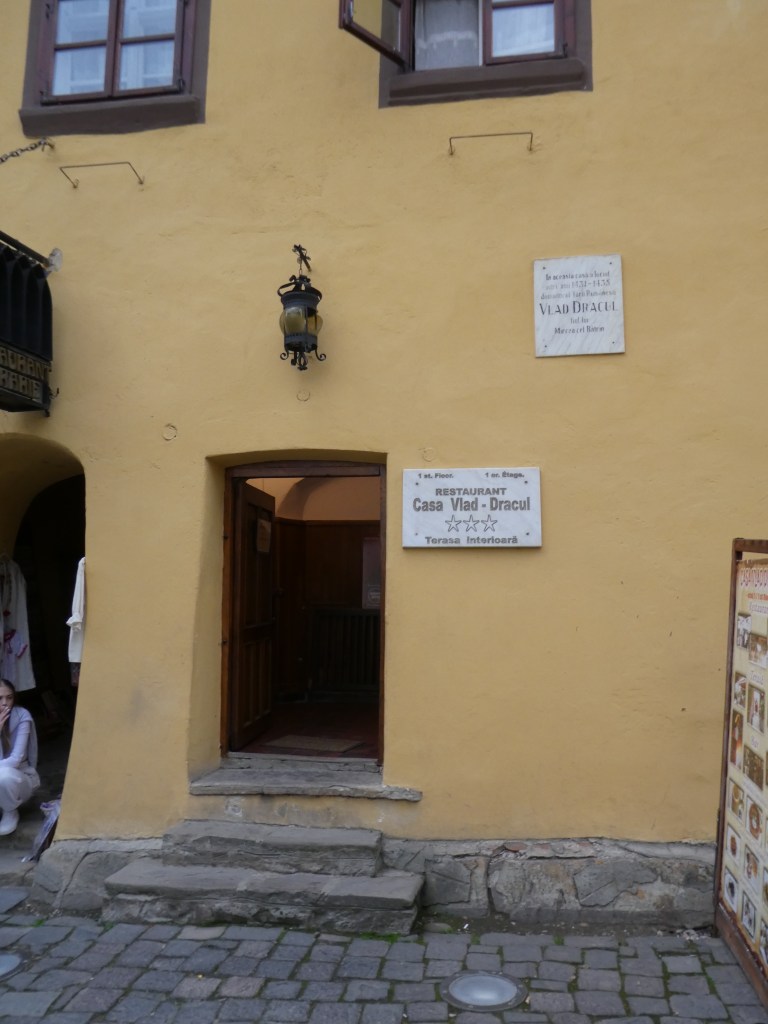
But enough…we’re not here to bathe well or safely…we’re here for Dracula. Sighişoara is a small, medieval, fortified town. There is evidence that the Dacians had a settlement here in the first century AD. During the 12th century, the Saxons built the current medieval town we are seeing. It’s perfectly intact and frozen in time. And yes, this is where Dracula – Vlad Draculea or Vlad Tepes (Vlad the Impaler) was born in 1431. He was an actual prince – the son of Dracul, meaning devil or dragon – who was a nobleman. He ruled Transylvania from 1448 to 1476 and earned the impaler nickname literally – he would impale his enemies on rods.
Here’s Sighişoara, starting with Dracula’s birth house, in yellow:
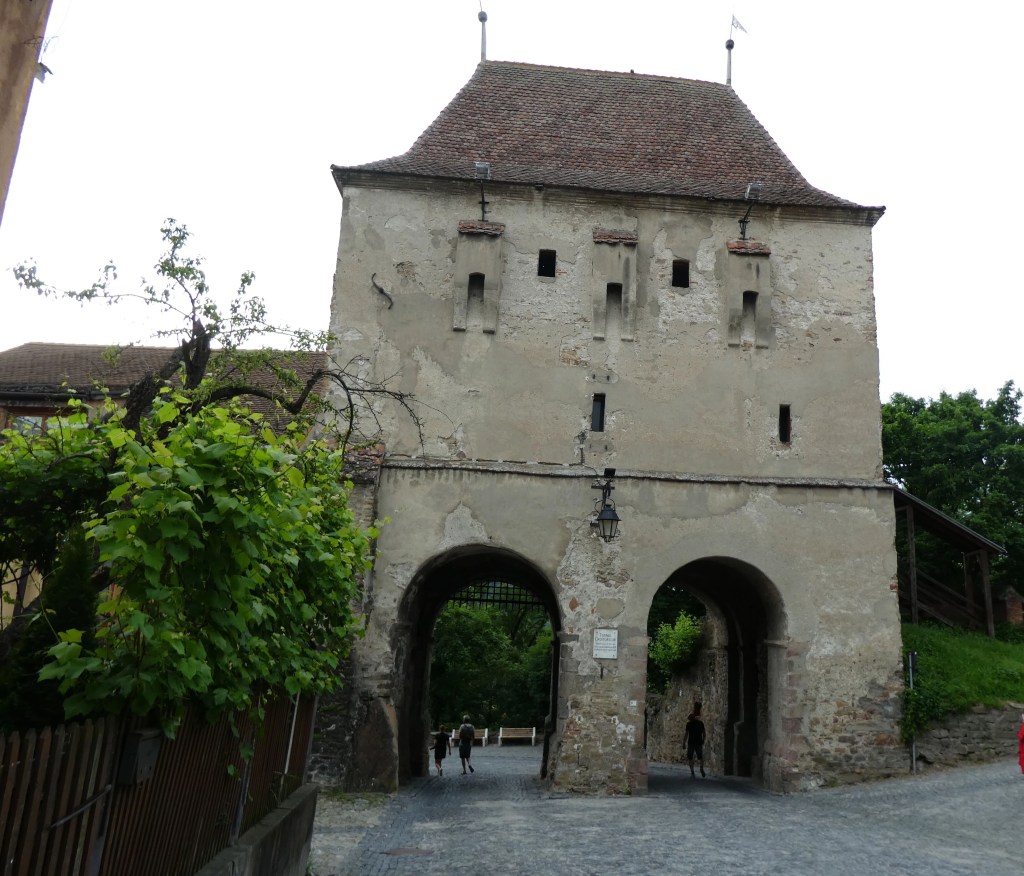
Below is the Tailors’ Tower from the 14th century, guarding one of the two gateways to the citadel:
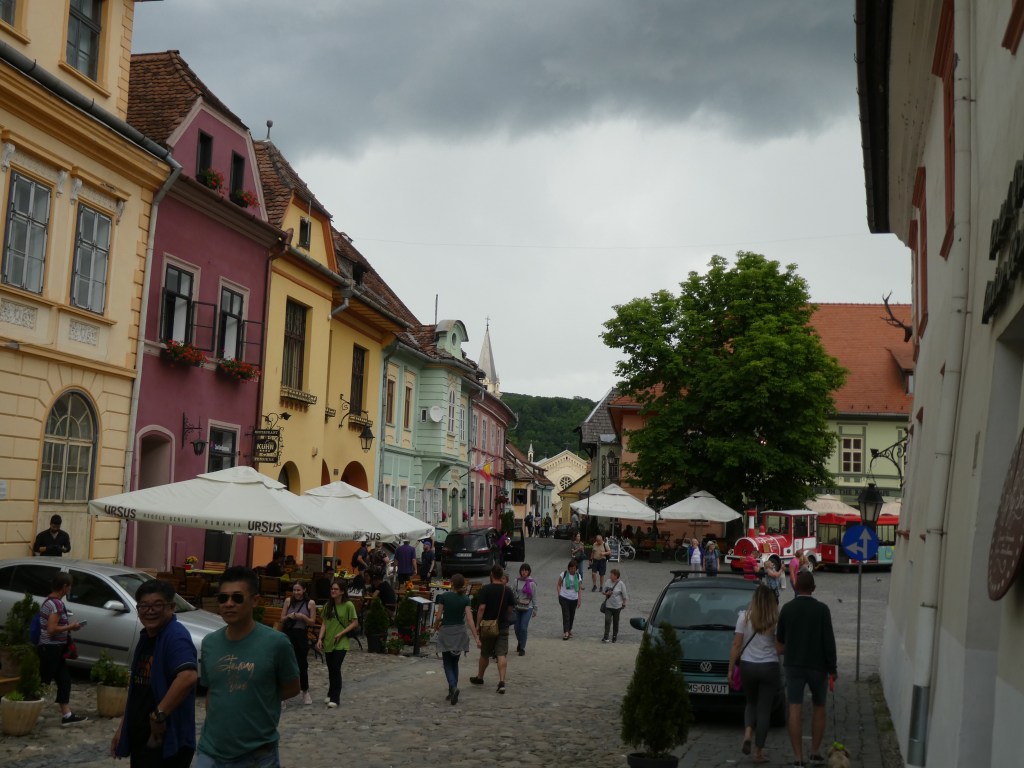
Below is the main square:

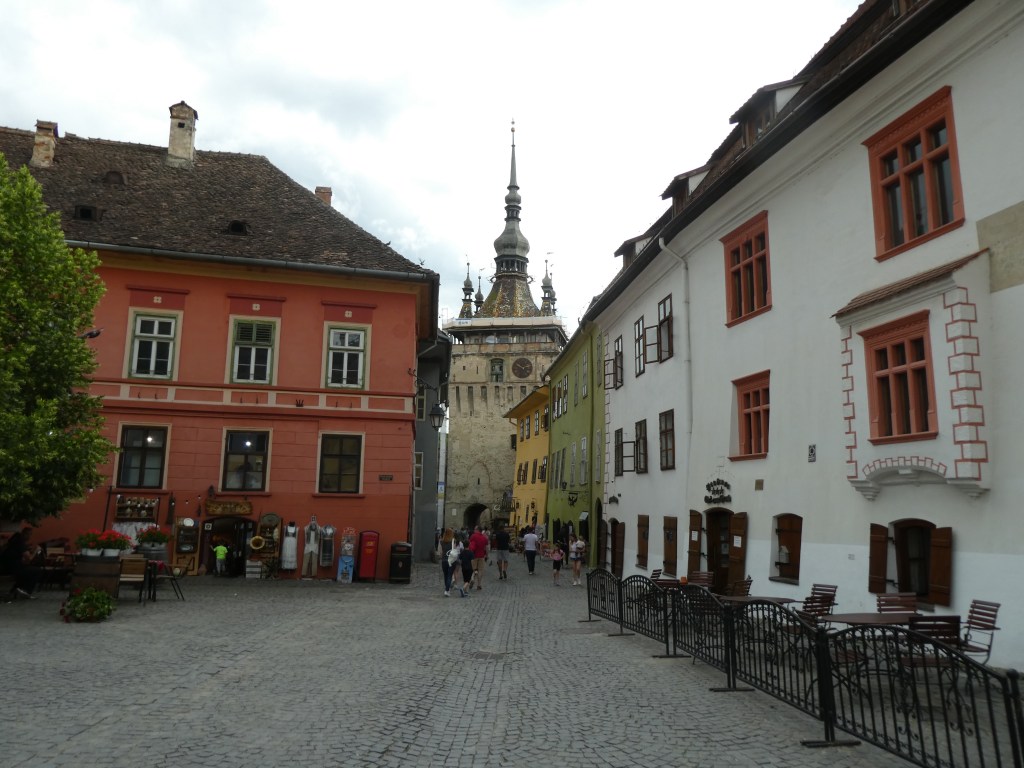
In the picture below, you can see the 14th century Clock Tower, the other guarded entry to the citadel:
Sighişoara is mostly just an atmospheric place to spend a night or two. These are the Scholars’ Stairs, leading up to the church(pics not mine), built in 1642 to connect the upper and lower parts of the citadel:
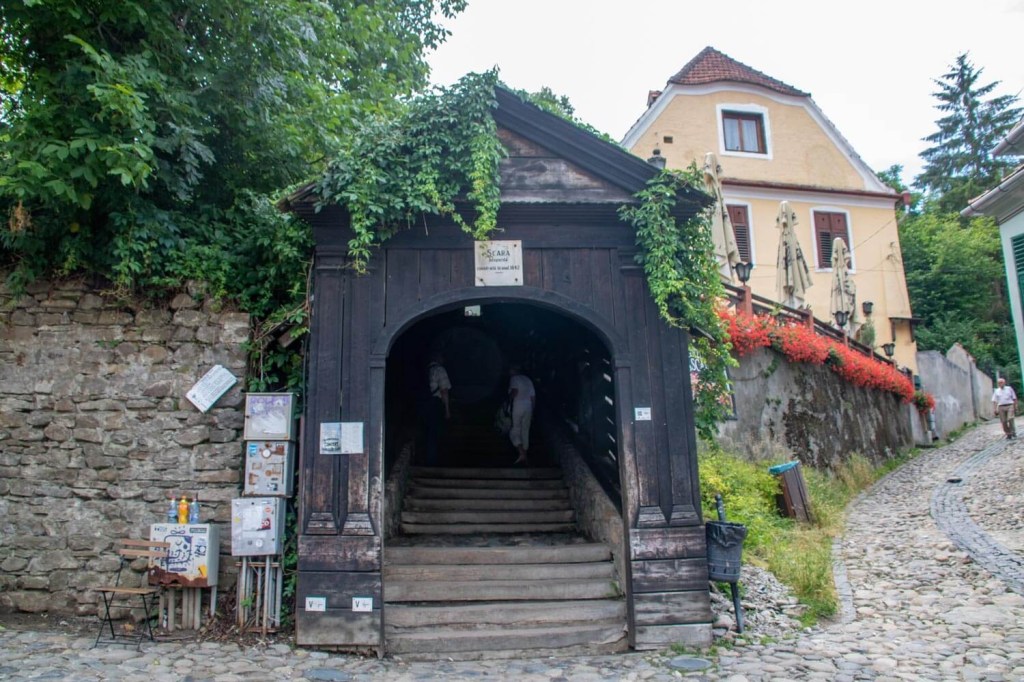
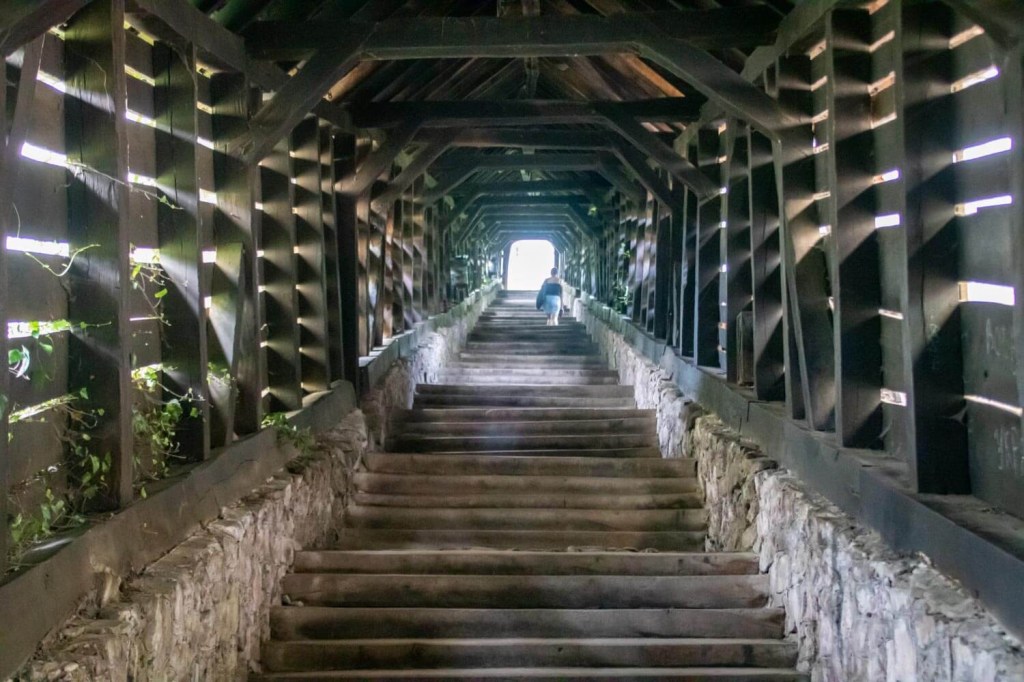
Here’s a couple of other pics:
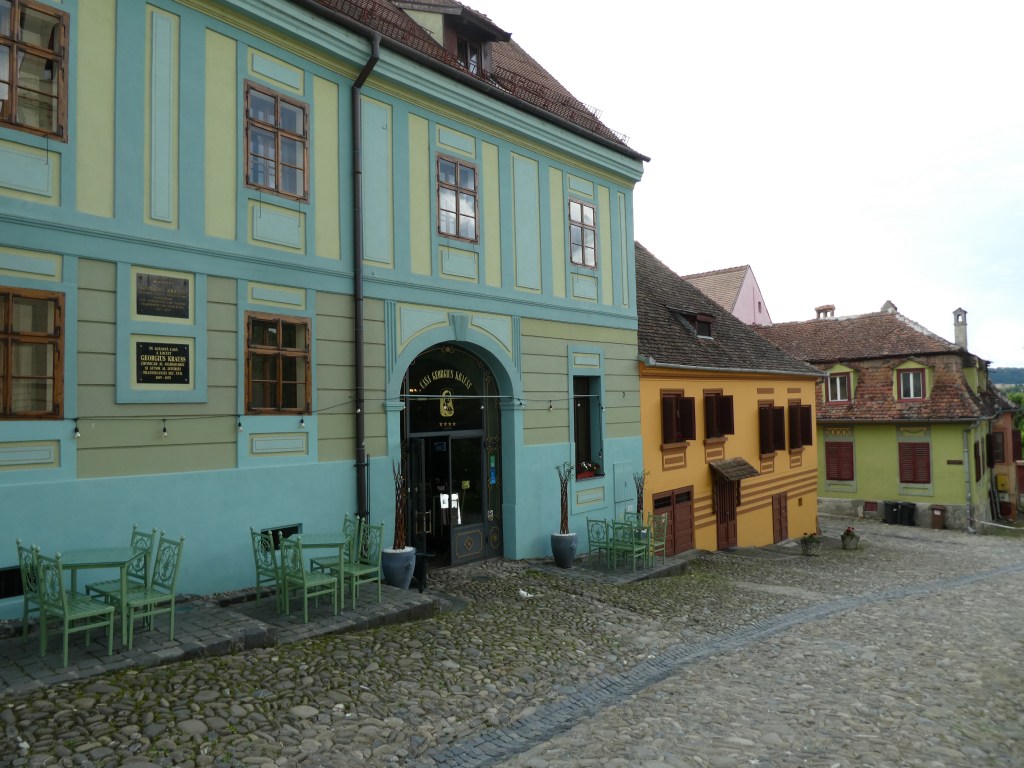
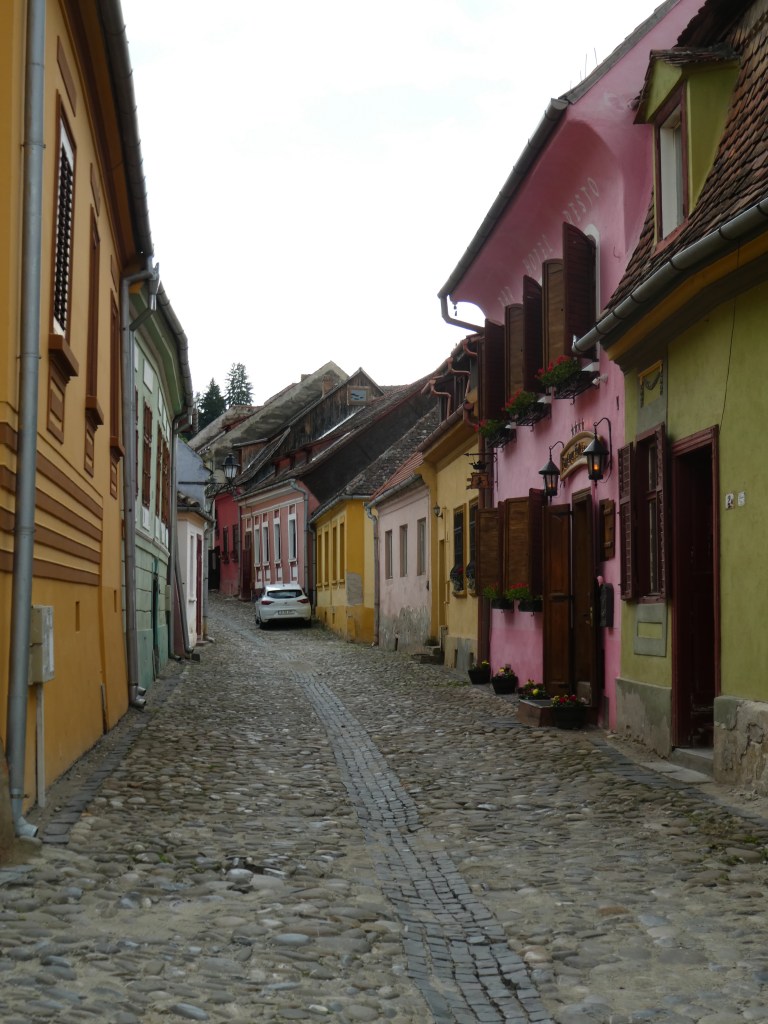
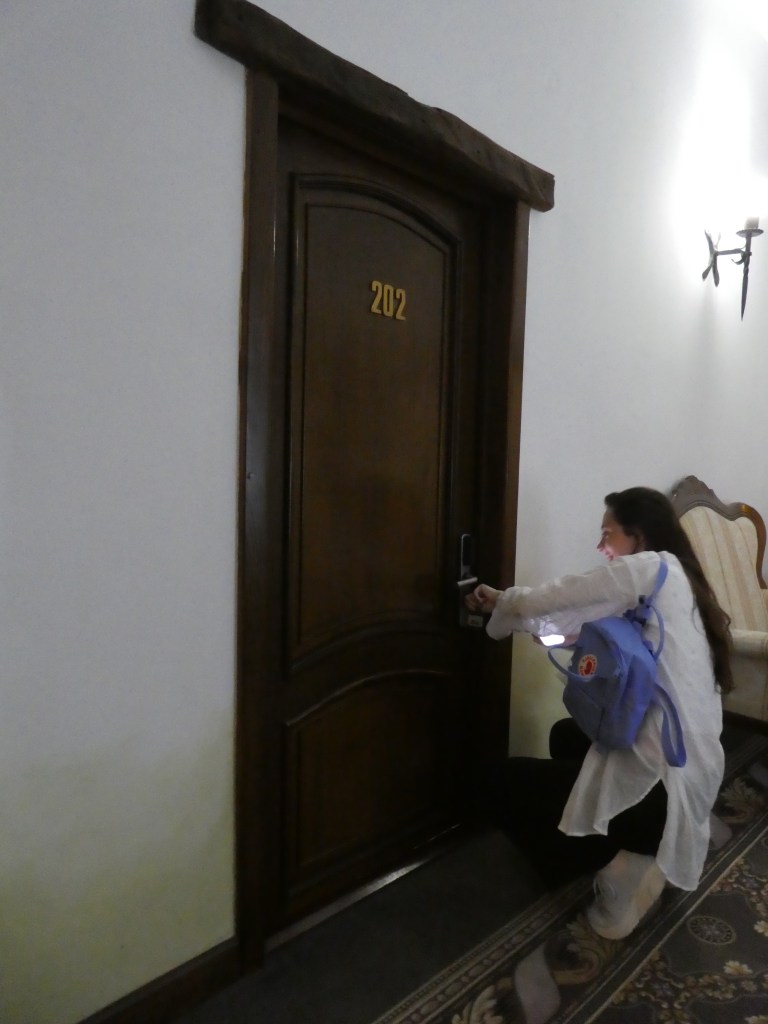
And here’s Grace, enjoying another unique benefit of our hotel room, as if the art and shower were not enough. The keyed entry area sits nearly at floor level!
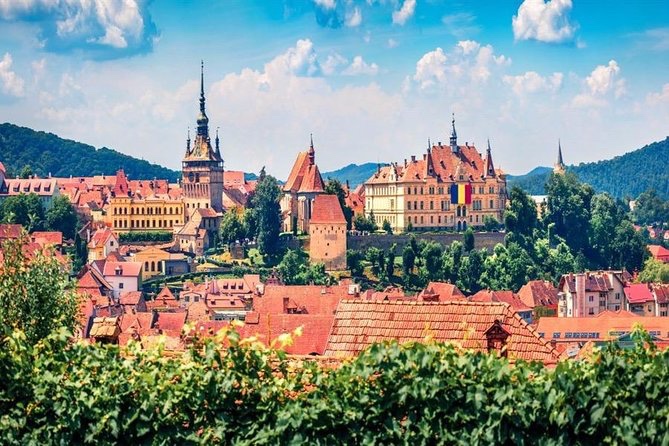
I’ll leave you with this more relevant touristic shot of Sighişoara from afar(pic not mine):
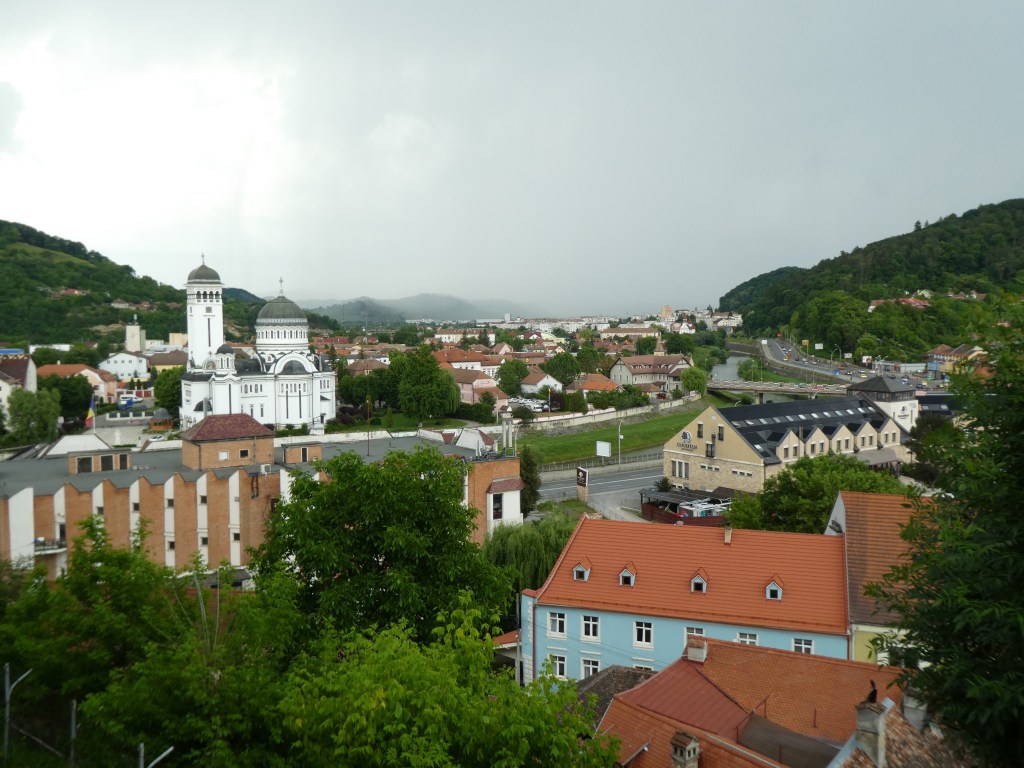
And then this view from the citadel down onto the newer part of Sighişoara:
 Travels with Valerie
Looks like an interesting community…nice pictures
LikeLike
Wait, did I miss a picture of Dracula?? Or is that just a clever marketing scheme? lol
LikeLike