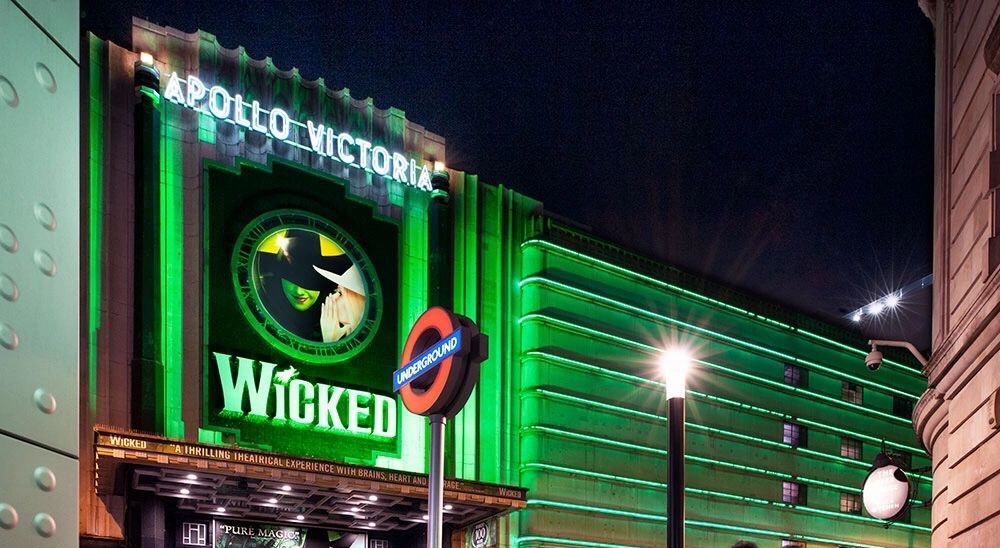
Wicked tells the story of the two witches from Oz – Glinda and Elphaba – the good witch and the wicked witch. The London production we saw had a fantastic set and great singers – especially the woman playing Elphaba. I felt like I got the general gist of the plot in Act One and so I decided, as I enjoyed Act One, that there was really no need to stay for Act Two. Ron, ever-agreeable, said we could go and back to the hotel we went.
I’m notorious for leaving evening events halfway through. I’ve got 24 hours until Phantom of the Opera. This is Ron’s favorite musical ever. There has got to be some way to keep myself at the theatre for both Acts. Will keep you posted.
We did an 8.3 mile loop around London today to see three things: the Imperial War Museum, the Tate Modern art museum, and St. Paul’s Cathedral.
The Imperial War Museum is mostly dedicated to World War I and World War II. It’s got one additional unique permanent exhibit specifically on the Holocaust. I was struck by how helpful and unique it was to have the Holocaust as a genocide covered separately from the battles and politics of WWII.
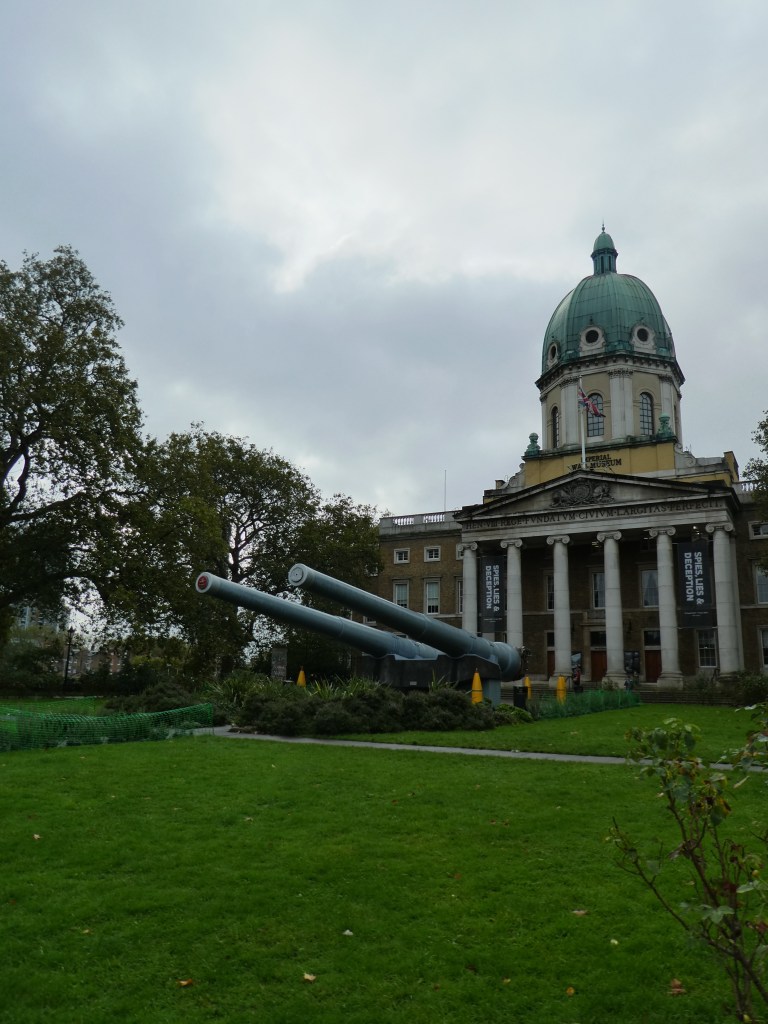
Here’s the Imperial War Museum. It’s absolutely free to visit.
We focused our attention – as usual – on the World War 2 rooms. We did – at the end – walk through the World War 1 display and I was reminded of how little I know about it. We all know I’m no historian, but through volume and frequency of visits to World War 2 sites, I have gained hold of the general concepts. Not true for World War 1.
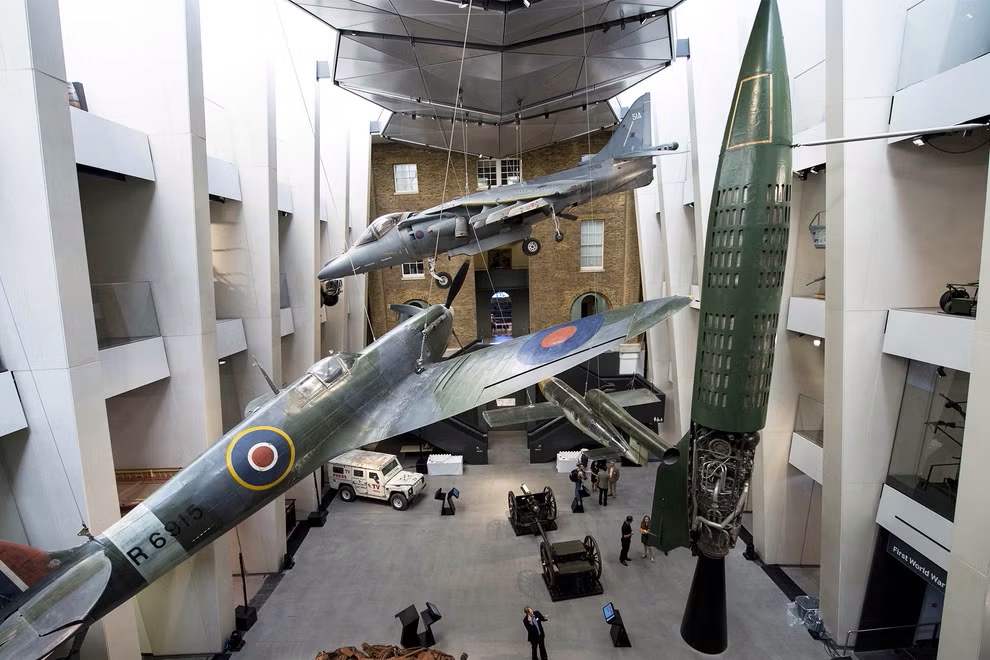
The museum has 800,000 items on display, and they are a vast and extensive grouping (remember that the British Museum has 8 million). Here’s the entry atrium (not my pic):
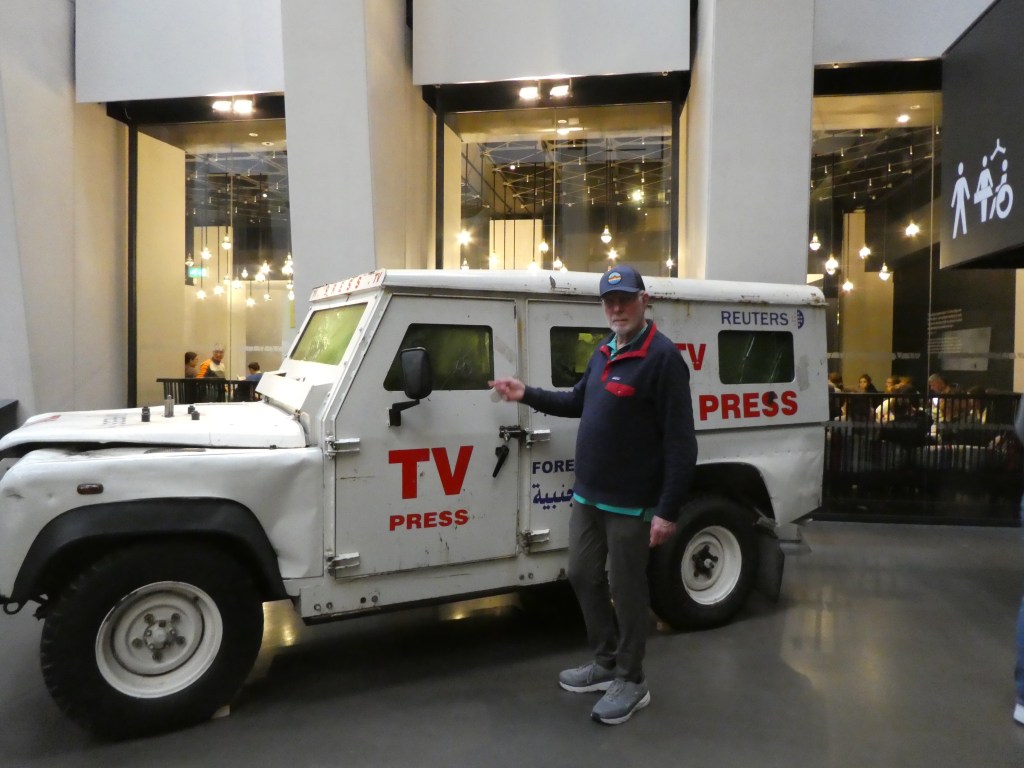
Here’s Ron, pointing out a damage to a Reuter’s press van. It was hit by rocket fire in Gaza in 2006. Both reporters inside were injured but survived:
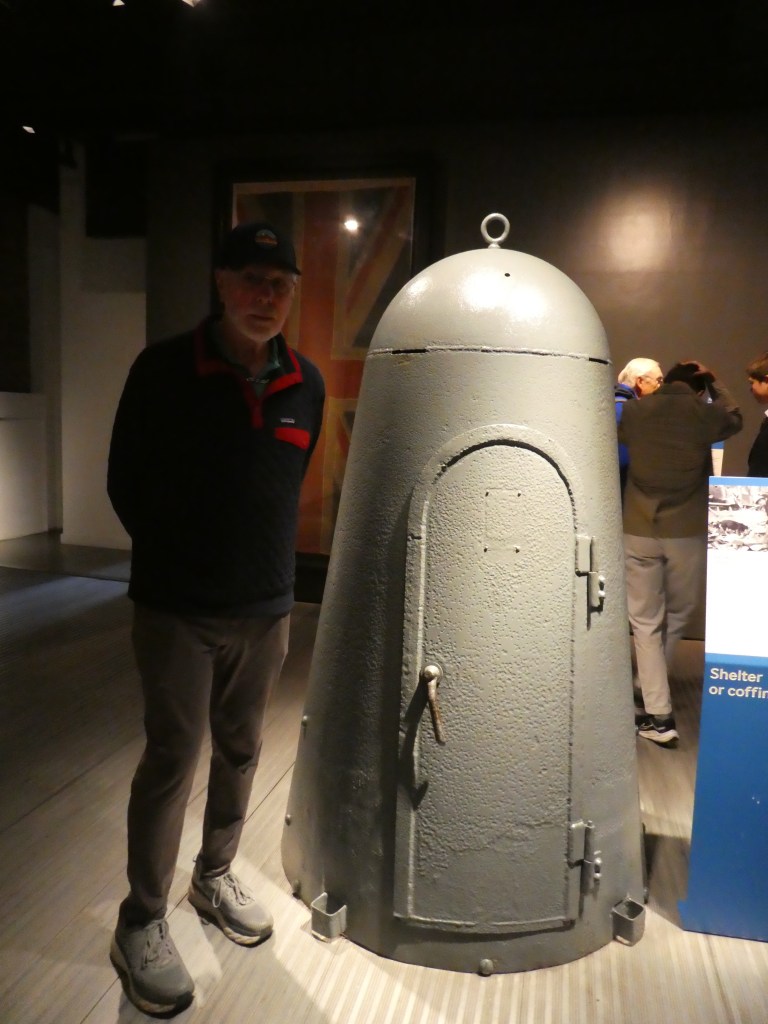
There is also this personal bomb shelter, used by air wardens during World War 2. It’s hard to imagine even getting into one and, clearly, Ron would not even fit. The second pic shows one of the shelters in use in 1940:

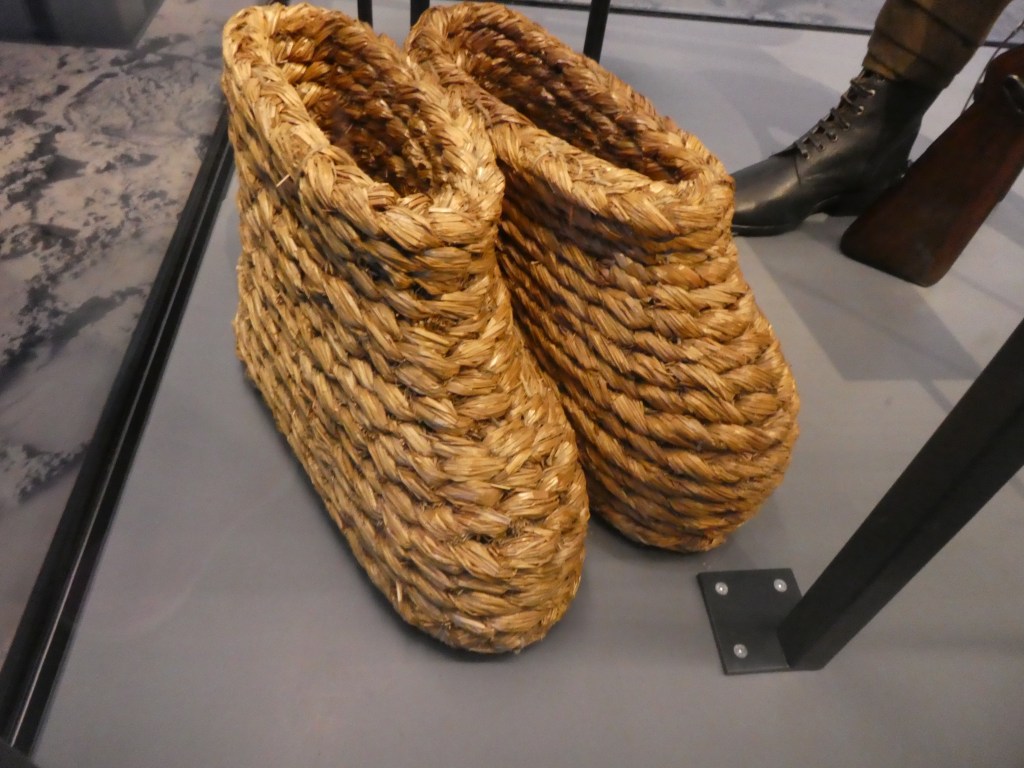
Here are some straw boots the Germans used to cover their shoes as they headed into Russia – their regular uniforms and shoes were not sufficient for the freezing Russian winter:
The most interesting part of the museum was definitely the Holocaust Gallery. No photos were allowed – and few photos even showed up in a subsequent online search – but there is a collection of over 2000 items from victims. They are the tiny life details that – in their ordinariness – convey the personal angst, the desperation, and the unfailing spirit. They range from letters home from concentration camps to ghetto videos, and also include stuffed animals, favorite plates and cups, traveling outfits and luggage. There is extensive coverage of the Kindertransports – dozens of personal stories of actual children, with pictures of them, pictures of what they were allowed to carry with them, and details of their new lives with foster families. Just this area makes the trek out to the museum worthwhile.
From the war museum, we headed over to the Tate Modern, one of the largest groupings of modern art in the world. 5 million people a year visit the Tate, built into the shell of the repurposed Bankside Power Station. Ron was not impressed. He said I do not see how this is art.
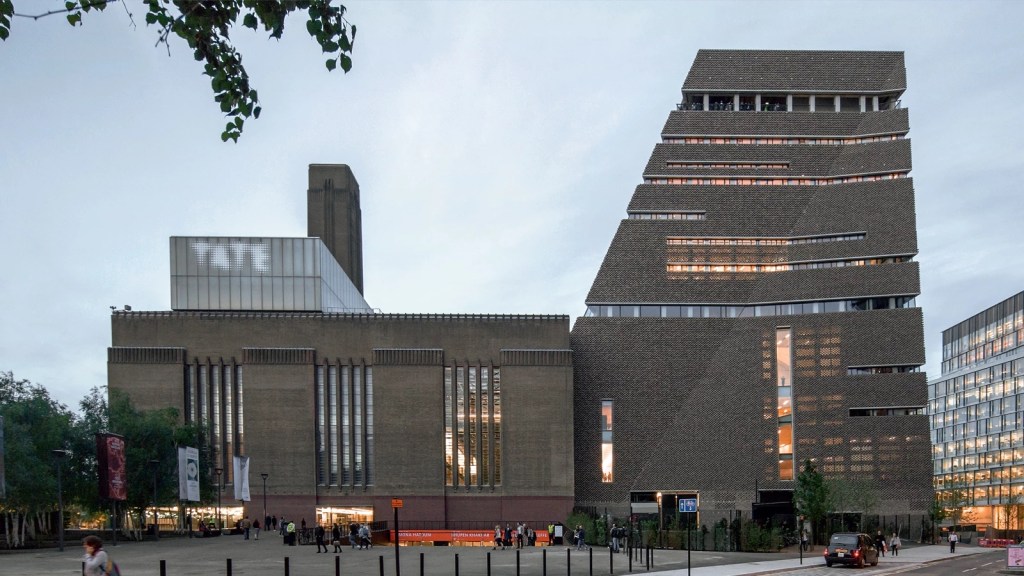
Is he wrong? You decide.
Here are a couple of museum highlights:
This is Untitled by Jannis Kounellis, from 1993. He’s working with bed springs, a meat hook, and paint on a wall:
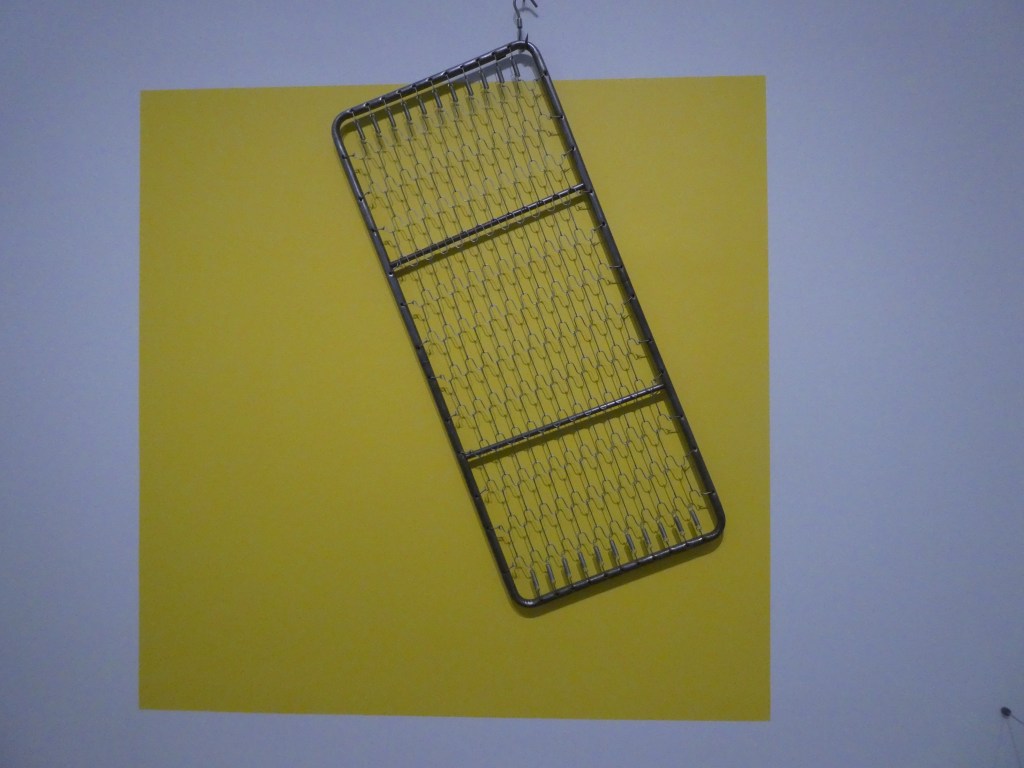
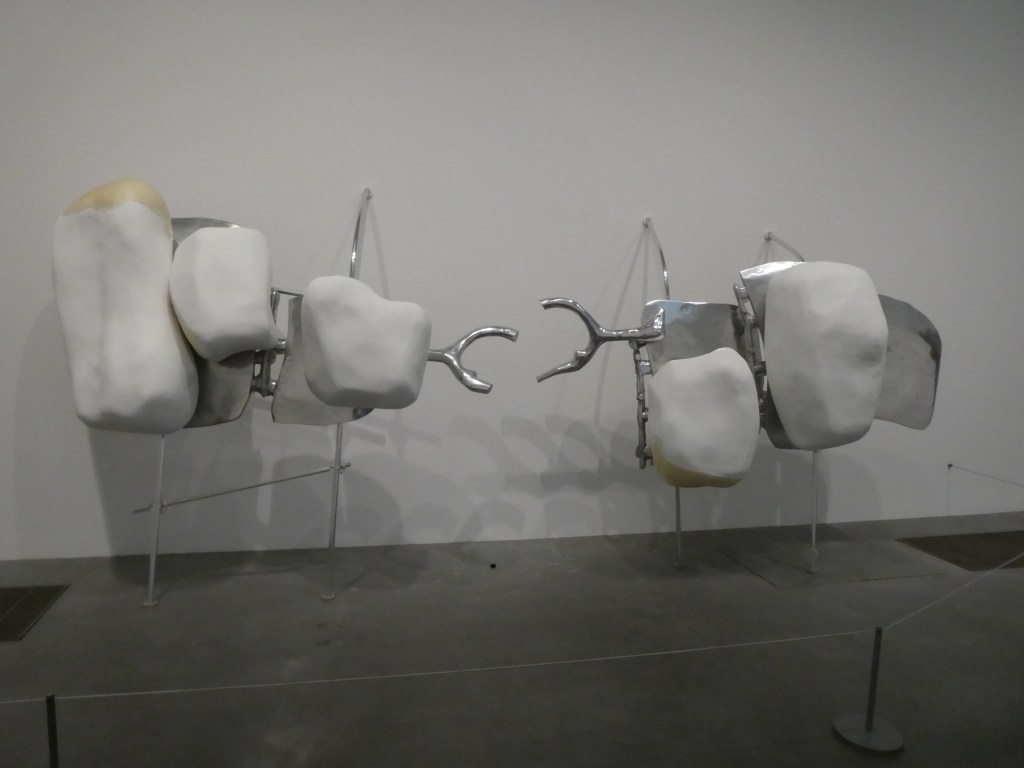
I don’t recall what the next piece was but it reminded me of someone in serious need of braces:
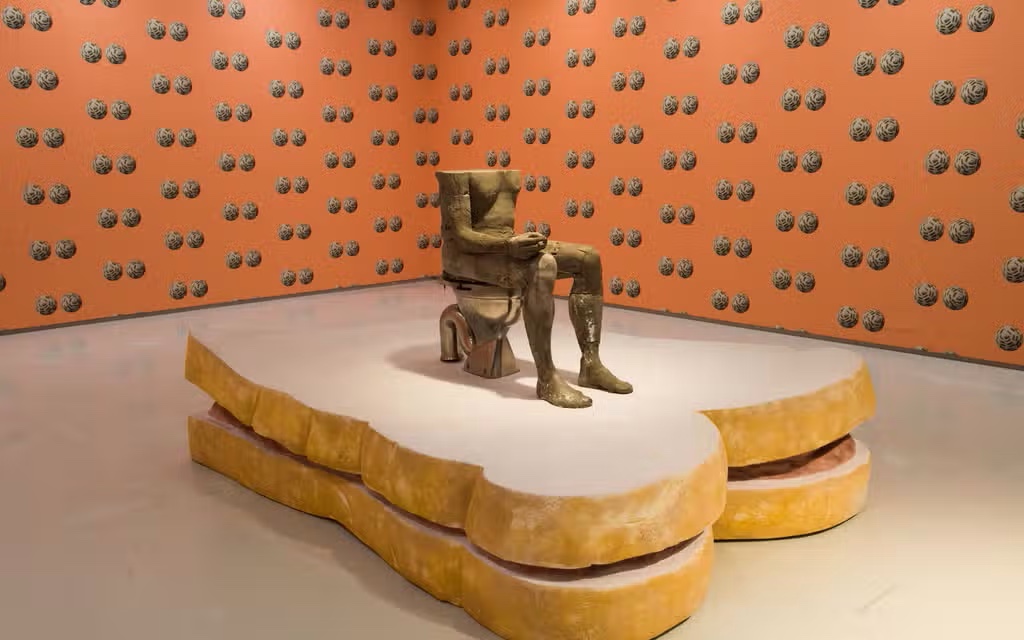
Apparently this fabulous piece called Sandwich is there as well but Ron was losing patience and wanted to move on.
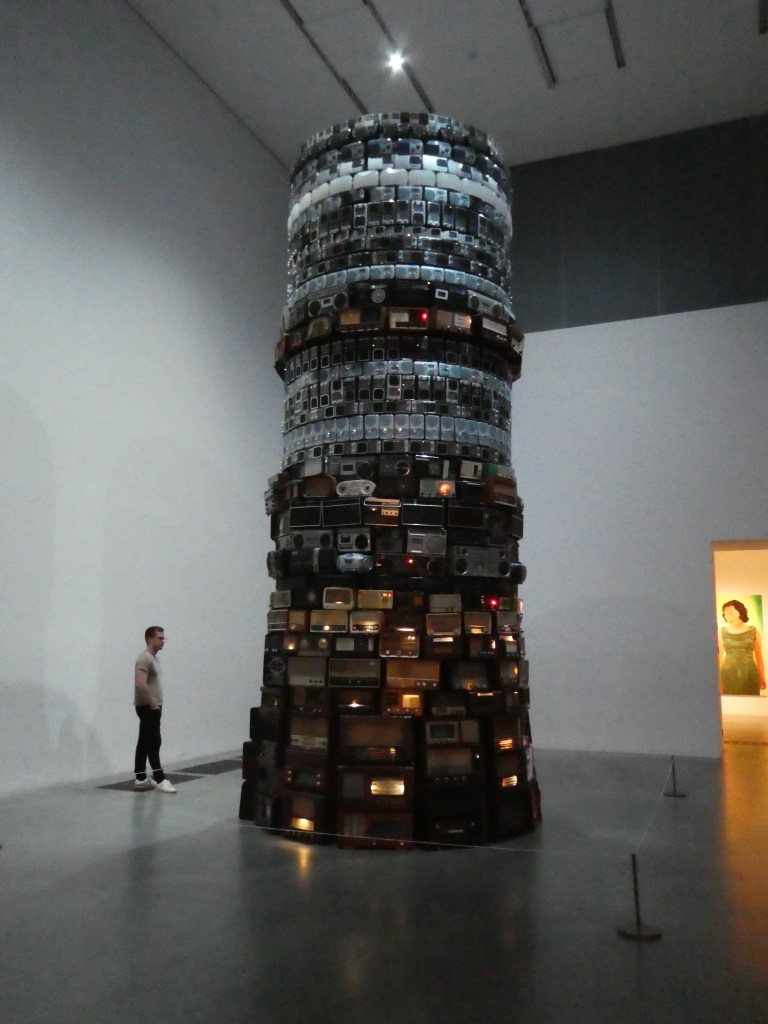
Here’s my favorite, called Babel 2001. It’s a tower of hundreds of radios, each tuned to a different station. It’s supposed to represent miscomprehension and mankind’s conflicts:
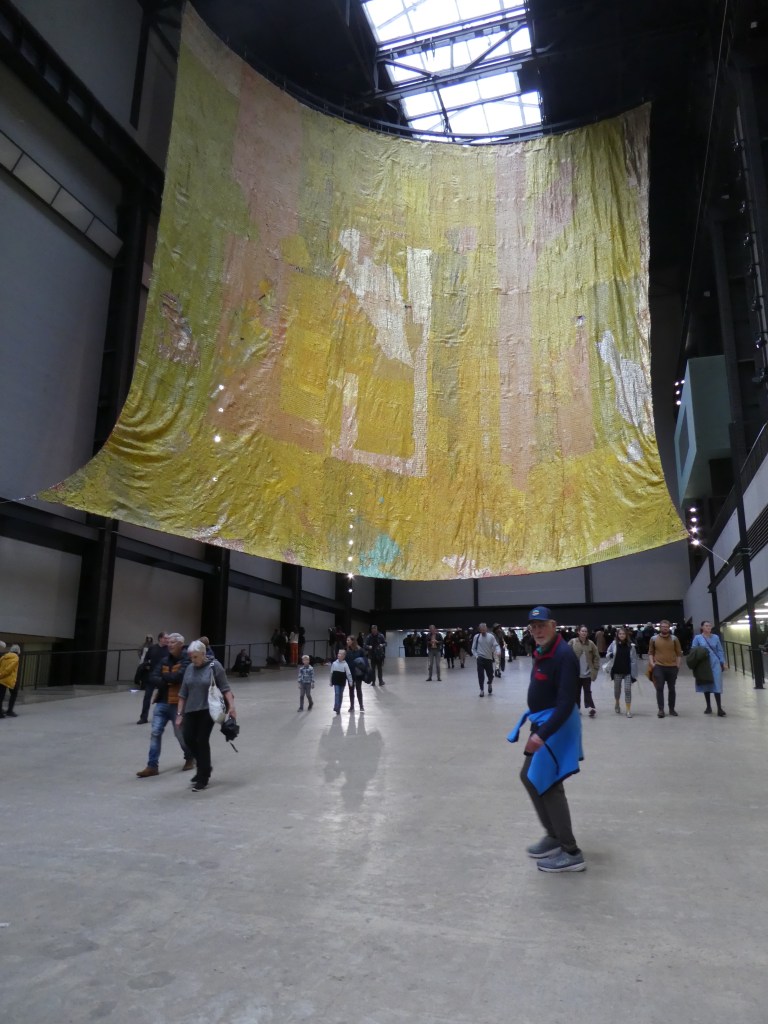
Here’s Ron in the Tate’s Turbine Hall. It’s a massive post-industrial art display/hall. Ron saw an exit behind the large yellow art and bolted:
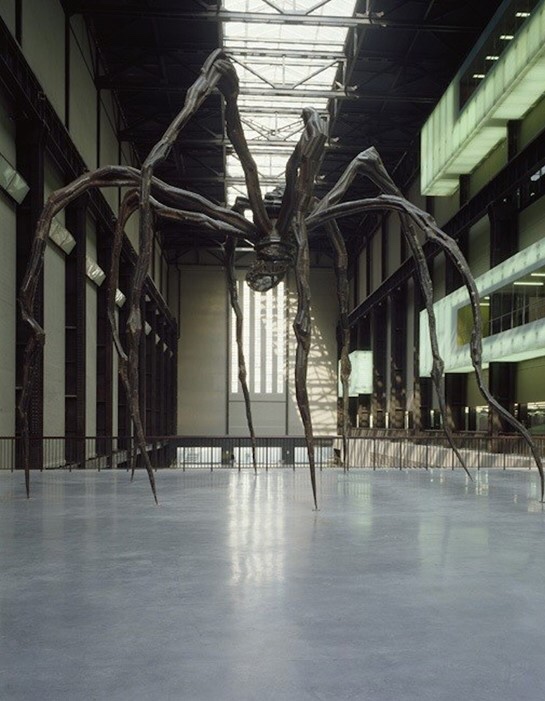
But the Turbine Hall reminded me of why I like modern art. It’s big and in your face and – without a doubt – I know it’s art. Or at least I know it’s interesting. Look at this spider installation from 2020:
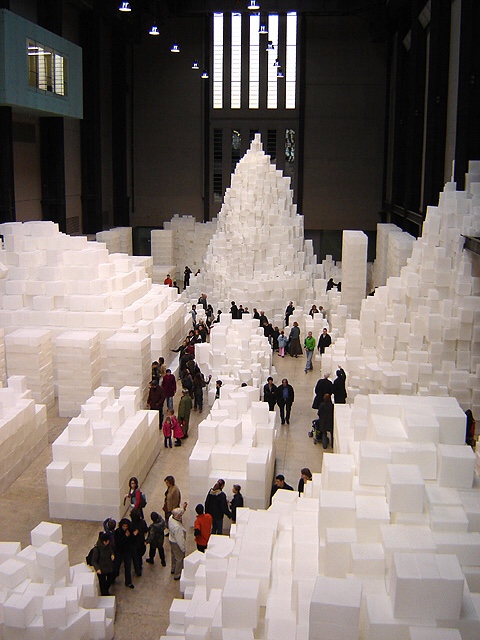
Look at this one, from 2005. It’s called Embankment and consists of 14,000 white polyethylene boxes:
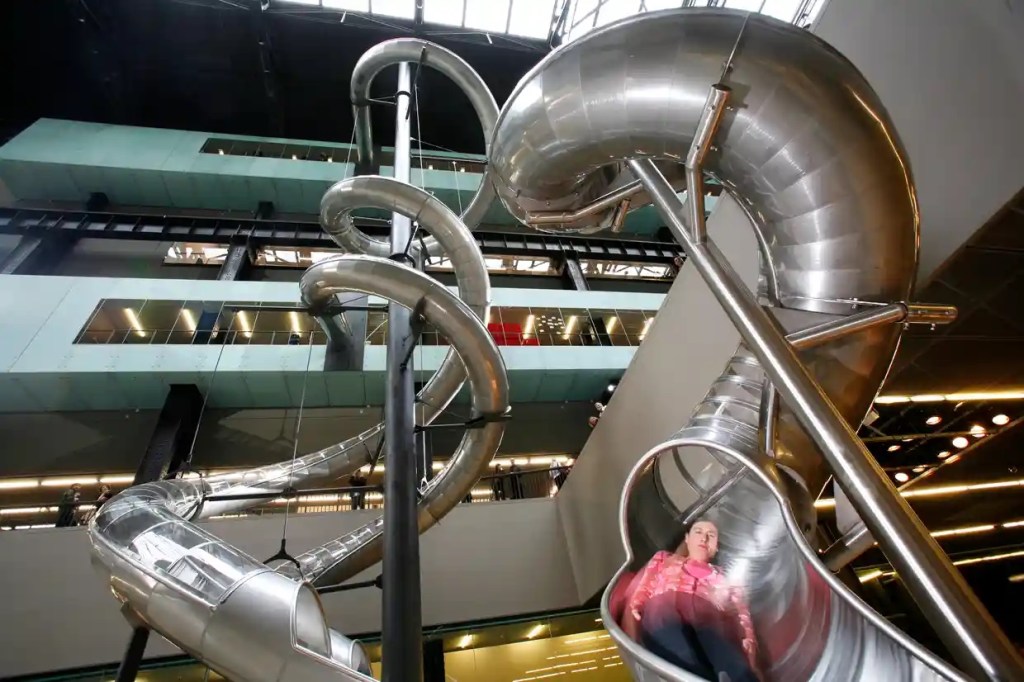
In 2006, artist Carston Holler put in an adult playground:
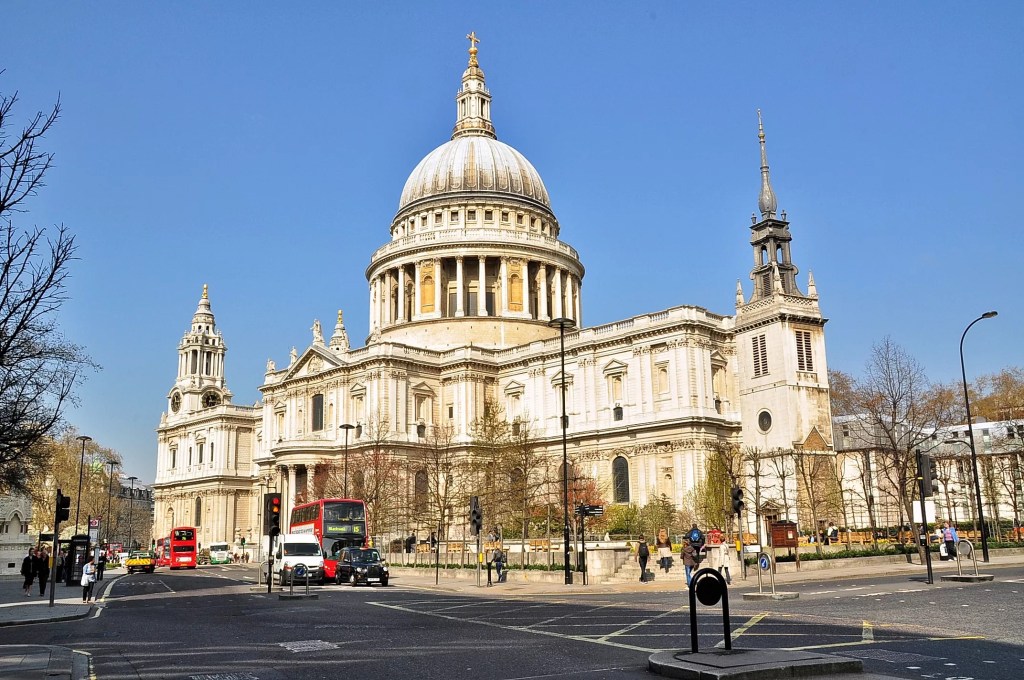
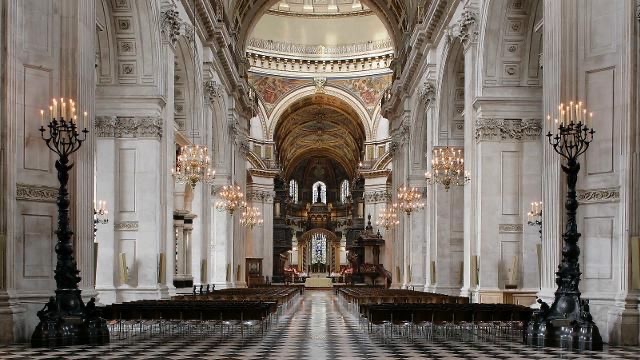
From the Tate Modern, it was time for St. Paul’s Cathedral. St Paul’s is the seat of the Anglican Church in England. It was built in 1710. It’s a seriously important place. Lady Diana was married here, Winston Churchill’s funeral was here. The ecclesiastical tenor of the place rubbed right off on Ron, who walked in and stated: Holy shit is this place big.
Here’s an interior pic (no St. Paul’s pics are mine)
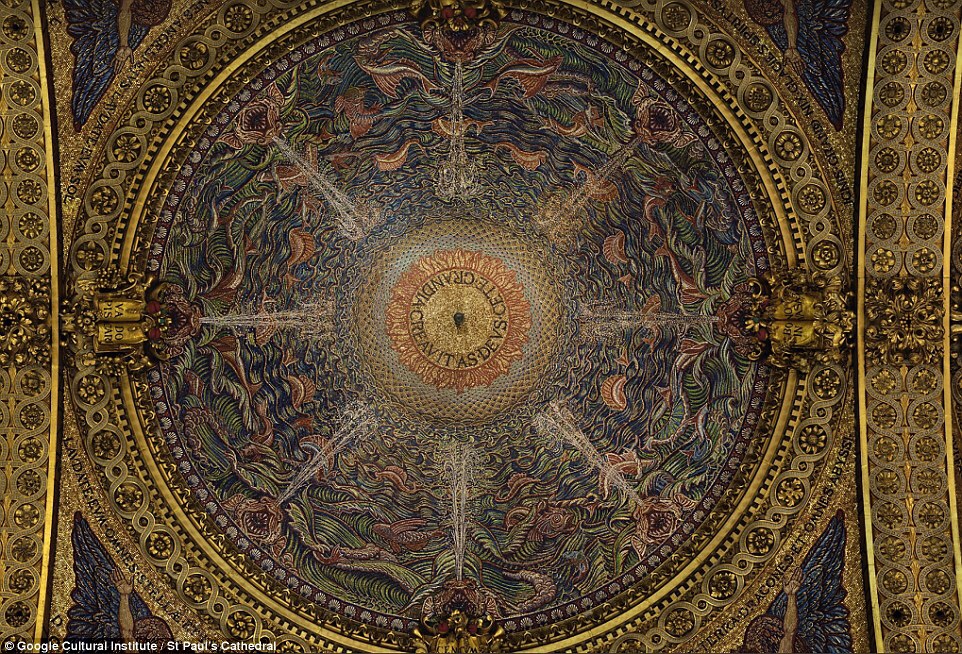
My favorite part was these mosaic ceilings. They were commissioned in 1891 and designed by William Richmond after Queen Victoria said that St. Paul’s interior was dark, dingy, and undevotional. It was commonly felt that the interior was too plain but these mosaics fixed that – they’re gorgeous.
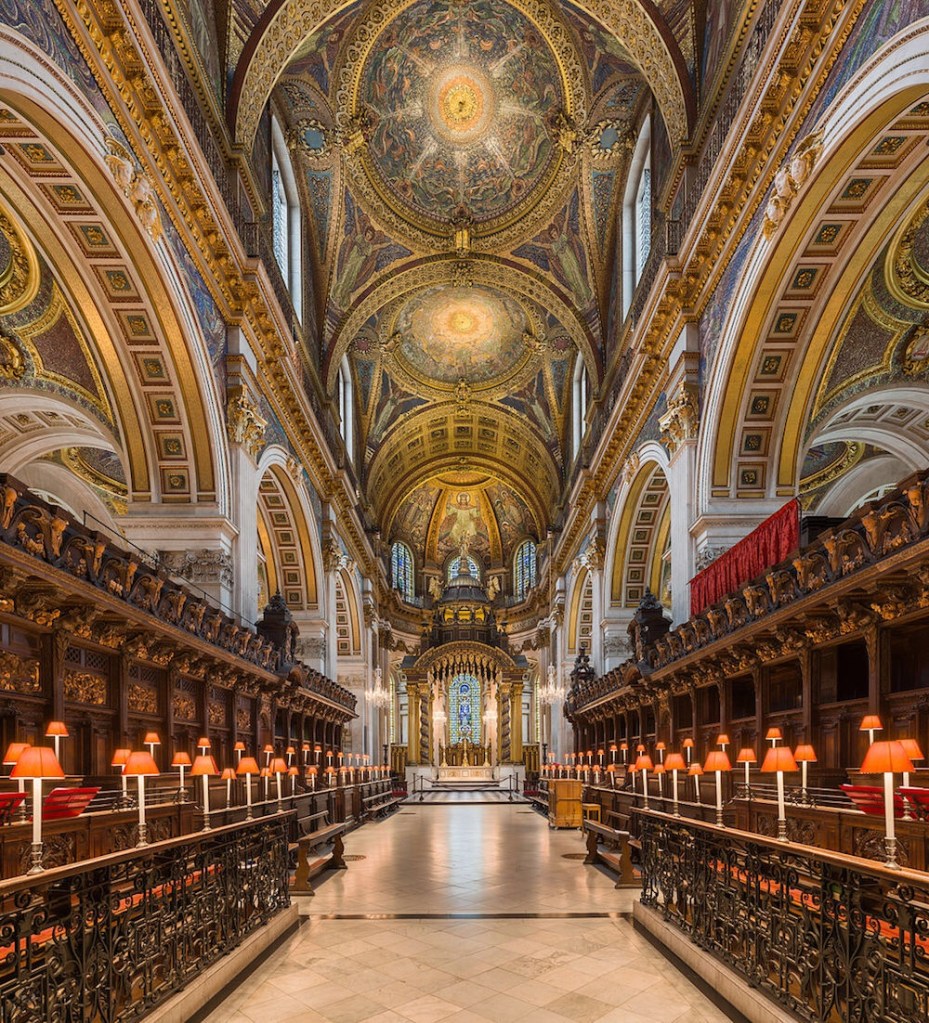
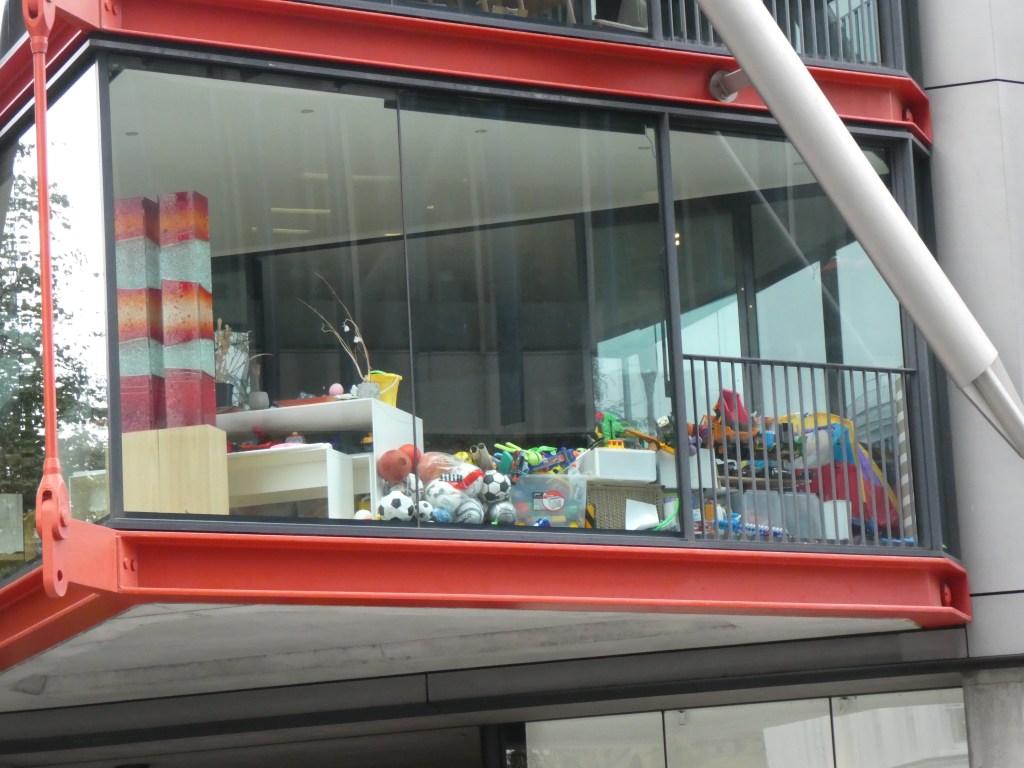
Just a few more pics before I go rest up to try to get through all of Phantom of the Opera. This was an apartment building near the Tate Modern. Here’s the building:
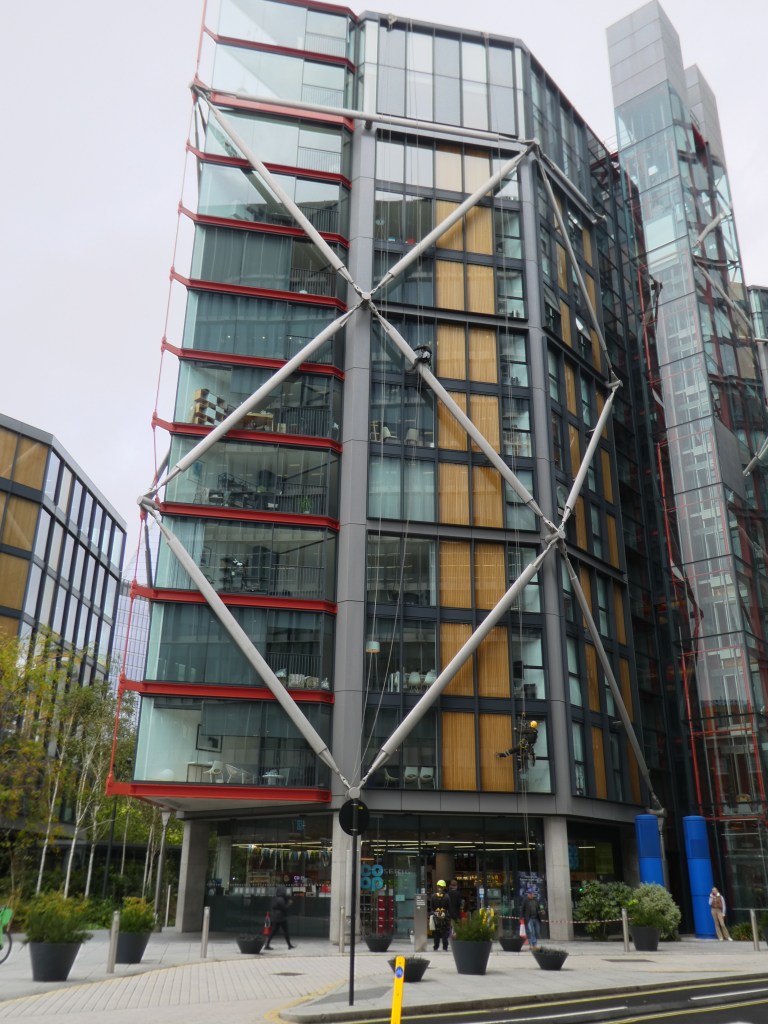
And then look at this zoomed in shot of one of the units with all those toys? Dog toys? stored in the window:
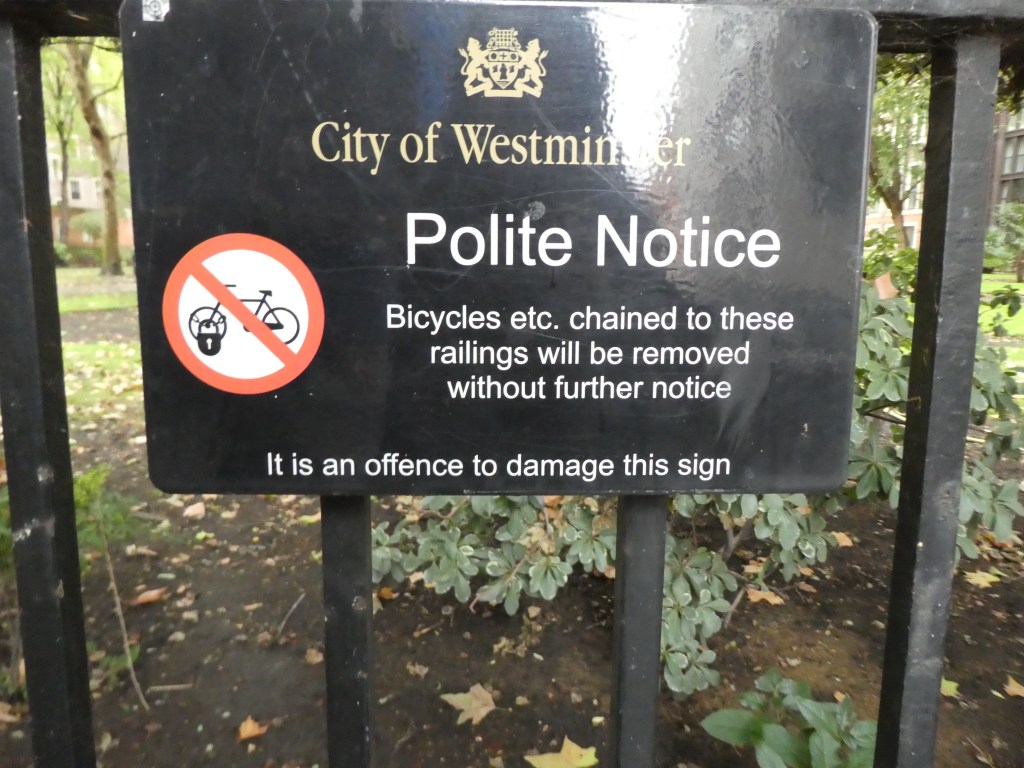
And then I liked this sign because it shows the well-mannered charm of British society. There’d be no “Polite Notice” in the US and I feel confident that any sign threatening an “offense” for damage to the sign itself would be covered with graffiti and profanity. This park was dotted liberally with these signs and they were all in this same pristine condition.
 Travels with Valerie