I like Chicago. Sure, it’s known for the skyscrapers, which make me nervous in the same way that airplanes do, but I’m open to being convinced.
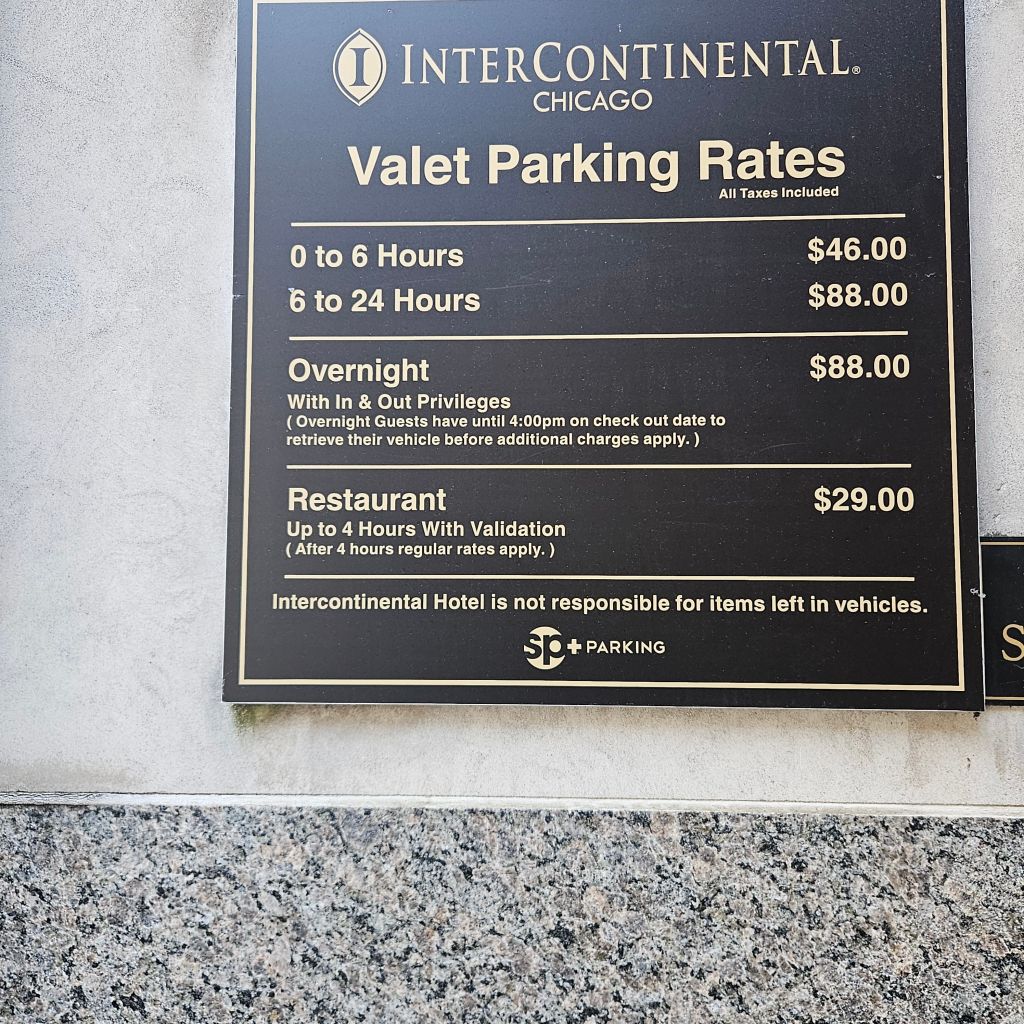
One cool architectural theme of Chicago is the extraordinary parking prices. Prices this high are posted everywhere:
Another thing I notice as I stroll around is that some of the churches are open for my investigation a la Europe. En route to my main sites today, I was able to get into two.
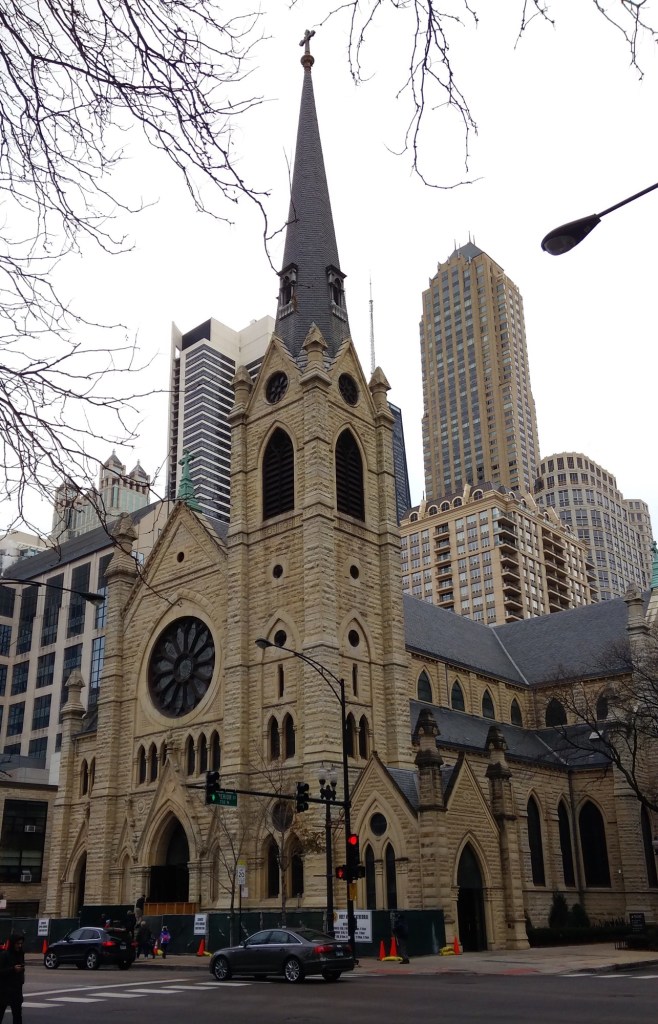
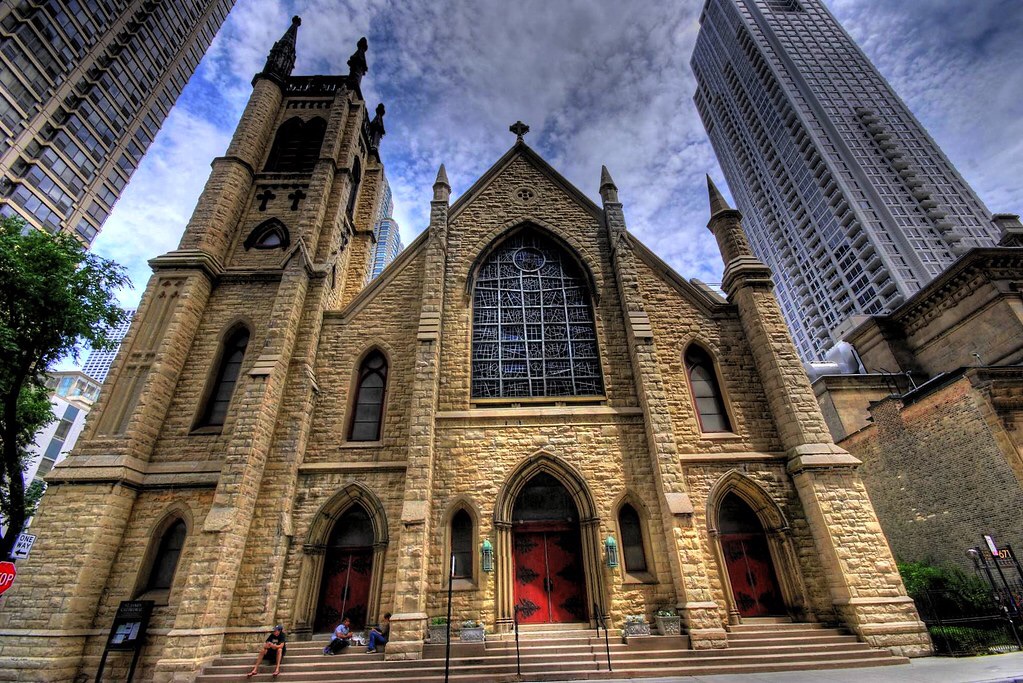
Here is Holy Names Cathedral, from 1875:
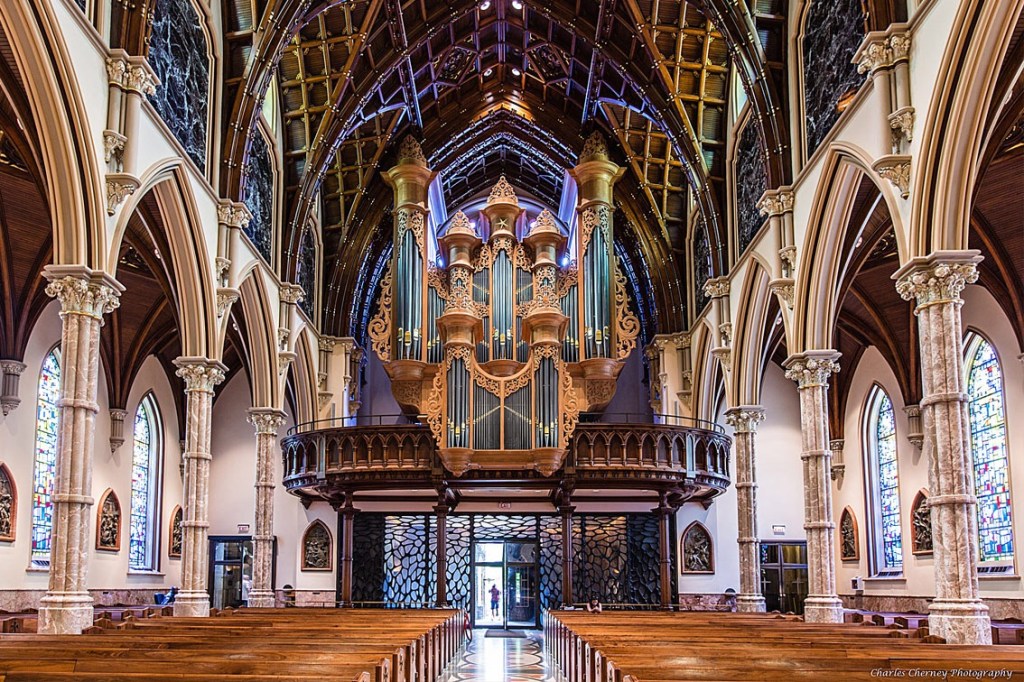
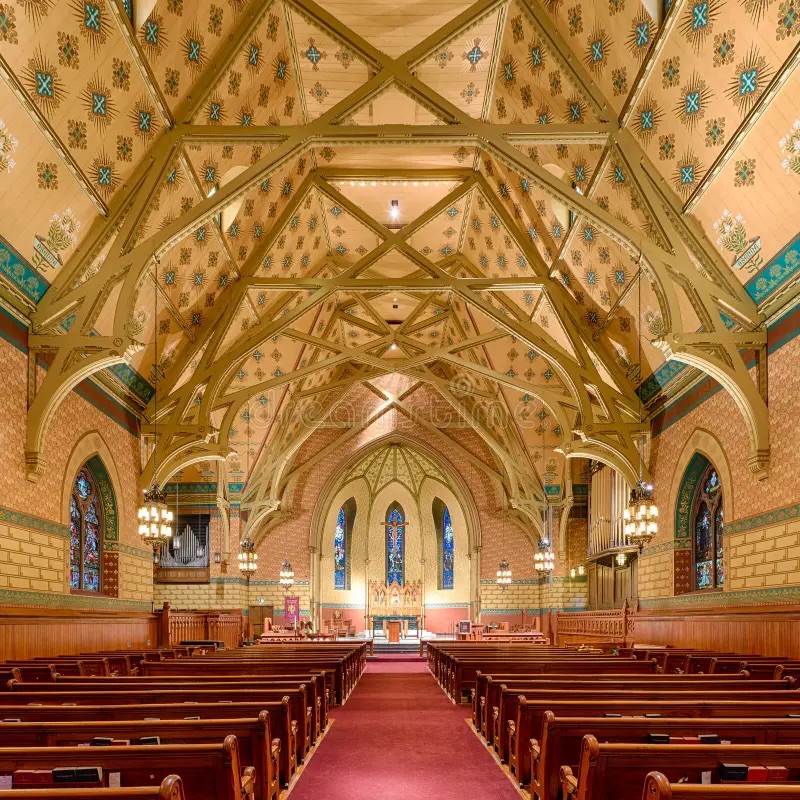
Here’s the interior:
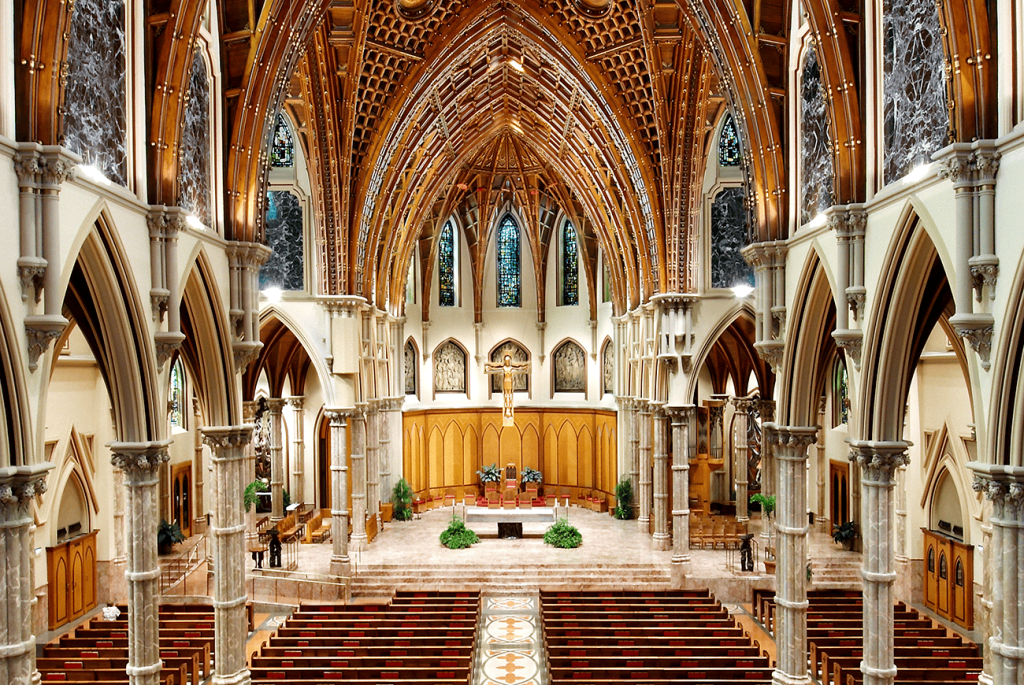
Here is St. James Cathedral, from 1875:
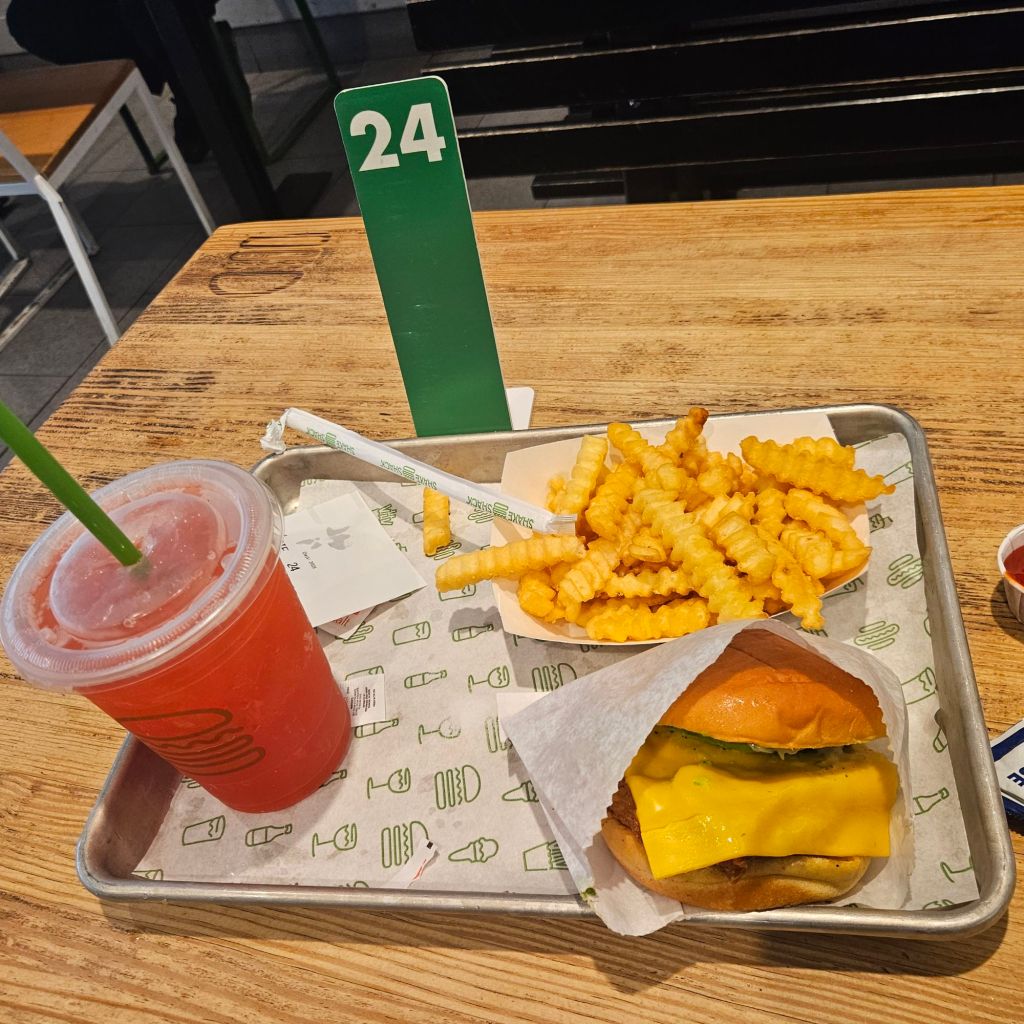
In between those two cathedrals, I came across a Shake Shack. Ron and I only discovered the Shack last year. This tray of food cost me $25 but I could afford it because I am not parking a car in downtown Chicago.
The reason for my walk today was Richard Driehaus. Richard Driehaus was a very wealthy man. He could probably swing a Shake Shack meal and a parking spot in the same day. As is often the case for wealthy people, he made his money managing the money of other wealthy people. At the time of his death in 2021, he was managing 13.2 billion dollars of our assorted money.
In an effort to keep this blog from becoming overwhelmed by architecture, I will add some financial information: Driehaus is considered to be the father of momentum investing – spotting stocks on prolonged upward trends.
This methodology must surely work because the Driehaus legacy exists just off Michigan Avenue, where, for $20 ($20 entry fee + $25 lunch + $88 parking), you can wander the Richard H. Driehaus Museum. (Note that he has passed on from this world and he was so good with money that we are STILL giving him our money.)
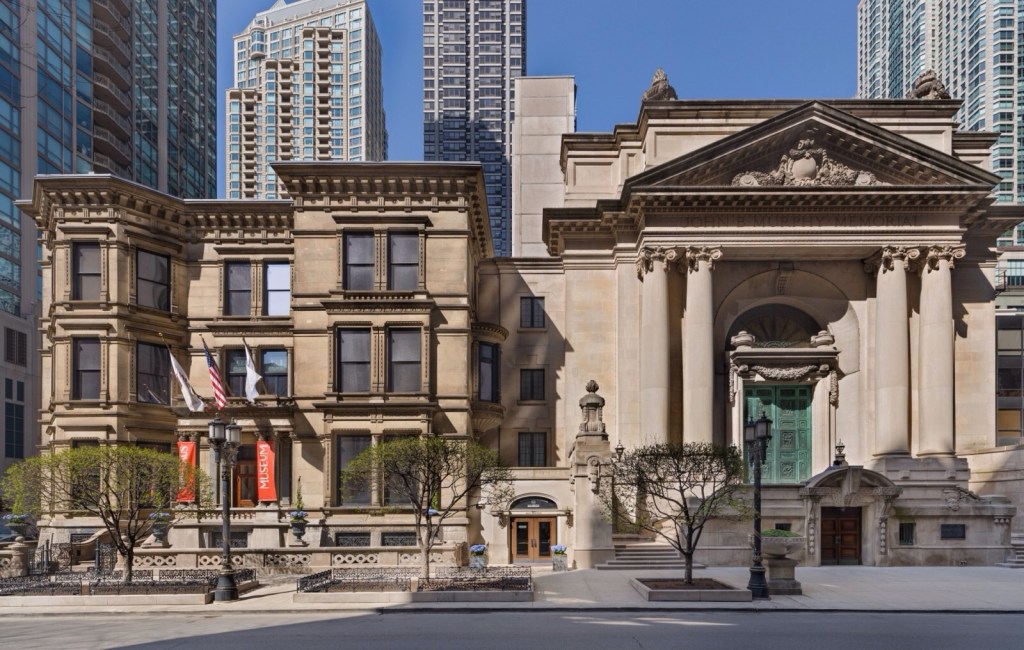
The house was originally built in 1883 for Chicago banker Samuel Nickerson. He paid $450,000 for it – about 14 million today. It’s 24,000 feet of exuberant opulence and Frank Lloyd Wright would NOT have approved.
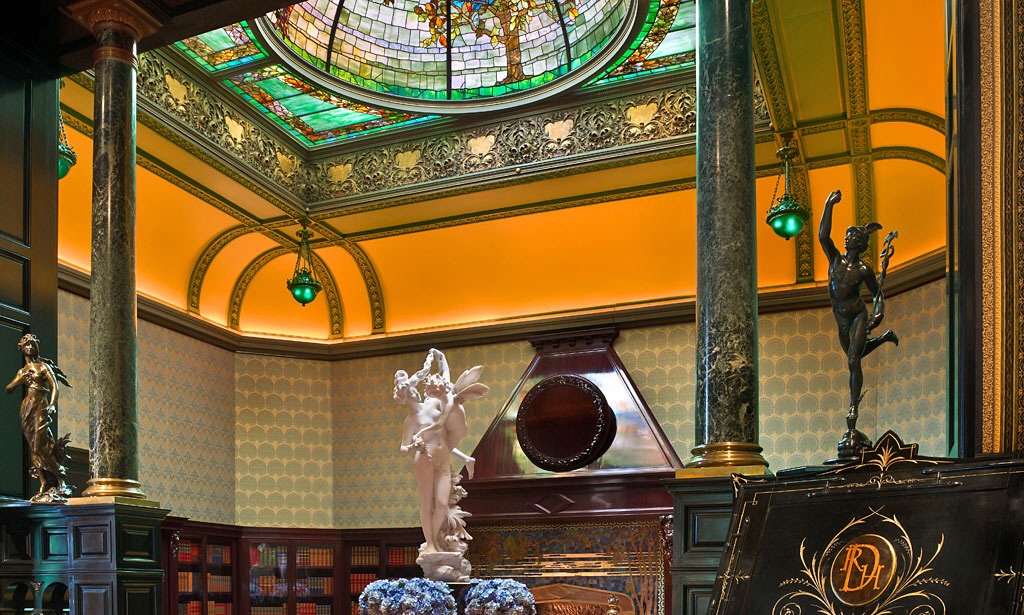
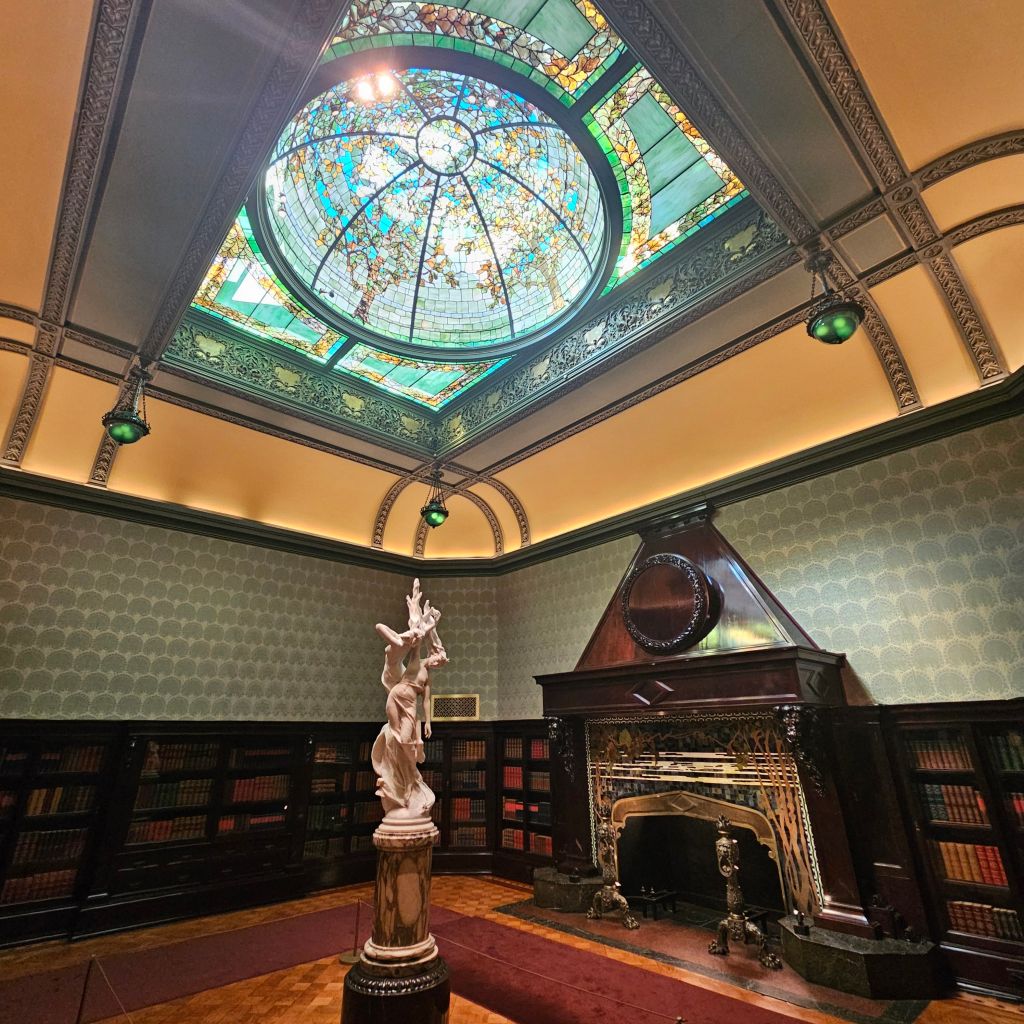
Here is the highlight – the Maher gallery stained glass dome from 1901:
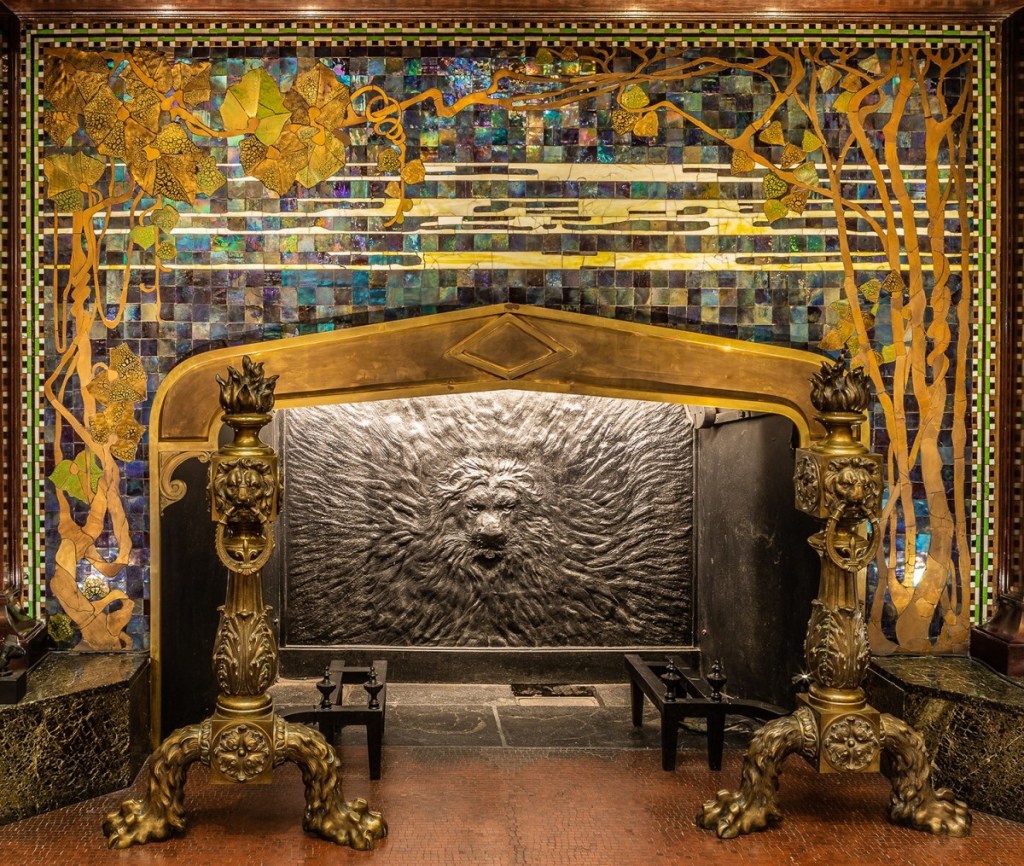
And this mosaic fireplace:
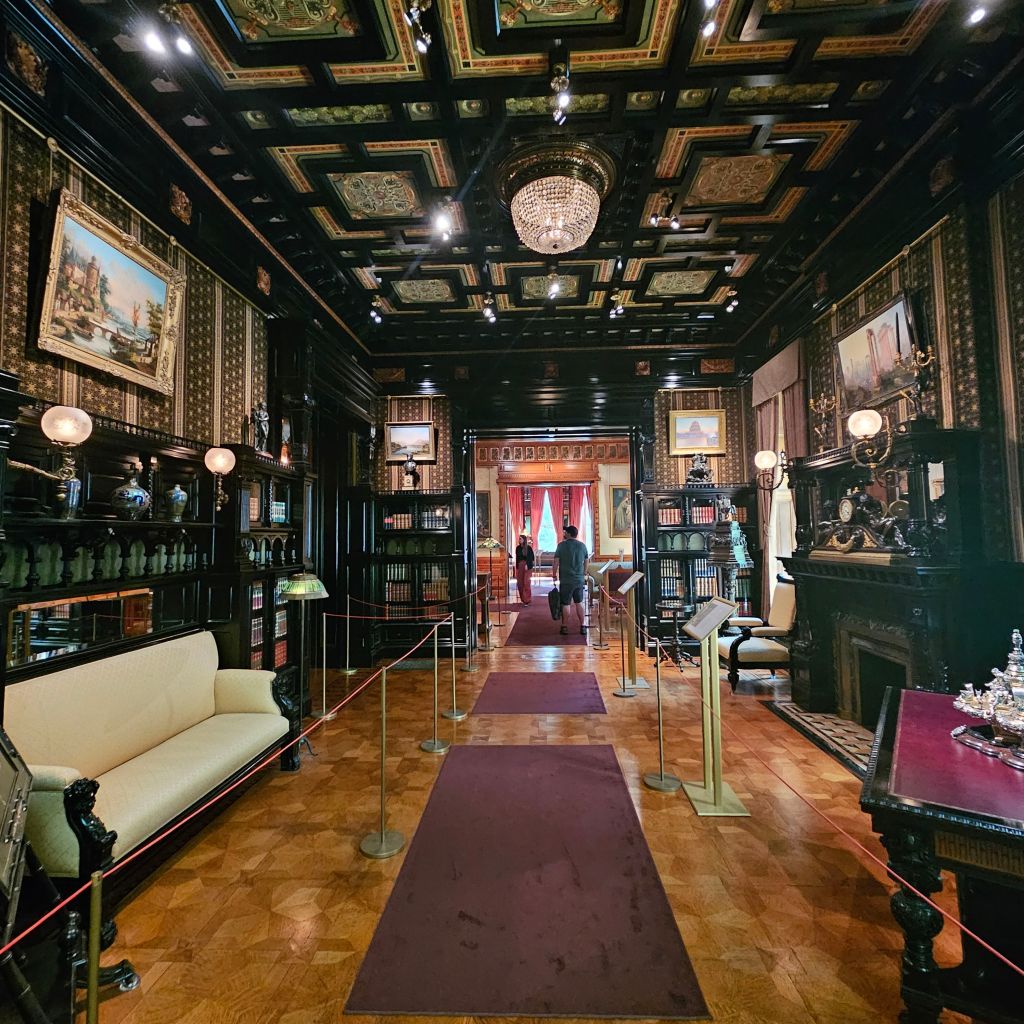
Here’s the entry hall:
I also took an architectural boat tour run by the Chicago Architectural Center. The CAC is a fantastic place – I bought an annual membership and can do most of their walks for free. They offer 80 different Chicago walks and have a roster of over 300 volunteer docents. I’ve met three of them so far – including one who abandoned Seattle for Chicago. They lie in wait for you at this relief map and wallflowers will not be tolerated – by god they are going to talk architecture with you.
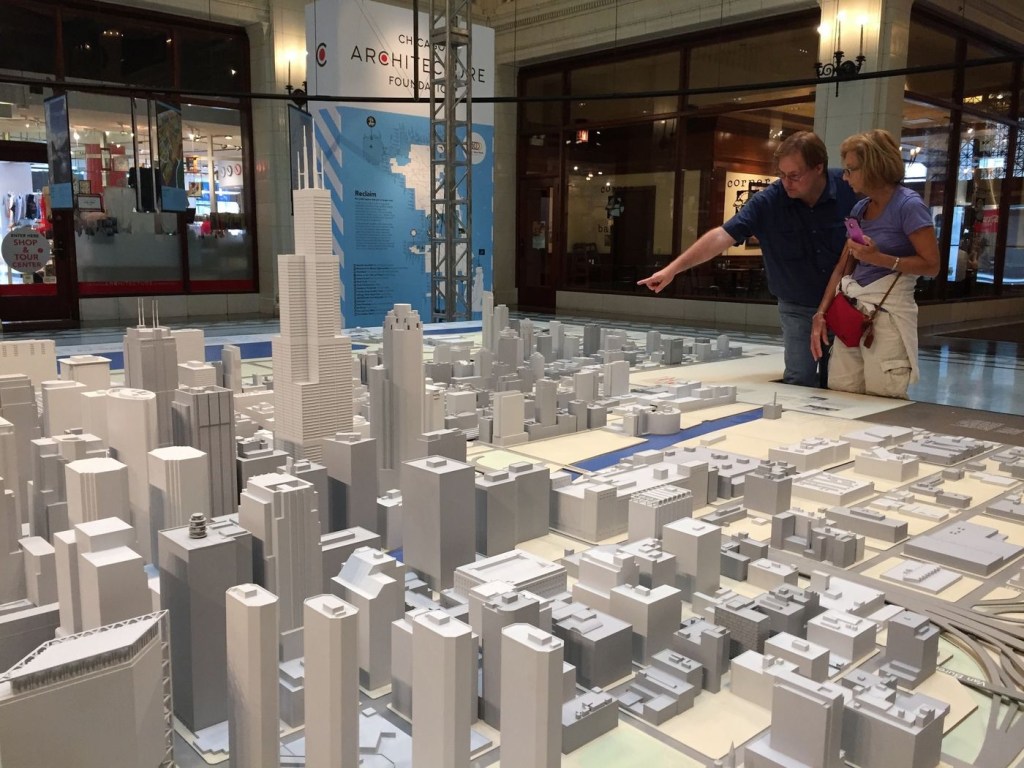
The CAC welcomes you with a short video about skyscraper development and the architectural impact of the 1871 Great Chicago Fire. The 1871 fire burned 17,500 buildings and left 30% of the city homeless. The devastation from the fire led Chicago to adopt building material codes – the use of wood was banned in the downtown area, ushering in the use of brick, limestone, marble and terracotta. In turn, the use of these heavier fireproof materials led to the exploration of steel “skeletons” and deep foundations to build “up” – the advent of the skyscraper era.
It was interesting to think about the history of skyscraper from the CAC boat tour. I’ve never spent any real time in a city dominated by skyscrapers – sure Seattle has a few, but can’t compare to Chicago. I’m still undecided about these monster buildings. On one hand, my fear of elevators means there’s no way whatsoever I am going up into any of them. And at first glance, they seem rather generic – tall and lacking the personality of a manor house or a cathedral.
But, as with most things, I am wrong.
The CAC river cruise helped me see a lot of intricate detail and personality in these buildings. Here were my favorites:
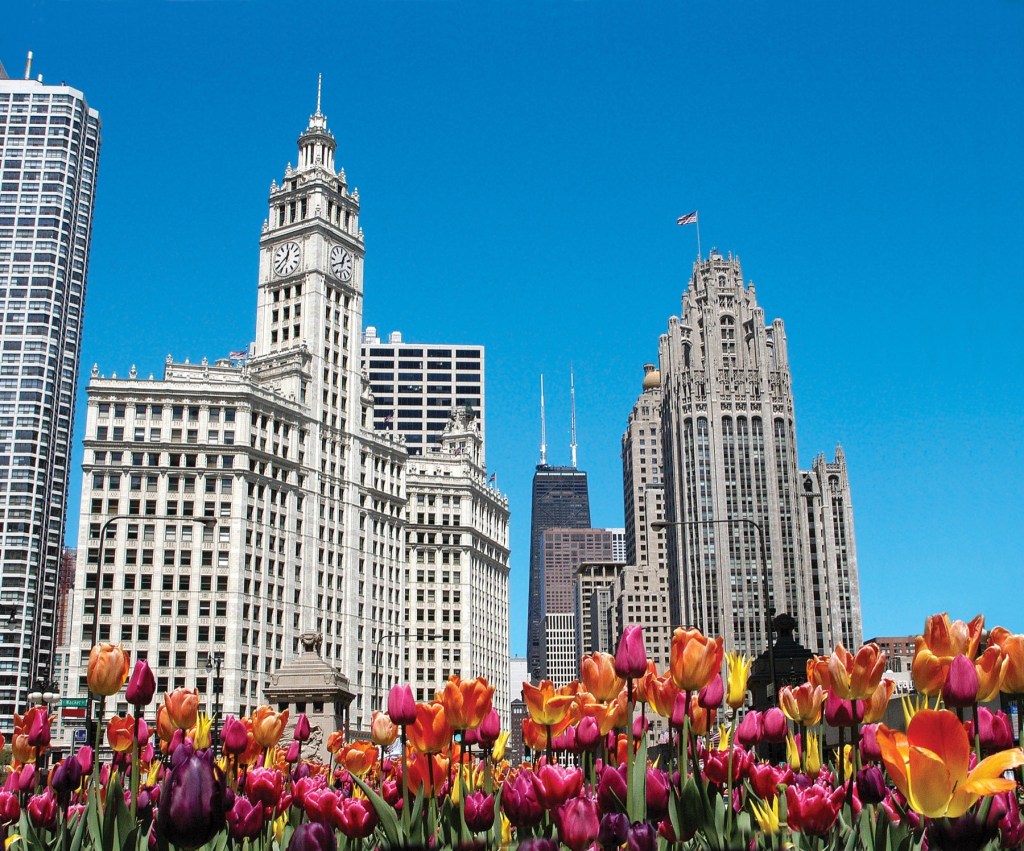
Obviously I like the Wrigley Building on the left (1920) and the Tribune Tower on the right (1925):
But there’s also the St Regis – from 2020 – 3rd tallest building in Chicago at 101 floors. Look up at the top of the tallest portion – there is an empty couple of floors where the building is just gone? That’s called a “blow-through floor.” That empty floor was added by engineers mid-build, when a wind test revealed that there would be too much sway at the top of the building and that the sway would make people seasick.
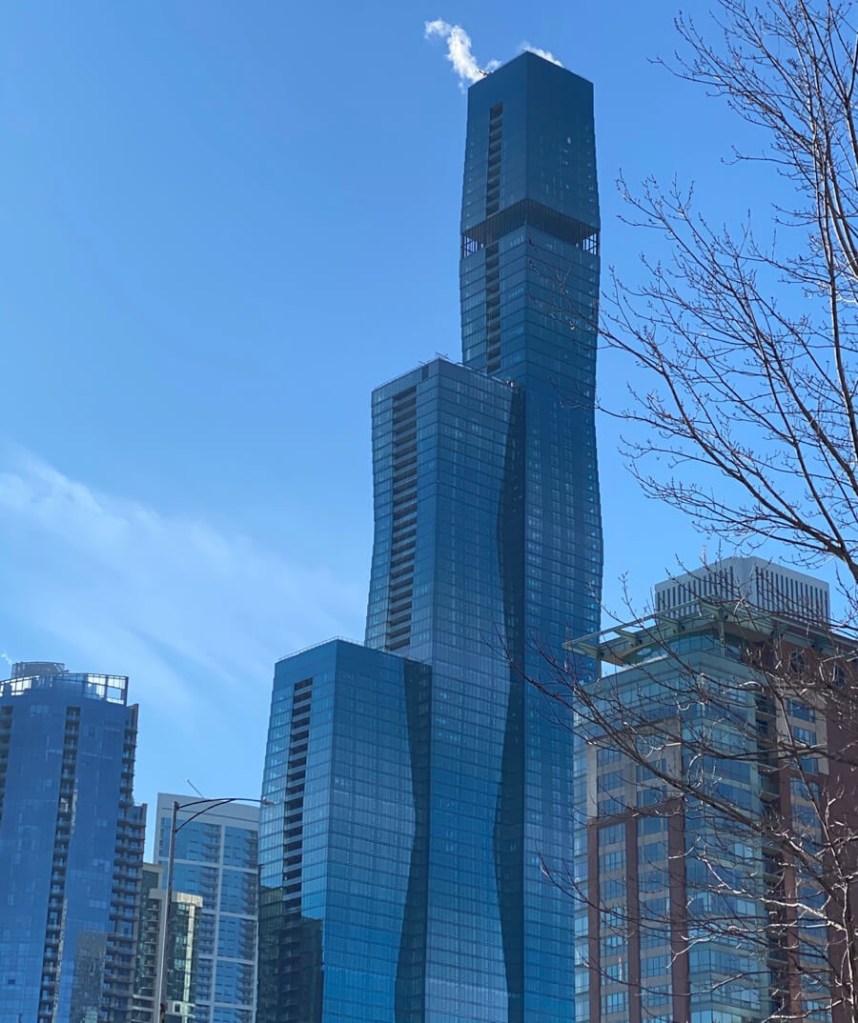
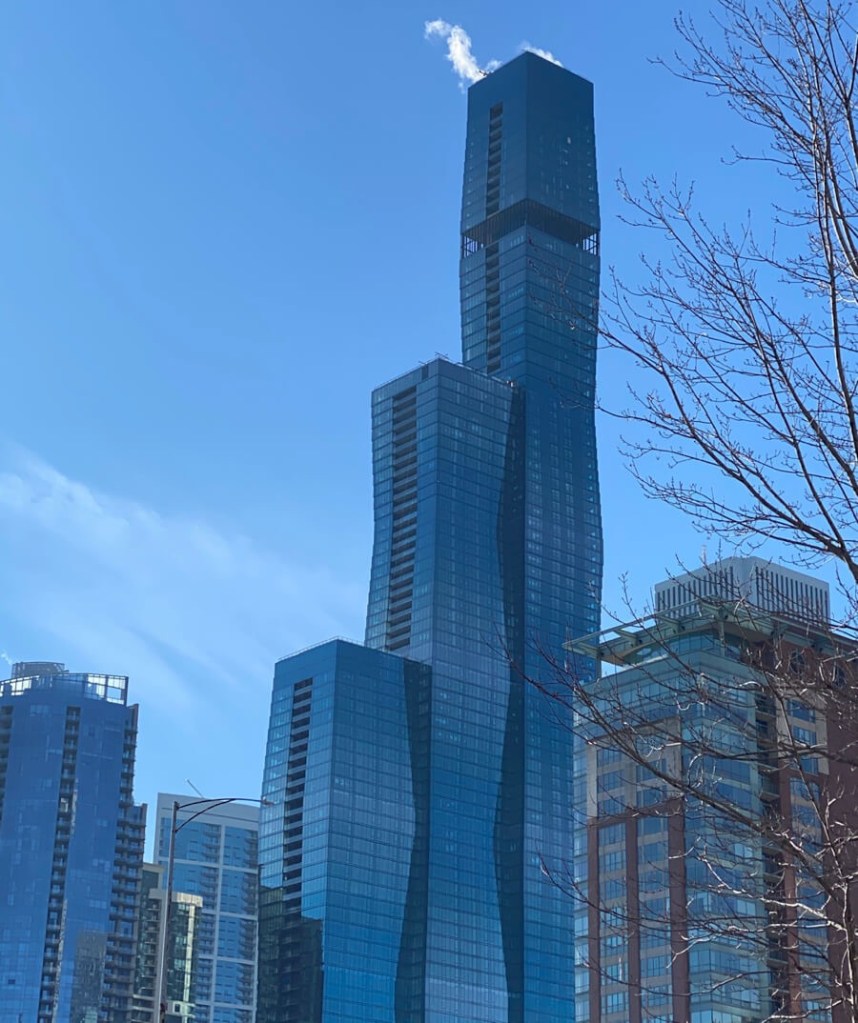
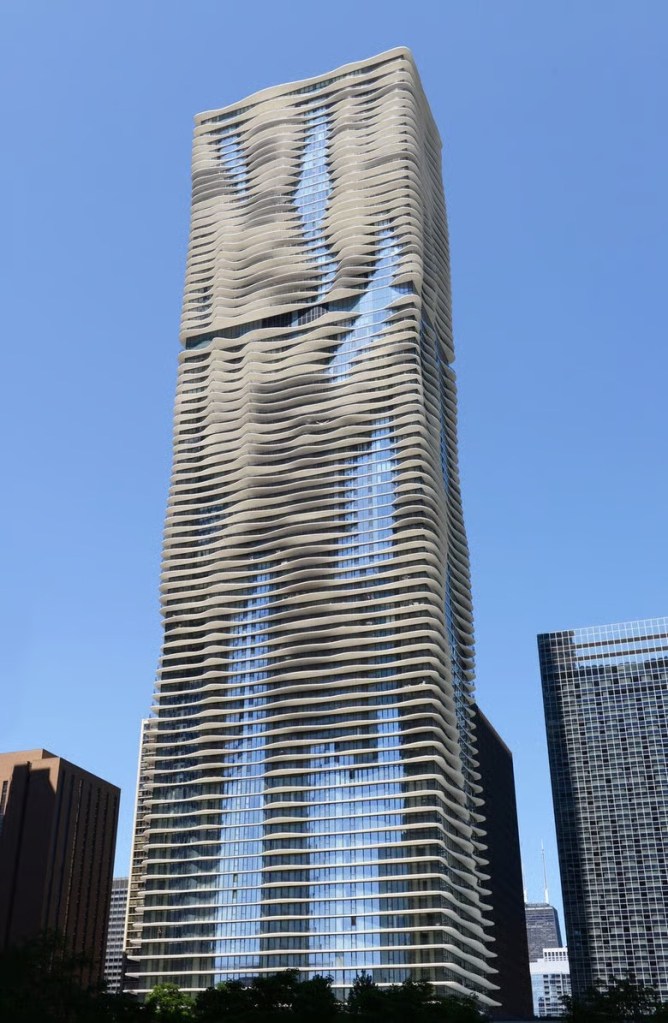
Here’s the 83-story Radisson Blu Aqua from 2009. The waves are balconies of between 2 and 12 feet, serving a functional residential purpose – but they also provide wind buffering and deflecting – protecting the building from too much sway.
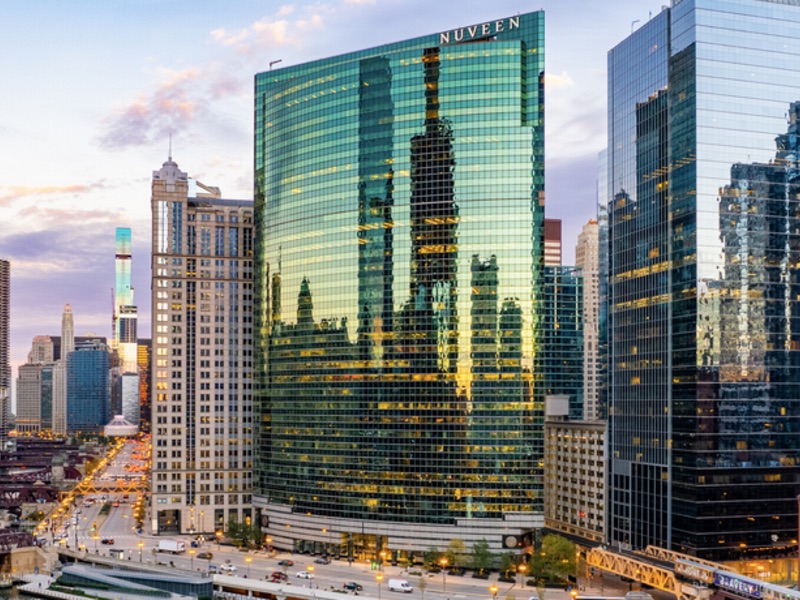
I also liked the 333 Wacker building for its fun mirror properties. In addition, at only 33 stories, it seemed possible that I might be brave enough to enter that one:
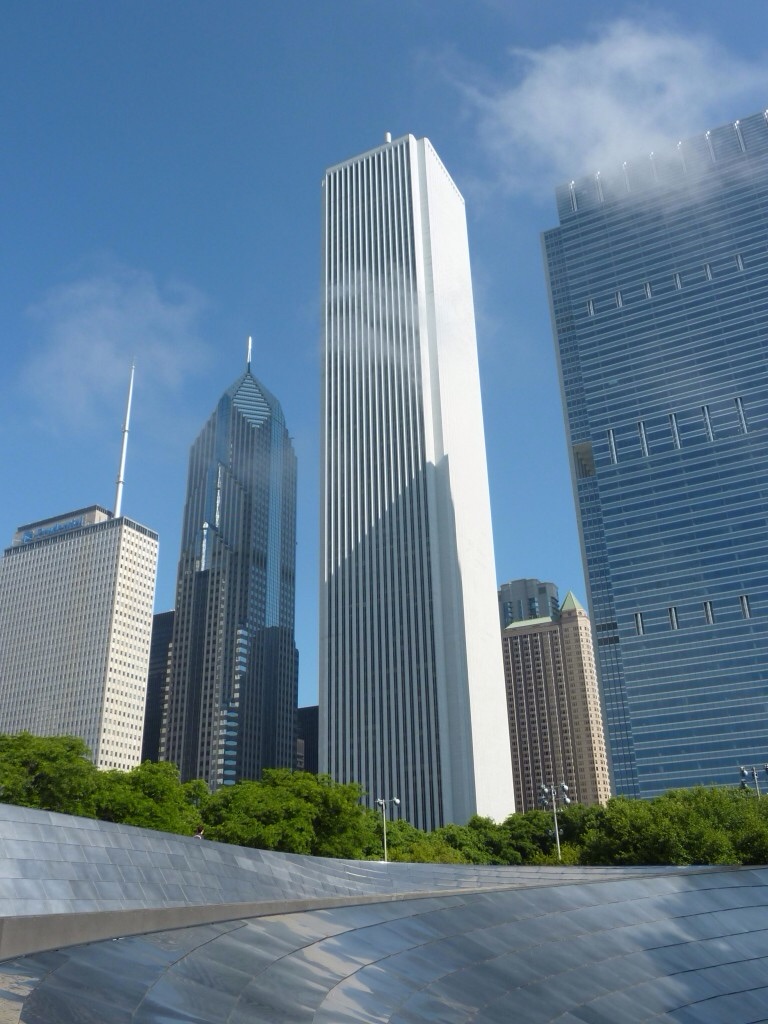
This one is the 83-story Aon Center, from 1973. It was covered in Carrera marble, which proved unsuitable for Chicago winters when the marble started cracking. The 120 million dollar building was then re-clad with granite – at a cost of another 80 million.
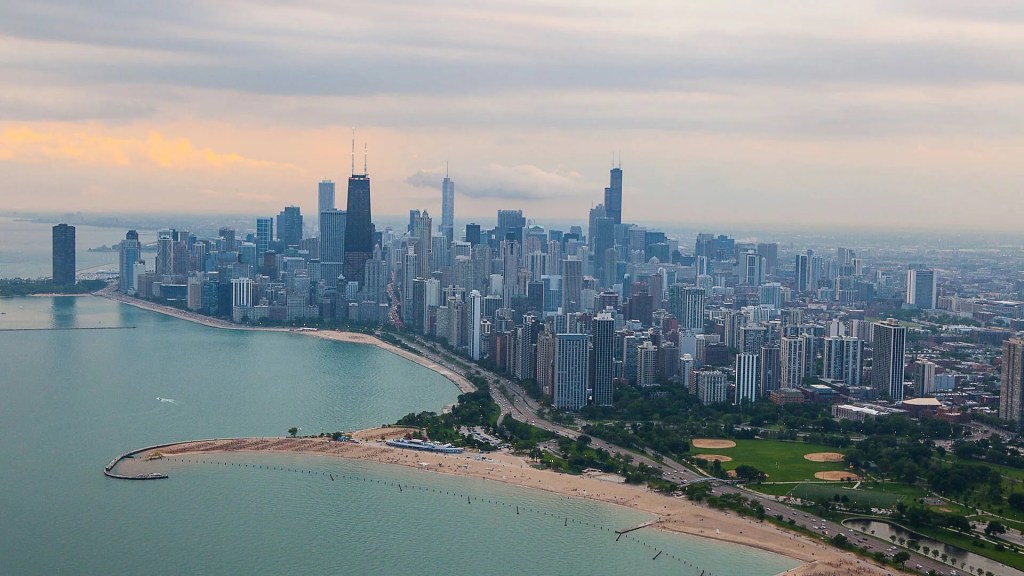
I’ll leave you with a shot of the entire skyline so you can get a sense of how big this city is. My skyscraper lesson did not convince me to go up into any of these buildings. The dominant theme really seemed to be engineering errors and lessons learned – which makes for an interesting boat ride but cements my allegiance to a good old wooden medieval center.
 Travels with Valerie