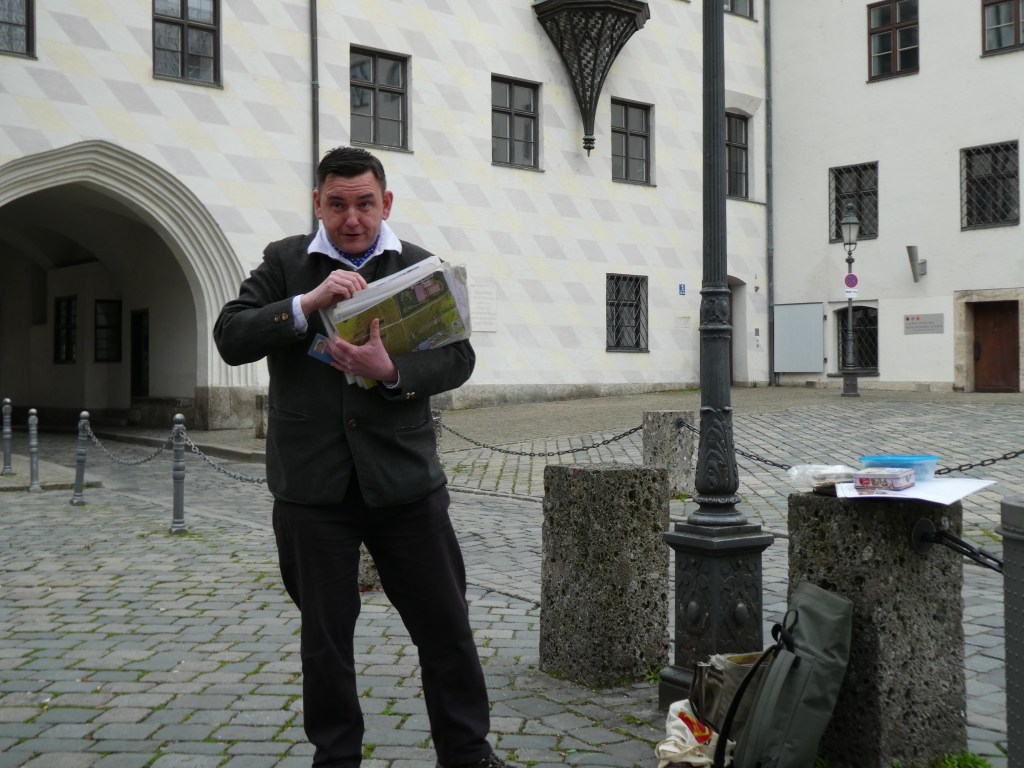
We spent our day with Taff of Dark History Tours Munich. Guides really vary – and Taff does an excellent job of making a touring day come to life through the use of fine acting skills and extensive props that he carries in an assortment of bags, backpacks and stuffed clothing pockets. Here is Taff, right when we met him, with his bags on the ground, his various Tupperware boxes sitting on the cement block, rifling through a massive stack of illustrative pictures, each one wrapped in a protective plastic sleeve:
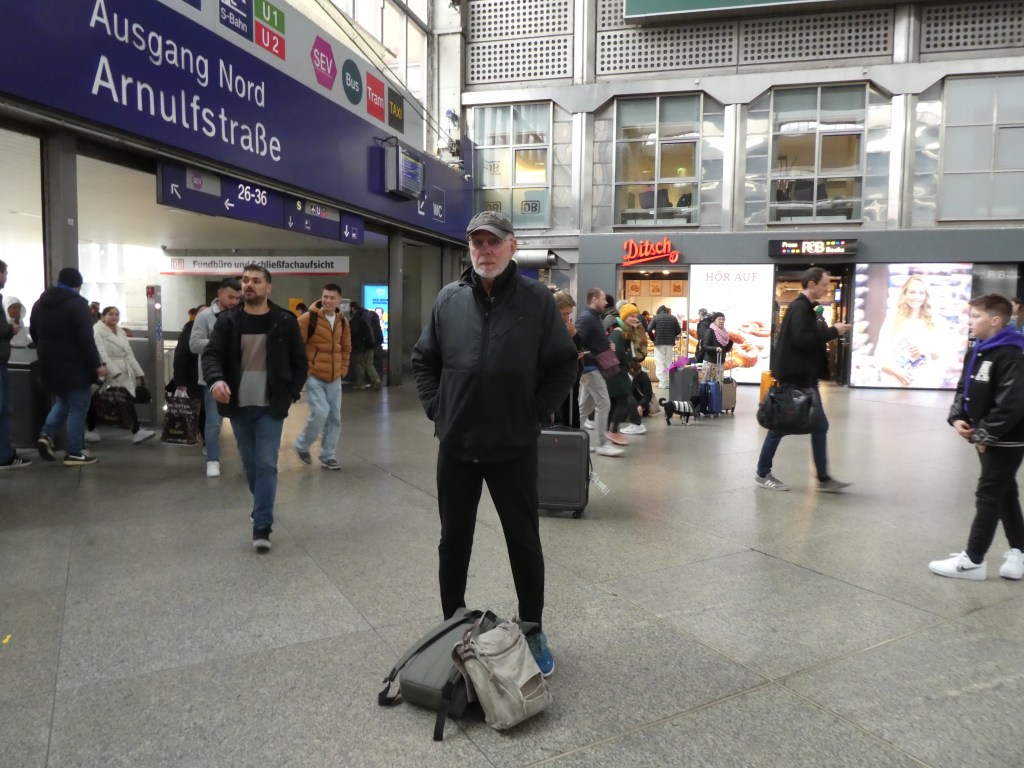
Here is a vigilant Ron in the Munich central station, later on in the day, having been entrusted by Taff – who has not been informed about Ron’s ability to lose things – to watch those valuable backpacks while Taff is on a restroom run:
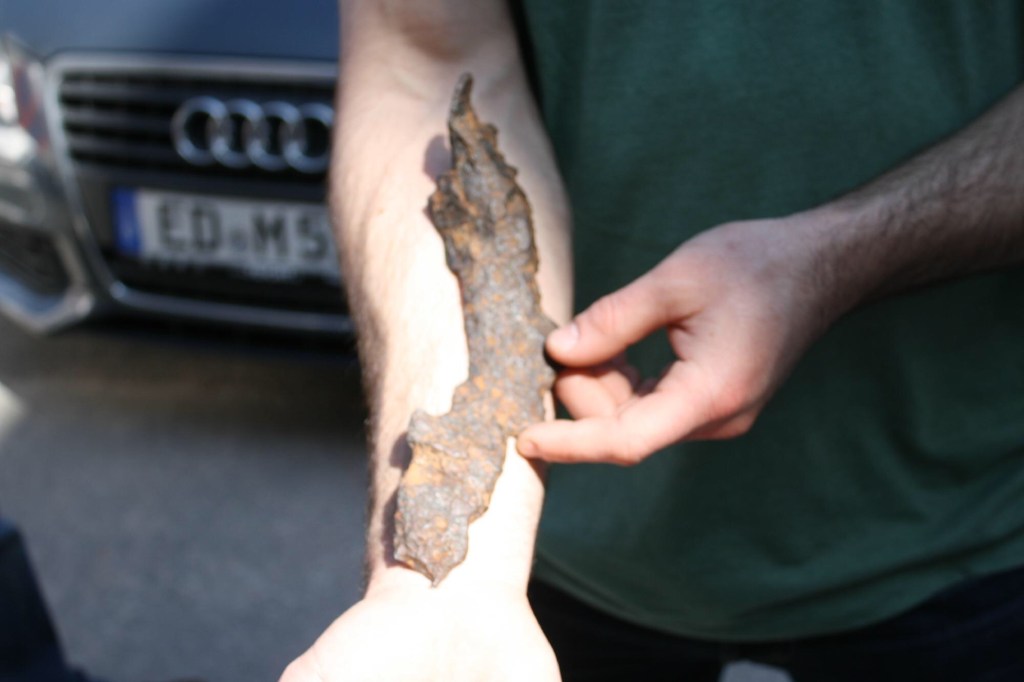
Half of the fun of touring with Taff was watching what he might pull out next. For example, he carts around this 5 pound piece of bomb shrapnel that fell in Munich: (pic not mine)
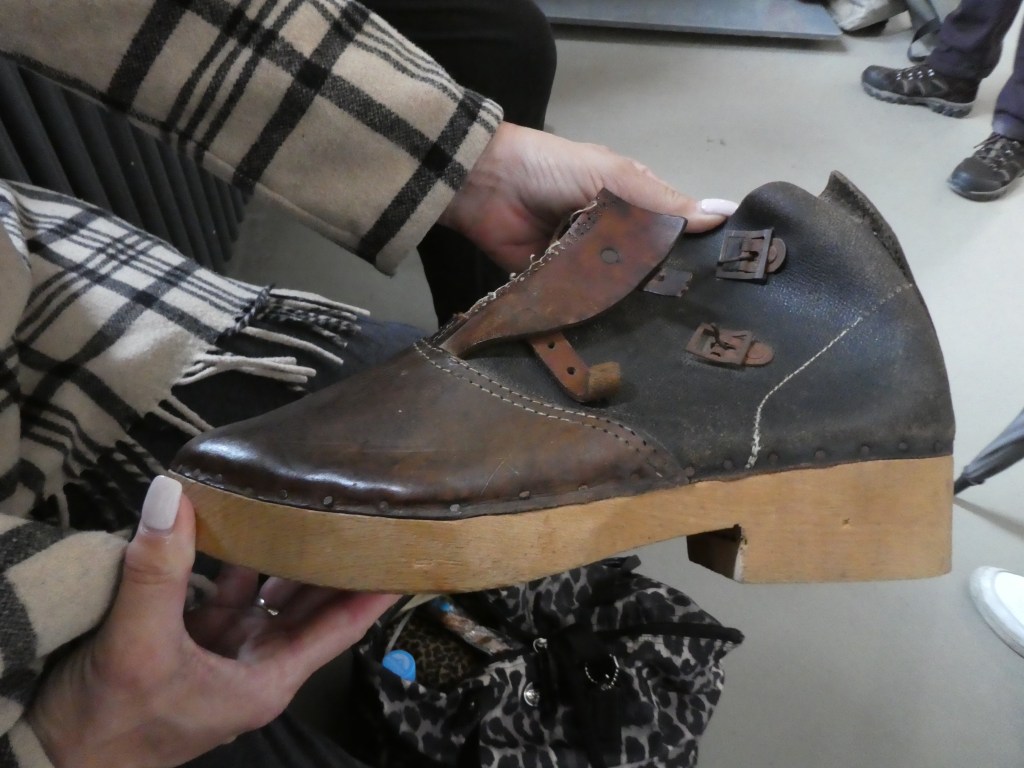
At about the 6 hour mark of our day, he hauled out this actual prisoner shoe from Dachau:
One thing I discovered with Taff was that my feelings the other day at the Nazi Documentation Center were accurate – the sense that, while Munich has finally mobilized to present, acknowledge, and accept accuracy for the WWII atrocities here, there remains an undercurrent of loss?sympathy? for the German losses in the city and I just don’t know how to temper my reaction to that.
Taff did a really good job of trying to portray the thought process of the average Munich citizen – the desperation and financial woes brought about in the city after World War I and the Marshall Plan and how that overriding poverty created the breeding ground that fed the fire that Hitler was stoking.
One thing that Taff showed us was this covered spot off the Marienplatz – on a wall of the Old Town Hall – where there is a Memorial to the German Prisoners of War, dedicated in 1954: (pic not mine). In 1954, there were 12,500 citizens of Munich still missing, many in the Soviet Union. But what struck me about the memorial, was that, about 10 feet to the right, there was a second memorial, dedicated to the victims of the Kristallnacht- and it wasn’t put into place until more than 50 years after the war ended. The juxtaposition of these two plaques really bothered me. Kristallnacht – the night of broken glass – was conceived and ordered right in that building. It touched off a night of looting and destruction that lit the fire that led to the deaths of 6 million Jewish people in the war.
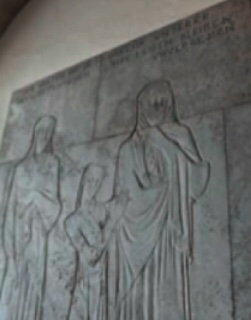
Rioters destroyed 267 German synagogues, 7000 Jewish businesses, and 30,000 Jewish men were taken into custody…on that one night…and it just made me angry to see the two adjacent plaques. I will not pretend that Munich does not have dozens of other memorial sites – Munich does – but I will not deny the undercurrent I feel.
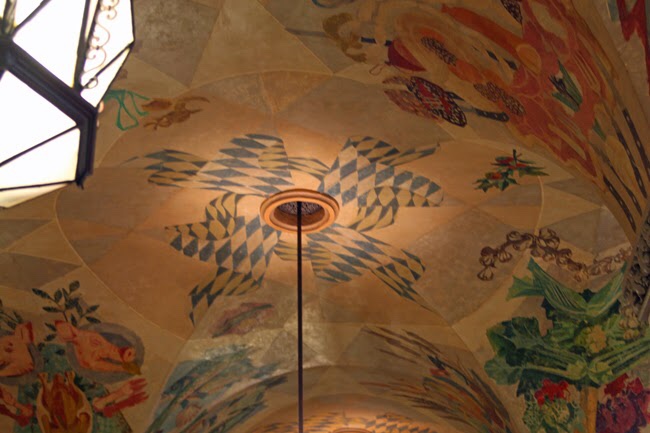
Perhaps this picture will help. It’s from the Hofbrauhaus, the famous Munich boisterous and cheery beer hall, where virtually everyone stops in for a drink. The Nazi party was partly formed in that beer hall – where Hitler would come in and give unifying, passionate speeches about saving Germany. There were swastikas painted onto the ceiling and now, today, those swastikas have been painted over. Sort of. If you look carefully, you can see the original evil shape contained in the lighthearted whimsy:
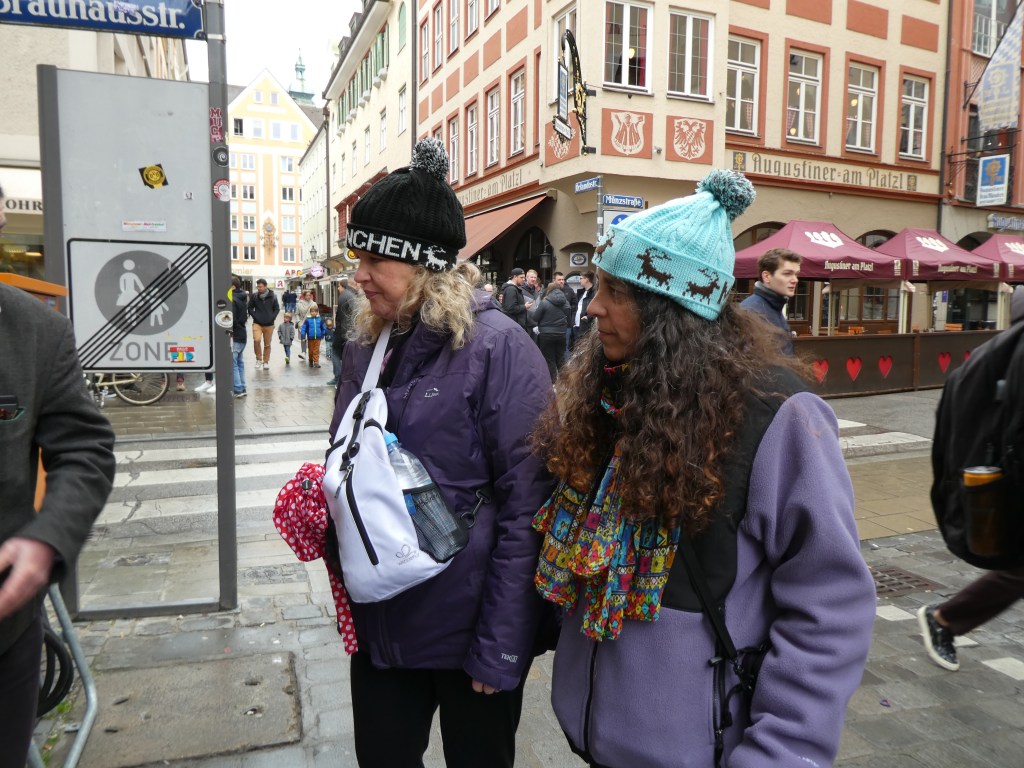
From our city tour, Taff went out to Dachau with us. Although it is mid-April and we were expecting warmer weather, our Dachau tour day was cold – in the 30s – with gray skies and wind. It was weather befitting the destination. We were touring with Sam, Kris and Mikey and to add a tiny bit of levity, here is Kris and I, sporting our mid-day München desperation hat purchases:
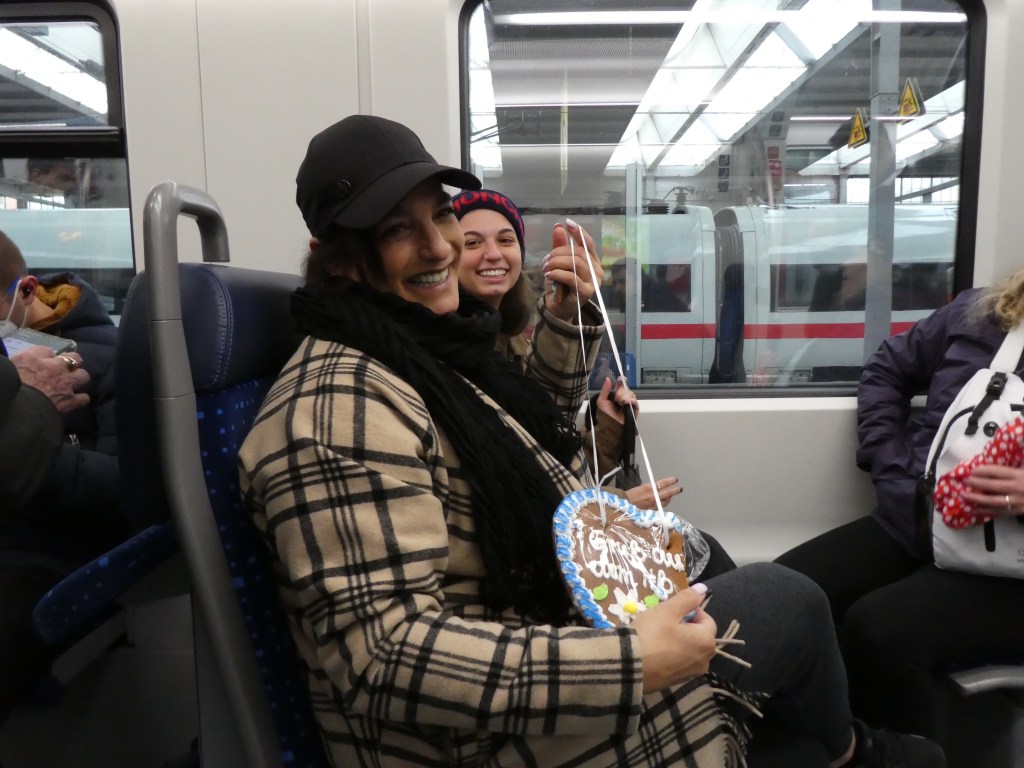
And here is Sam after a stop at the Hofbrauhaus, where we all purchased pretzels and Sam purchased this decorated “cookie” from a very confused pretzel maiden. Taff told us – later – that no one buys those cookies – they’re made for decorating the pretzel baskets and they’re probably a year old – except super drunk people in the wee hours of the morning. But such is Sam’s commitment to shopping!!! (Note to readers who have asked for follow up on the bra situation: YES, Sam did finally acquire some!)
I’m going to omit most of the graphic pictures from Dachau. We walked through all of the sites, including the gas chamber and furnaces – if you want to see them, they’re easy to find online. Dachau was a more of a prison camp vs. a death camp, but I suppose that’s really only true in comparison to a camp like Auschwitz, where 1.1 million people were murdered in 2 years. 90% of those Auschwitz victims were Jewish.
Dachau opened as a prison in 1933 (vs. Auschwitz in 1940) and is considered to be the first concentration camp built by the Nazis. The Nazi movement was based in Munich – where Hitler was living in the years after World War I, and so Dachau – 10 miles outside of Munich – was initially used to house political opponents.
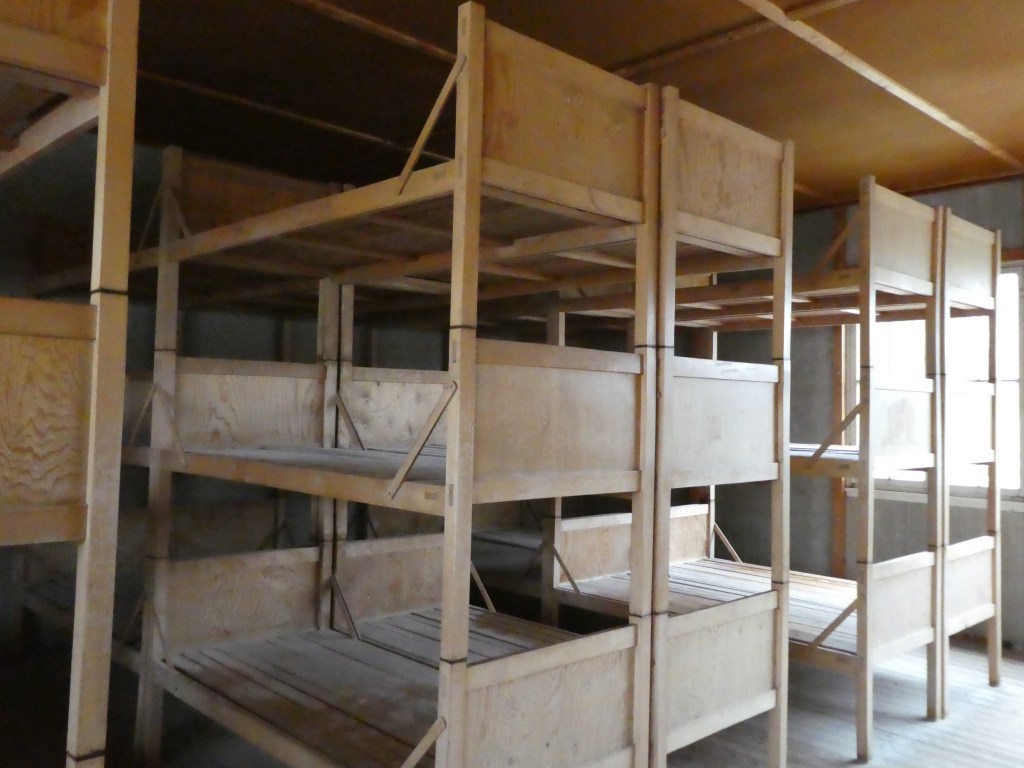
There were 6000 prisoners there in the early years of the war. By 1945, there were 30,000 prisoners and at least 32,000 people had been gassed or executed there. The living conditions were deadly. By the end of the war, there were 3 people living in each of these bunks – 3 people per level, so what you are seeing in the foreground is 2 stacks of triple bunks – for 18 people, not the 6 you would assume.
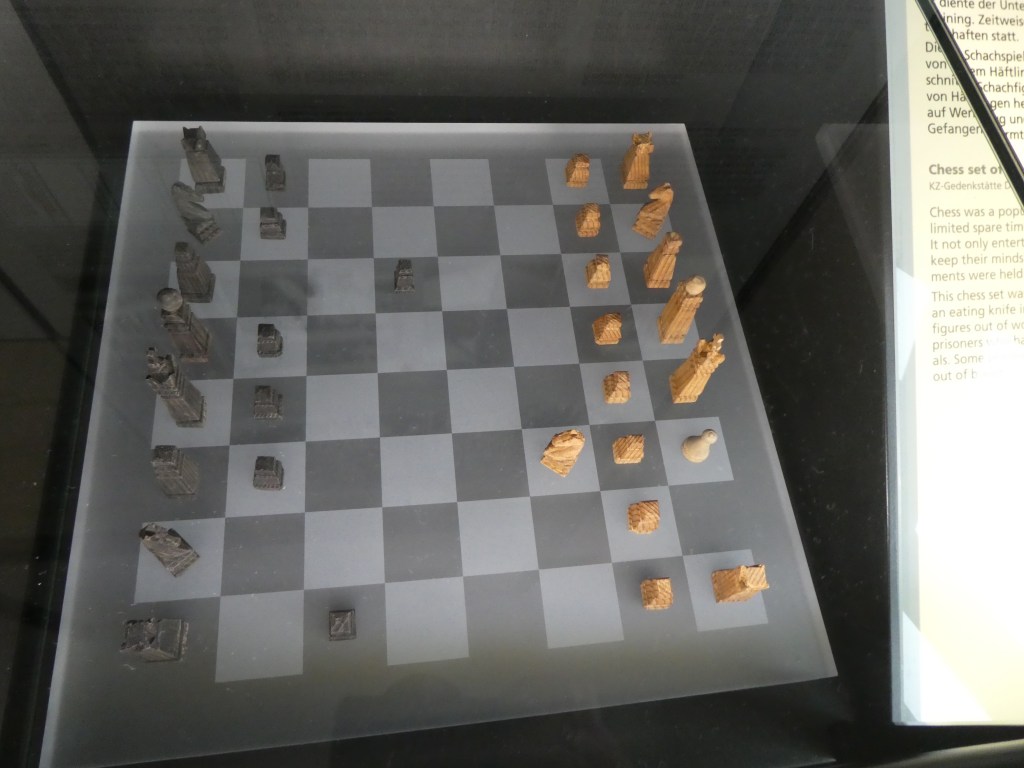
I was struck by this 1933 hand-made chess set, carved with whatever silverware a prisoner could find:
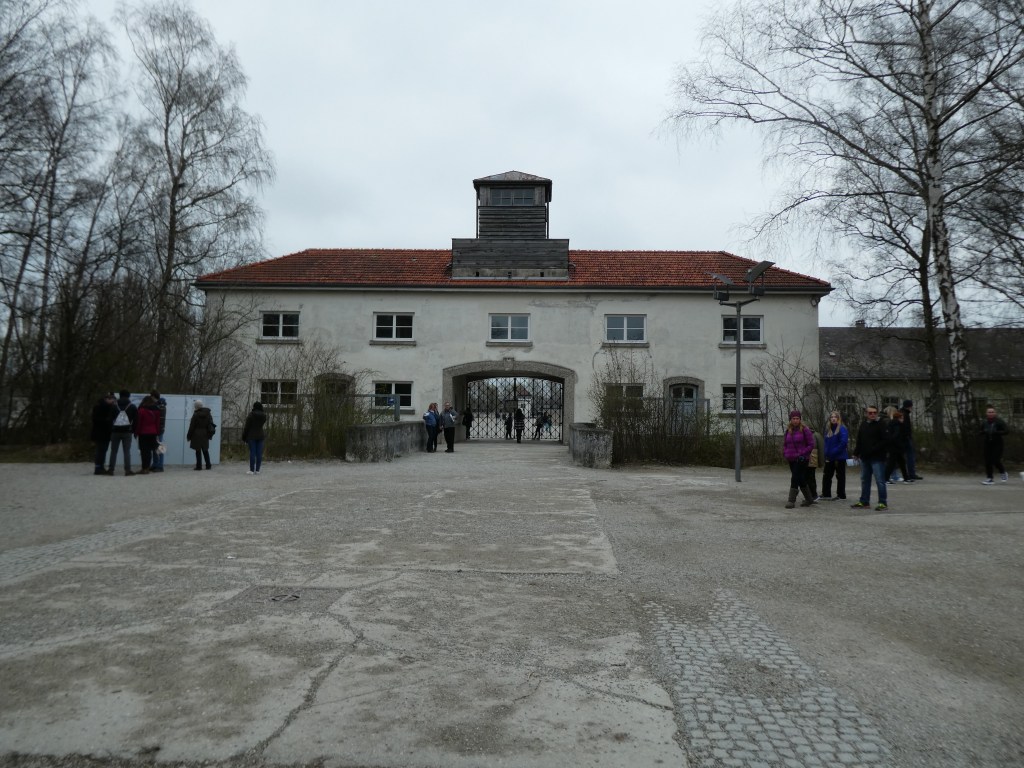
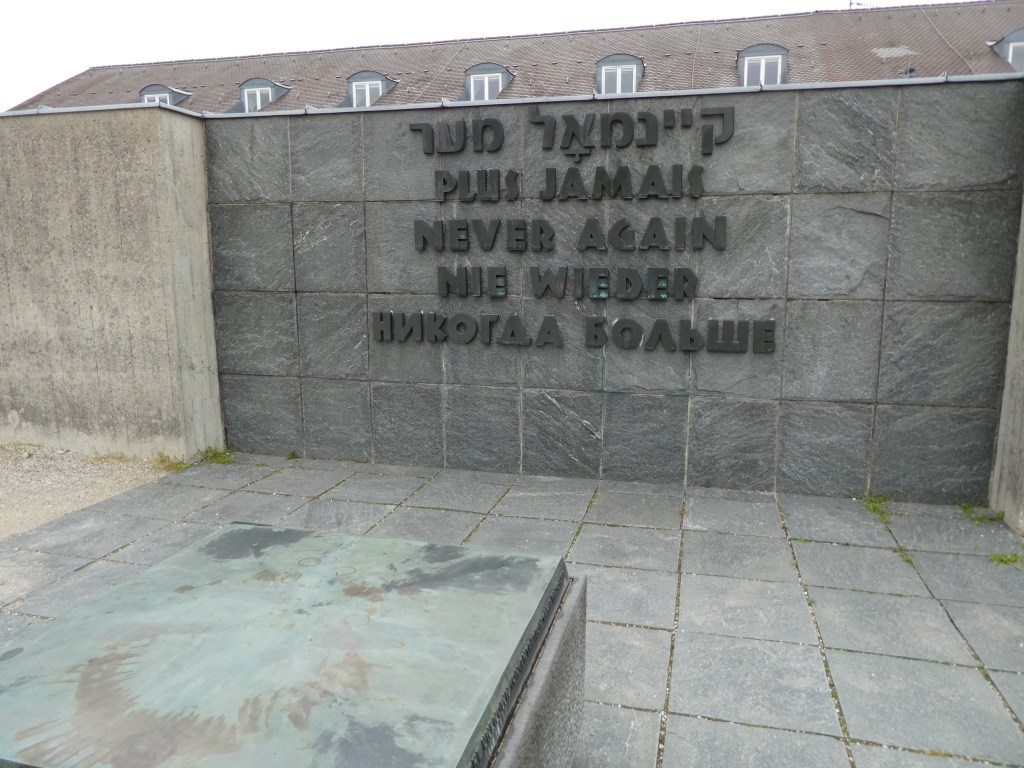
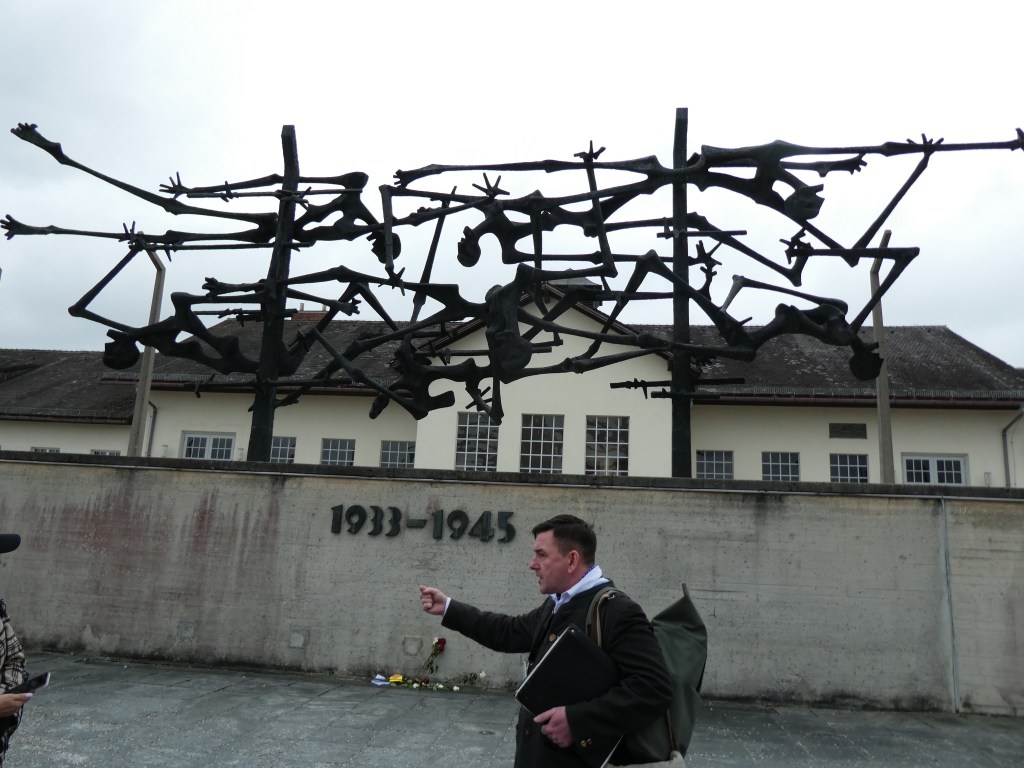
The sadness I felt – standing in the huge open courtyard of Dachau – is the only tribute I can pay to the horror of it all. I come to see it for myself. These are very difficult places to visit and it’s the best I can do to make sure it’s clear that I will never forget:


Thank you for the write up and Munich’s contradictions. We did not experience Taff in 2015 while in Munich but did experience your other activities. It is also cold in central VA w/ temperatures in the high 30’s. Another year of covering up Easter frocks w/ winter coats.
LikeLike
It’s certainly a great city to visit! We’ve had a great time – now if that weather would just warm up!
LikeLike
In response to Taff’s suggestion that Naziism was the result of bad economic times after WWI:
A reason is not an excuse.
LikeLike
Well said, Stan! My mind spins looking at all of this stuff. It just feels so personal – FFS how can being Jewish ignite such hate.
LikeLike