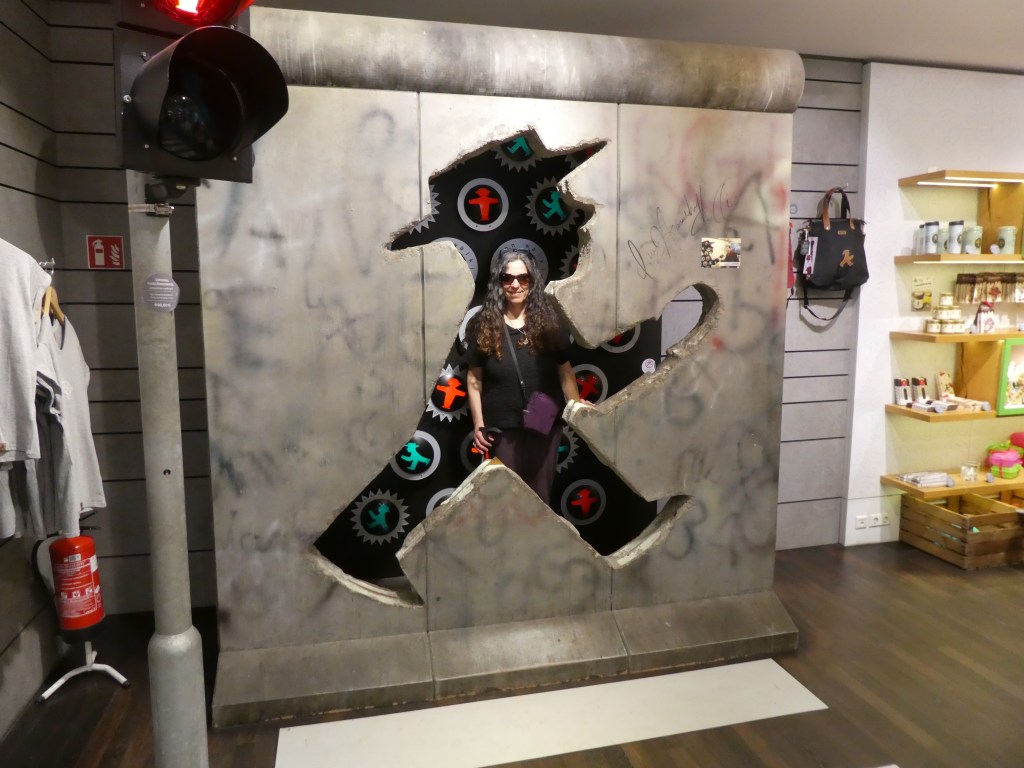
It pains me to admit this but only now…when we’ve been to Stuttgart, Munich, Nuremberg, Erfurt, Dresden and Berlin…have we finally figured out how to cross the street in Germany. Below is Ron, having a little mid-trip training session on what the green walk sign looks like.
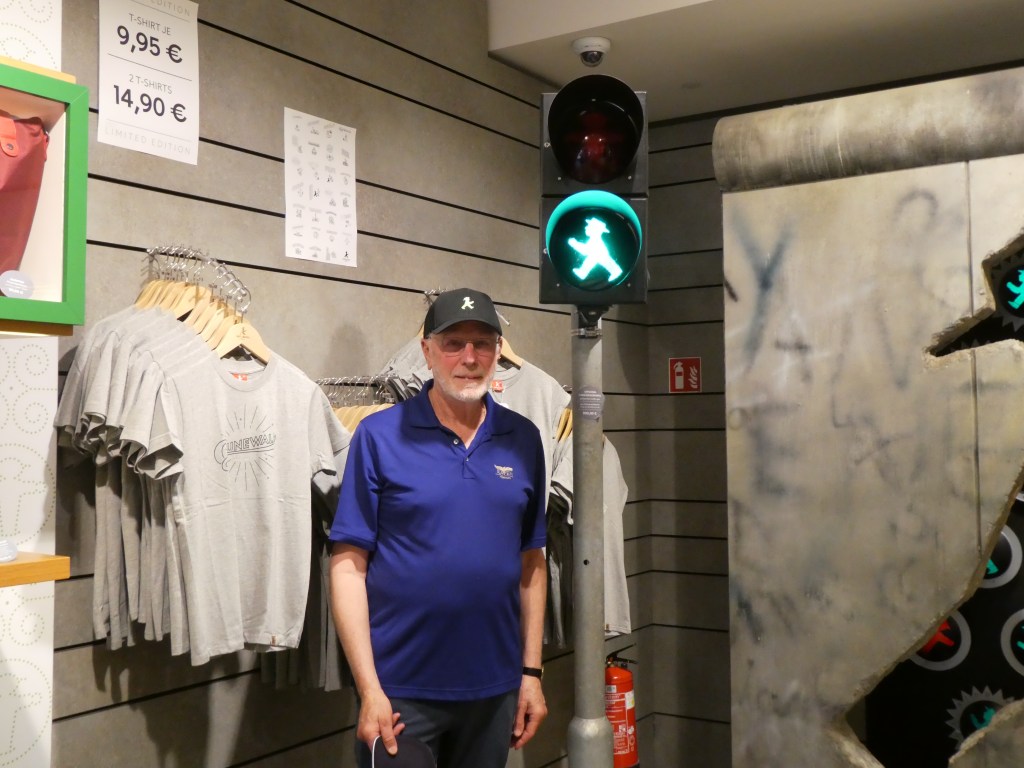
But below here is Ron, showing off his new knowledge. See, we’ve been perplexed at how to trigger the walk sign like we can in the US. We’ve spent countless minutes/hours, pressing the yellow button below in various cities and waiting to cross. But it’s always seemed like we have not actually signaled our presence.
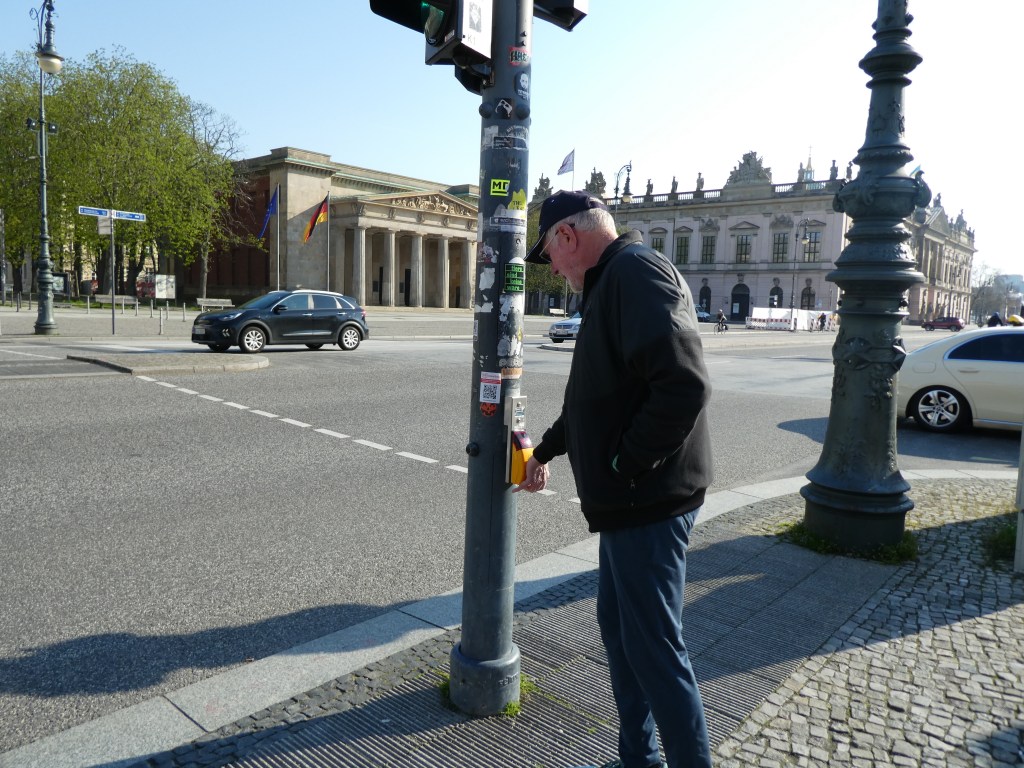
It wasn’t until we arrived in Berlin – and paid over $200 for a private Introduction to Berlin tour – that Dr. Robert Sommer (PhD in history – always stressful for me to try to hide that I’m a history moron from someone who defended a dissertation) casually stuck his hand up and into the underside of the yellow walk button. I was oblivious but Ron who is, as we know, quite keen on street crossing politics and flaunting the legal crossing requirements, was on to Dr. Sommer like a hawk.
And so…voila!…after 18 days in Germany, we are set to cross the street! And there’s no better city to have this knowledge handy – for they will surely mow us down in Berlin if the opportunity arises! Even the bikes are a hazard.
We learned other things from Robert as well. Although we had asked Robert to give us WWII history information, and he did, we were both more fascinated by Robert’s personal life. He was a 15-year-old when the Berlin Wall came down and so he lived the first part of his life under East German rules and cultures and then the rest of his life as part of the west. As a child, he was in the minority of kids who were allowed – by their parents – to watch the western TV that came through since the “Wall” could not block TV signals. He watched The Dukes of Hazard, Magnum PI, Knot’s Landing and more. The rule in his house, though, was that the TV had to be silenced (no mute button on a remote so he had to walk over to TV) during the commercials. Robert’s parents worried that the catchy jingles that accompany ads would stick in Robert’s head, he’d hum one in public, and the whole family would get in trouble with the Stasi.
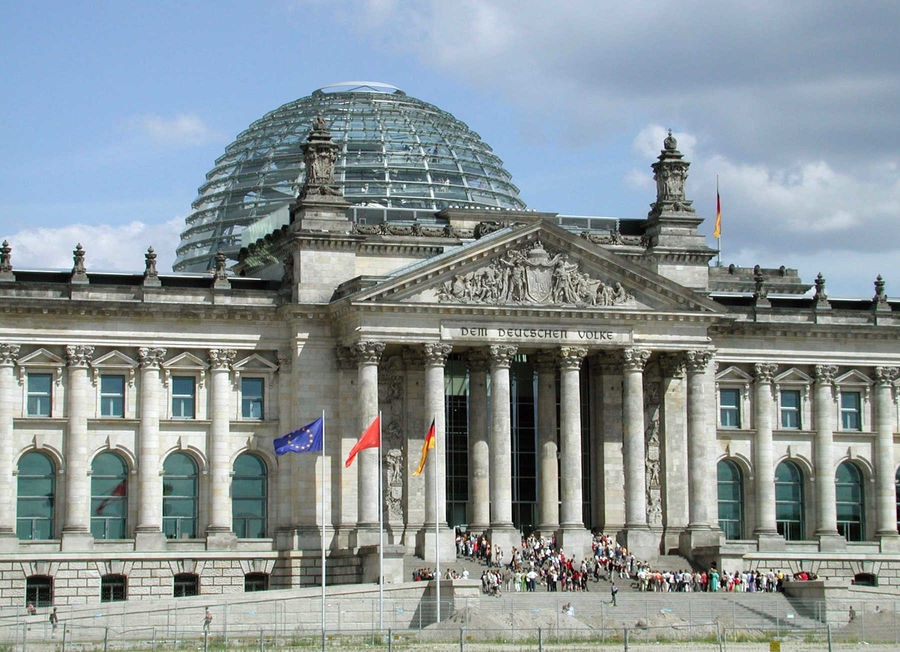
As we walked around, Robert pointed out some of the key Berlin buildings. This is the Reichstag building, seat of German parliament, built in 1884 and heavily damaged in WWII (pic not mine)
But right near the Reichstag are these other government buildings, pictured below. Robert said they were specifically designed to symbolize transparency and accountability. If you look back up at the rebuilt Reichstag picture, notice that the dome is transparent – it was not there on the original building. Inside the dome, you can look down at the parliament in action – the ultimate nod to democracy. Here’s a couple of shots of transparent buildings from right next to the Reichstag:
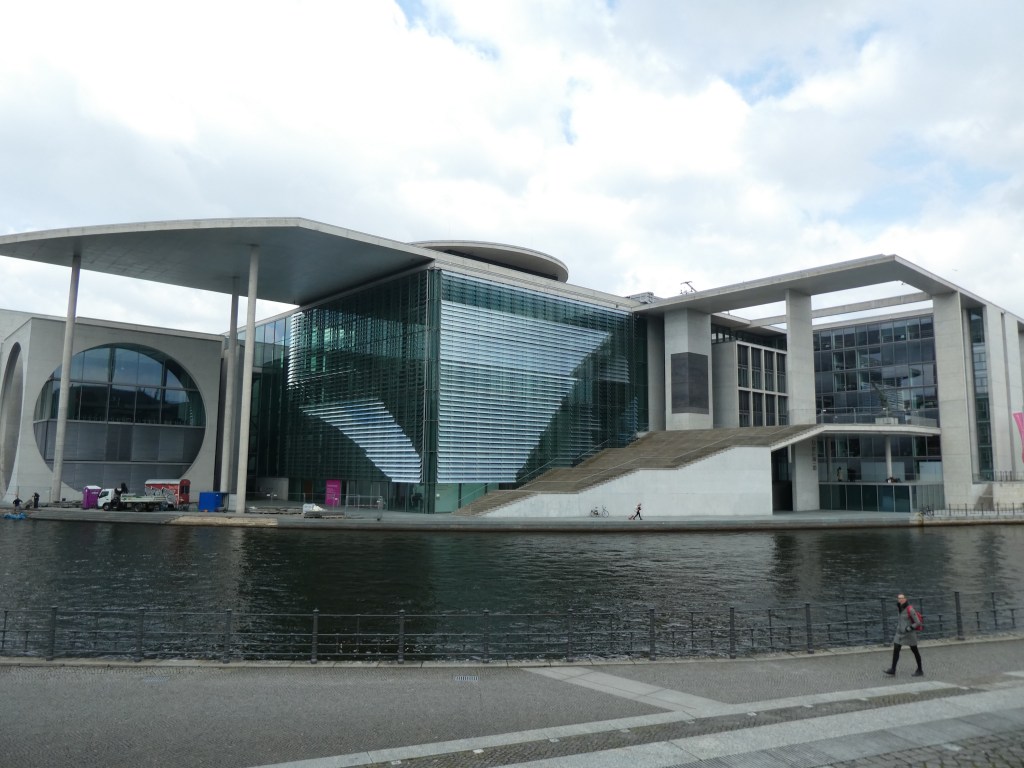
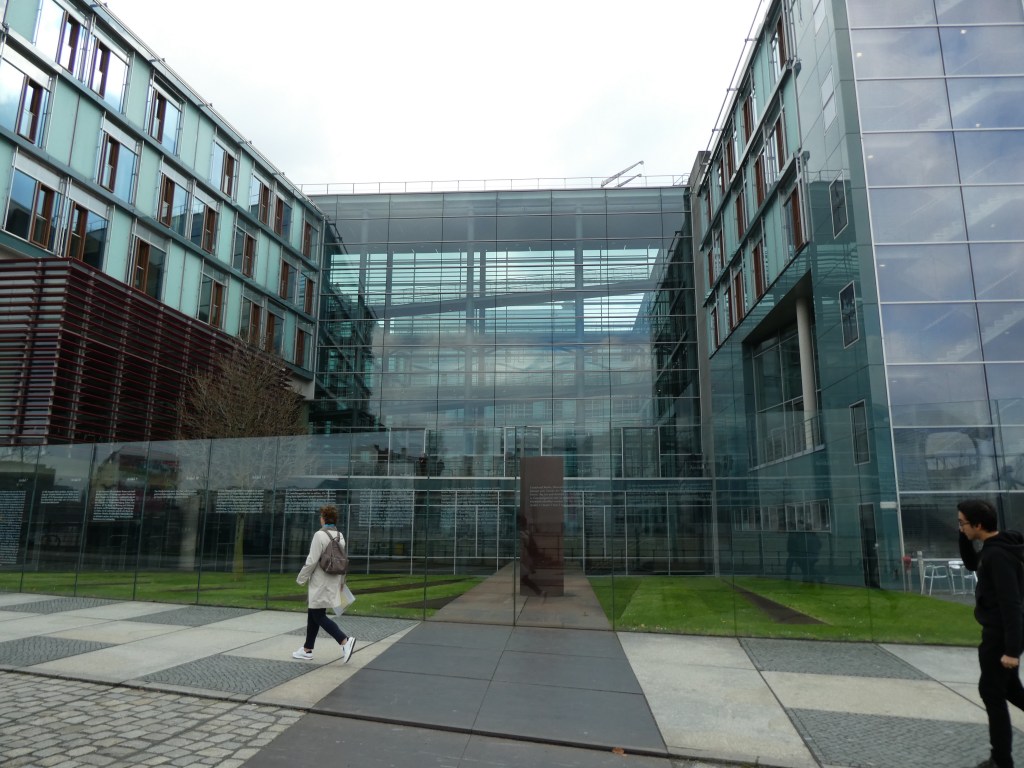
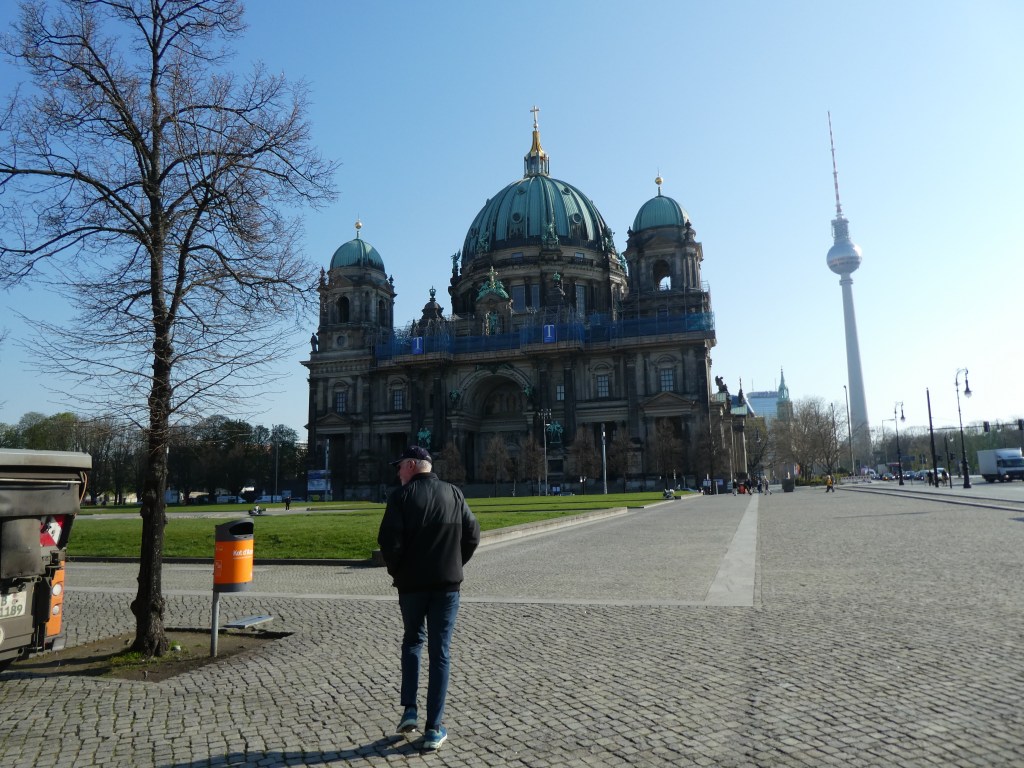
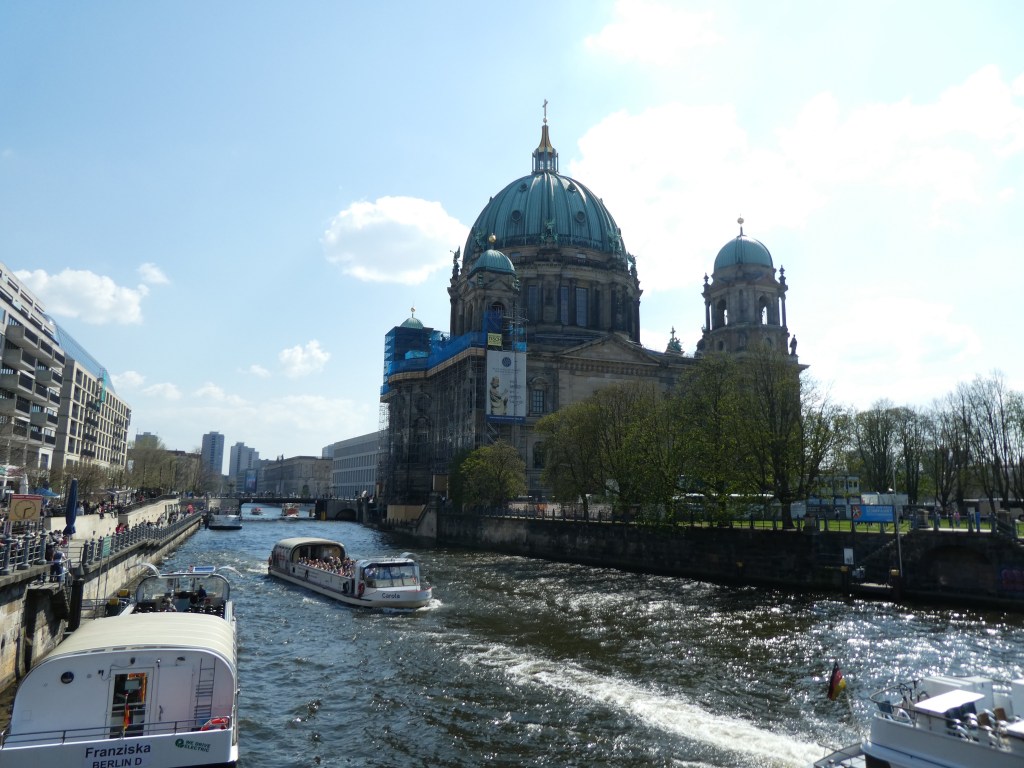
Having parted ways with Robert, we spent a long day yesterday on our own, walking 12 miles over the streets of Berlin. It’s a really vibrant and fun city. It bears the scars of both the WWII bombings and the pre-unification years and yet still manages to have some amazing architecture. I liked this picture, with a rebuilt Berlin Cathedral and the Berlin tower. The tower was built in the 1960s, both as a symbol of the Communist government and as a radio tower:
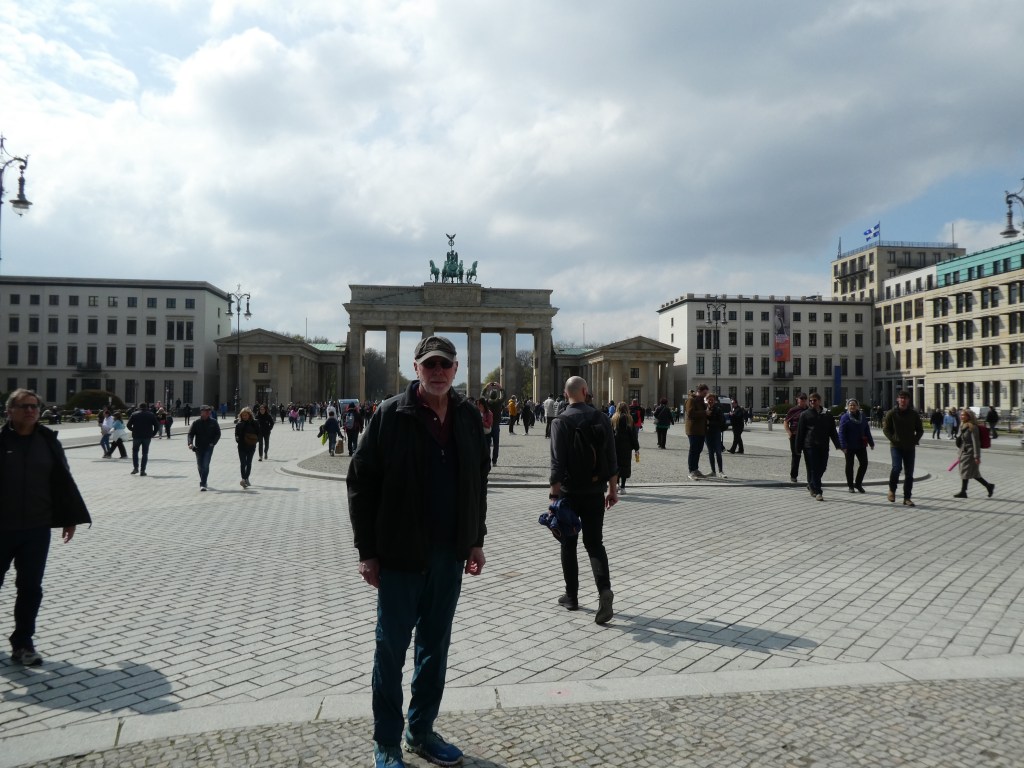
Here’s Ron at the Brandenburg Gate:
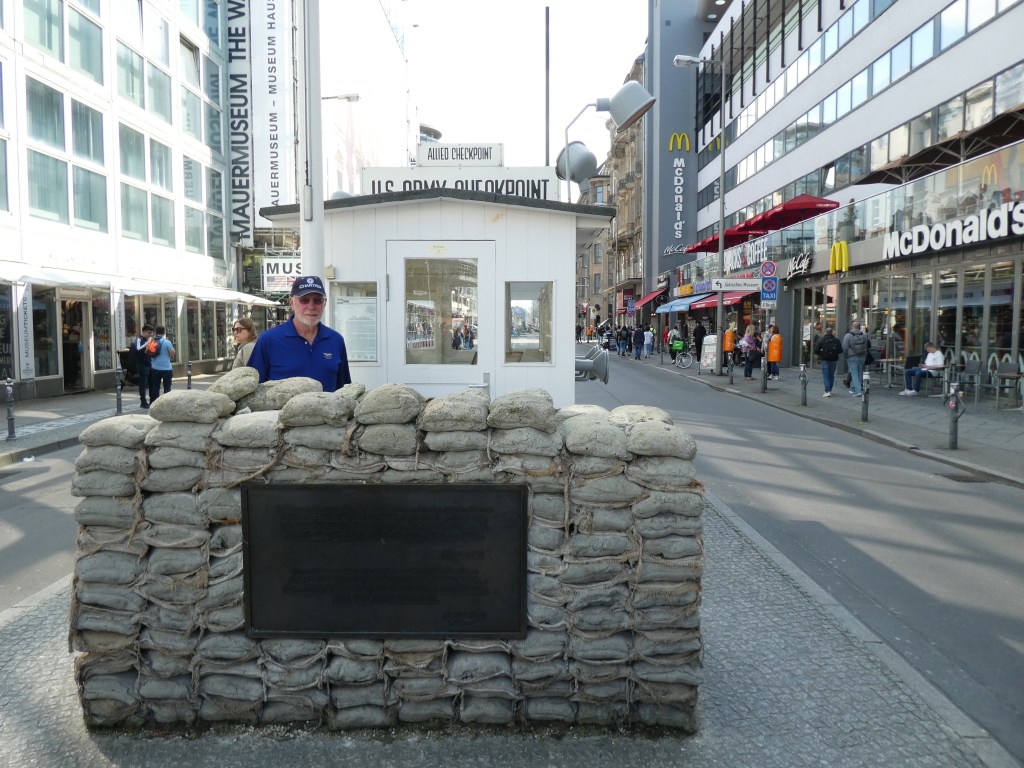
And here he is at the old (rebuilt) Checkpoint Charlie – between East Berlin and West Berlin:
And then here’s me, with a piece of the Berlin Wall behind me:
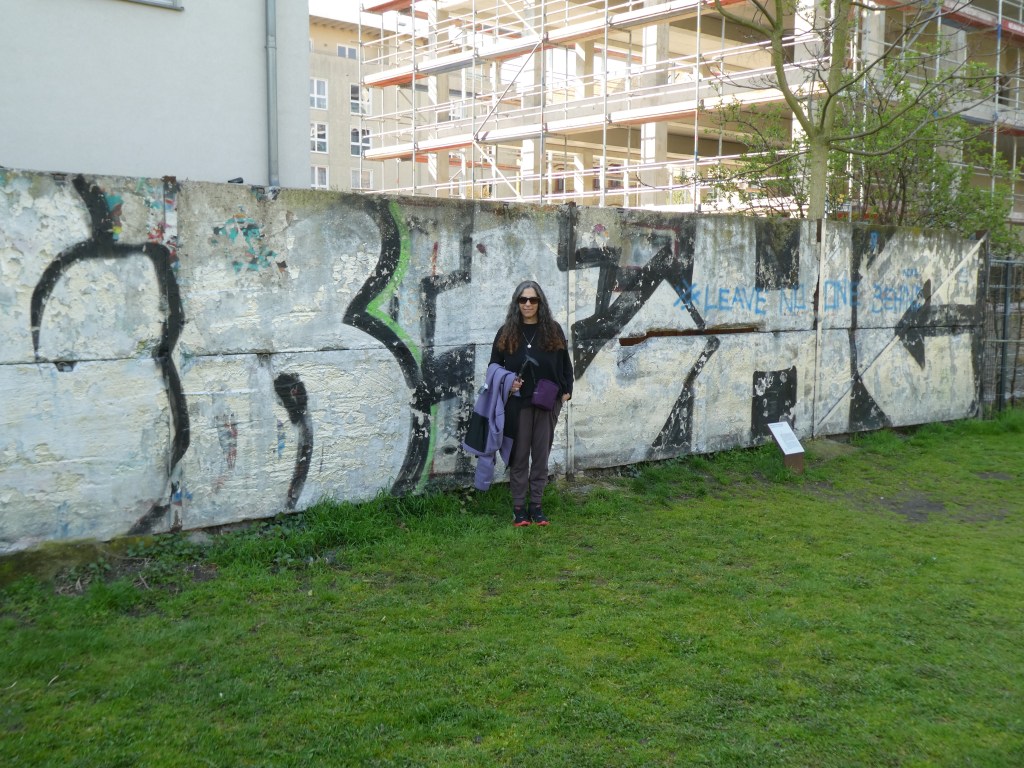
Walls are a really dominant theme here. And they leave me confused. Ron and I are continuously asking each other – in between tense conversations about whether or not we’re lost and why in the world Ron wants to cross the street – which side of the old divided Berlin we’re in.
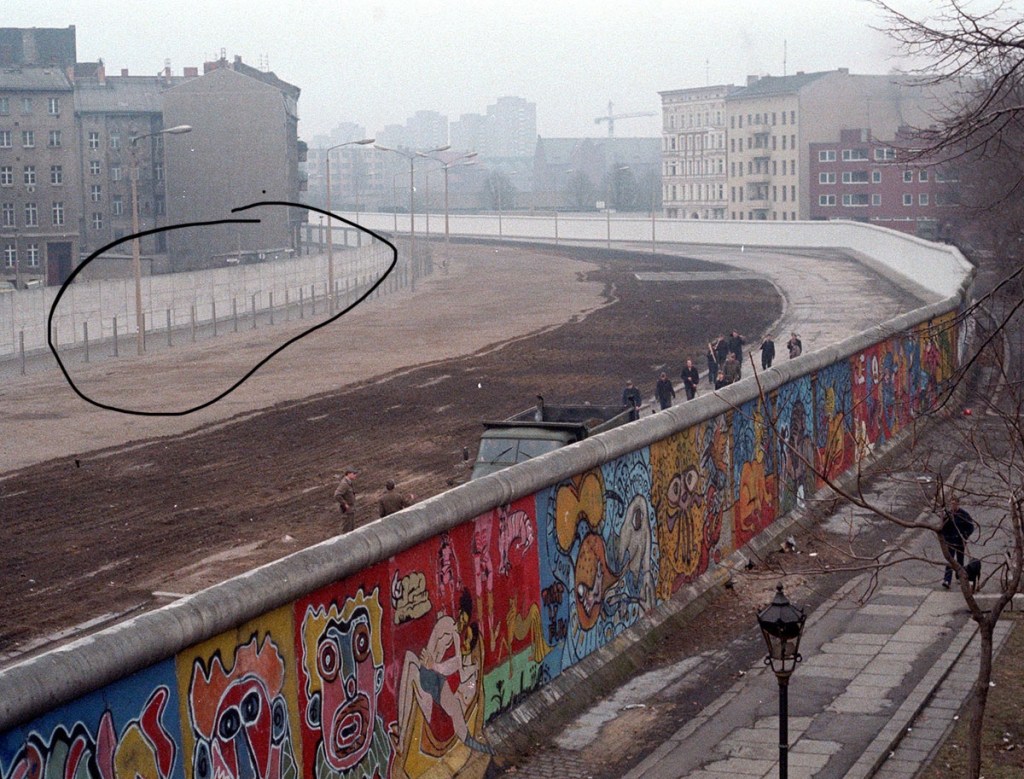
This schematic might help you, although it’s not going to alleviate our confusion as we walk around. In the photo of me above, I am standing right in the area I’ve circled in the photo below. I’m standing at the edge of East Berlin, looking into West Berlin: (pic not mine)
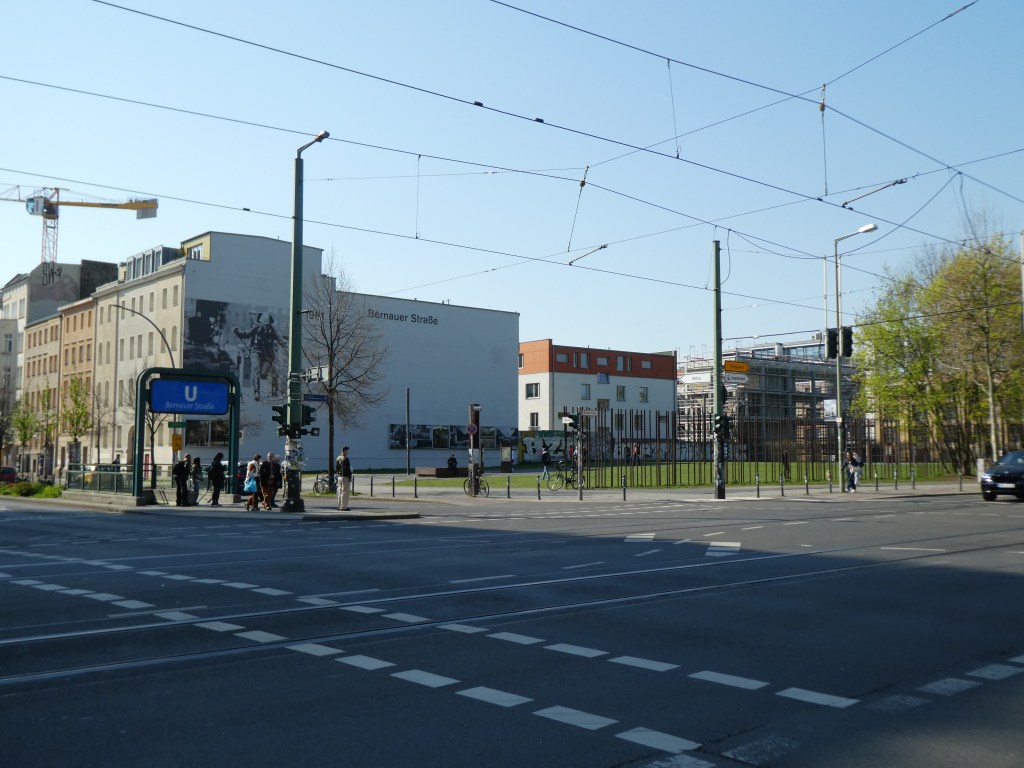
Here’s one more. This is the Bernauer Strasse U-Bahn station. The station was in the exact way of the line between East and West and so, in 1961 when the Wall was built, the station was closed down and became a Ghost Station – trains passed through but could not stop. Here’s how they addressed this, with the station bricked off (pic not mine)
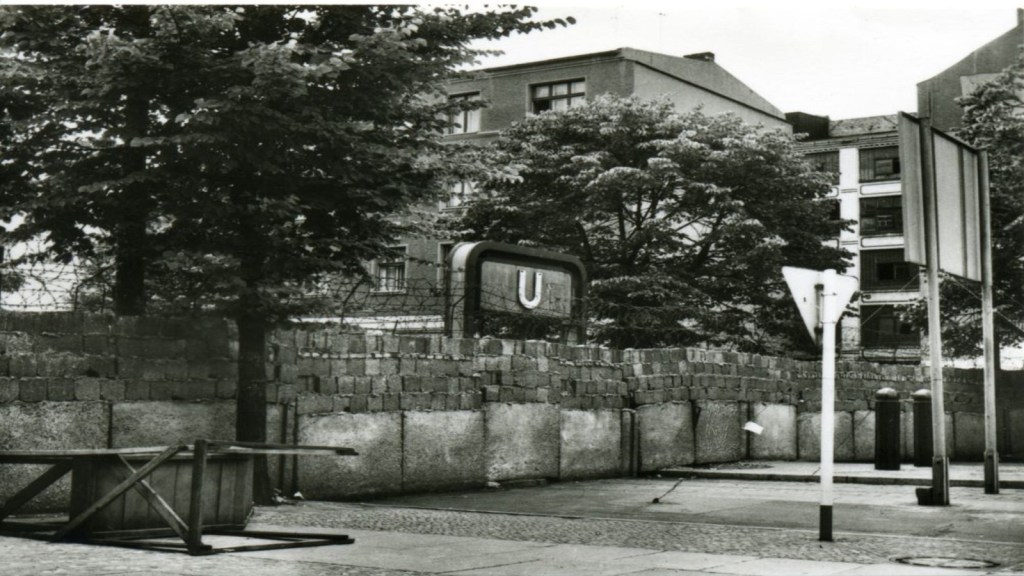
And here is the Bernauer station now – I’m standing in West Berlin, looking at the station, with East Berlin behind past the U sign for the station.
We ended our day at the Berlin Story Bunker, which does an incredibly good job of detailing the rise and fall of Hitler and the Nazis. We both felt it was the best summary we’ve come across yet…in all of our travels. It’s worth seeking out in Berlin.
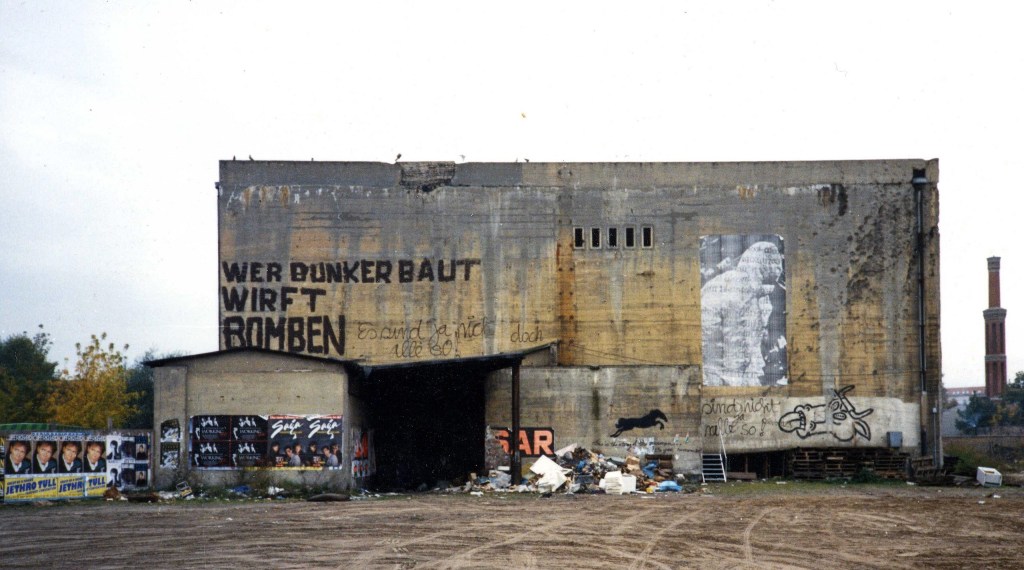
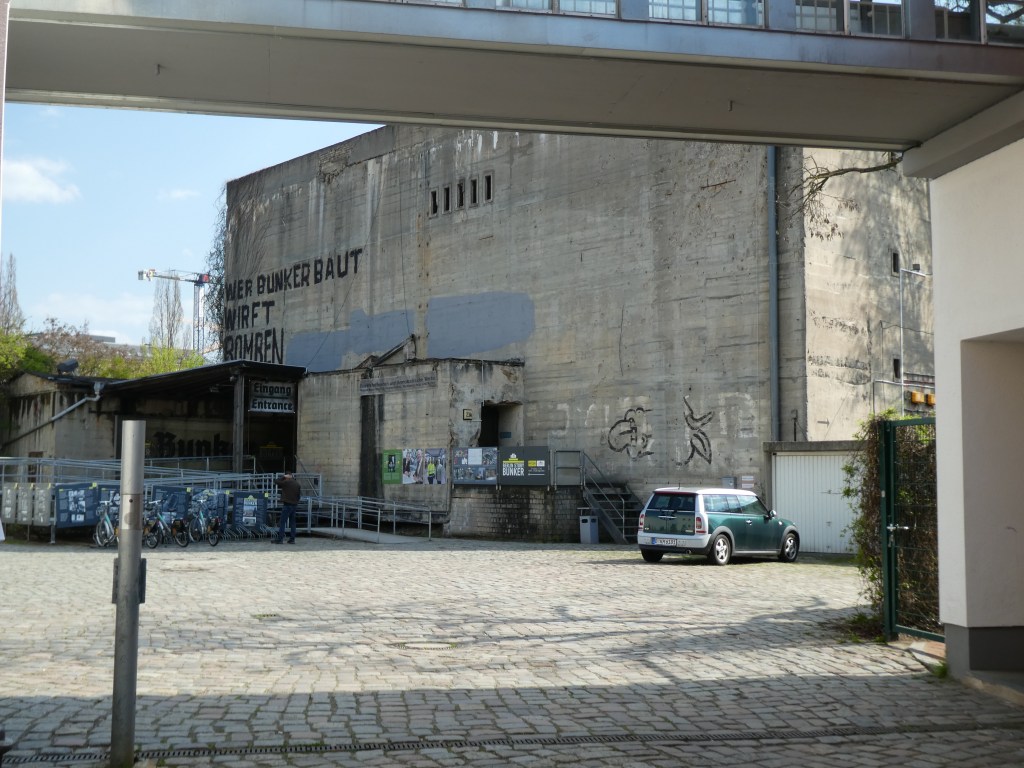
The entire exhibit is contained in an old WWII bunker. The bunker was built in 1943, five stories and room for 3500 people. By the end of the war, there were 12,000 people at a time in there. First pic is not mine – the bunker before “clean up”. Second pic is mine – the bunker now:
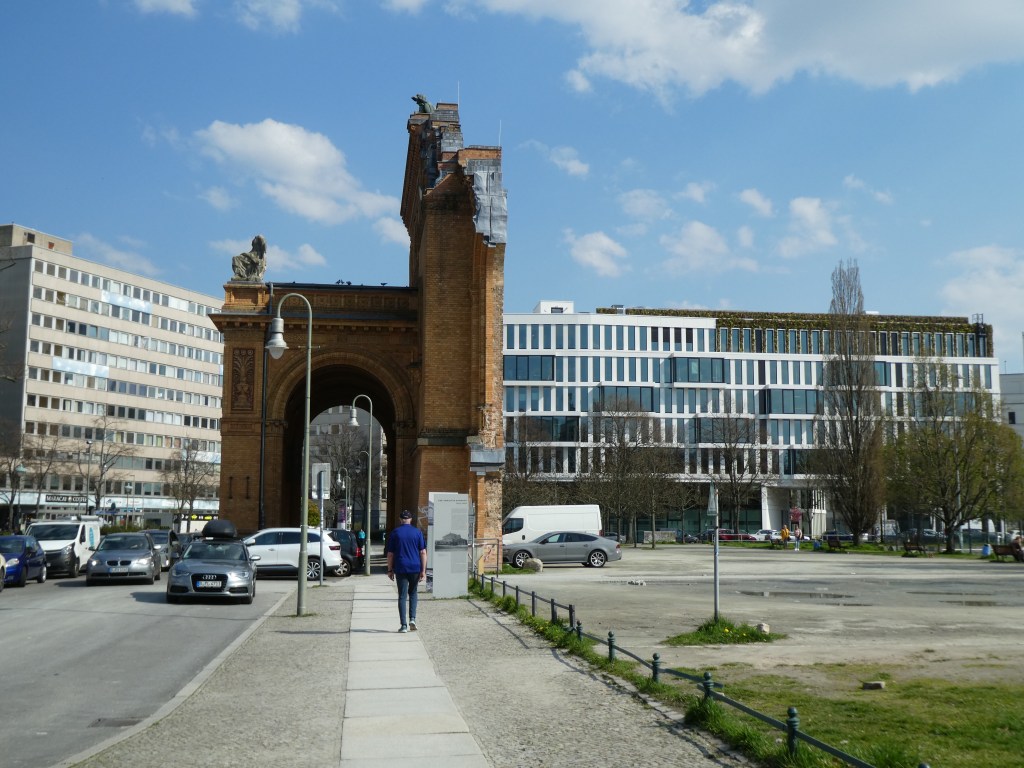
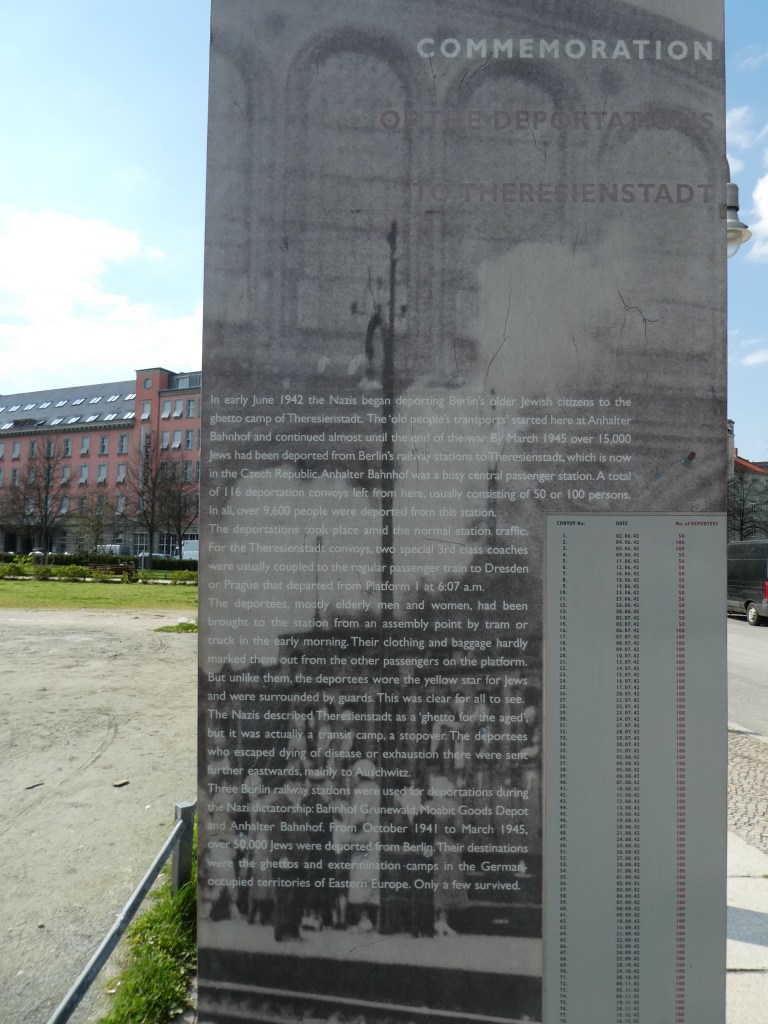
As always, we find the best way to discover a city is to walk it, with the promise of fun discoveries en route. Outside the Berlin Story Bunker, we found the remains of the Anhalter train station, which was used for nearly-daily deportations to Theresienstadt between 1941 and 1945:
I’m going to include this picture below for you, even though it’s not that clear. It’s a tally of each person deported from Anhalter – day by day by day – over the years. It made me wonder and worry and reflect on what the German citizens saw and chose not to stop. Our stop at Anhalter made me come back to the hotel and look up what percentage of Germans supported Hitler and, while my research provided a range of statistics, all of the numbers defy my emotional and logical thought-processing skills. Both Ron and I have struggled with coming face to face with the history of this hatred. As we walked off from the train station, I told Ron how additionally bereft I felt as a Jewish person – that such extraordinary violence and furor could be directed at me because of this tiny fact about myself. I’m not really religious at all – but there’s certainly something about witnessing these sites of murder and persecution that solidifies my Jewish connection and drives me to tell you I am from a Jewish family.
Okay, enough, I say. I process this: Berlin has emerged from its monstrous history as an interesting city, full of cafes, parks, and massive museums. Here are a few pictures from our wanderings:
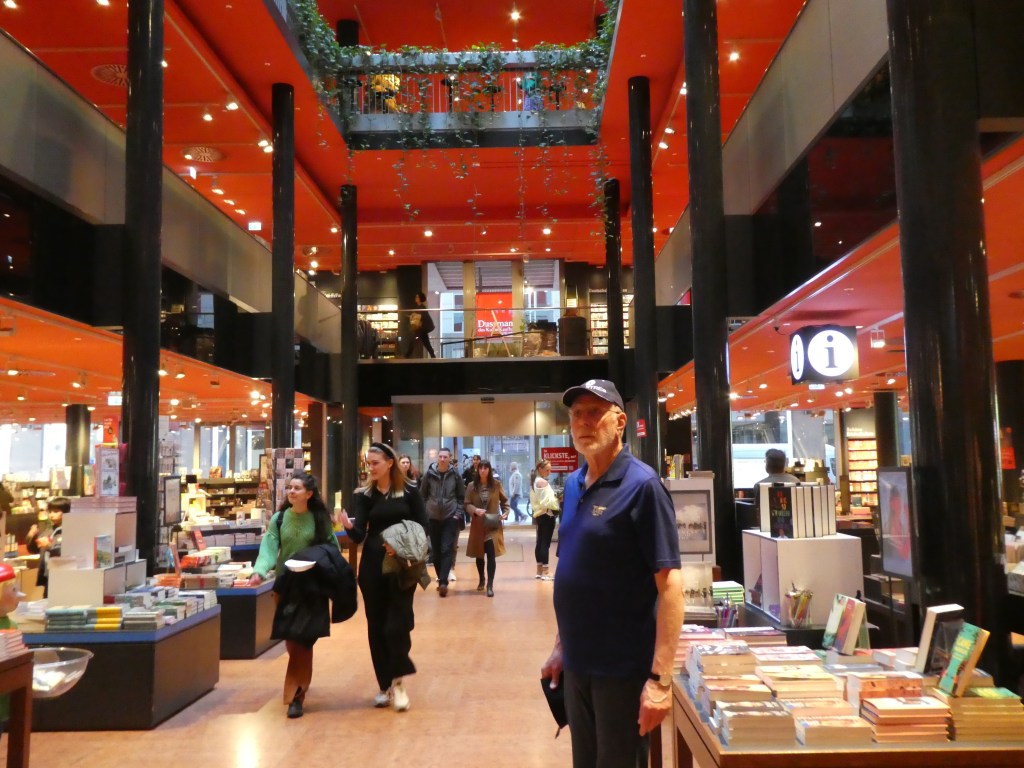
This is an incredible bookstore right near our hotel:
Here’s the Spree River with the Berlin Cathedral:
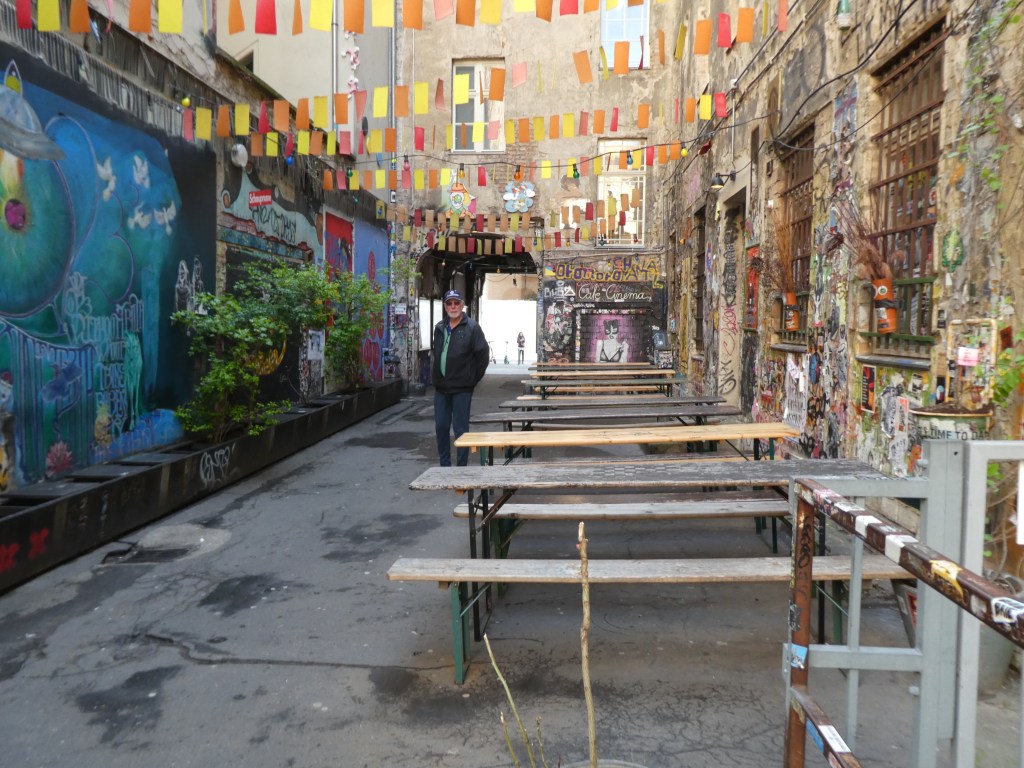
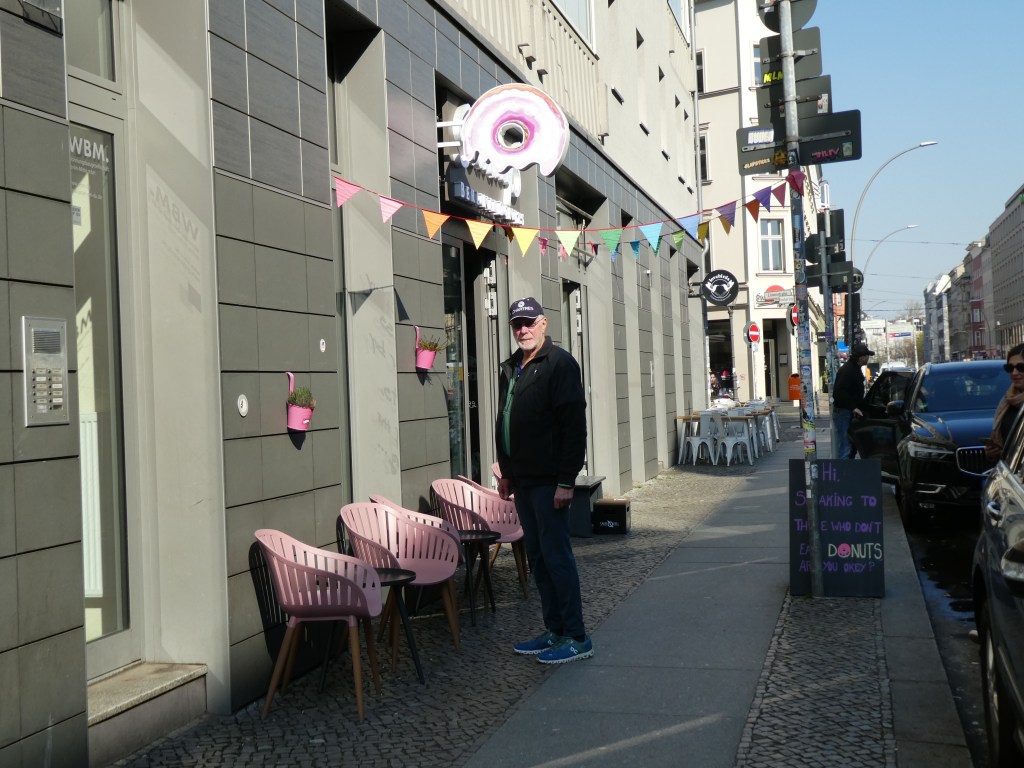
And last one – for the Ron fans – he showed amazing restraint here and did not buy a donut:
 Travels with Valerie
After walking twelve miles I would have eaten two donuts. Pass the donuts….
LikeLike
We were so wiped out…because there was the 12 miles and there were the two sites we toured – both underground! Long day.
LikeLike
My sister and I both loved Berlin. The day we arrived, we banished possible jet lag by spending the rest of the day outside at the amazing zoo and small but very nice shopping center, which surprisingly share glass walls along one side. We spent 10 days in Berlin with a day trip to Potsdam and a walk across the Glienicke Bridge. Yes, we had seen the movie “Bridge of Spies”. Besides the obvious monuments and museums, I found myself wondering several times if I ever would have been brave enough or desperate enough to attempt to climb the Wall from East to West. I remember quite a bit about the wall and the airlift. It just made it so real to be there. Where are you headed now?
LikeLiked by 1 person
PS I sure wish there was a way to edit my replies to you!!!🙄
LikeLike
Live and learn! You inspired me to look and I CAN EDIT comments! So I fixed the typo that I assume was bugging you:) Let me know if you want a further edit:) And, yes, it’s just incredible to think about this whole East/West Berlin thing. What a crazy setup to live through. We’re headed to the zoo today!!!! And then Amsterdam tomorrow.
LikeLike
I sure hope your weather improves. Amsterdam is such a fun city! Thanks for the info and yes, that was the edit. I’m ashamed to admit I am a former English teacher! Live and learn is right and I will absolutely let you know although I bet you will catch them before I do. I’m disappointed Ron didn’t buy you that car before you leave Germany. Enjoy the Berlin zoo and if you have time, do go into that shopping center if for no other reason, to see the zoo from the other side. For whatever reason, I found that idea captivating. There is a very nice aquarium on the site, too. I’m looking forward to your reports. The flowers……..ah…….
LikeLike
Well Ron checked the forecast and Amsterdam is going to be cold! High of about 50. At least it should be warm…maybe hot????…when I head back over in 3 weeks!! We did love the zoo and – on your advice – popped in to the shopping center – Bikini Berlin? Or something like that. Loved the zoo – so nice!
LikeLike
That’s a bummer but we’re expecting a snowstorm dropping possibly 12” on us tomorrow! So in my mind, you are ahead of the game. Especially since you’re in Amsterdam and I’m in Colorado!
LikeLike
Has the weather improved? Sure wish we could have made it to Berlin. Sigh. Next time!
LikeLike
Well we got ONE day of nice weather so far. I wore a short sleeve shirt and took my jacket off. It was divine:)
LikeLike
Ah, you found the massive “Dussmann das KulturKaufhaus” bookstore on Friedrichstrasse! This bookstore is a big favourite among expats who live in the capital city: decent English-language selection and its hours of operation during the week.
As for crossing the street in Germany “against the light”: there’s nothing like the experience in the evening when there are zero vehicles against your pedestrian light, thinking the “unthinkable” to cross on a red, only to find an Oma (grandma) staring at you with an evil eye and tapping her walking stick. Without a word spoken, this is exhibit A for “don’t you even think about it.” Hah! (Ahem)
LikeLike
It didn’t take us long to see that the Red Light for no crossing is serious business in Germany…we were scared straight right away!
LikeLiked by 1 person