We stopped in a little village called Panagyurishte en route to Plovdiv and Odysseys Unlimited had arranged for us to spend a few hours at a little inn – learning how to make the Bulgarian staple cheese pie called a Banitsa.
It’s basically like a Greek tiropita – layers of bread and a feta-type cheese. It was all well and good to make our own tiropita but the inn held some unanticipated bonus fun moments.
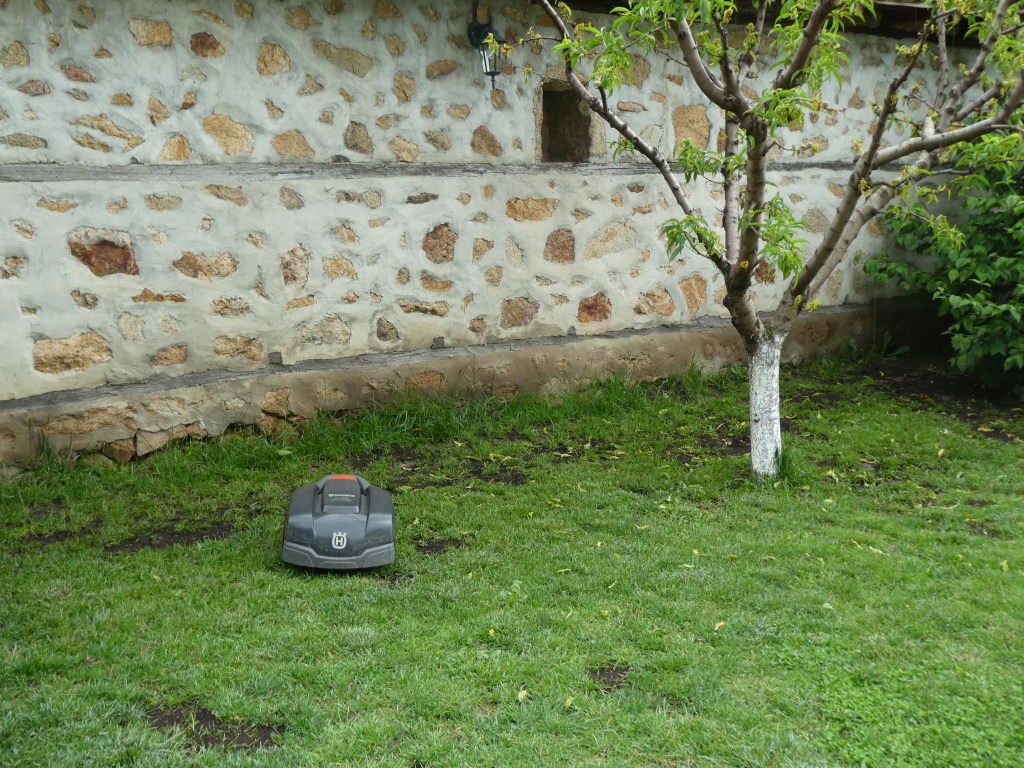
First, we all got to be mesmerized by this lawnmower version of a Roomba:
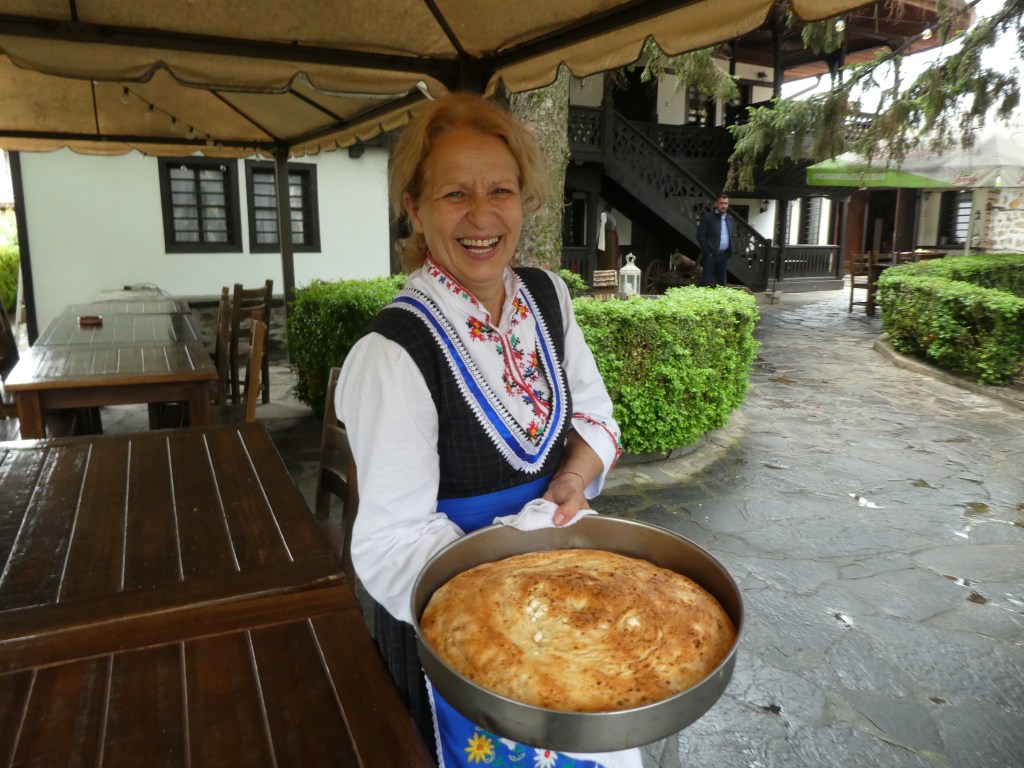
And then we did get to make this lovely banitsa:
But the real highlight occurred when I stepped into the toilet for a moment, with a specific instruction to Grace to stand right outside the door and make sure no one came into that unlockable little cubicle, which seemed a very clear directive – with no room for interpretation.
And yet when I came out – less than 90 seconds later – Grace had abandoned her post outside the potty and was instead across the room with two other members of our tour, and they were all outfitting themselves in typical Bulgarian garb.
Those of you who know Grace well are surely as confused as I am as to how two total strangers convinced her to take part in the costuming and then head outside to greet the rest of our tour members and guides.
Yurdana is the kind of guide I really like. She’s only with us through Bulgaria – in Romania, Irene will take over the main role. But for now, I’m learning a ton from Yurdana. She does a great job of giving information without overwhelming me and she gives lots of more recent social/political information.
Bulgaria became a Communist country in 1946. The government voluntarily resigned when the Berlin Wall fell in 1989. From 1989 to about 2018 is considered the “transition” period here – as the country went from a planned economy to a market economy. Things really fell apart in 1996, when a bad grain harvest led to disclosure that the typical government grain reserves were completely insufficient, and that disclosure caused a bank to fail. The failure of that bank caused dozens of other banks to fail, the economy collapsed, and inflation jumped 300% in 90 days.
The only way that crisis was stopped was that the IMF stepped in with a currency stabilization program.
Yurdana says that the population was generally happy in the 43-year communist period. The 60% of the population at the bottom of the economic ladder had access to enough food – even if it was very simple food – and had access to educational avenues. People were allowed to own homes, car, possessions etc. But all businesses were considered publicly owned. The overriding feeling is that the regime was restrictive of political, religious, and economic freedoms, but provided security. Living standards actually deteriorated significantly after 1989, and Bulgaria is interesting for the dominant feeling that the memories of life under communism have not been “criminalized”, but instead contain some elements of nostalgia.
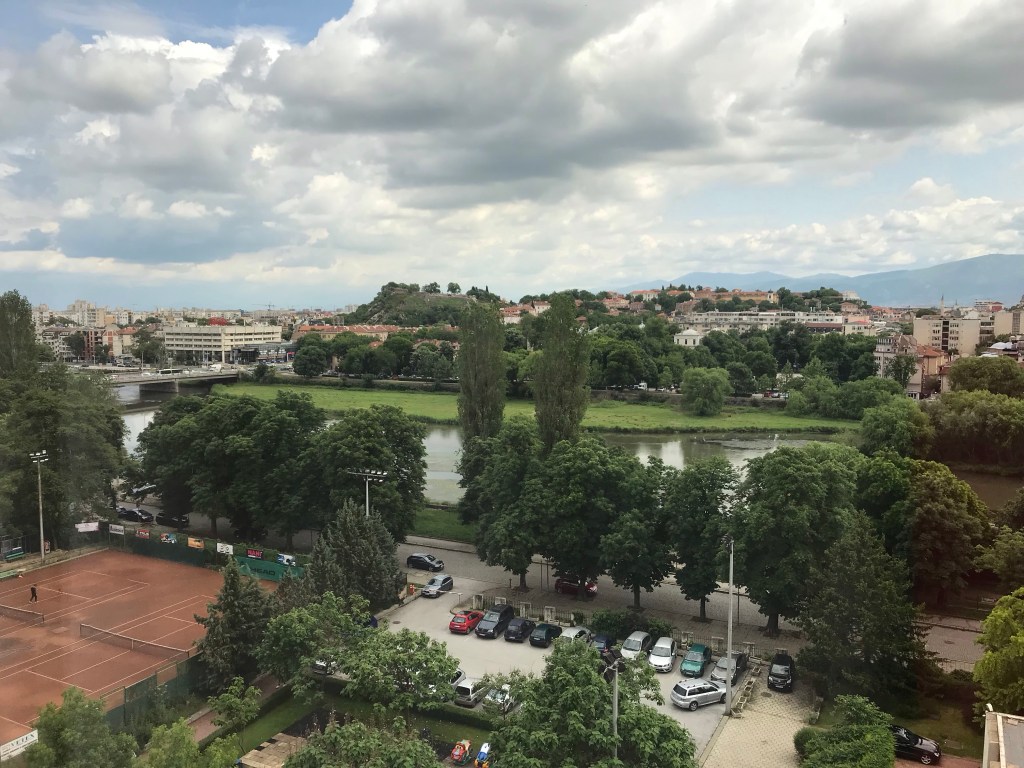
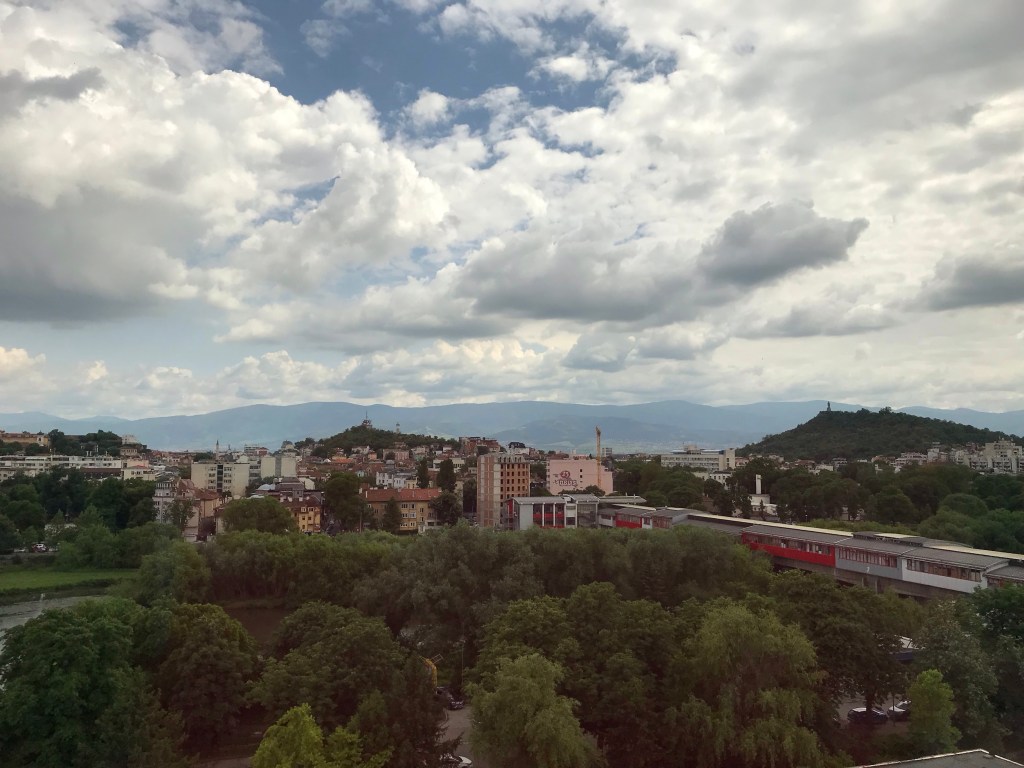
I’ll leave you with a couple of pictures of Plovdiv. We’ve just arrived – it’s the second largest city in Bulgaria, population 348,000. This is the view from our hotel room, with the Maritza River, which flows to Greece (only 125 miles to the south!) and Turkey and then down to the Aegean Sea.
 Travels with Valerie
Great post, Val, lots of interesting info. Seems like you are having a great time with your daughter, too. Enjoy! Stef
LikeLike
Thank you, Stef! It’s awesome here and I’m so happy I got to do this trip with Grace!!!! It’s been a LONG time in the works.
LikeLike
Great photo of Grace with Bulgarian ladies!
LikeLike
It was a fun stop at that inn! We all loved it.
LikeLike
I have a ‘thing’ about Eastern Europe which Stef clearly doesn’t share. She didn’t accompany me to Poland, and I sort of had to twist her arm into going to the Balkans next year. Her positive responses to your posts have, however, given me hope. Keep ’em coming!
Stan
LikeLike
I’m on it! There’s a lot to see here and I think that the best is yet to come as we have the Black Sea coming up and then Romania!!!!!
LikeLike
👍
LikeLike
Val: My Bulgarian across the alley neighbor wants to know the deets on the tour–price and so on. You can back channel me . . .
LikeLike