
Sometimes, when I’m traveling, I’m afforded a glimpse of clarity that I seldom get. I had one of those moments today – an understanding of good and bad, gauging resilience and determination, and the confusing framework of our world falls temporarily into place.
How did I gain such insight? Basketball and the Grateful Dead.
Because, here I am, an American with only a limited historical foundation, riding a tour bus through Lithuania at a time of great peril for Lithuania, Ukraine, Latvia and more – countries facing the creeping resurgent shadow of the Soviet empire.
Our guide, Aida, is playing a video – The Other Dream Team – for us – which tells the story of the Lithuanian basketball team at the 1992 Barcelona Olympics, the first Olympiad after the break up of the Soviet Union. Lithuania has long had a strong basketball tradition – it is played in backyards, community squares, high schools. But when the Soviets took over in 1945, the Lithuanians had to play for the Soviet Union. For 36 years, Lithuanians propelled Soviet basketball teams to medal-winning basketball domination. At times, four of the five starting players were Lithuanian – in fact, they were all from Kaunas – Aida’s hometown.
But the times were changing – look at these pictures from August 23, 1989. This is the Baltic Chain of Freedom – a line of two million people, stretching 430 miles across Estonia, Latvia, and Lithuania to publicize their quest for freedom from the Soviets. On March 11, 1990, Lithuania was the first Soviet republic to declare its independence.
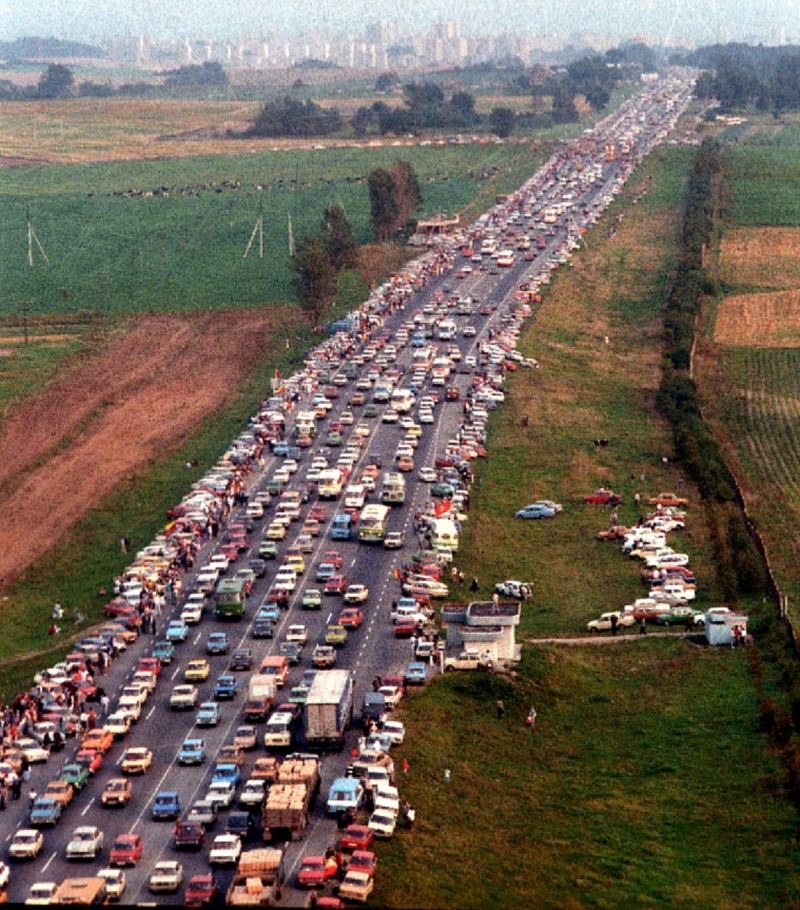
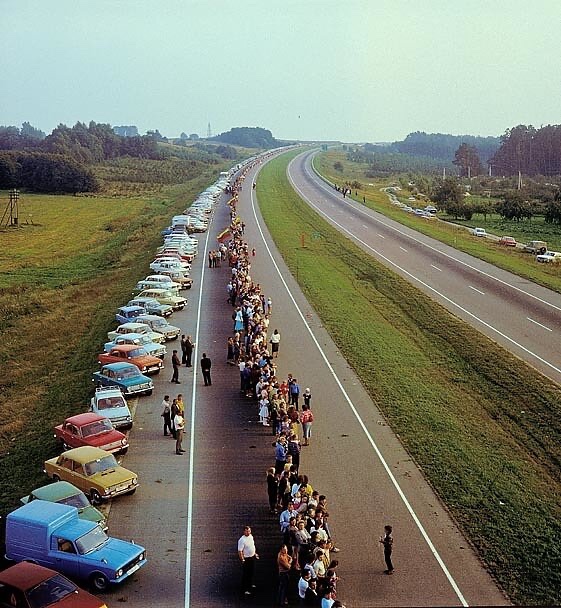
Where does the Grateful Dead come into this? Well, once Lithuania was free, those basketball stars wanted to play basketball at the 1992 Olympics – for Lithuania, not the Soviets. And while they had plenty of talent, they had no money.
To the rescue? The Grateful Dead. Jerry Garcia and Bob Weir and company decided to bankroll the team – under the guise of celebrating the general concept of freedom. Team fashion? Tie-dye, of course.
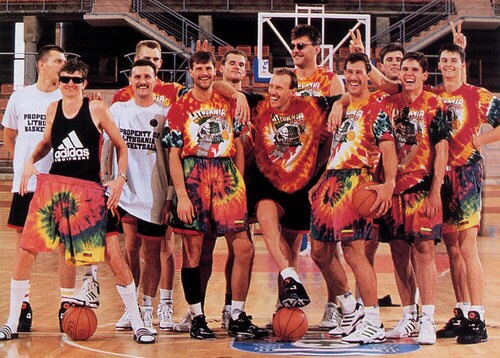
Maybe you all know that story already, with the Lithuanians winning the bronze medal. I had forgotten the little bit I knew – I recall just a commemorative tie-dye t-shirt rotating through my marital laundry back in law school.
But why does it resonate so much with me today? Well, because of this OAT bus I’m riding. Stories like that help me understand what’s at risk right now. Every Lithuanian we talk to – from the PhD tour guides, to the Lithuanian family Ron and I had an OAT-sponsored home-hosted dinner with last night – they’re worried. They’re worried that if Ukraine falls, next comes Lithuania, Latvia, Estonia and more. They’re worried that the beautiful cities they’ve built – the non-Soviet architecture, the freedom they’ve grown accustomed to, the family businesses, the nice cars, the top-tier medical care systems – it’s all at risk.
A day like today makes me immensely grateful for the perspective I am offered as I travel – an important chance to step out of the American egocentric muck – and focus on something else.
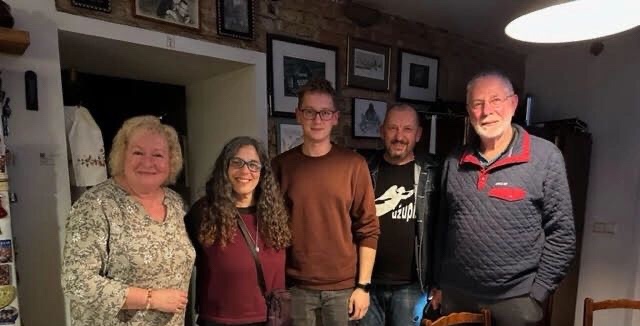
Where’s my travel update? As I mentioned above, we had dinner with university PhD-candidate history student Thomas and his parents. OAT sets up dinners with local families and pays for a cab to drive us out there and in we walk – dinner with total strangers. It sounds like exactly the kind of thing I would avoid but we went – and were served a fully vegetarian meal – vegetable soup and paella – and heard about their life under the Soviets and the strides they have made in living standards, educational options, and freedoms. It was a fantastic night. Here is our host family – Irene, Vikas, and Thomas:
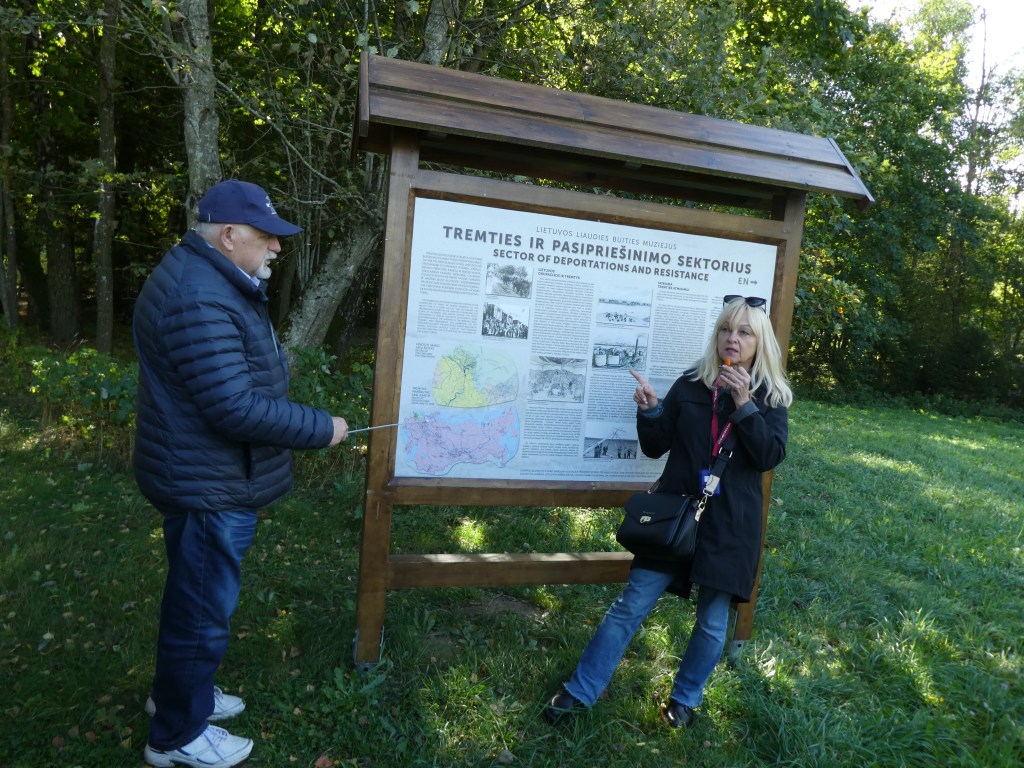
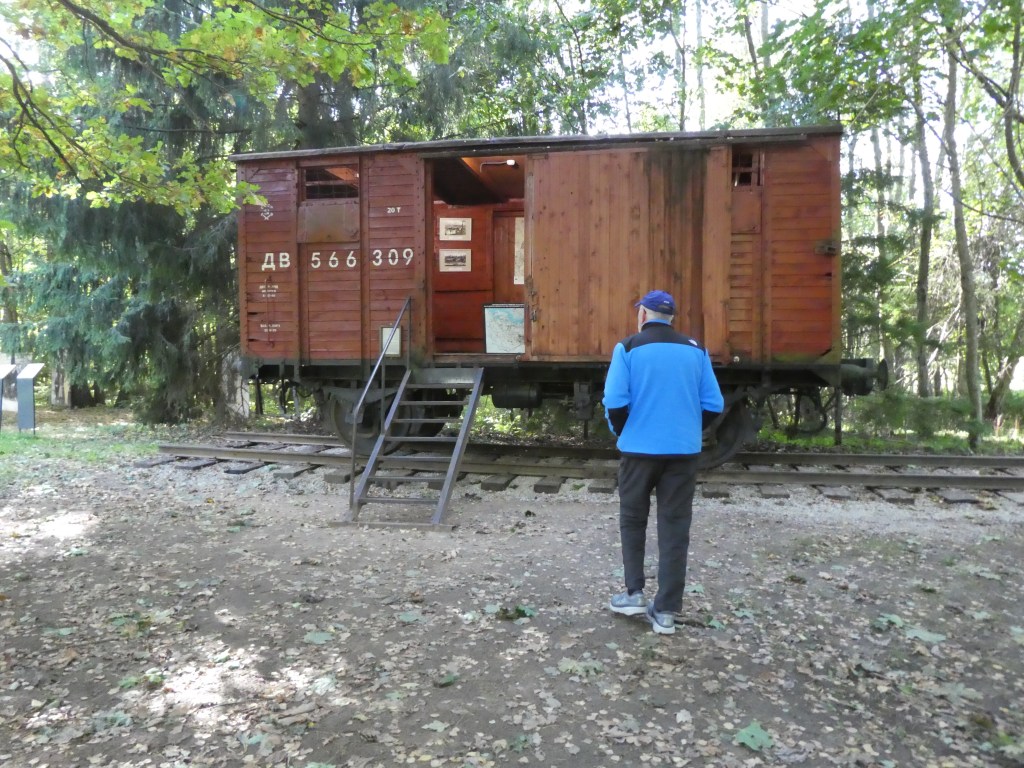
We also made a stop at an ethnographic museum and met local resident, Jonas Markauskas, whose family was banished to Siberia by the Soviets for 12 years. Here he is with Aida, showing us the map of his family’s journey and then, below, one of the train cars the Soviets used – 50 people in there for a 4000 mile ride:
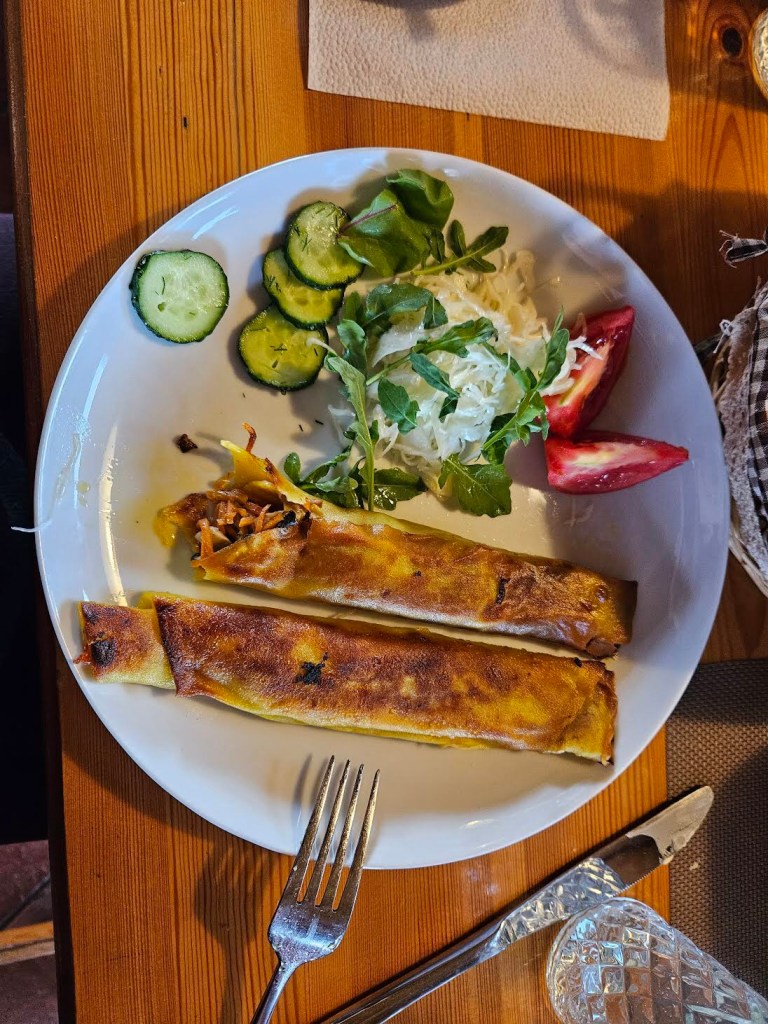
And to end on a light note, here is my amazing lunch today – vegetarian crepes with sautéed vegetables. Our OAT bus stopped at the Magda cafe that they use for all their tours. I love the history of OAT’s relationship with cafe owner, Edmunda. Years ago, an OAT tour bus broke down near the cafe, and Edmunda was so unexpectedly helpful – arranging for bus repair, feeding the OAT tourists – and so OAT has been stopping there ever since.
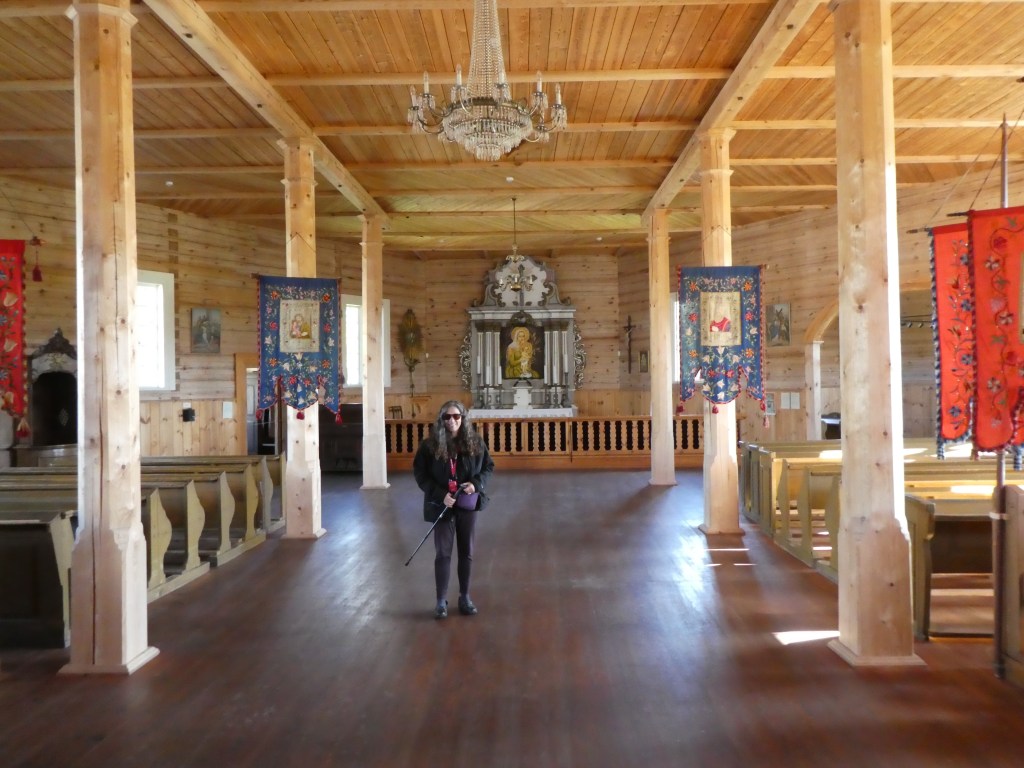
That’s it from here – I’ll leave you with this – the rare photo from Photographer Ron.
 Travels with Valerie
Valerie, I so enjoy your travel notes-informative, helpful, funny-just delightful! Your mom and dad would love them!
LikeLike
Hi Cindy!!!! Thanks for your nice note!!!!!!!! I hope you’re doing well!!!!!!
LikeLike
I’m glad you mentioned the slow simmering existential fear about the active and violent resurgence of a New Russian Empire. For small nations who spent long years, decades, even centuries under the thumb-screws of another empire or nation, the independence of language and culture is tied strongly with identity, regardless of how physically small the nation-state is.
LikeLike
I, of course, watch our US news coverage of these issues…but it somehow takes having dinner with a family who feels the fear on a daily basis to get the imminent weight of what is at stake. We’re near Kaliningrad today and the close proximity makes it clear how badly Russia must want to re-establish a land bridge back there.
LikeLiked by 1 person
Trip seems great, love reading your blogs. Hope you will join our OAT trip to the Balkans!!! Sounds like OAT is a cut above the usual tour companies.
LikeLike
Again, this comment above is from Stef, not Stan. Although he echoes my sentiments.
LikeLiked by 1 person
Thank you both! As you know, I love Stan’s blog too!!!! I’m working on Ron for Balkans – he’s balking;) Says it’s a lot of repeat areas.
LikeLike
I’m catching up…This is a particularly awesome post, Valerie. This history of the Lithuanians sounds very similar to what we learned from the Estonians we visited in and around Estonia and Tallinn several years ago. Instead of basketball, the Estonians sang their way to freedom. There is a nice video about that-“The Singing Revolution”. The ‘warning’ is exactly what President Zelenskyy fears might happen. From what you’re writing and I’m reading, I think I would really enjoy OAT tours. My favorite tours are those where educating all the senses happens. I am so enjoying your tour!
LikeLiked by 1 person
Hi Andi! Thanks for the nice note:) I will look up the Singing Revolution story. As to OAT tours? I’m hooked. The in-person, cultural exploration stuff is AWESOME. Our group leader is tops and the itinerary is packed with fun stuff – and the best thing is that it’s fluid – Aida adds little stuff in as she sees opportunities as we travel around.
LikeLike
Valerie, Love, love, love this post. I had chills reading about the families fear of Russian and Ukraine. Makes it so real. Kris
LikeLiked by 1 person
Thank you!!!!!! It really just makes all more sense when I see it firsthand.
LikeLiked by 1 person