First of all, I would like to apologize for misinforming everyone on my tour about my age. Someone caught me off guard by asking when I wasn’t prepared…many of us do not hold this type of information in our heads…and so I supplied an age that is close to my actual age but not my actual age. I did not confess my error until the following day, which was, unfortunately, the same day as the incident that leads to my next apology.
I would like to apologize for forgetting my glasses before our morning lecture on the 20th century Spanish artist cohort, necessitating I run back to my room and delay everyone.
Then, it was also entirely my fault that – when I came back into our Road Scholar classroom with my trusty glasses – my fashionably rolled-up J Jill shirt sleeve caught on the light switch panel, suddenly turning on each overhead light in the dark room where the instructor had started sharing her photo lecture.
(Note: I do not feel I need to apologize for falling asleep on the bus and missing the little Madrid tour because it did not involve deceit/delay/messing up a slideshow.)
We have left Madrid now – headed out to Cuenca. I had a final afternoon on my own to see more of Madrid after we toured the Reina Sofia museum. My critical art takeaway from the Reina Sofia is that it was extremely crowded and they do not have a single chair in any of their art galleries. It felt patently unfair that the galleries were full of tiny 3 and 4 year old schoolchildren, decked out in uniforms, who were allowed to sit on the floor in front of the art when I had to remain standing. It is one of my strong beliefs that people who can’t recall their age should be afforded the same rights as those of floor sitting children in art museums.
Our final afternoon was a Monday – with a lot of closed museums, but there’s still plenty to do in Madrid. The first option I chose was spending an hour at this KFC, one of over 10,000 dining establishments in the city:
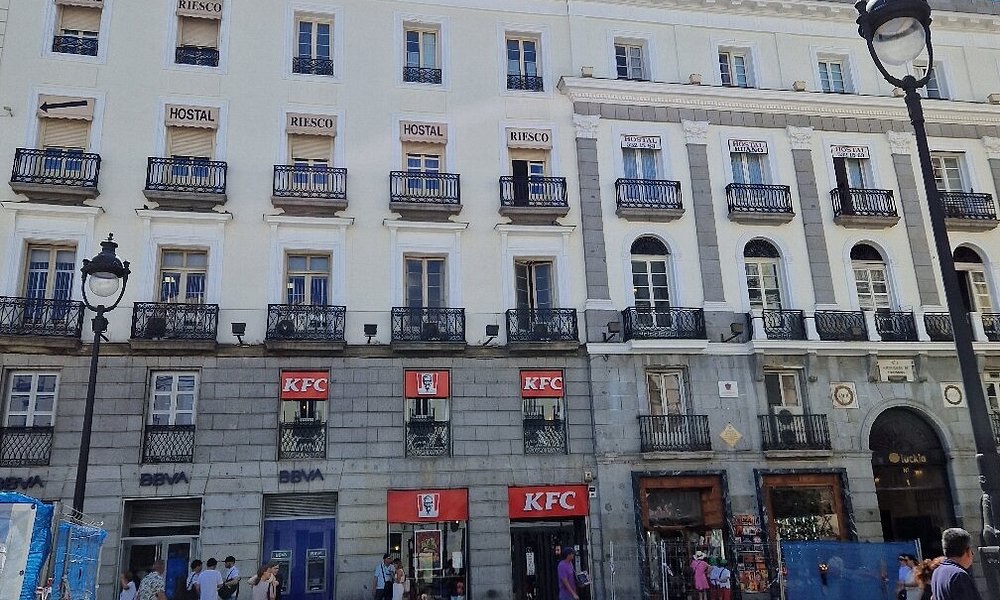
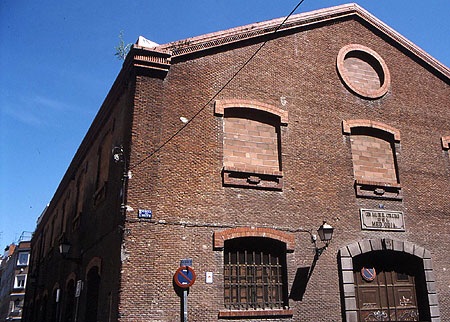
The KFC was both nourishing (chicken strips, fries, Pepsi) and on my way to a building I wanted to see – the Caixa Forum. It’s a cultural center from 2008, placed in a former power station.
Here’s a before picture:
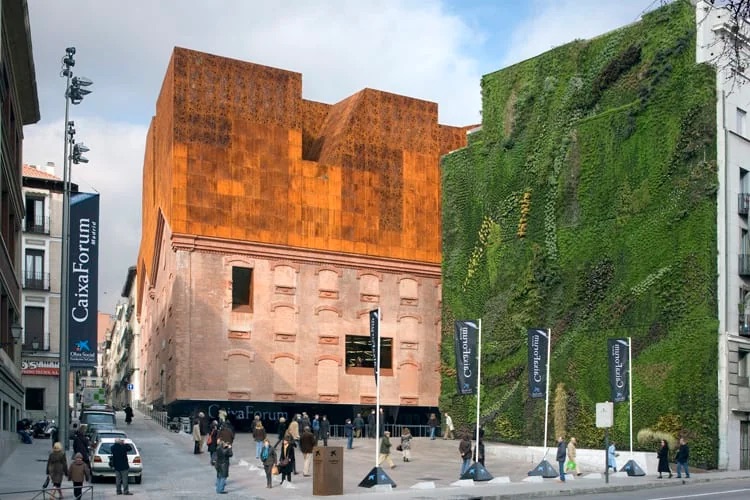
Here’s the exterior – with a vertical garden formed with 15,000 plants from 25 species. It’s 78 feet tall. No soil – they survive on air and water:


I’m adding one more picture here so you can see what the architects did to create the building. The bottom section is the facade of an old power plant and then they attached a specially-created rusted steel structure right on top of it. It’s just beautiful:
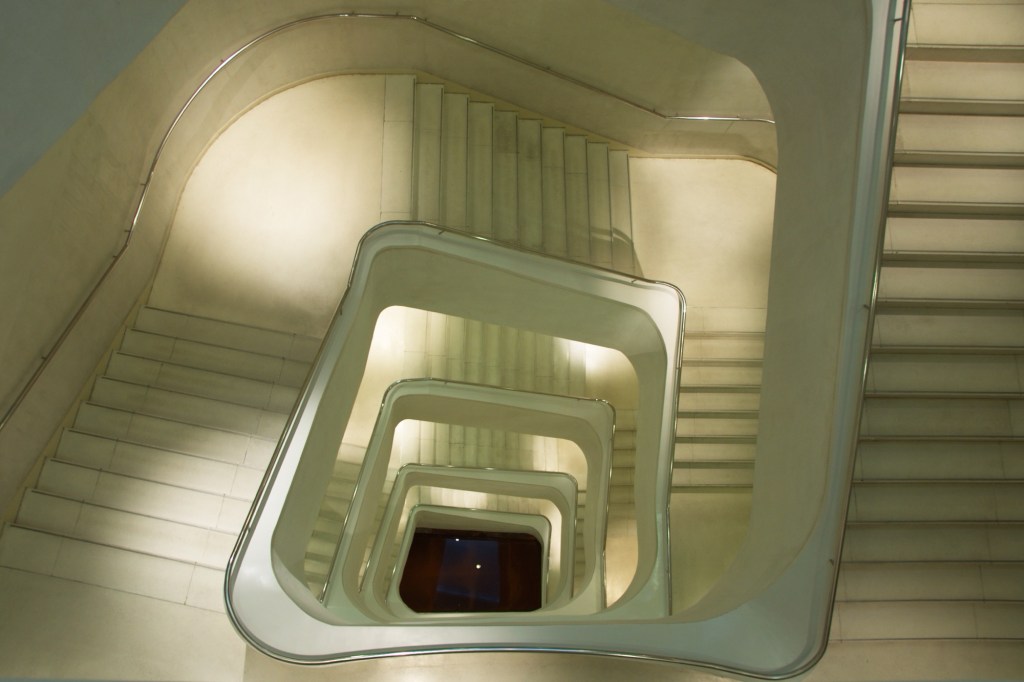
And then look at this entry stairwell:
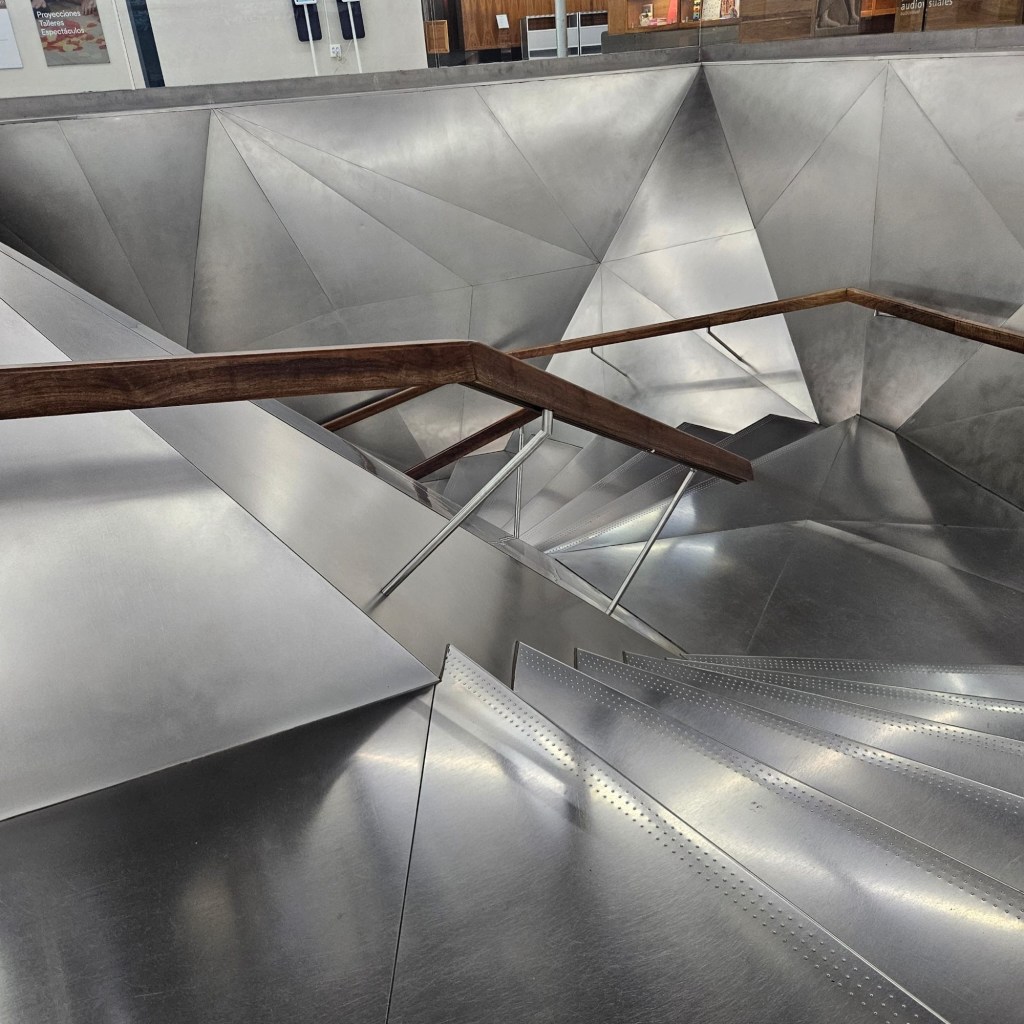
And the central stairwell:
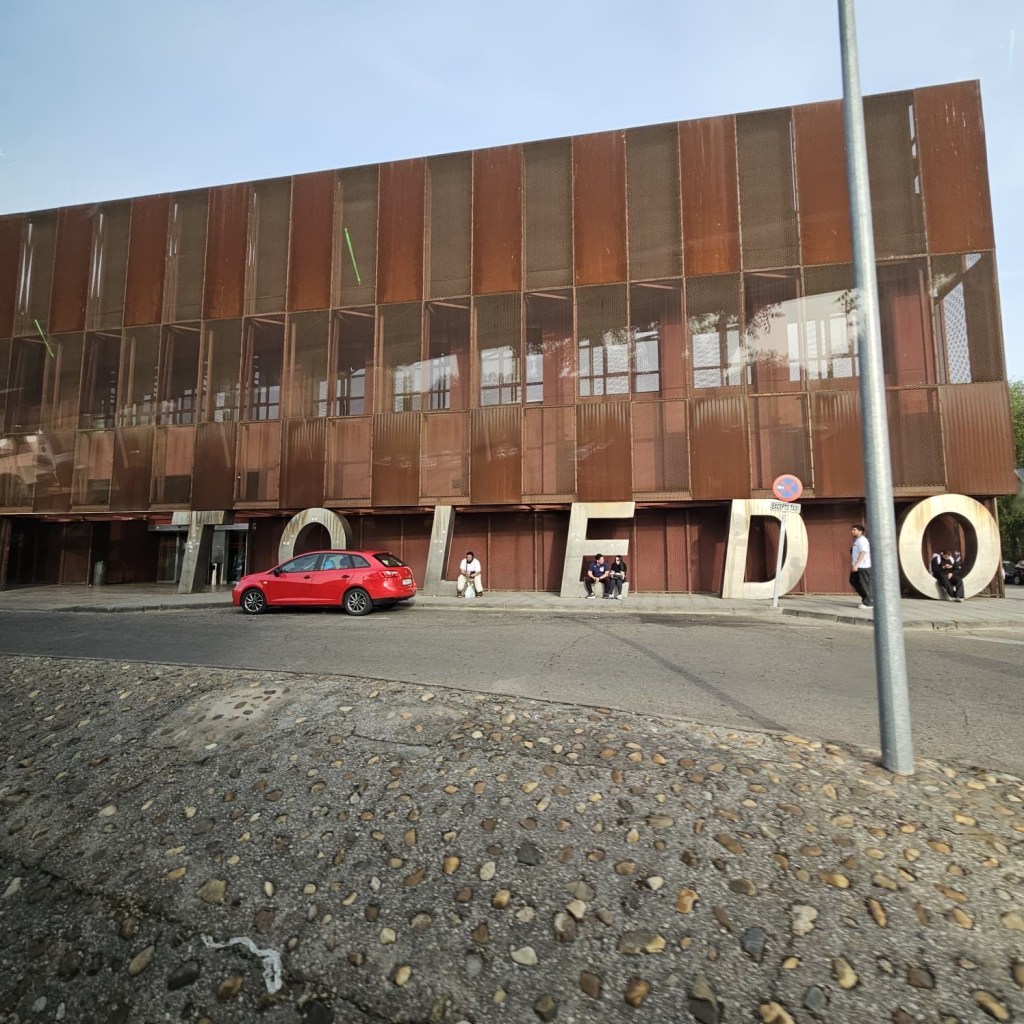
On our way to Cuenca, our Road Scholar tour stopped in Toledo for a few hours. There are a lot of historically significant buildings in Toledo…I think the whole city is a UNESCO heritage site… and we’ll get to them in a second, but first I need you to see the modern bus station:
And look – the town is accessed from down below by this series of (almost) medieval escalators from 2001. There are 6 different escalators, all at different incline angles. You may already be aware, but this escalator installation won the Escalator Project of the Year award in 2002.
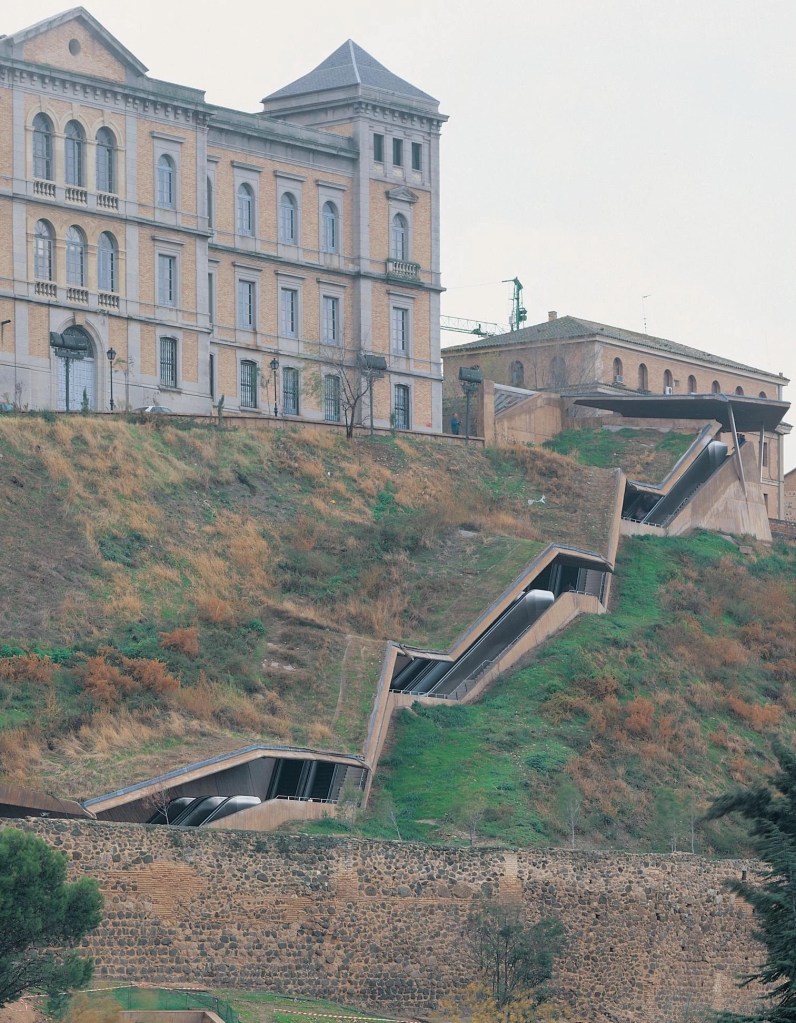
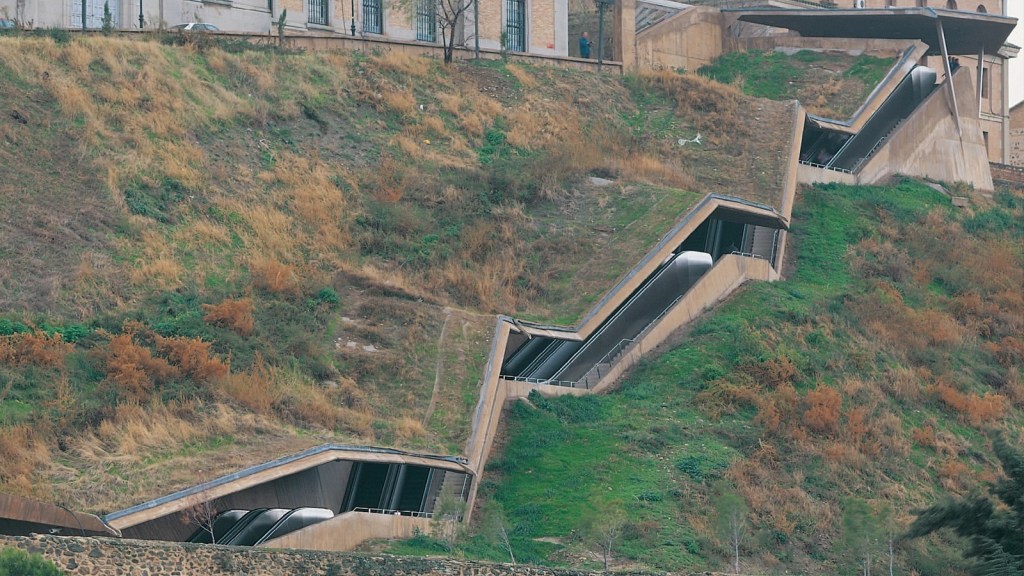
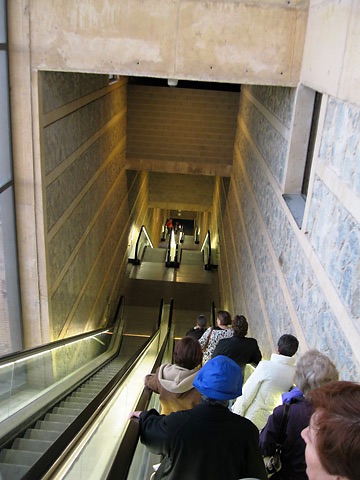
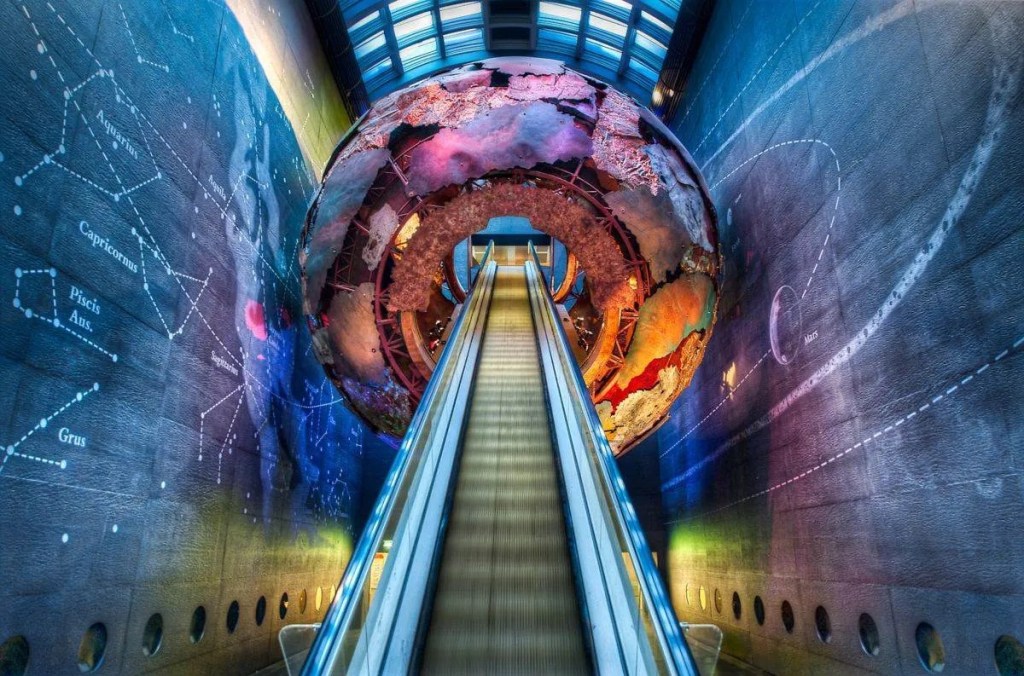
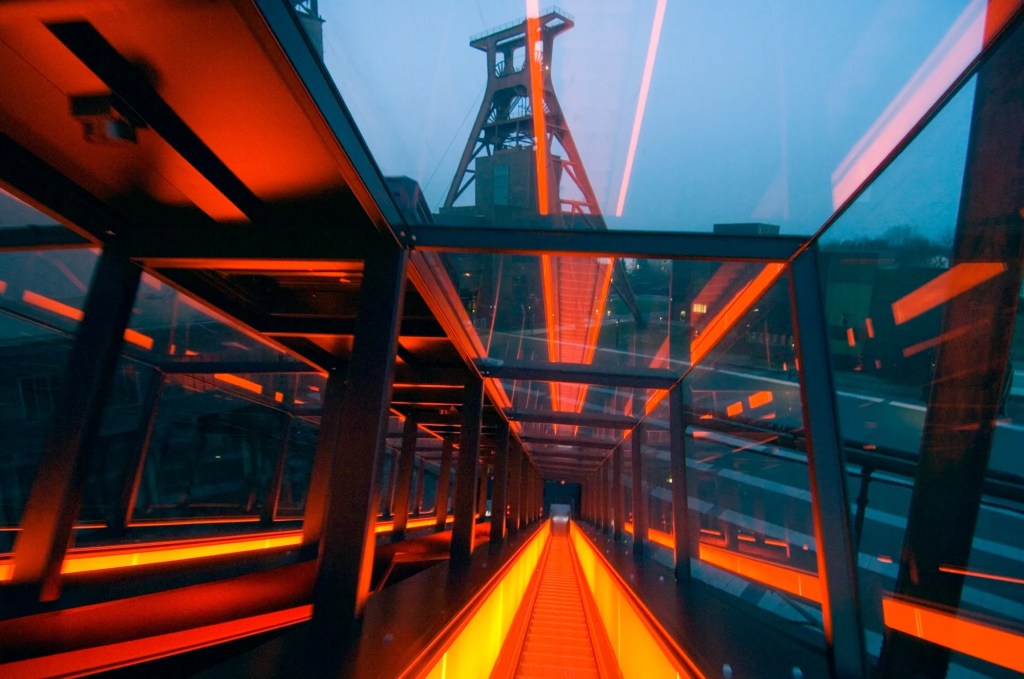
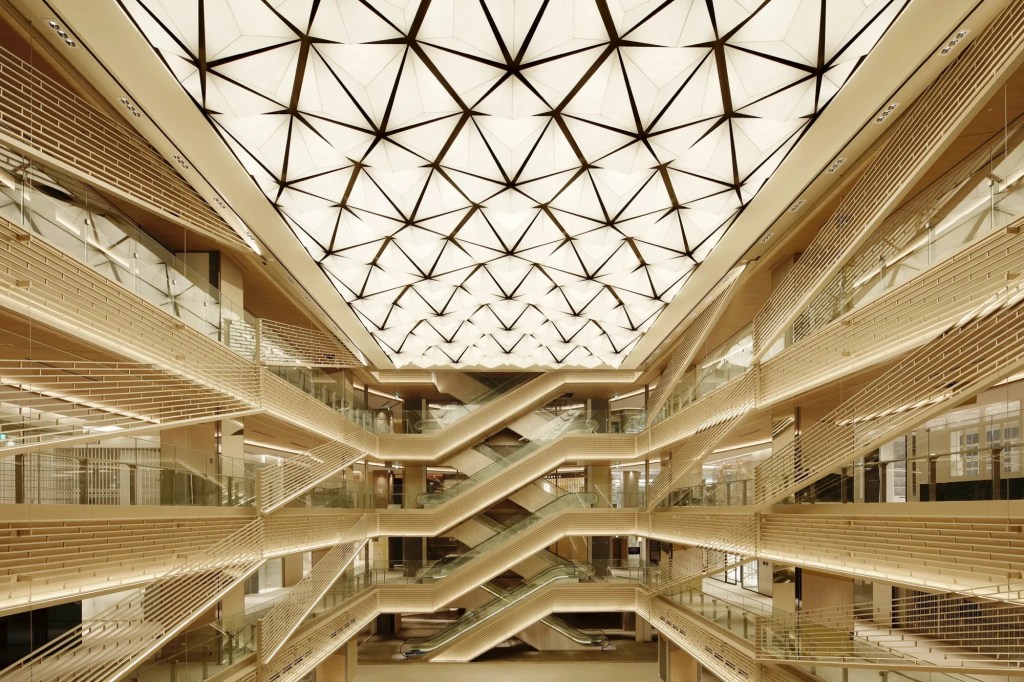
Those Toledo escalators probably left us all with the same passionate curiosity about other amazing escalators and so I’m posting a few here. This is going to be a new and continuing area of interest for me, alongside tiles, doorknobs, stained glass, and snack foods. I can comfortably spend the rest of my life wading around in minutiae and missing the big historical/artistic picture.
Plopped right down into my travel guide of Spain is the escalator at the National History Museum in London:
Zollverein Coal Mine in Düsseldorf, Germany:
Ginza Six shopping center in Tokyo:
So now I apologize…once again…to all of you for that detour…and thank you for your patience. Now…Toledo.
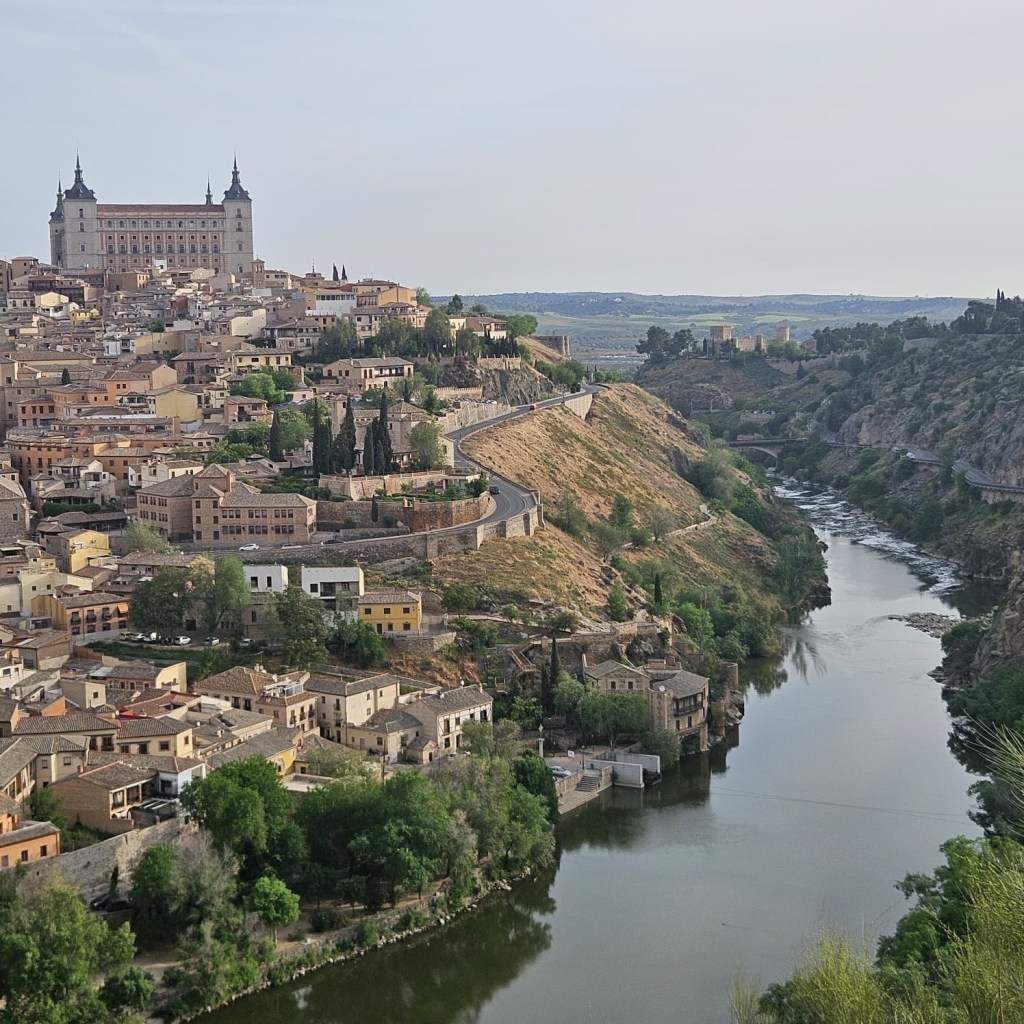
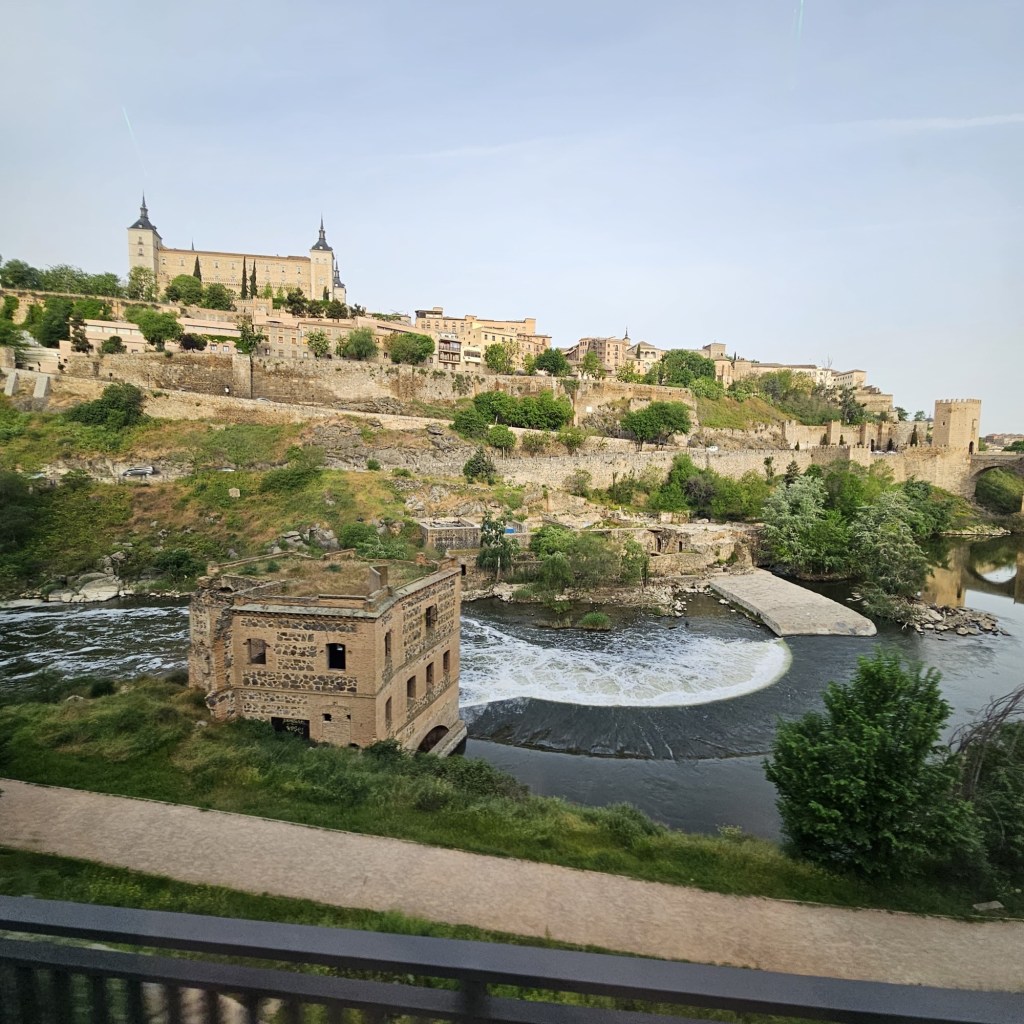
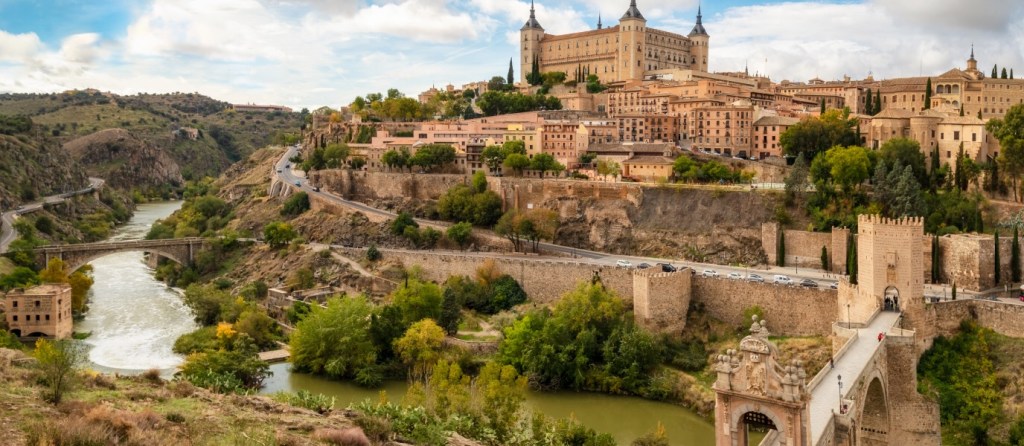
Toledo is famous for being a place where Christian, Muslim, and Jewish communities coexisted. The city had strong landscape defenses because it was ringed on 3 sides by the Tajo River and then had one huge city gate on the north side, built by the Moors in the 10th century:
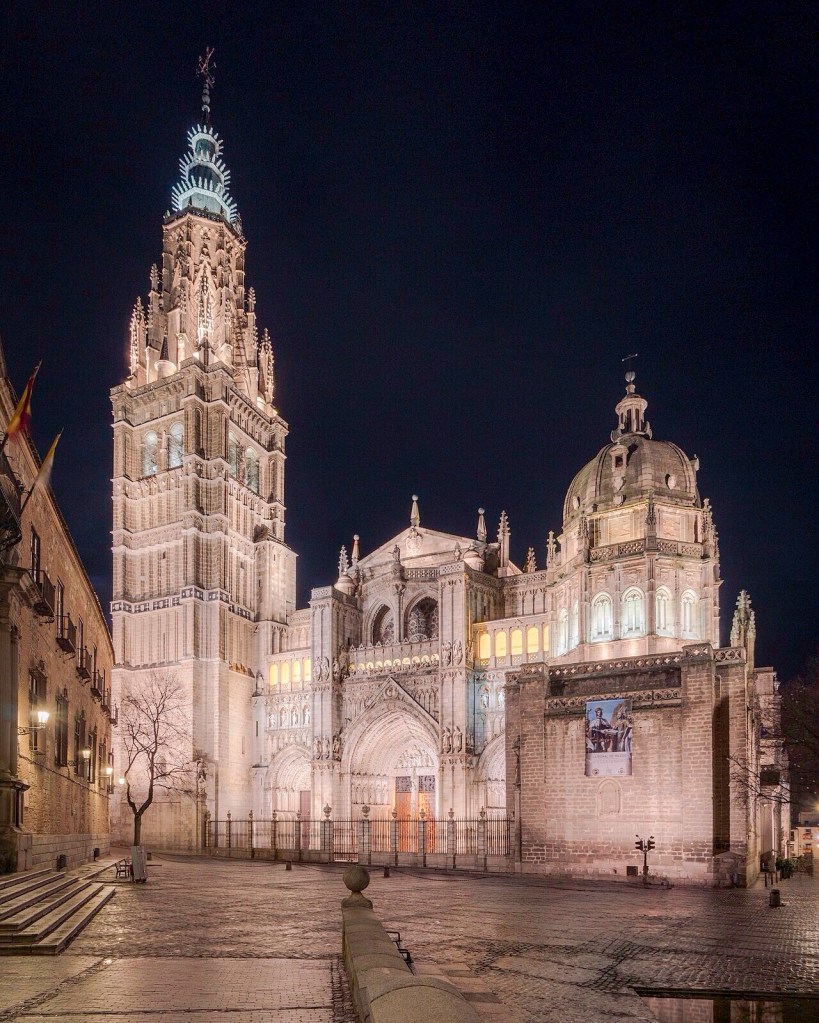
This is the Cathedral of Santa Maria, with building started in 1226 and finally completed in 1493:
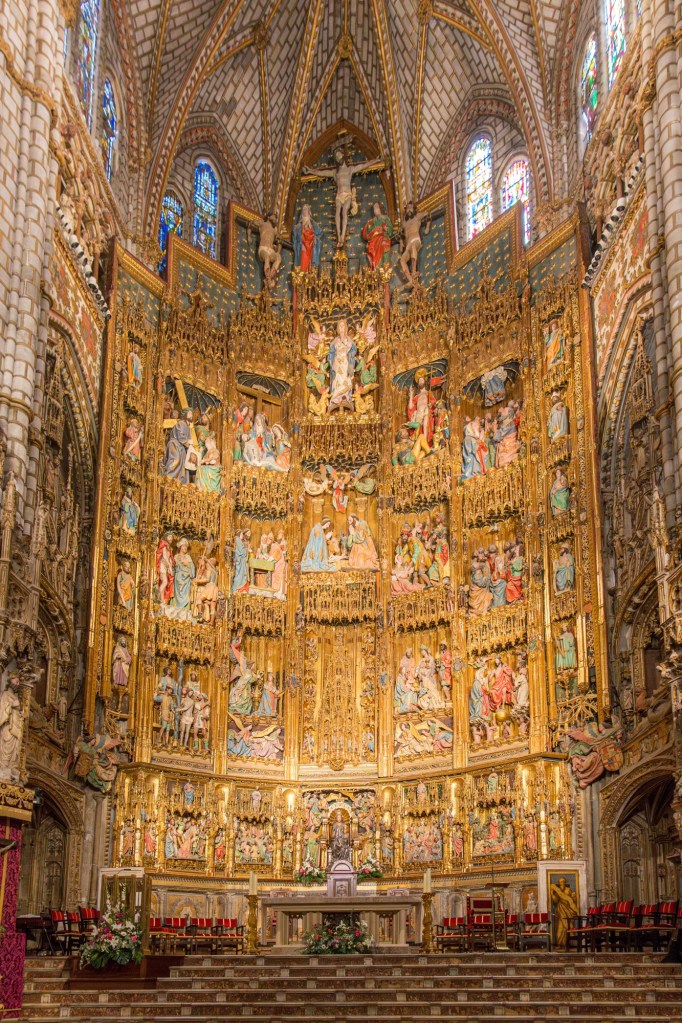
Inside is this alterpiece from 1504 – the coolest one I’ve ever seen. The amount of color and detail was beautiful. It took 7 years to make and is real gold on top of wood – an over-the-top extreme example of Gothic art. It’s 65 feet tall and 45 feet wide – a riot of whimsy, telling a Bible story – I’ve never seen anything like it.

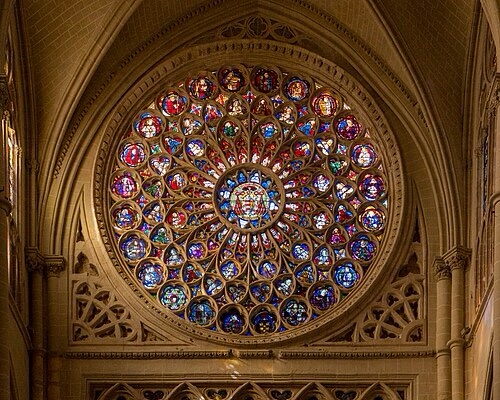
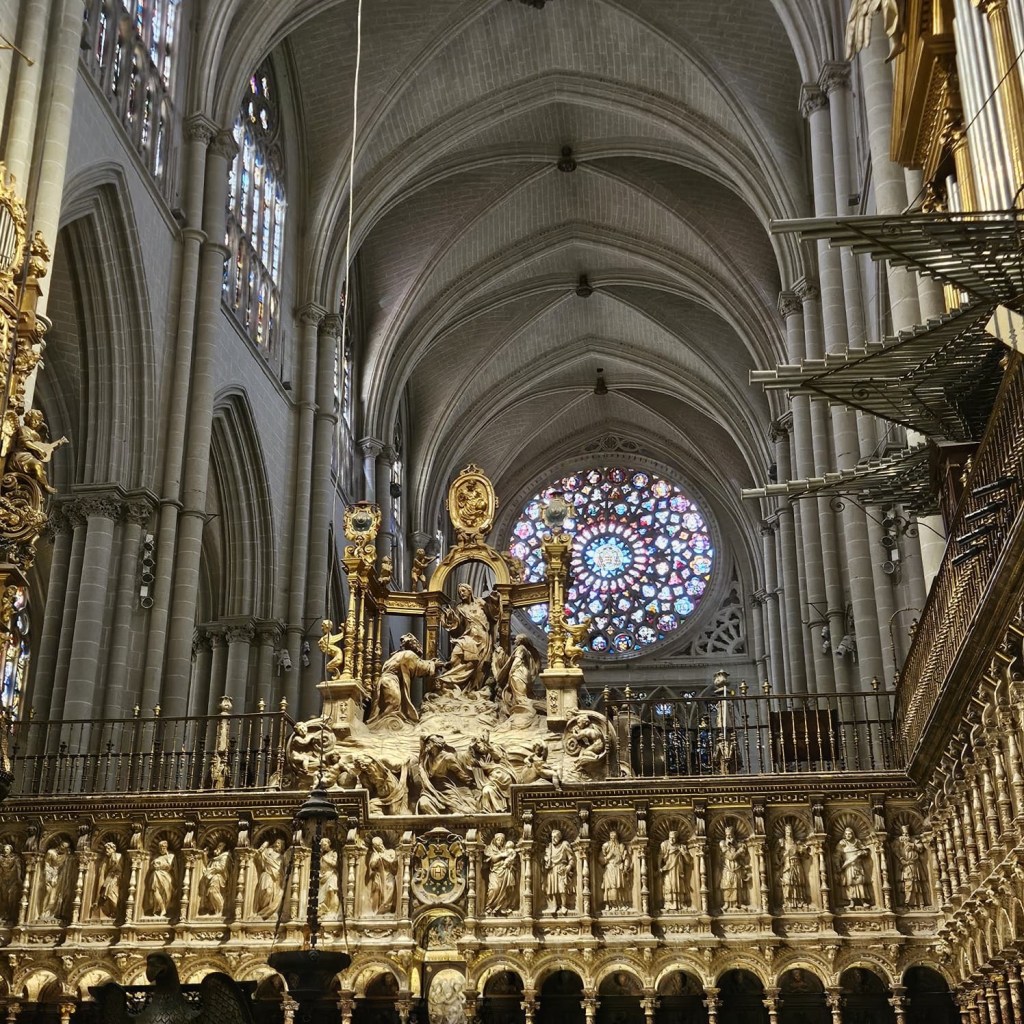
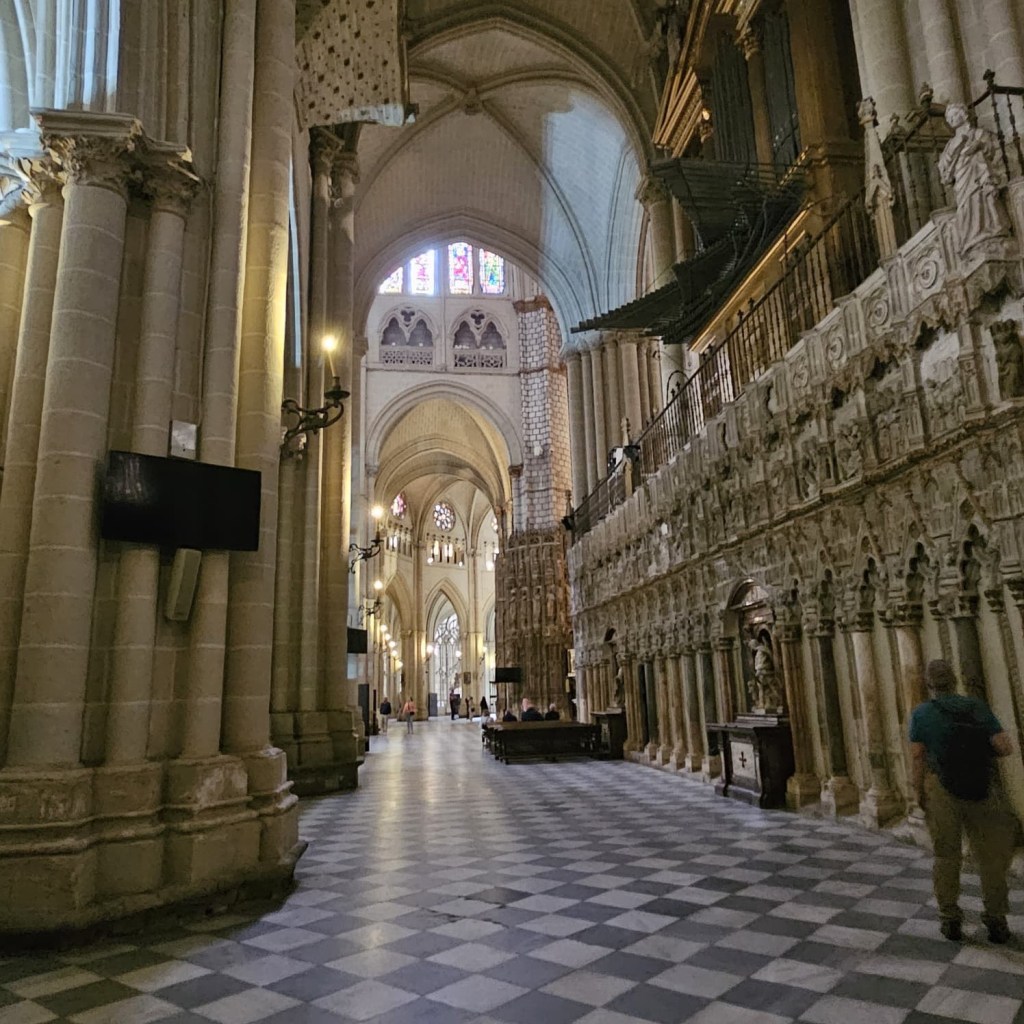
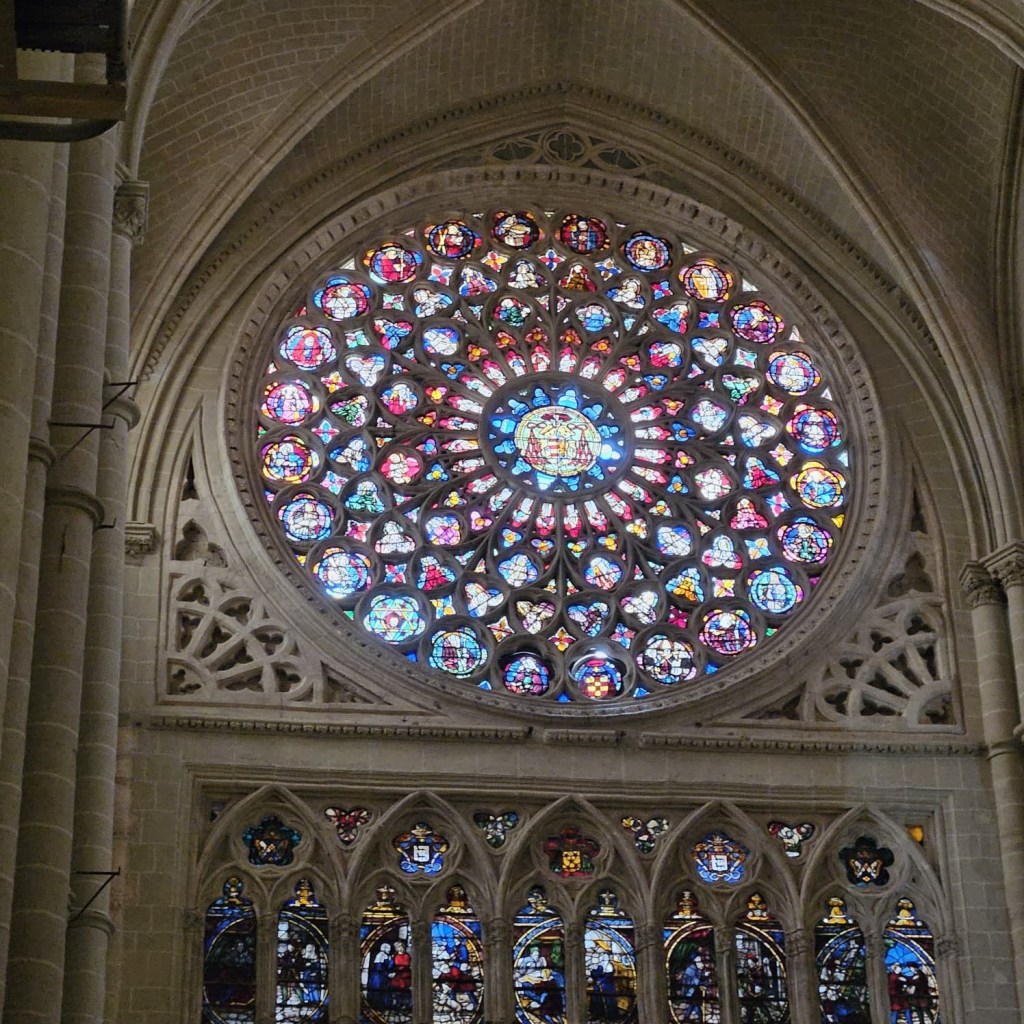
The cathedral also has more than 750 stained glass windows. Here’s the oldest one – the Rose window from the 14th century along with a few other interior pictures:
More soon from Cuenca with a spoiler – Cuenca is beautiful, empty, breathtaking…a highlight!
 Travels with Valerie
Well you now need to add Hong Kongbto your escalator wish list. We rode it, longest one in the world!
LikeLike
Well, I would like to see it! That 14 hour flight to get there terrifies me – so long!!!!
LikeLike
Welp, now I’m off to look up all the other Escalator Project of the Year winners!
LikeLike
You’re going to discover – as I did – that they lump the escalator projects with the elevator projects! The insult of it!!!!:)
LikeLike