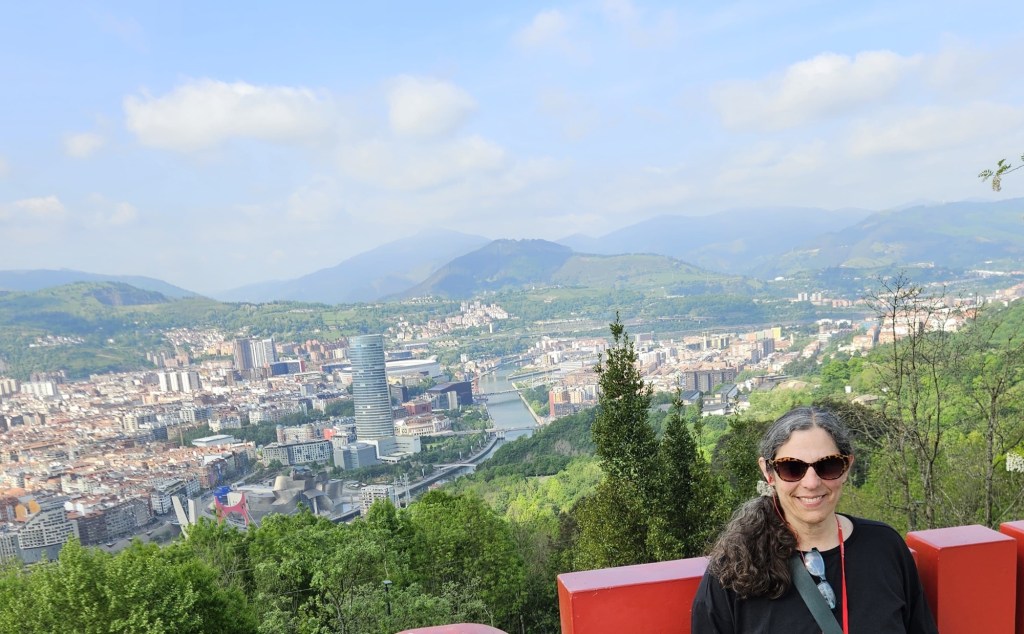
I know I’m going to lose all credibility by admitting that – after gushing about Cuenca and Burgos – now I’ve fallen in love with Bilbao. In my defense, I’ve wanted to visit Bilbao for years – the rest of these cities have been surprises.
Bilbao is a scrappy city – by the 1980s it was plagued by high unemployment, street violence, and open drug use. The decline was caused by the global downturn in the steel industry- Bilbao had flourished in the 19th century with iron mines and ship-building.
Bilbao also had a terrorism problem, which contributed to the downturn – with car bombings and assassinations. The bulk of the conflict was from 1968 to 2011. The ETA (Euskadi Ta Askatasuna) was a Basque separatist group. The complicated and long history of the ETA is way outside the scope of my live travel blog but I’ll link a good summary here if you’re interested. https://www.bbc.com/news/world-europe-11181982
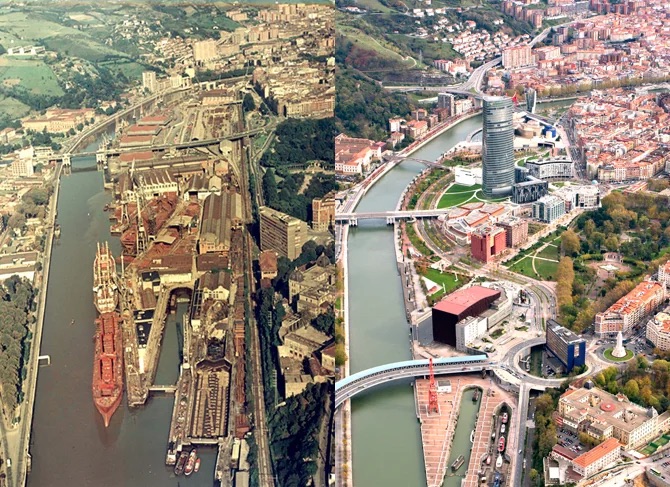
This first picture is helpful in visualizing the changes through the years. It’s the same section of Bilbao – in the 1980s on the left with all the shipbuilding and failing industry – and the present day redevelopment/public use:
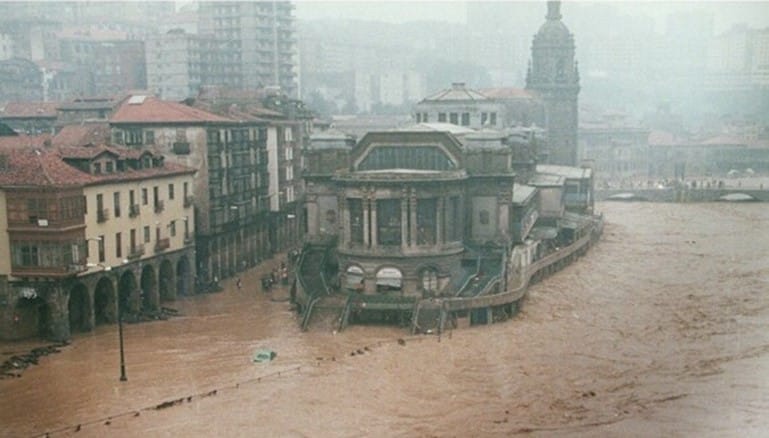
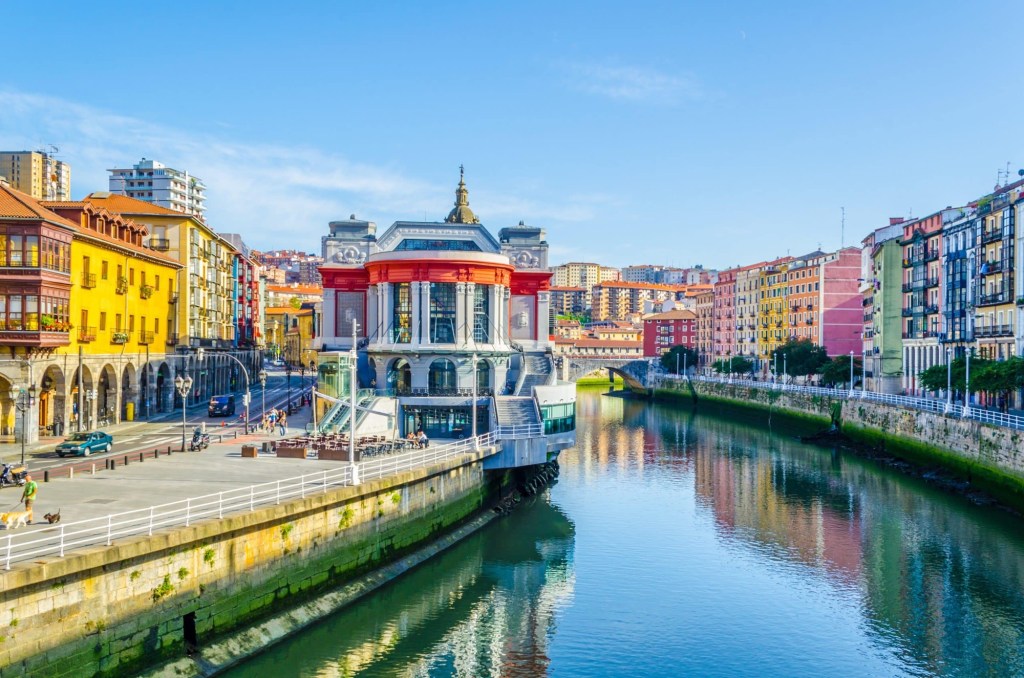
In August of 1983, Bilbao suffered an enormous flooding incident, causing extensive damage to an already struggling city. Here is the same stretch of the Old Town/River – currently and during the flood:
Despite all of this, the city of Bilbao is a story of post-industrial success. The city was salvaged by switching to a service industry economy – by creating new Metro systems and by courting a landmark architectural museum to make Bilbao a tourist destination.
The Basque government – mired in decline and corruption – made a deal with the Guggenheim foundation, which was looking around for a European city to locate a museum. (Other cities considered were less surprising – Berlin, Vienna, and Salzburg.) The government would pay for the construction of a museum, would supply 50 million dollars to acquire some art, and would pay 20 million dollars as a branding fee. The total cost was just over 150 million dollars.
Calculations indicated that, with half a million visitors a year, the investment would be recouped within 20 years. Our local guide said that the government broke even in 4 years – not 20. The Guggenheim routinely gets 1.3 million visitors a year and has transformed Bilbao into a beautiful place. The museum generates about 400 million Euros a year for the city and created the “Bilbao Effect” – the belief that iconic architecture can transform a city’s economic and psychological landscape.
So, let’s look at Bilbao.
Here’s the Guggenheim:
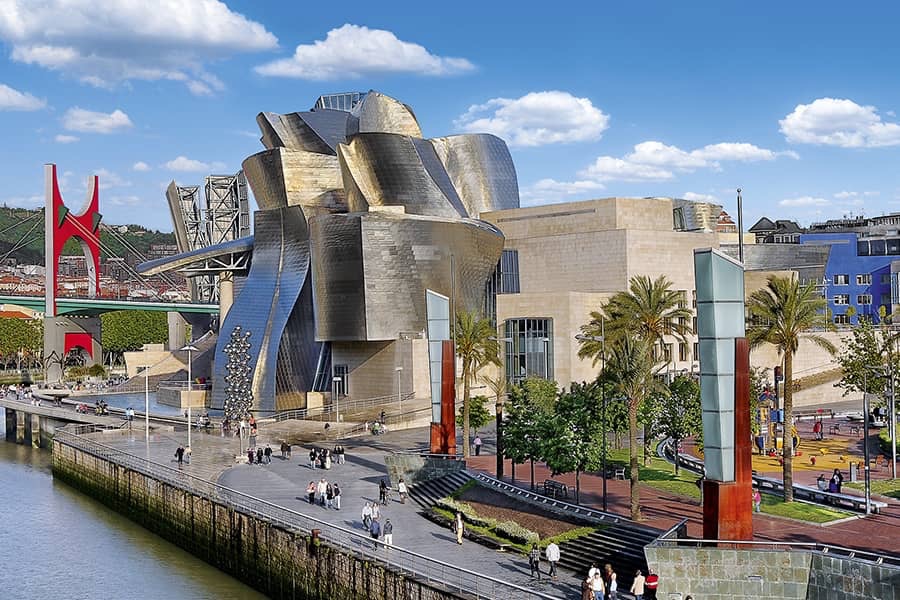
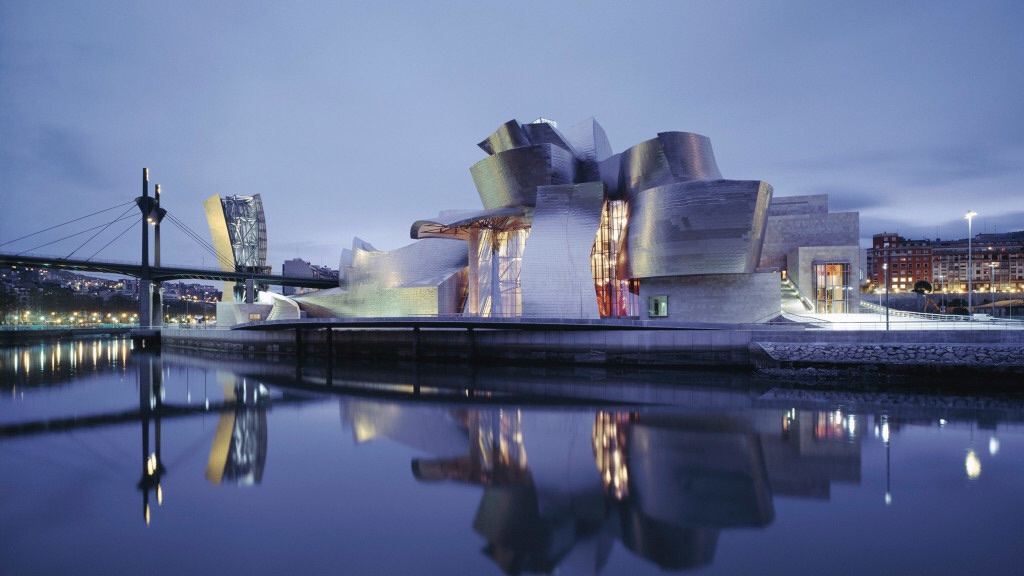
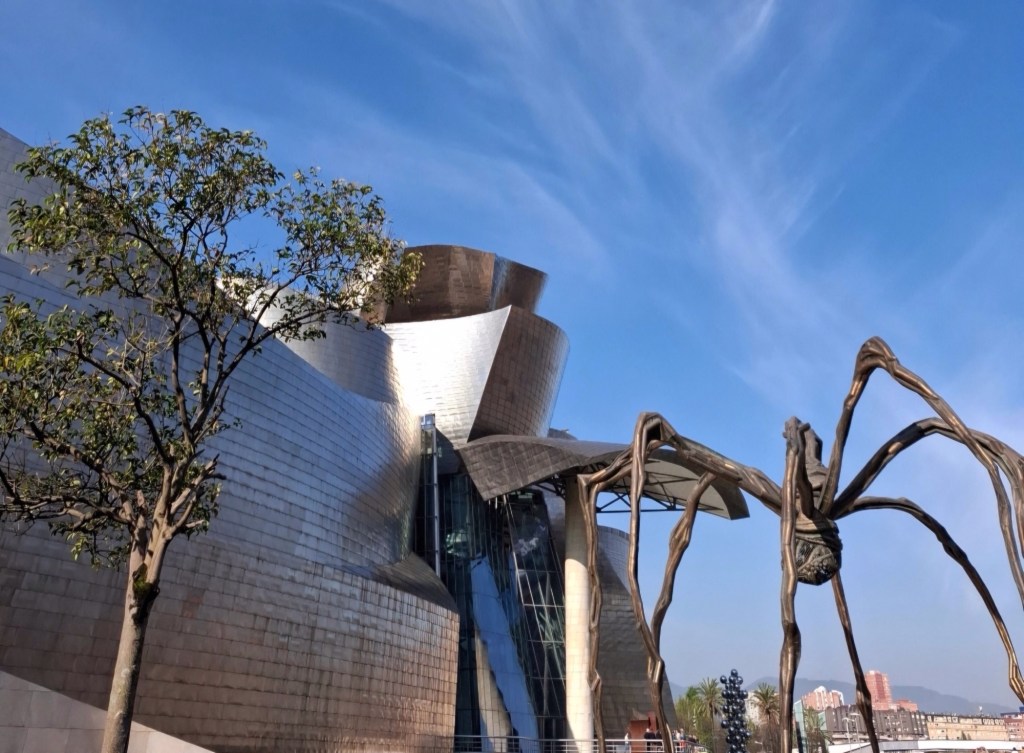
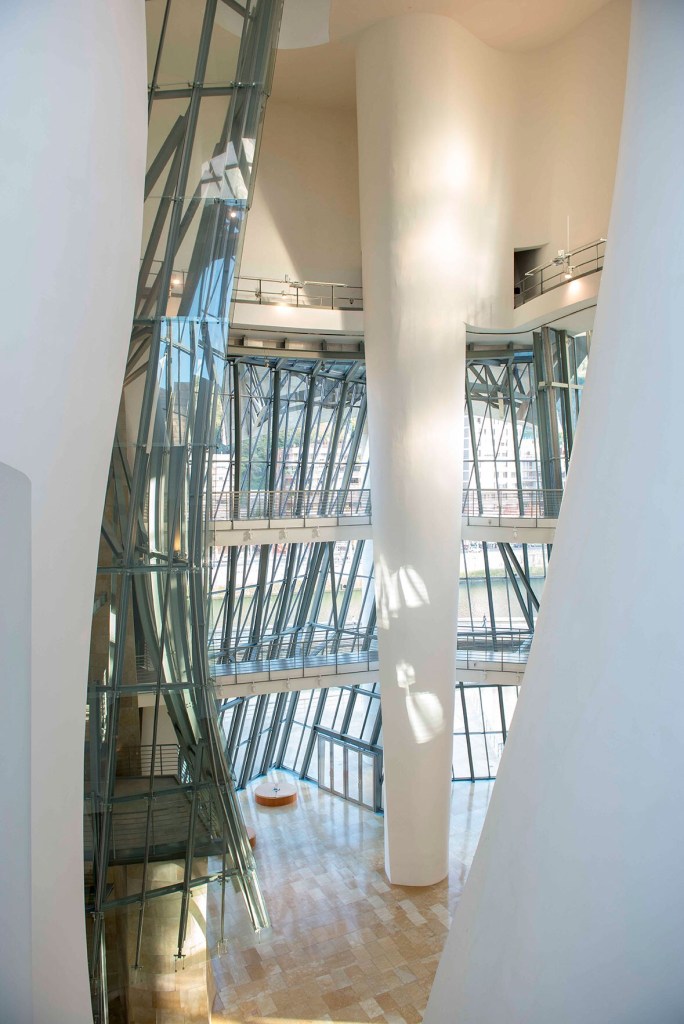
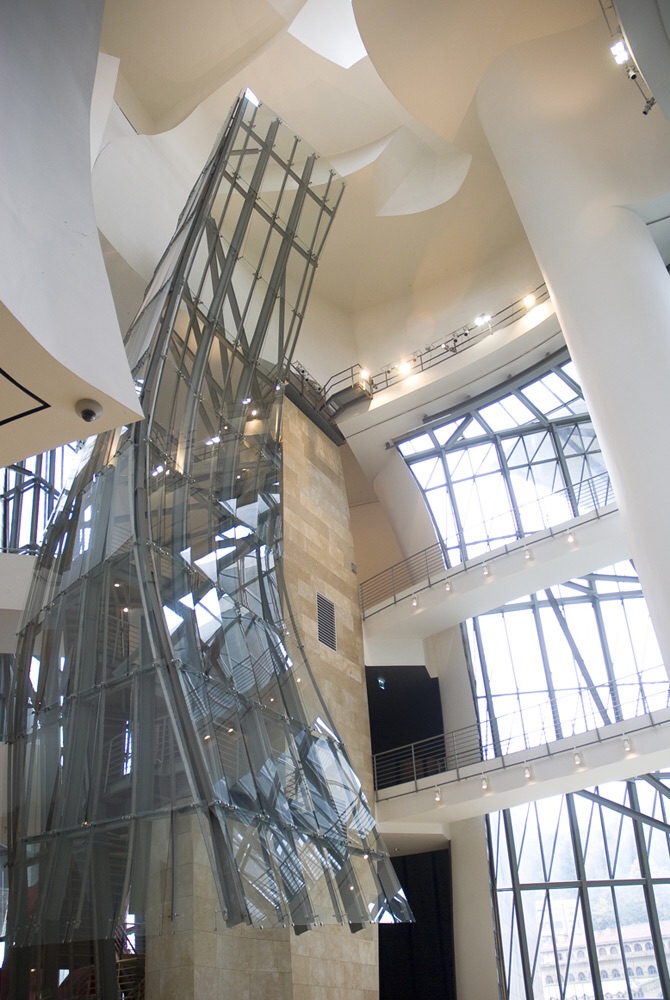
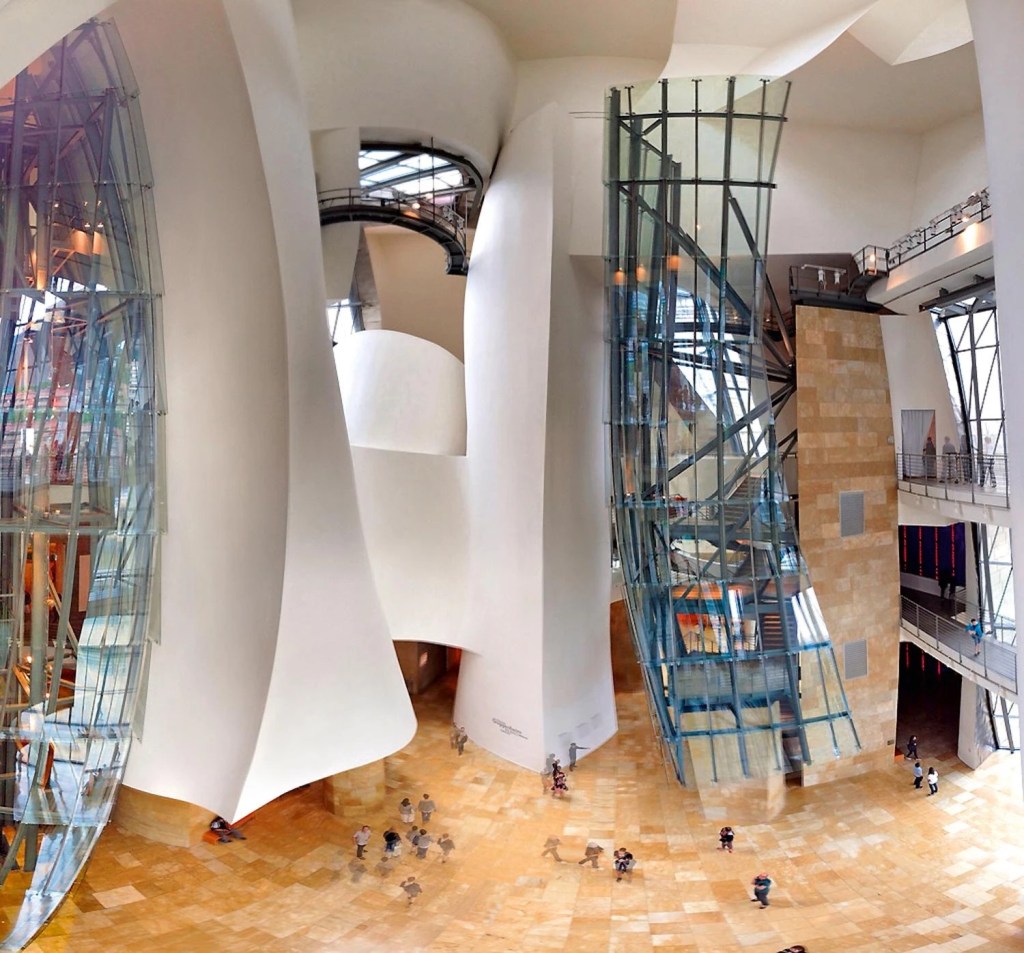
Here’s the interior lobby:
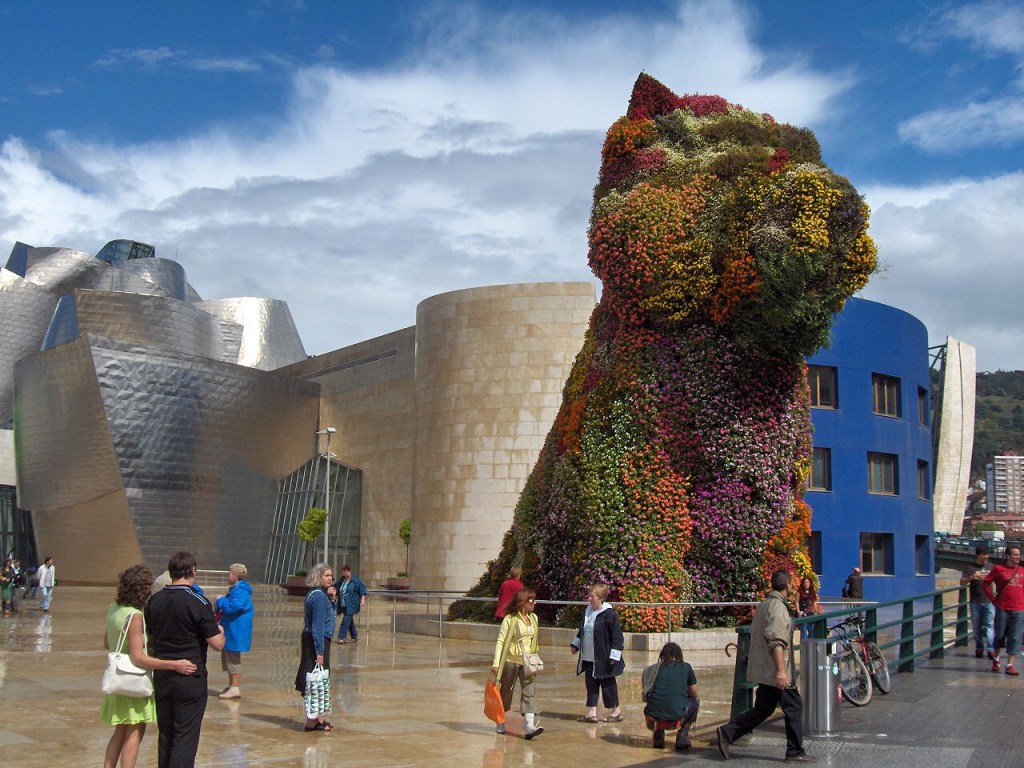
I’m not going to include much of the art but I do want to show you this – Jeff Koons’ Puppy – on display out front since 1992:
And Yves Klein’s Large Blue Anthropometry from 1960. This was one of those times where having a Road Scholar guide was really helpful in understanding the historical/political/drug experimentation background of a picture.
Here’s the picture, which, at first and with my limited art understanding, I concluded was a large blue blob:
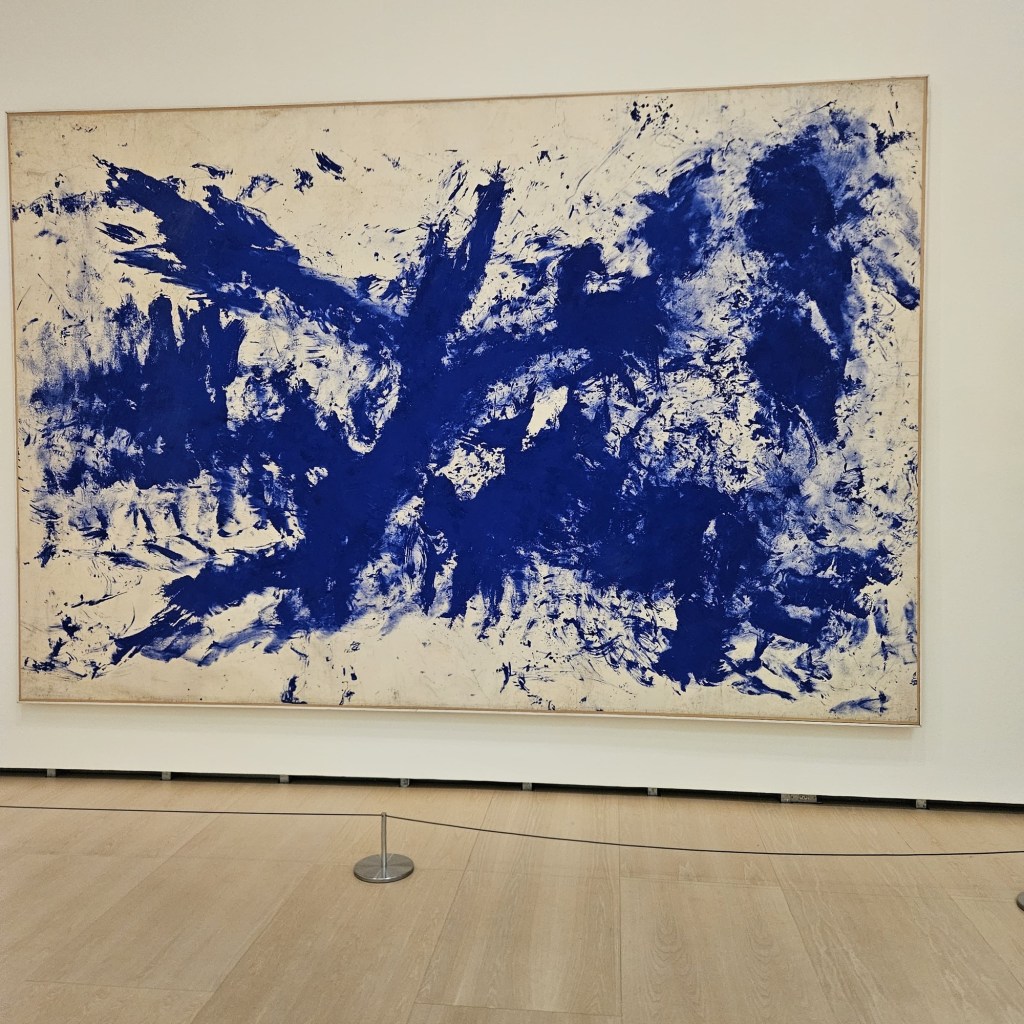
But it turns out Klein was conveying the concept of “living paintbrushes” – utilizing naked women that he covered in paint and then dragged around the canvas. This was accompanied by a symphony – playing Klein’s Monotone Symphony – a single note played for 20 minutes. Here’s an action photo from 1960:
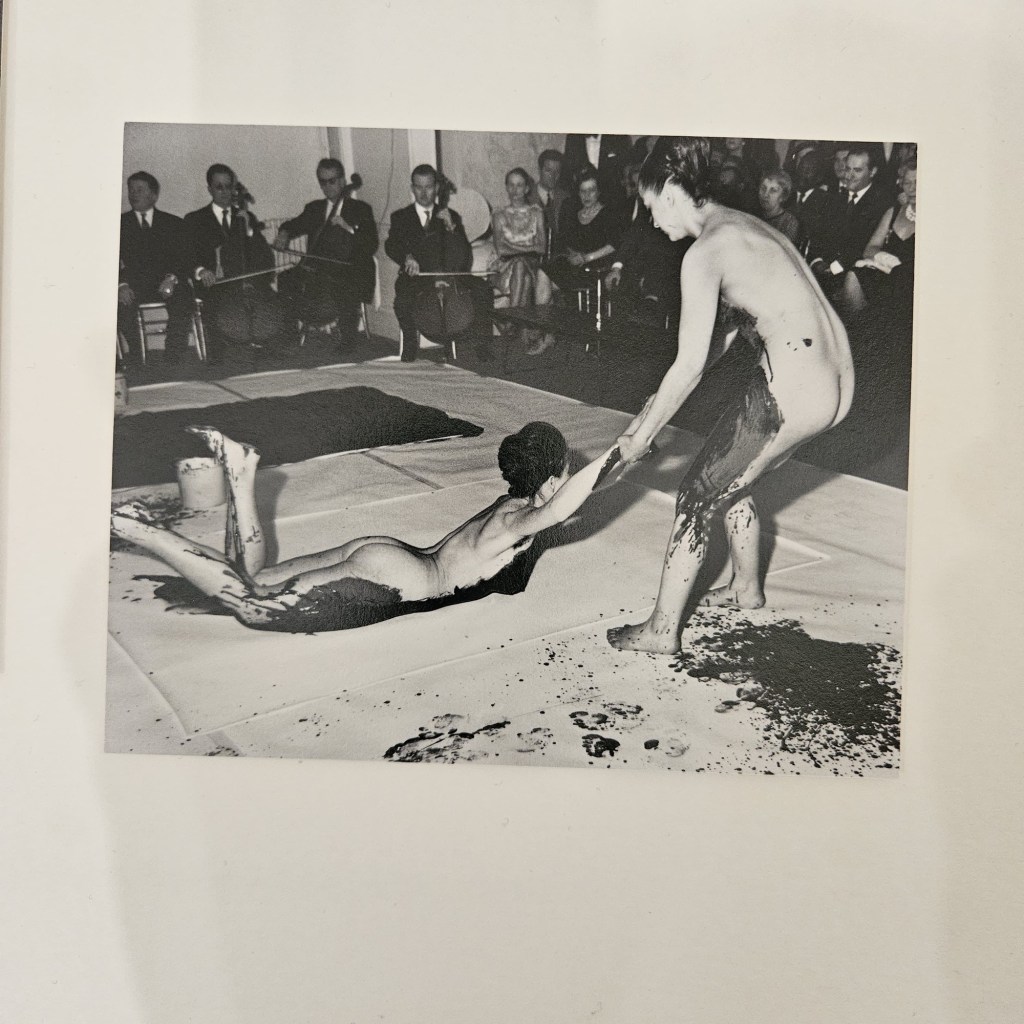
(Note for all of you getting ready to strip naked and drag yourselves around in blue paint to get into the Guggenheim: Klein did all of his work in that blue color. It’s a blue pigment he created and patented – it’s called International Klein Blue. But it’s widely believed that his passion killed him. The resin and fixatives used to create the sharp blue pigment powder gave off fumes that led to a heart attack at age 34).
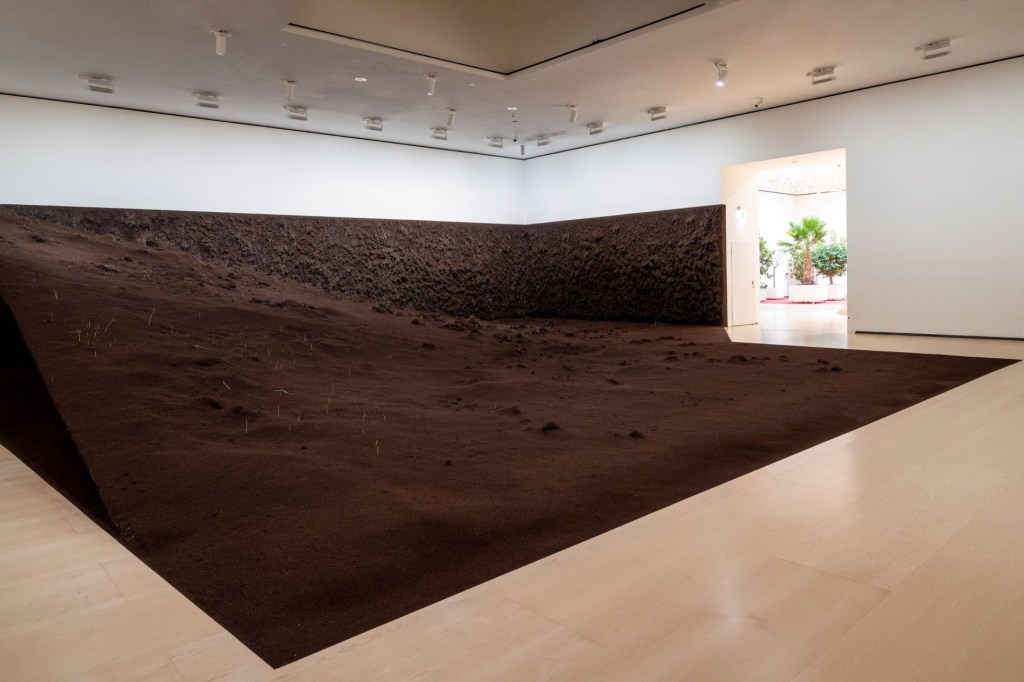
You may have an easier time submitting something like this massive room full of dirt, which might be messy to make, but will not imperil your life: Witch, by Delcy Morelos, from 2025, which (apparently) speaks to the ancestral wisdom of Basque women:
The Guggenheim has led to a flurry of other city architecture projects and I tried to see a few of them.
La Alhóndiga was an abandoned wine warehouse in the downtown core – built in 1909. By the 1970s, it was abandoned and looked like this from an undated photo:
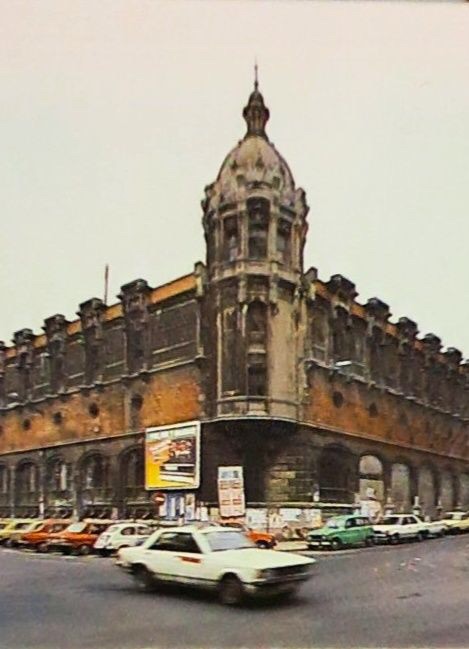
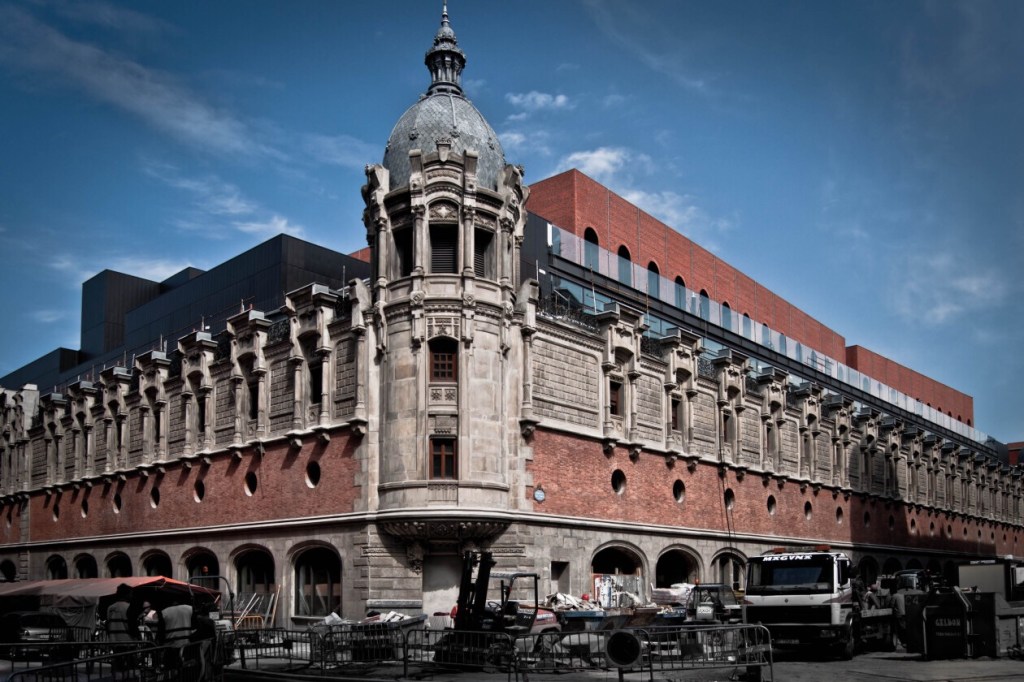
But as part of the Guggenheim success, the government decided to rehab the building and make it into a culture and leisure center. Renamed Azkuna Zentroa, and designed by Phillipe Starke, the building re-opened in 2010 looking like this:
Here’s what you see when you walk in:
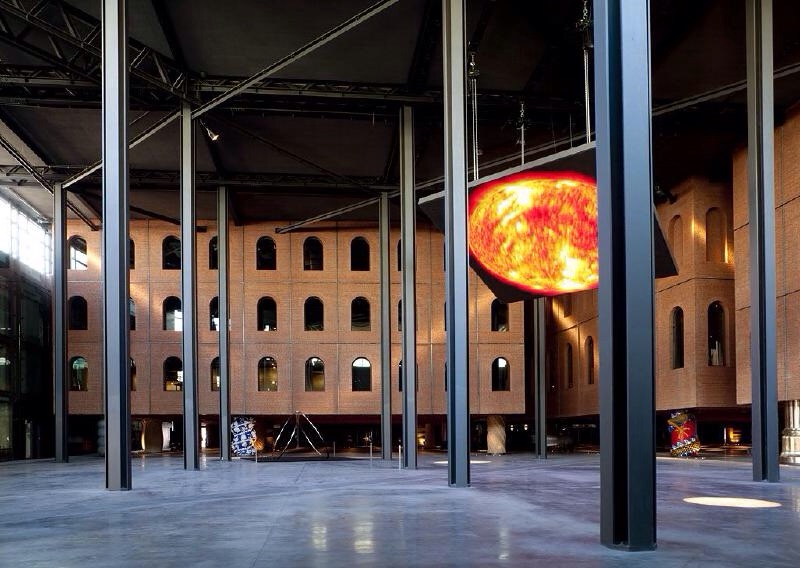
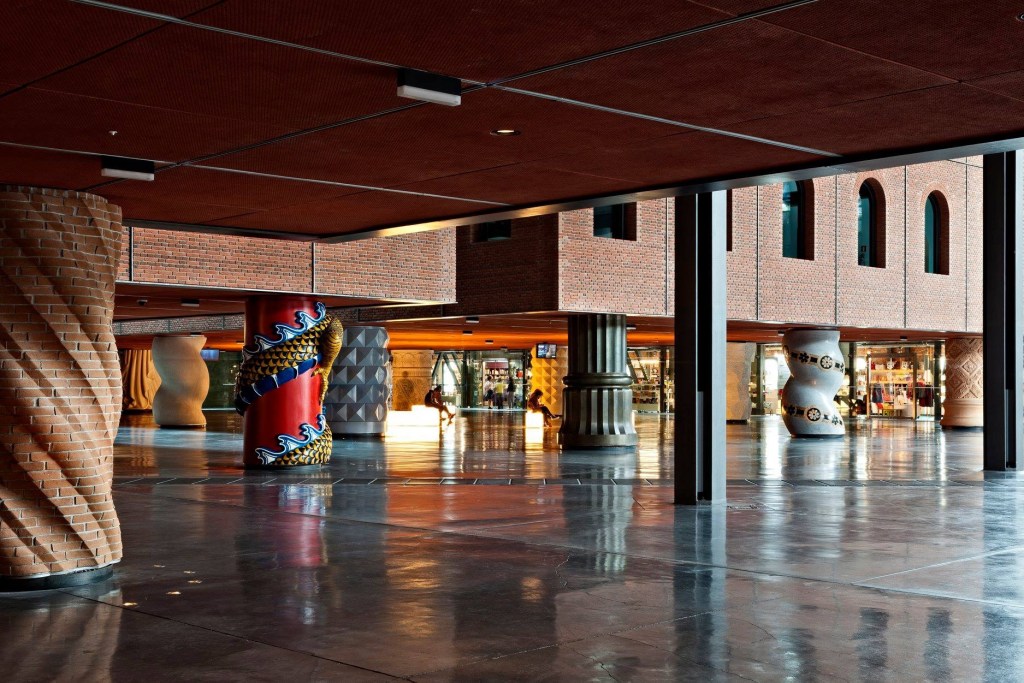
There are 43 pillars in the huge lobby – representing the endless types of architectural styles. Here’s a picture of a few to give you a sense of the variety:
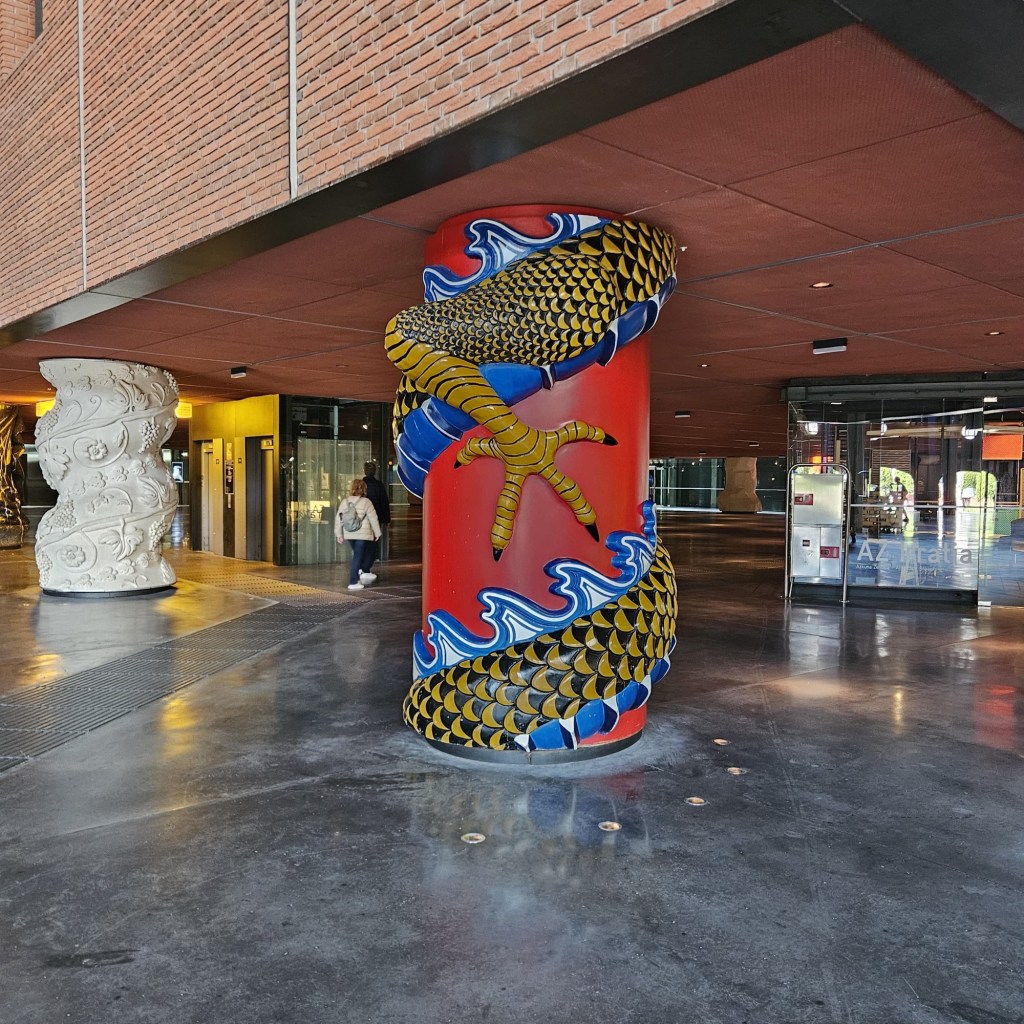
And here’s close up of my favorite – it’s a chicken foot:
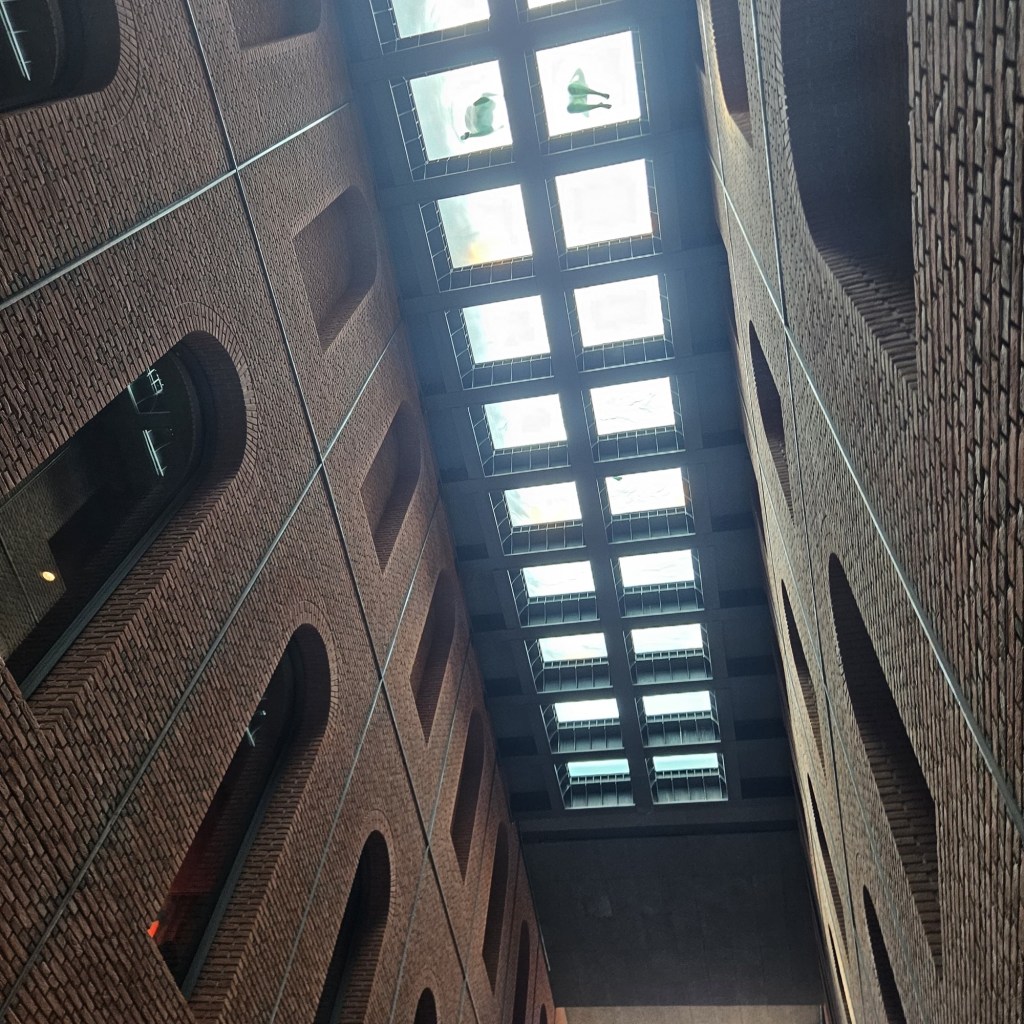
I don’t know who had this crazy idea, but somewhere above the lobby, they put in a swimming pool:
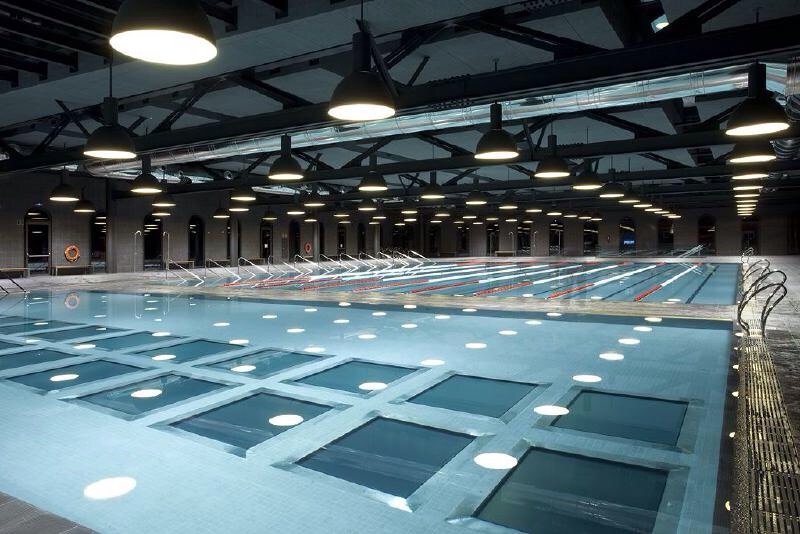
And the pool is open to the building below via some in-ground pool windows, creating an ever-moving liquid art display in the lobby. I was there for 30 minutes before I noticed someone staring at the ceiling across the huge hall and went to investigate. A photo won’t really work for this – so here’s a little video in addition to a picture:
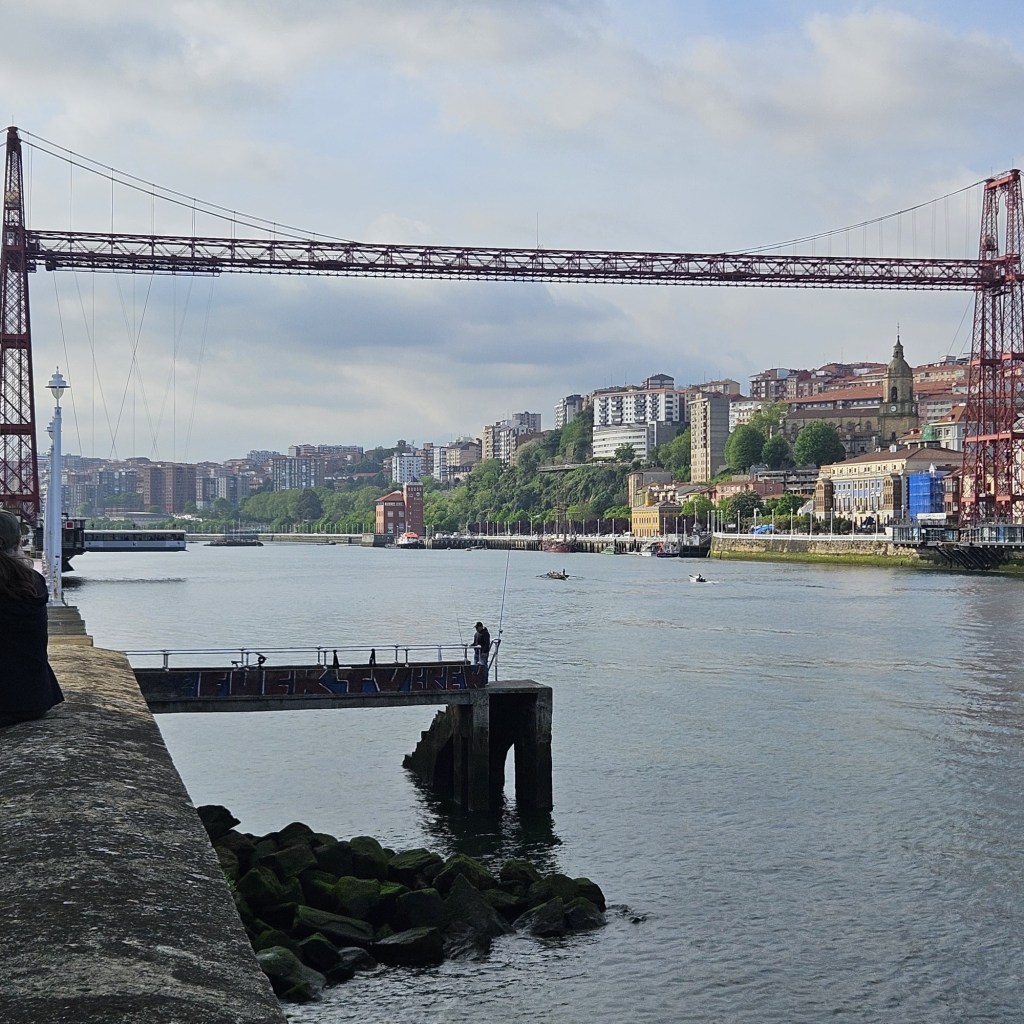
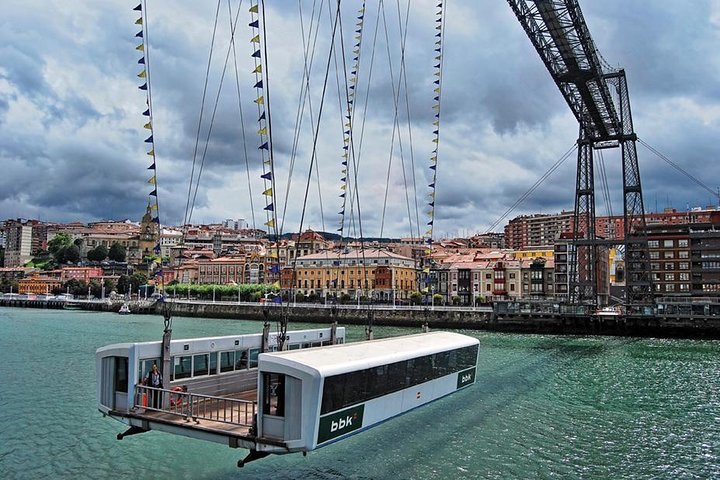
In addition to great buildings, Bilbao has a transport bridge I’ve been dying to see. It’s called the Bizkaia Bridge, by Alberto Palacio from 1893 – and it’s the world’s oldest transporter bridge. If you look at the second photo, you can see the bridge in use, with the car mid-span. The ride takes about a minute and a half.
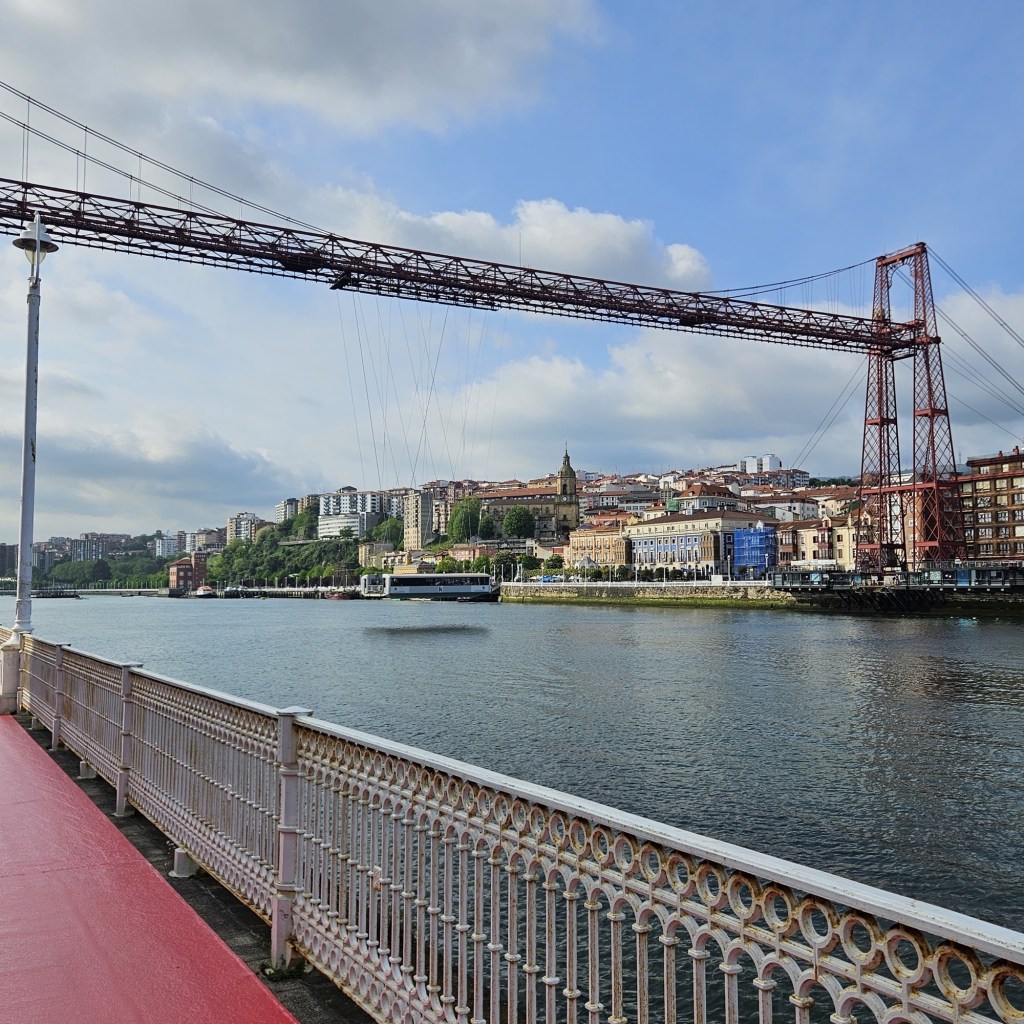
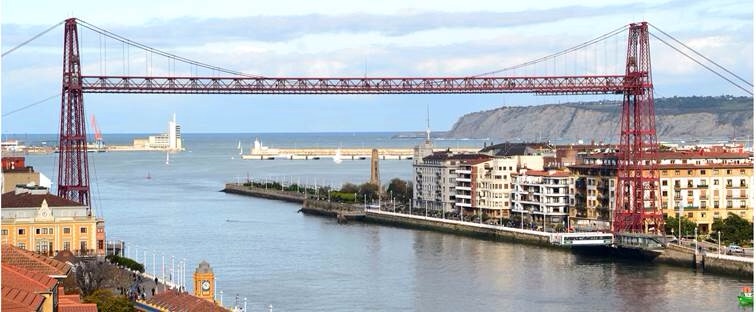
The moving car is called a nacelle and the bridge is on its 5th version since 1893. This one actually holds 6 cars in the middle and 100 people on each side.
That’s it for Bilbao – I’ll be back in a couple of days from Barcelona. I’ll leave you with a little more Guggenheim art. (Note: It is unclear how much of the 50 million Euro art budget was spent on these.)
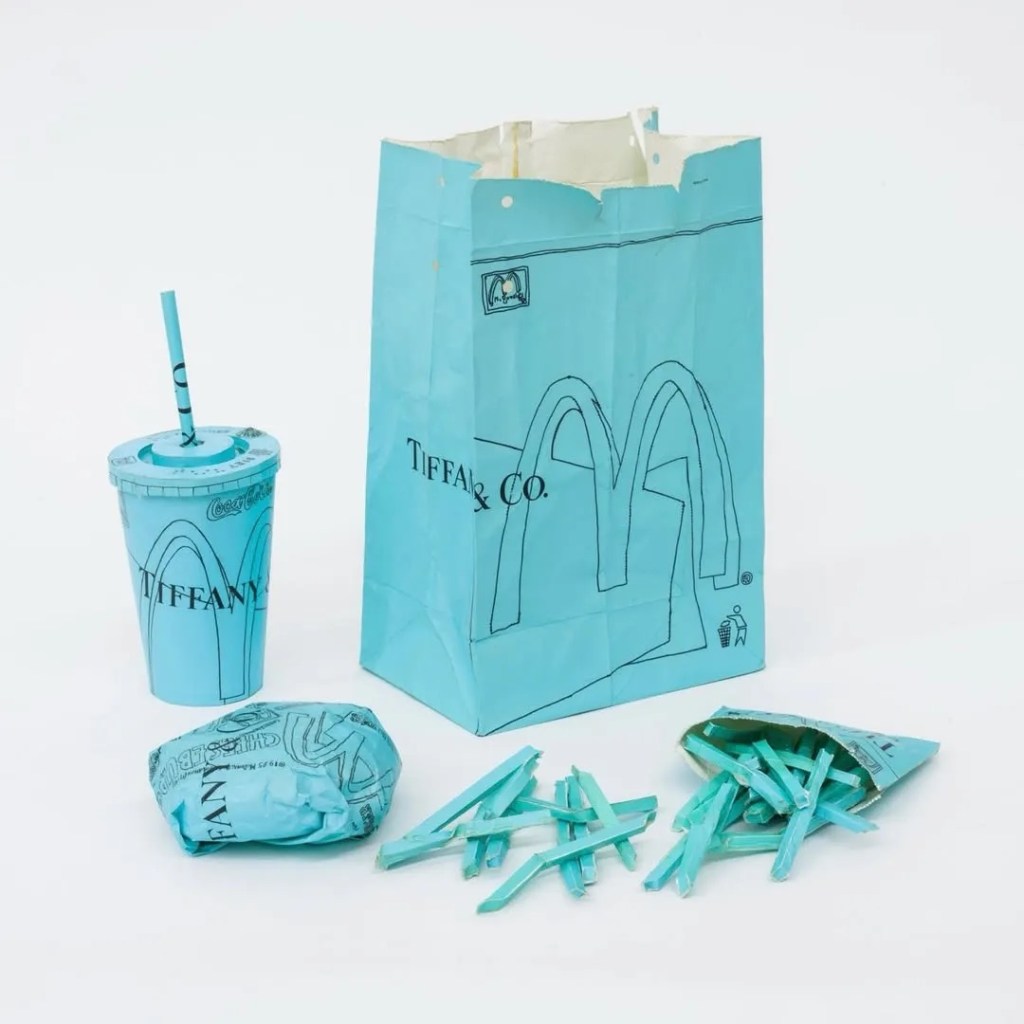
Tiffany Gift Meal, by Tom Sachs, from 1999:
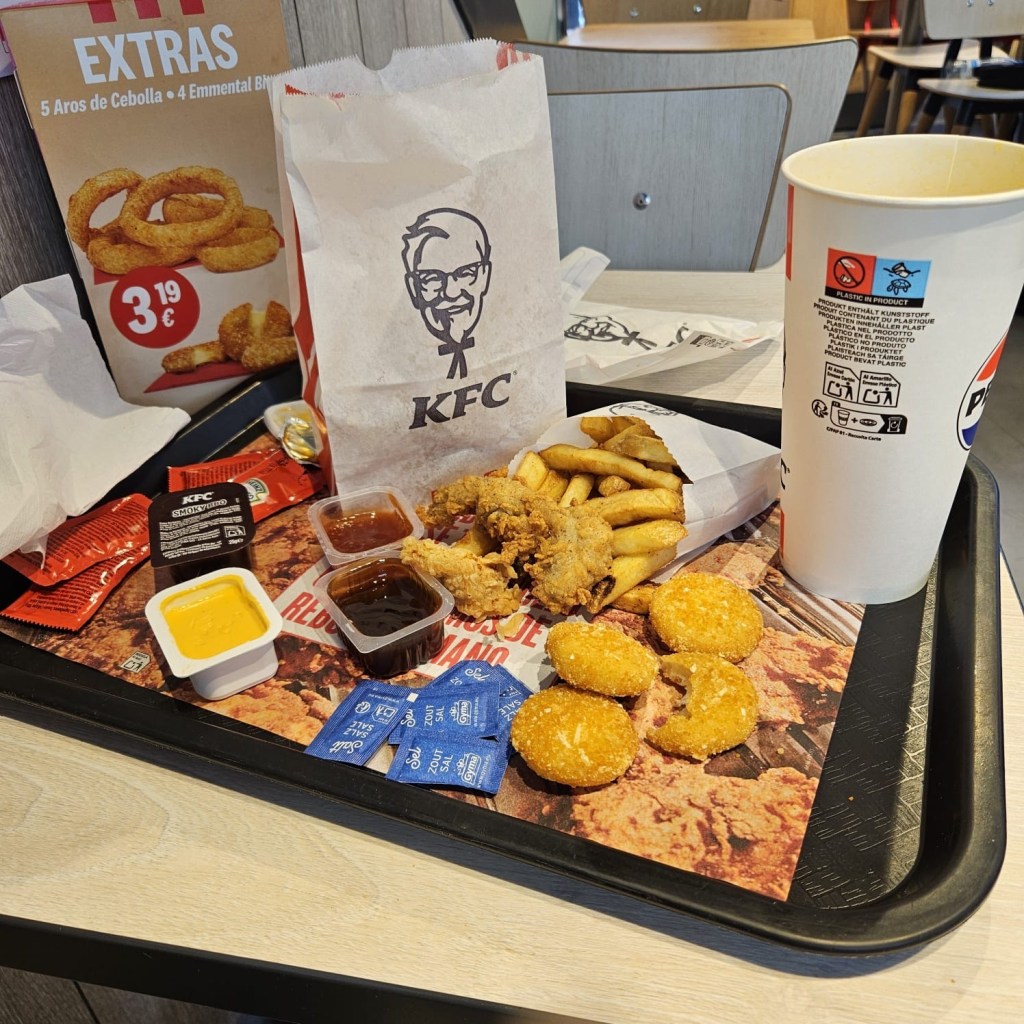
Contrast with Valerie’s Meal Last Night (cost: 12 Euros):
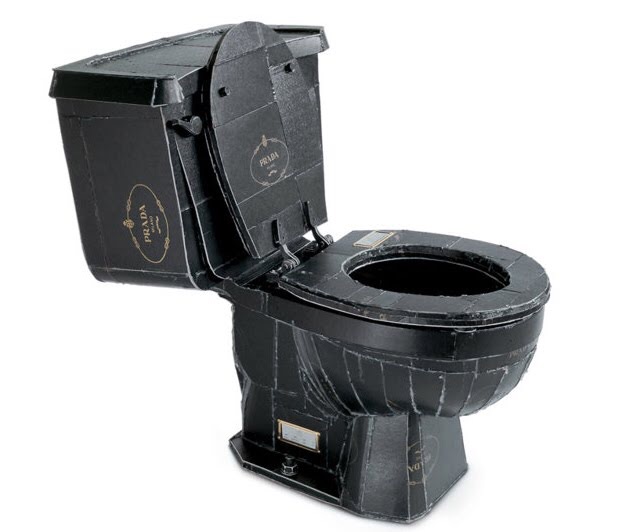
He also made this Prada Toilet in 1997:
Wait – I’ll actually leave you with this picture below, since so many of you get upset about art offerings like those above, even though they’re good enough for the Guggenheim family.
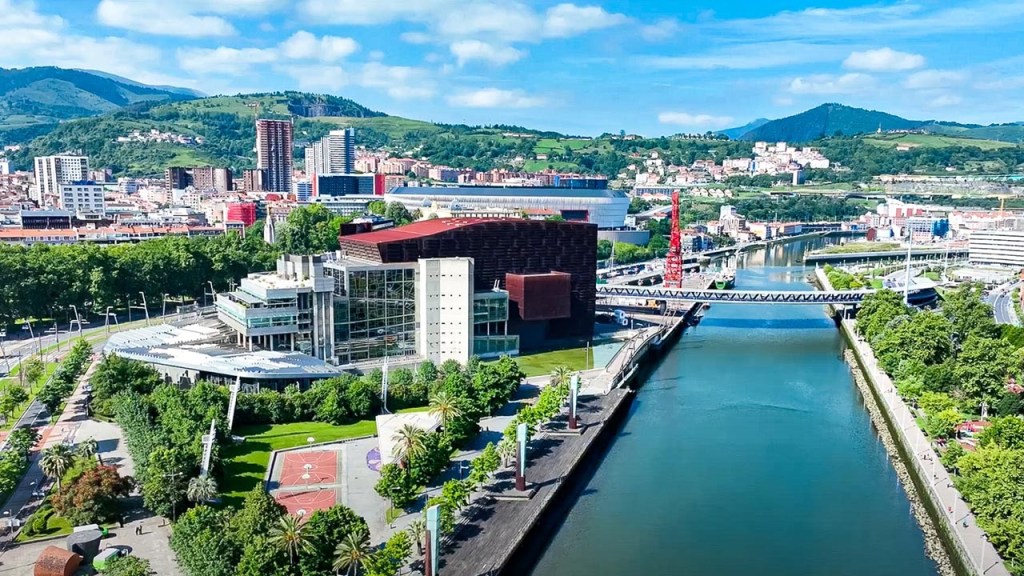
It’s the Euskalduna Palace – a new music venue that was built on the riverfront near the Guggenheim. It’s from 1999 – 2 years post-Guggenheim – and has both a concert hall and an opera house:
 Travels with Valerie
The before and after photos are fantastic, the art and architecture are too. Stan and I have to look into a trip like this. I too love each city you are visiting. xxx
LikeLike
It’s really a great architecture spot! I’m coming back in March on an OAT trip after some time on my own:)
LikeLike
The renaissance of a city stemming from an architectural project is really fascinating. What a gorgeous and happy transformation for all involved.
And yeah, I think the grateful dead played Klein’s Monotone Symphony on a nightly basis, right around the drums –> space segment.
Cheers to you and yeah, keep on truckin’!
LikeLike
Oh, I can see them including the Monotone Symphony! And yes – Bilbao – such an awesome city. It was apparently quite something in the 80s though.
LikeLike