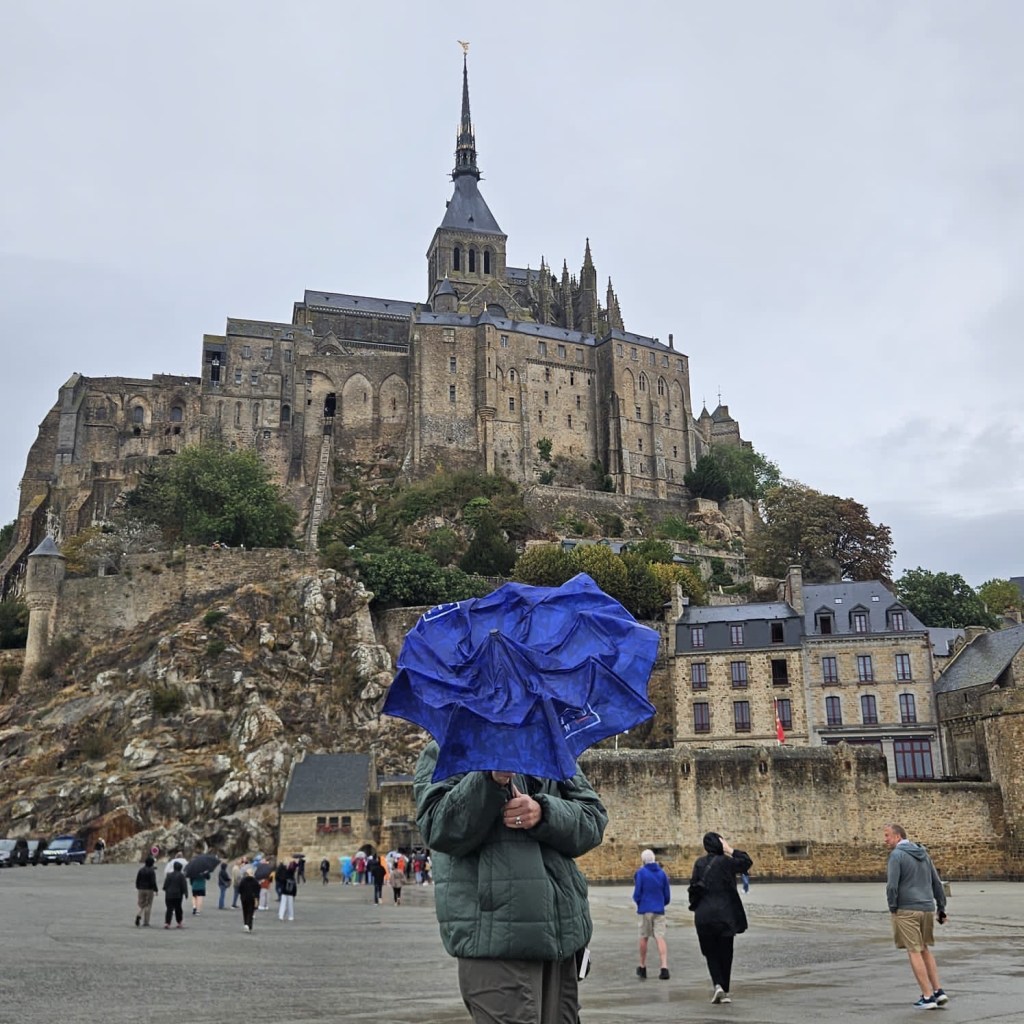
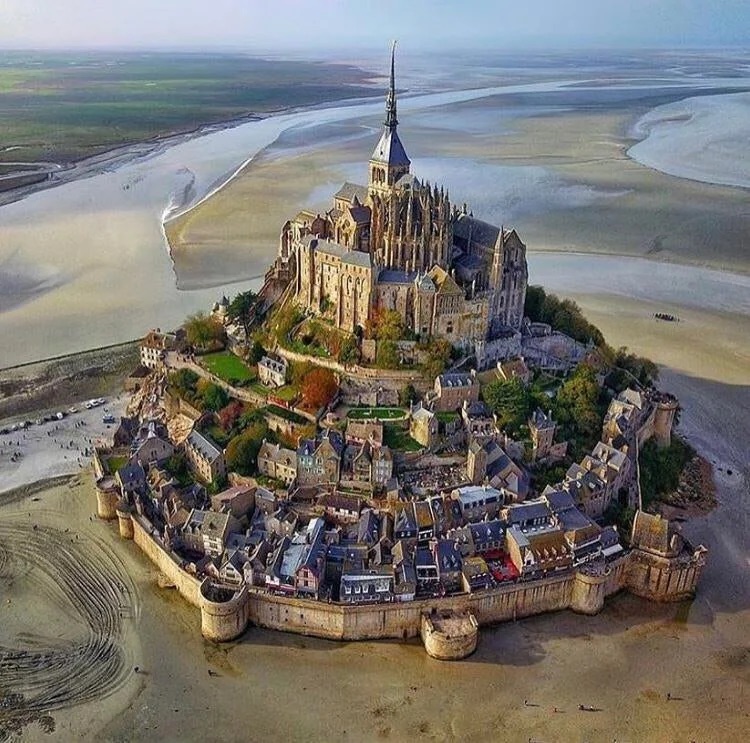
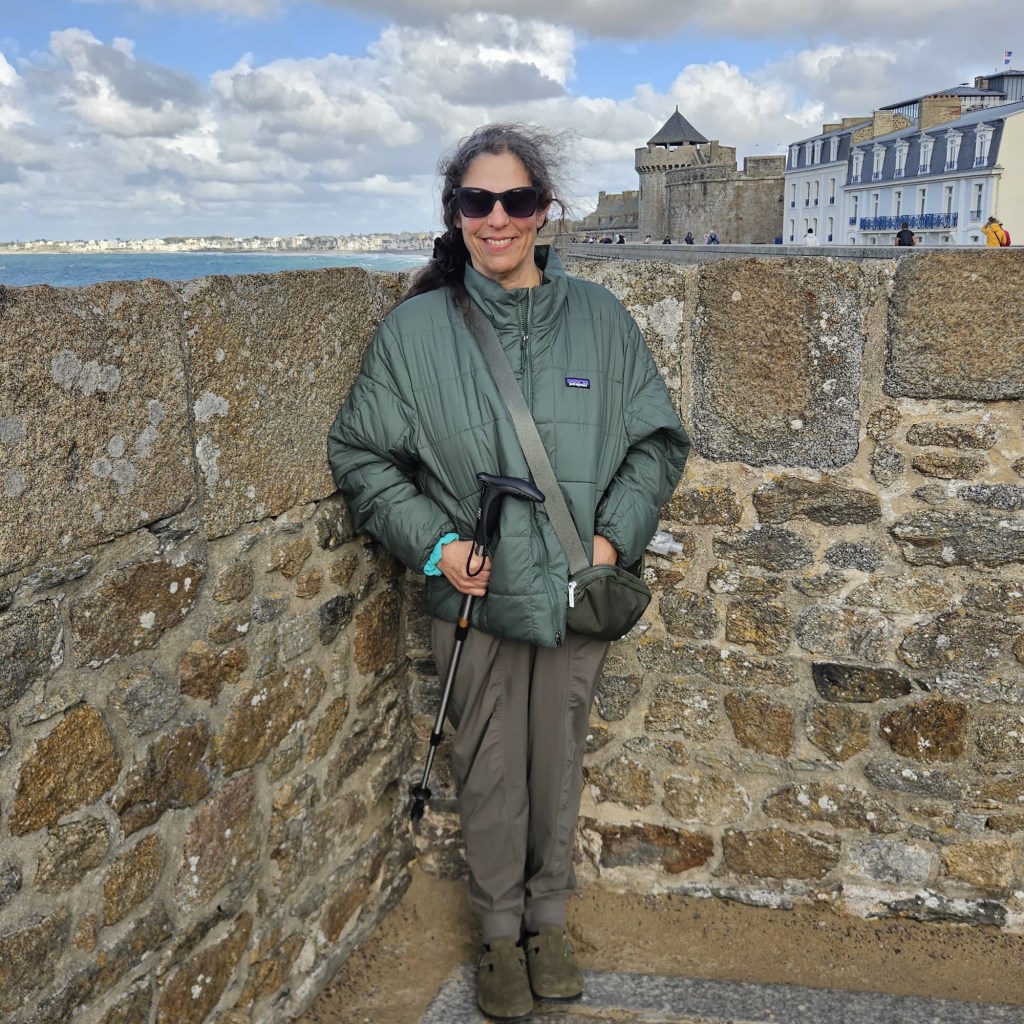
We went to Mont Saint-Michel – a tidal island with a medieval village perched there and a gothic abbey at the very top. I would describe the weather as poor due to wind. My legal assessment of the wind speed was about 80 mph and one of my tour mates looked it up and it was 24 mph so I was fairly close:
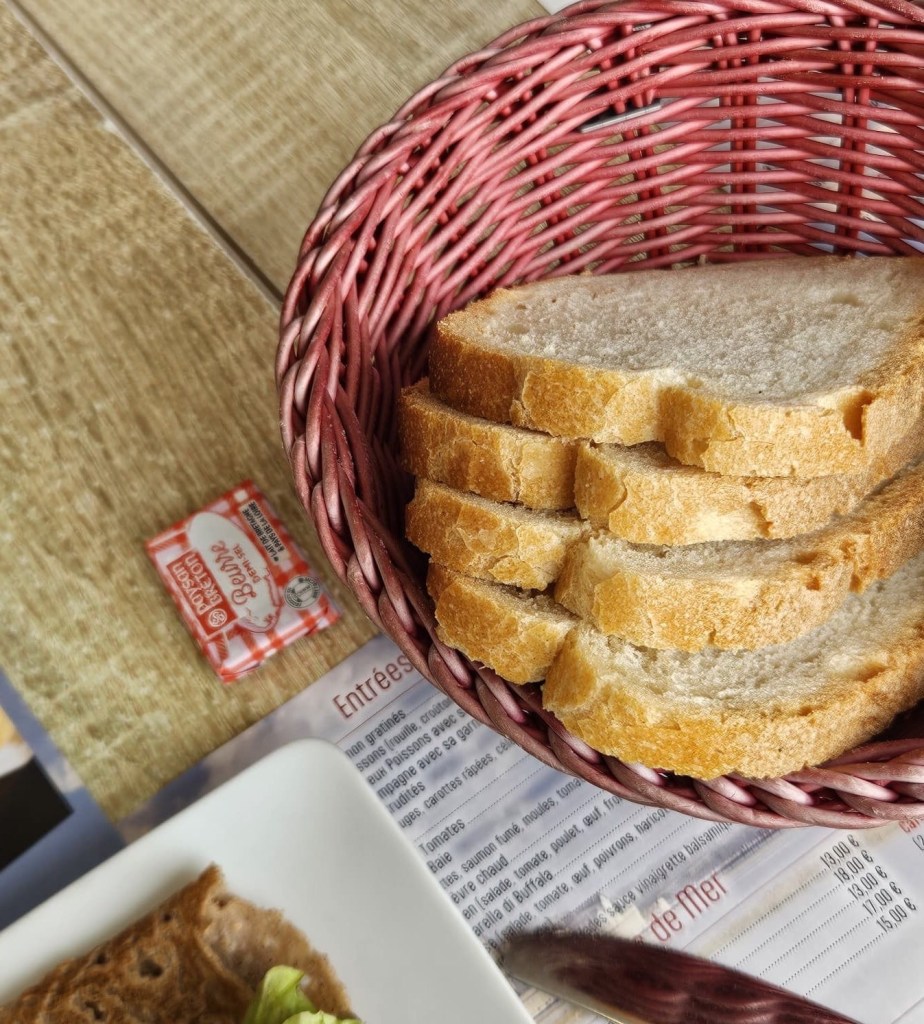
In addition to being windy, Mont Saint-Michel is struggling with a butter shortage – and so when I stopped for lunch with a couple of my tour-mates, we were given this nice basket of bread for 3 full-grown adults. We asked for some butter and, after frowning at us, the waiter brought us this pat of butter to share: (Later on in the meal, the three of us decided to bravely ask for more butter and an actual heated and gesticulative discussion occurred between two of the waiters and – after looking at us like they caught us skipping out on the bill – they came back with another single pat of butter so the shortage must be serious.)
Note: We told our heartbreaking couldn’t get enough butter story at dinner and we had other tour-mates reveal that they too could not get all the butter they wanted here in northern France. Perplexed, we, as a group, took our troubles to our Gate 1 tour manager, Robby. It’s his job to shepherd us around France and give us historical facts about sites.
It seems a reasonable stretch to ask him to help us get more butter and so we did and – in testament to Gate 1 customer service, Robby’s dedicated himself to getting us as much butter as 13 travelers require and the kicker here is that Robby doesn’t even care about butter and – in fact – has never buttered a piece of bread or toast or muffin – but he’s a professional and doesn’t belittle our hobbies.
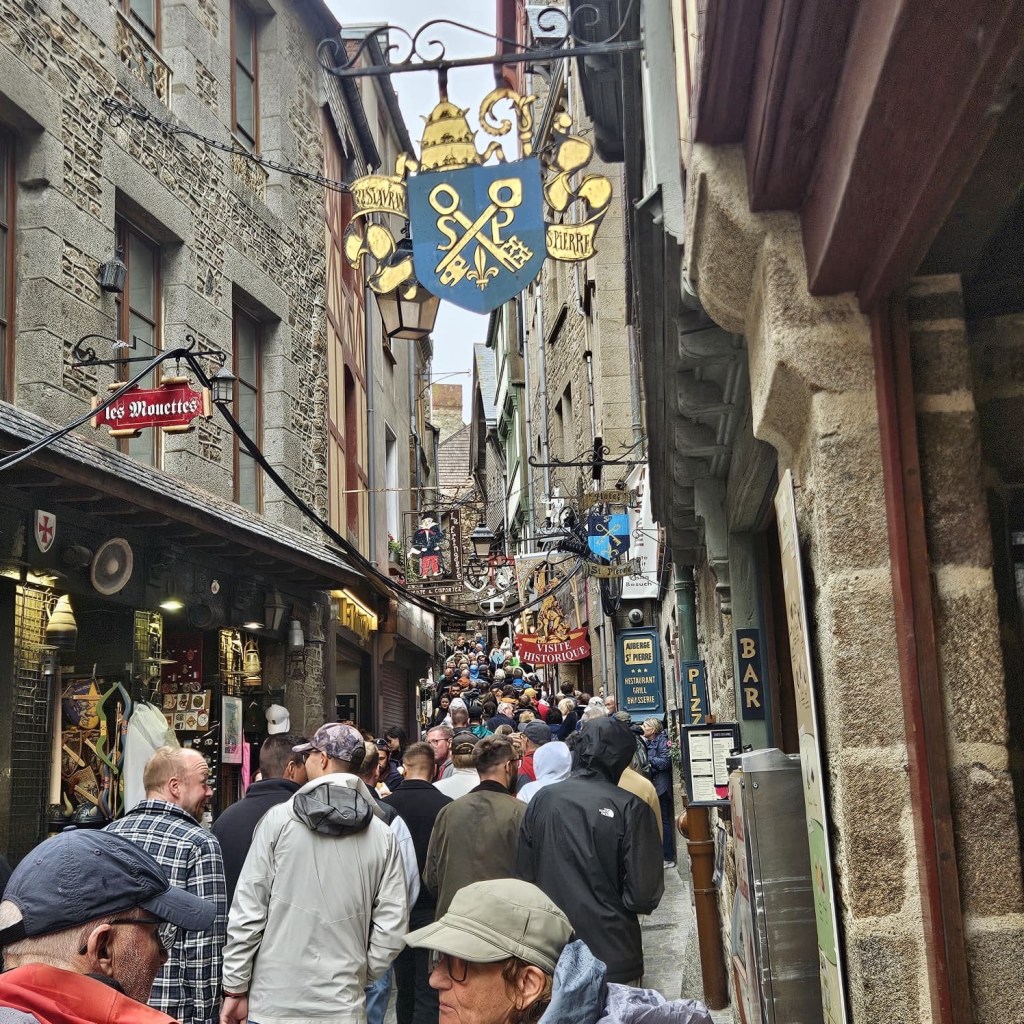
Mont Saint-Michel is a very crowded UNESCO site – and receives about 3 million visitors a year – the most-visited attraction outside of Paris. It felt that crowded today…these are the people walking ahead of me… especially interesting since the actual island population is only 23.
Here’s how it looks at high tide:
Here’s low tide, with the tides moving in and out at up to 3.7 miles per hour. Due to that vast and shallow bay you see below – coupled with a strong Atlantic water flow across that bay – the tides are famous for being the fastest in continental Europe:
One of the reasons I picked this Gate 1 bus tour is that it fit within the date parameters of a longer trip – and it got me up to the Normandy Beach area for a bit. I’m giving up travel control for simplicity – and so we ended up staying in a town I would not have picked for a Normandy visit. But wow – Cabourg is gorgeous!
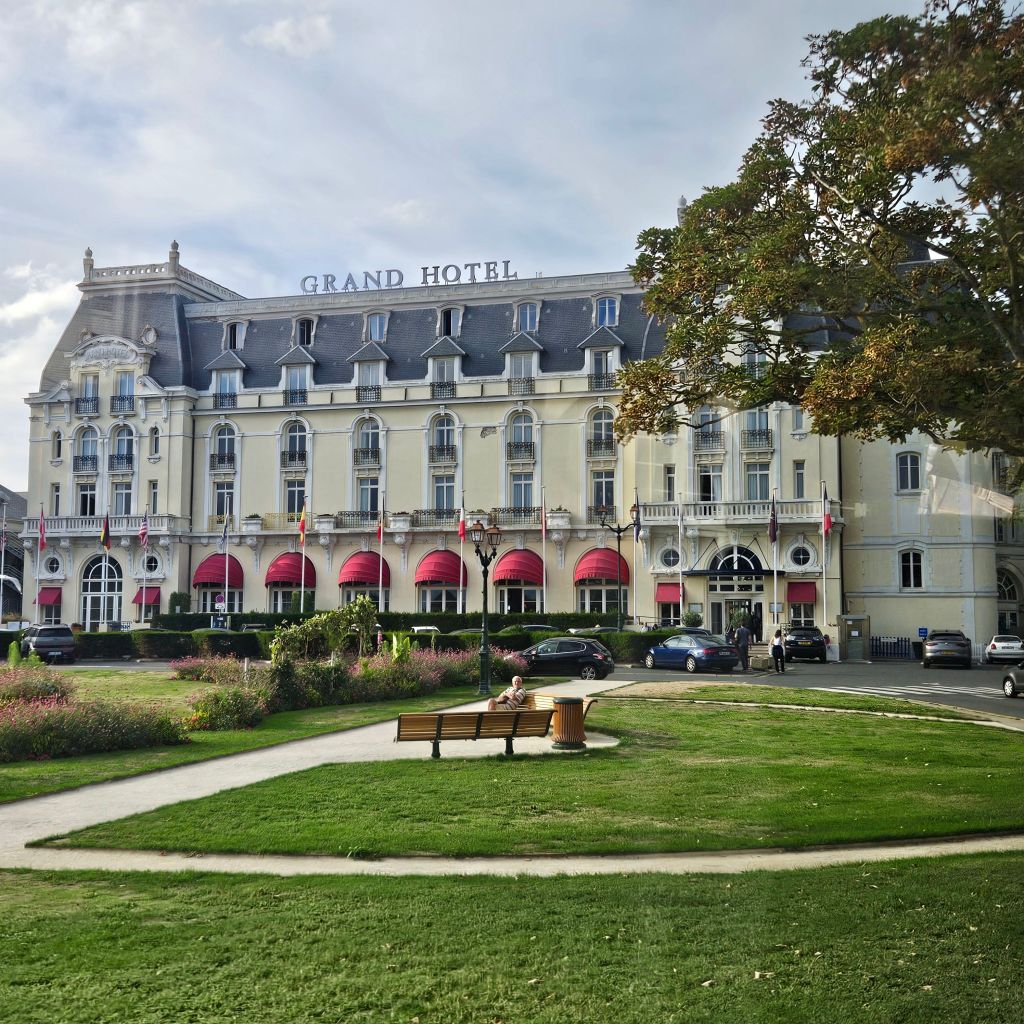
Cabourg is a seaside resort town – mostly developed in the 19th century and packed with Belle Epoque architecture. Gate 1 even put us up at the Grand Hotel:
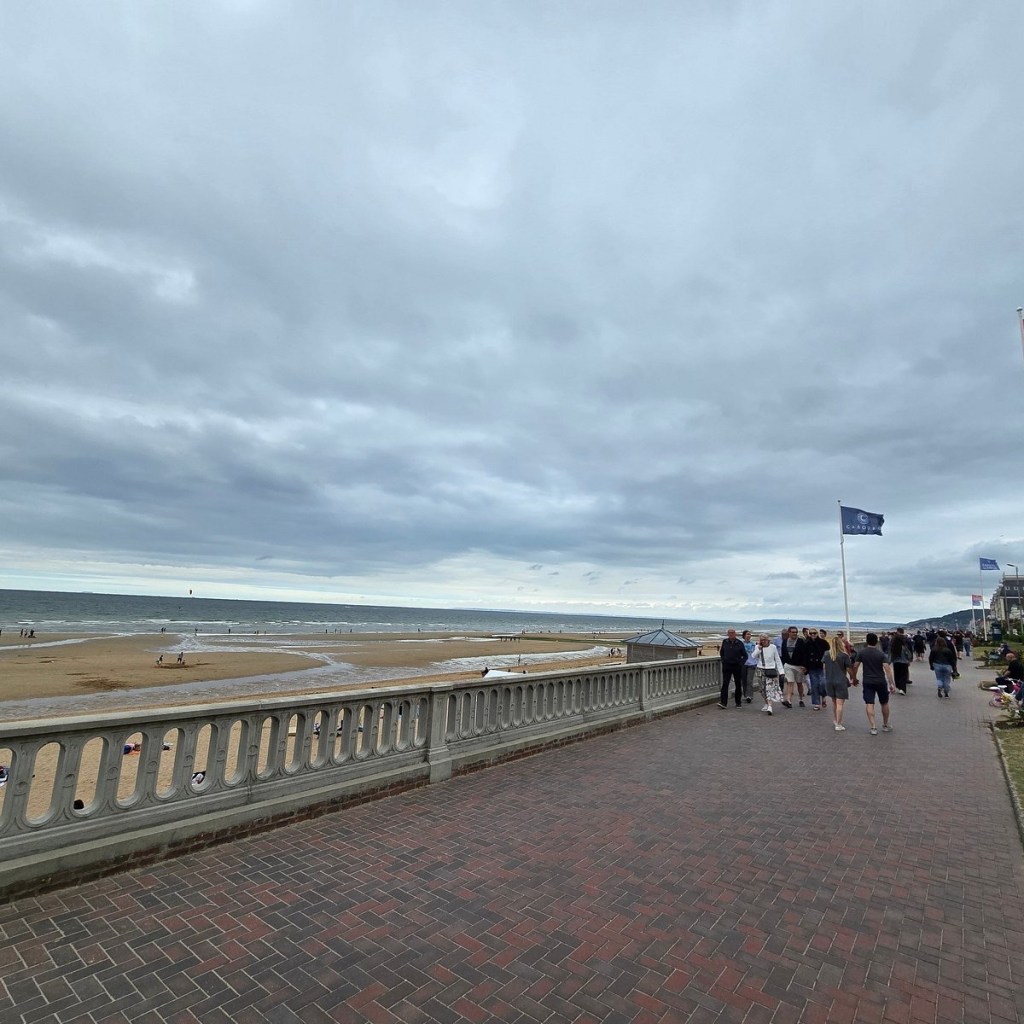
Right in front of the hotel is a wide beach and the Promenade Marcel Proust – named for the writer, who liked to come here to write, staying in the Grand Hotel. In his novels, the town called Balbec is really Cabourg. This is the longest pedestrian beach promenade in Europe at 3.6km.
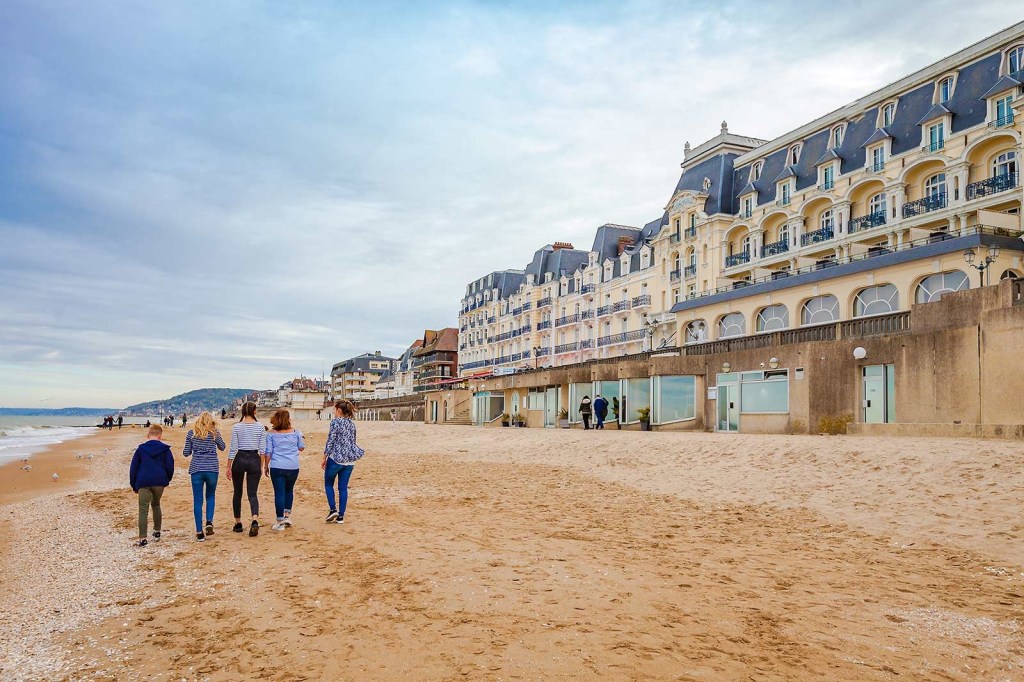
Here’s a couple of the buildings near our hotel:
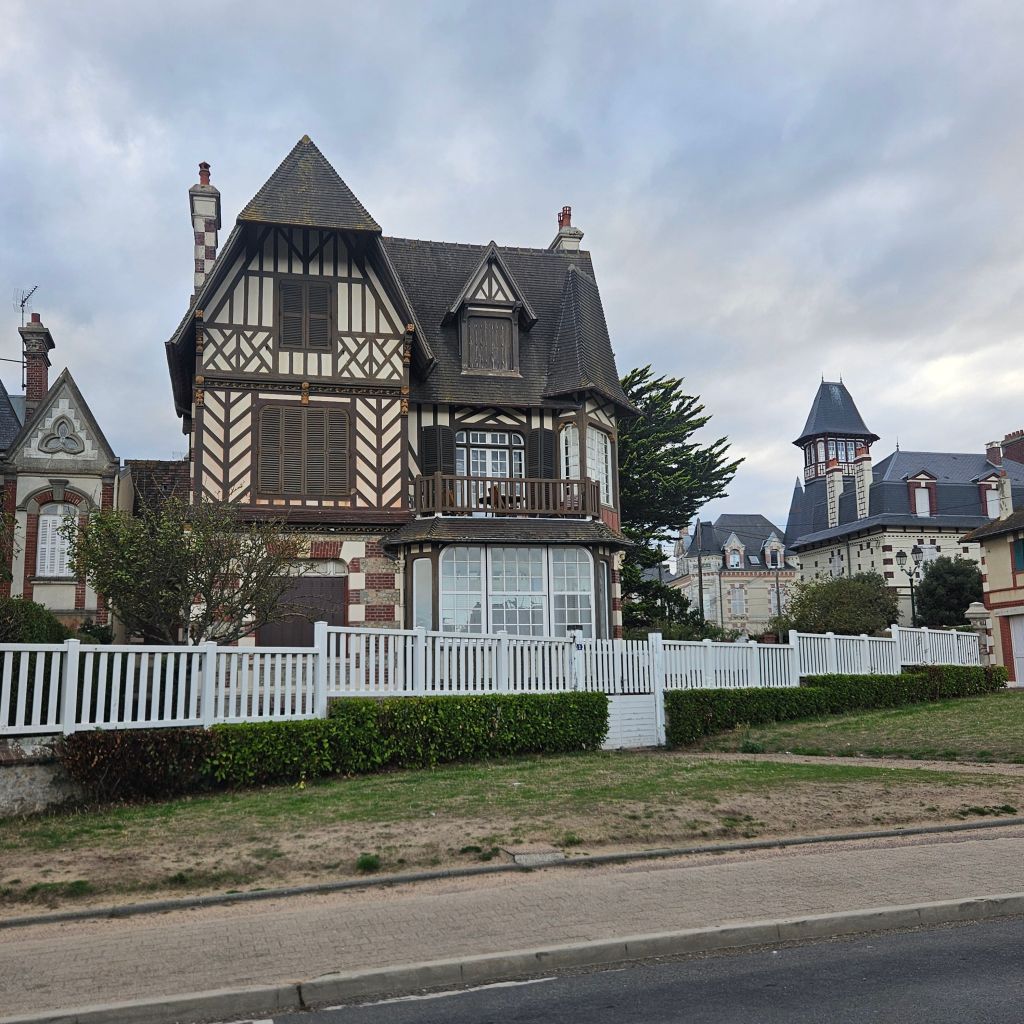
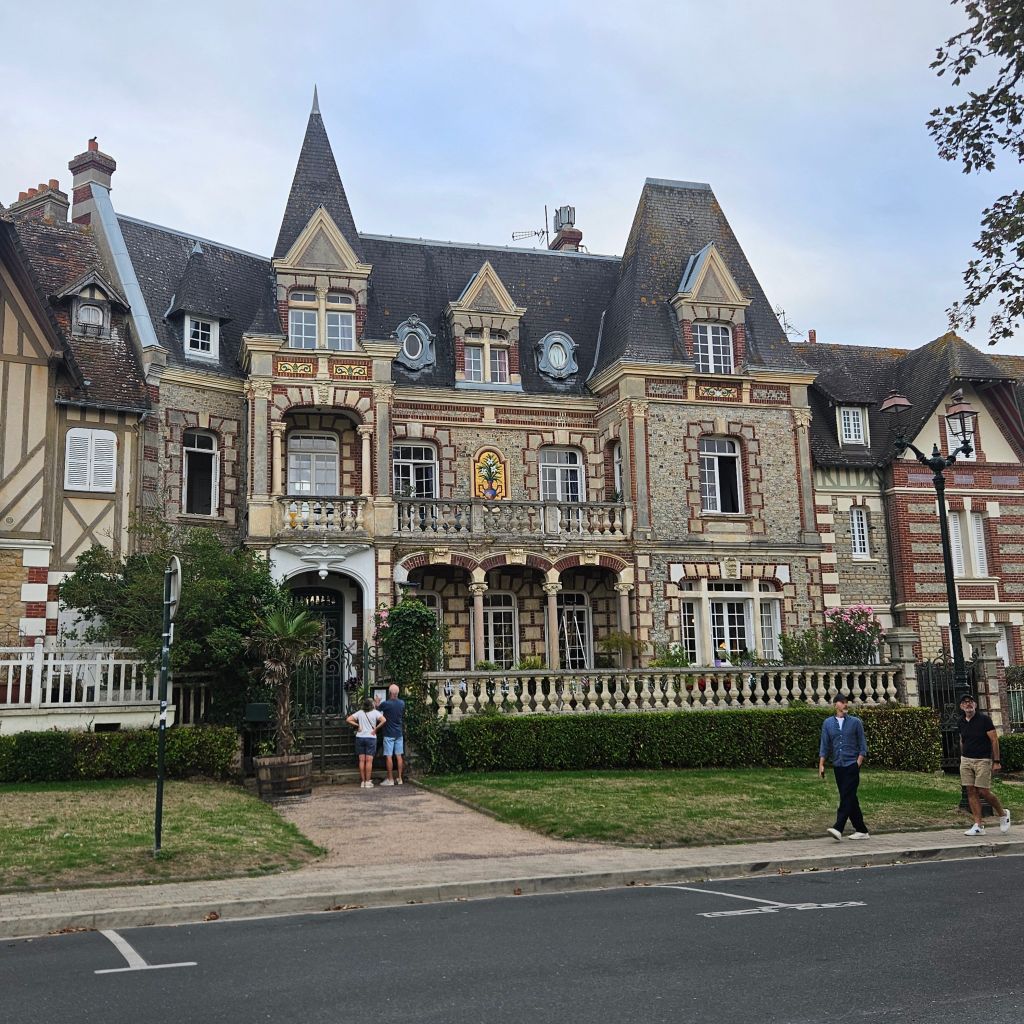
You readers know that my grasp of history (and art!) is limited. What I’ve come to understand has been hard won – dates, dynasties, lineage, battles – they don’t stay in my head and it becomes a swirling mess of Peters and Catherines and Richards. It drove Ron nuts – because I can list useless things like the non-stop flight schedules from SeaTac to every city in Europe and the color history of North Face Denali jacket design.
But travel with Ron meant that, eventually, I would come to understand a fair amount about WW2. We planned to go to Normandy together – it was part of the trip we had planned right before he got sick. The area is full of museums – there are about 19 various war museums – and we only got to one in Caen so I need to return. My only real goal for this first Normandy visit was to see Omaha Beach in person and to at least stand there – where 34,000 Americans came ashore on June 6, 1944 – with 2400 casualties.
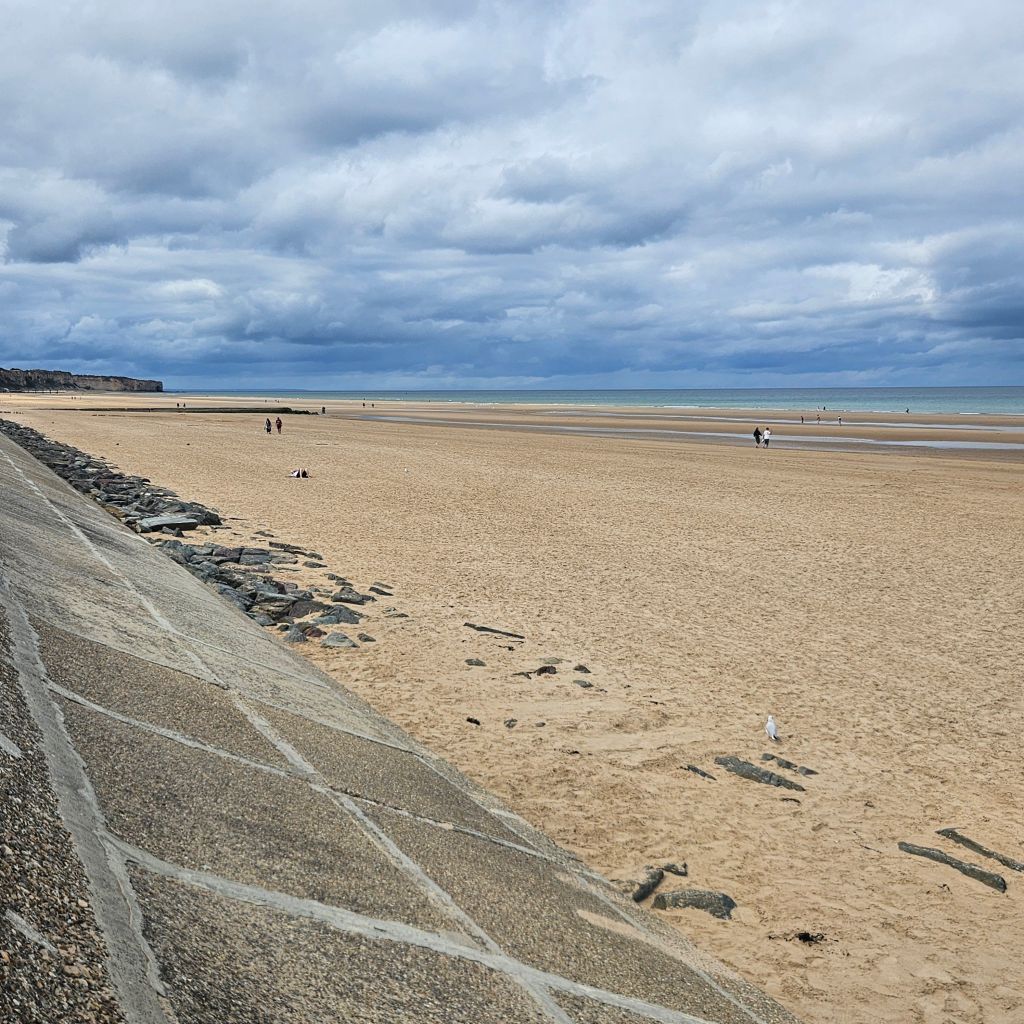
I am silenced by the sacrifices made there – the unquestioning bravery and determination – the commitment to morality and righteousness. That’s the larger story for me as well – the small rebellions, the sweeping military plans – the moral world, gathered together to overcome such a menace in such recent history.
It makes me feel a lot of things – proud, but also concerned – because as I write this, I see that Germany’s extreme right AfD party just won an election in Saxony – with 43% of the total vote. One of their leaders – Bjorn Hocke – has been fined twice by a German court for using a banned Nazi phrase – Everything for Germany – which was a slogan of the Nazi stormtroopers and engraved on their daggers. Their platform includes opposing climate change mitigation and stating that Islam does not belong in Germany. They’re anti-abortion, increasingly pro-Russian, and oppose same-sex marriage. They want to ban the sale of kosher meat.
And then this: in 2017, 10 AfD members who have been elected to German Federal Parliament (Bundestag) were found to have a little Facebook group to share thoughts/ideas/atrocities and they posted a meme that showed Anne Frank’s face on a pizza box with the words fresh from the oven.
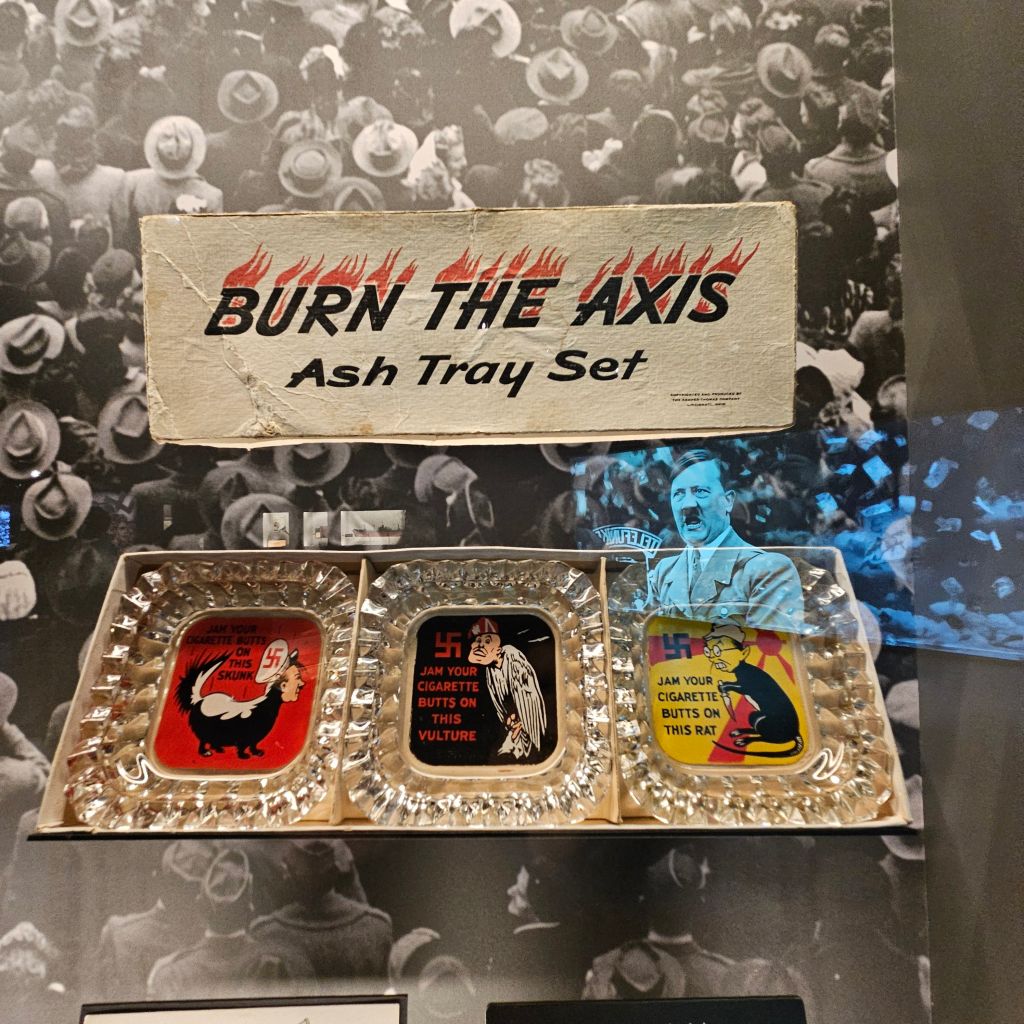
I won’t post that picture here. I’ll post this Caen Memorial Museum item instead and just finish by saying that I sometimes think I don’t understand anything about the world at all:
Let’s talk about something else. Here’s my “air conditioning” control at the Cabourg Grand Hotel:
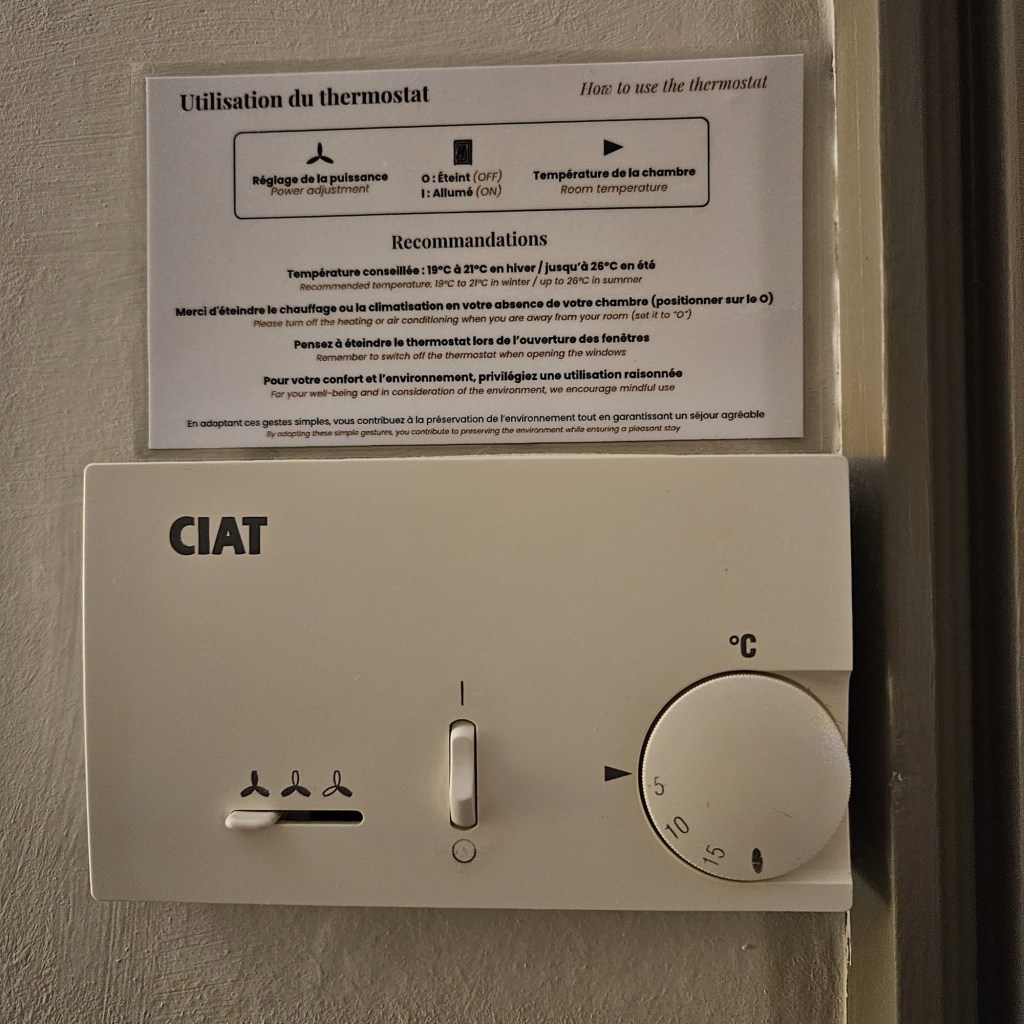
It appears to offer me the following temperature options – 5, 10 and 15 degrees Celsius. This equates to 41, 50 and 59 degrees as the offerings for my room, which is funny, because at no point did I get my room cooler than 74 degrees and I could feel no air flow from any vent and I know it’s mean to say, but I think that a lot of European climate control devices are merely decorative.
We also got to spend an evening in St. Malo, France – in the Brittany region – which was featured in the novel and TV series All the Light We Cannot See. St. Malo was 80% destroyed in WW2 because the Nazis had made the city a fortress in their Atlantic Wall. After D-Day, the Allies decided they needed access to a major port like St. Malo and decided to capture it. The subsequent battle with German forces left the city looking like this, with 680 buildings destroyed:
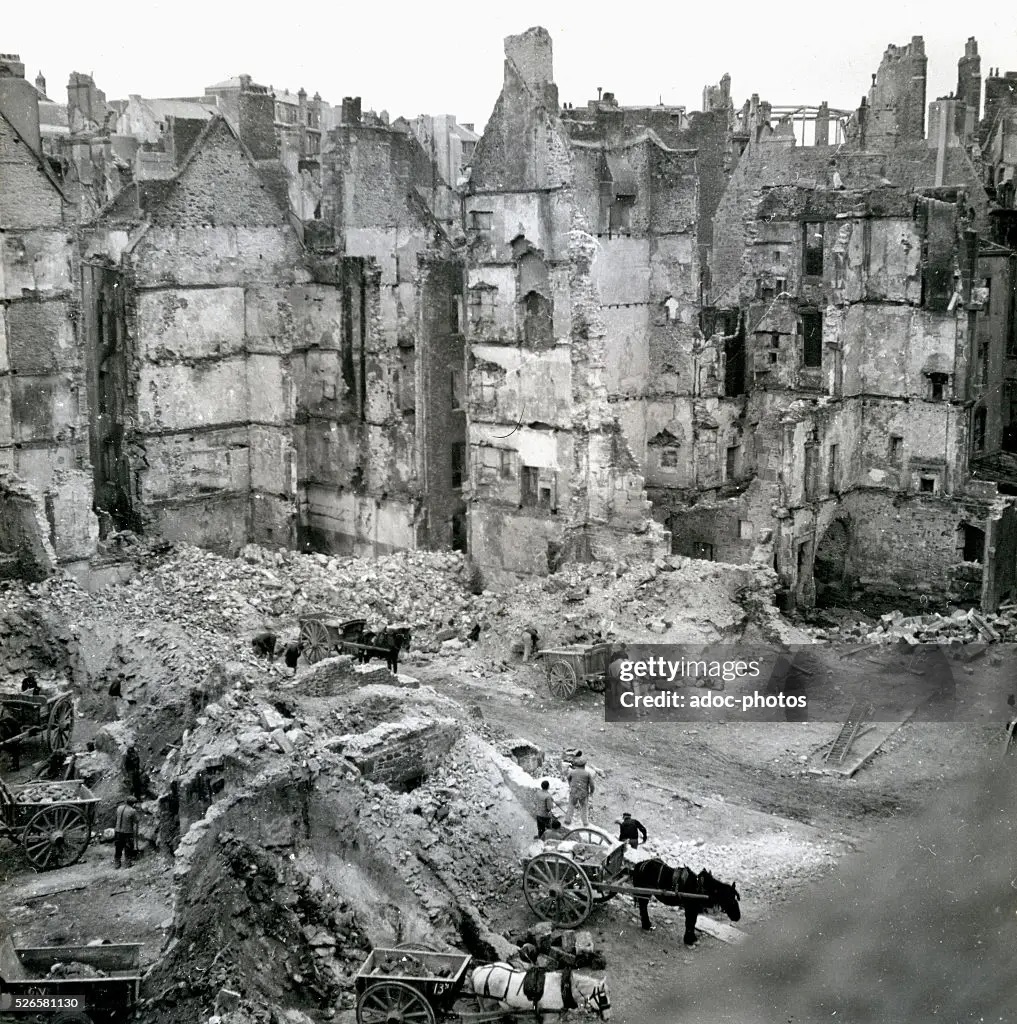
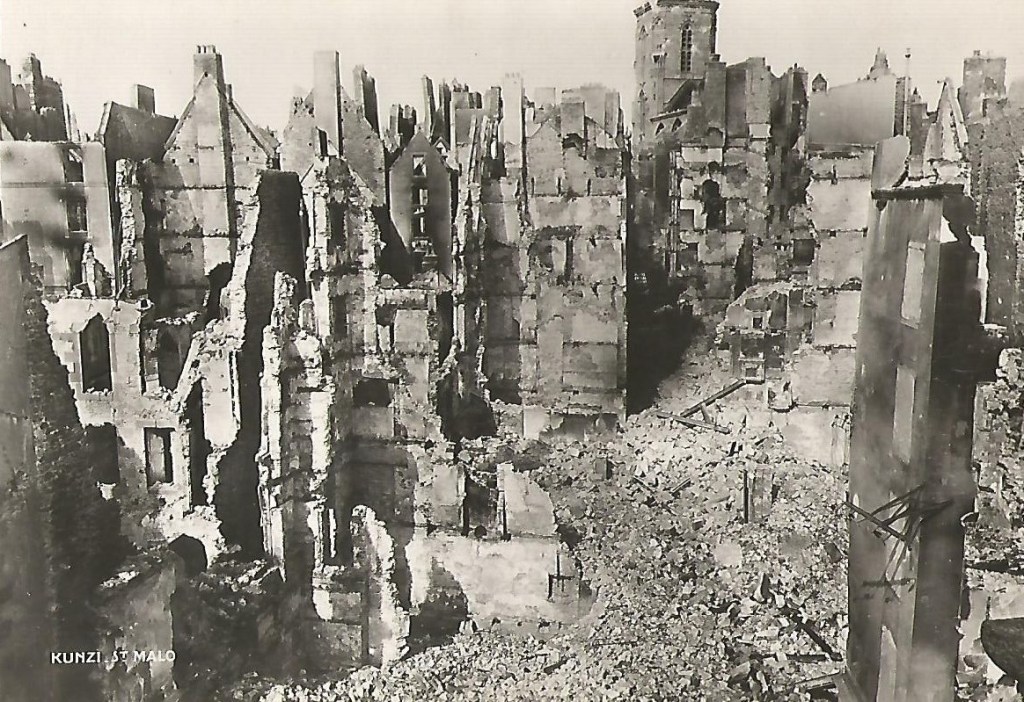
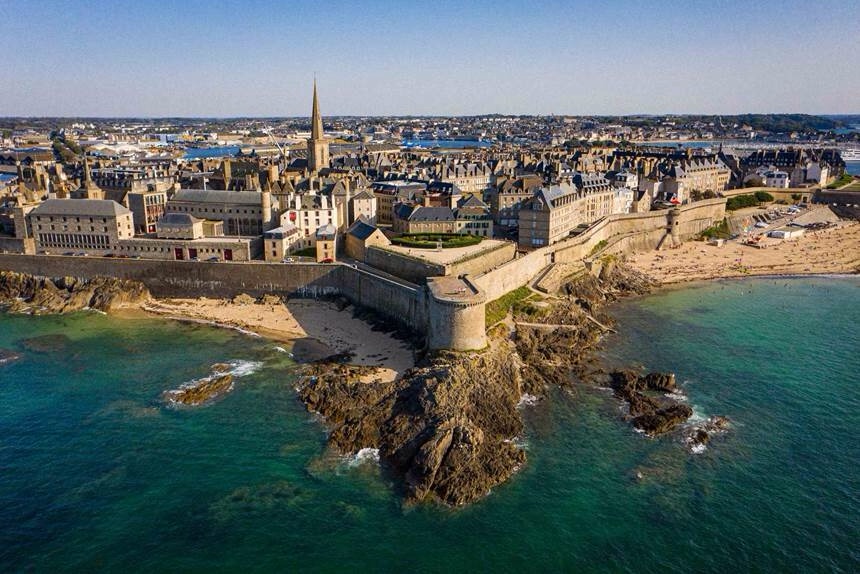
The city made the decision to rebuild a replica of the old city – starting in 1947 and working through about 1960 – and sorted through 500,000 cubic meters of rubble to save the building material they could (picture a massive room that is 8 football fields long – filled with debris). And so St Malo today is just a beautiful small city:
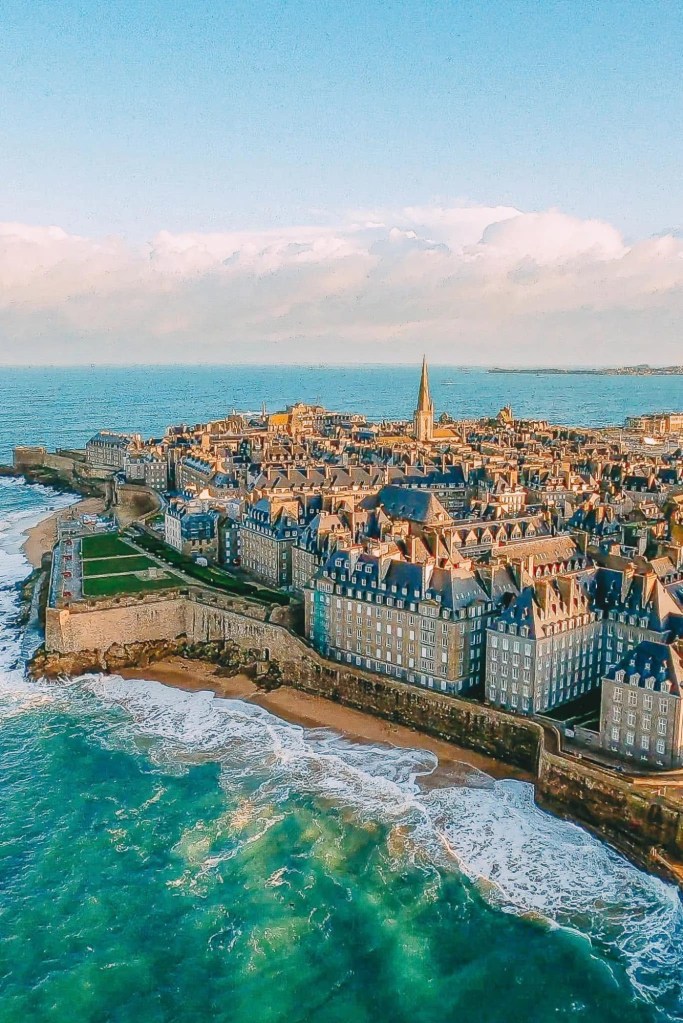
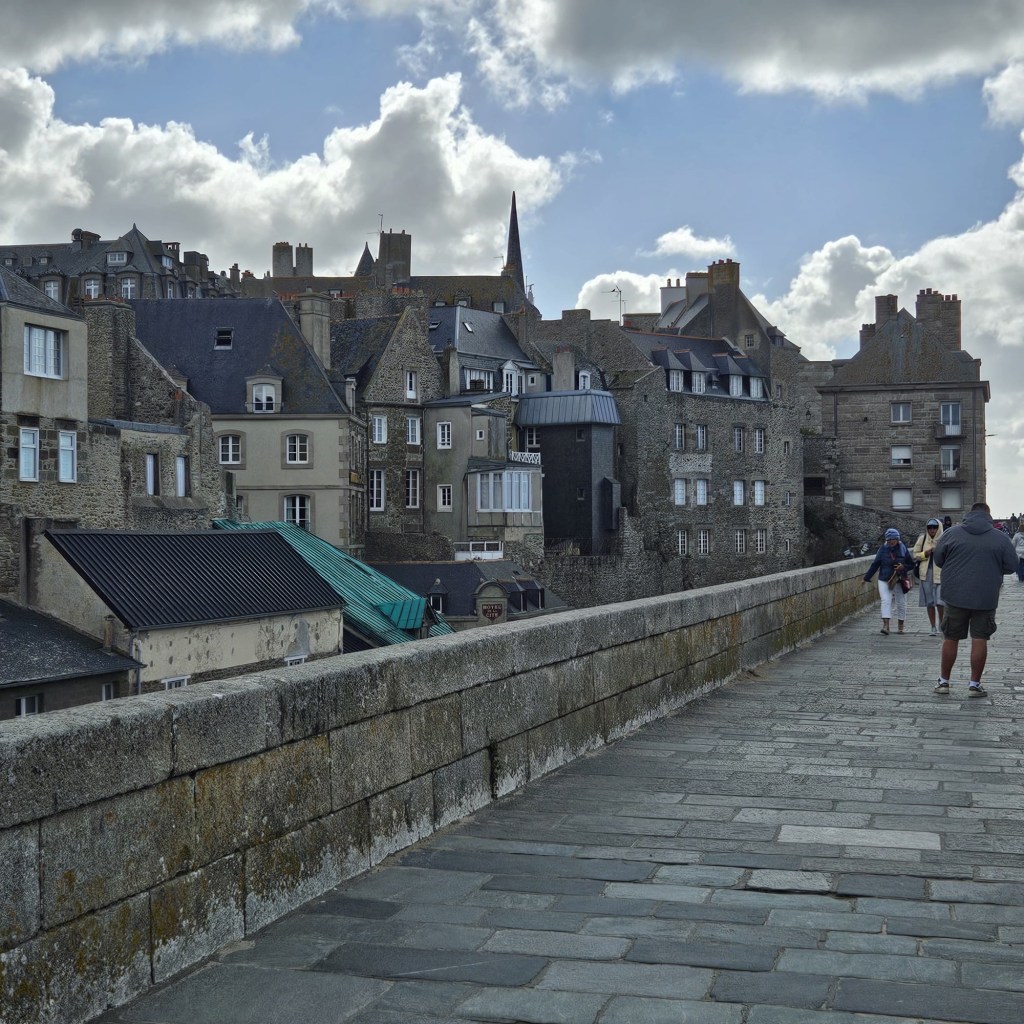
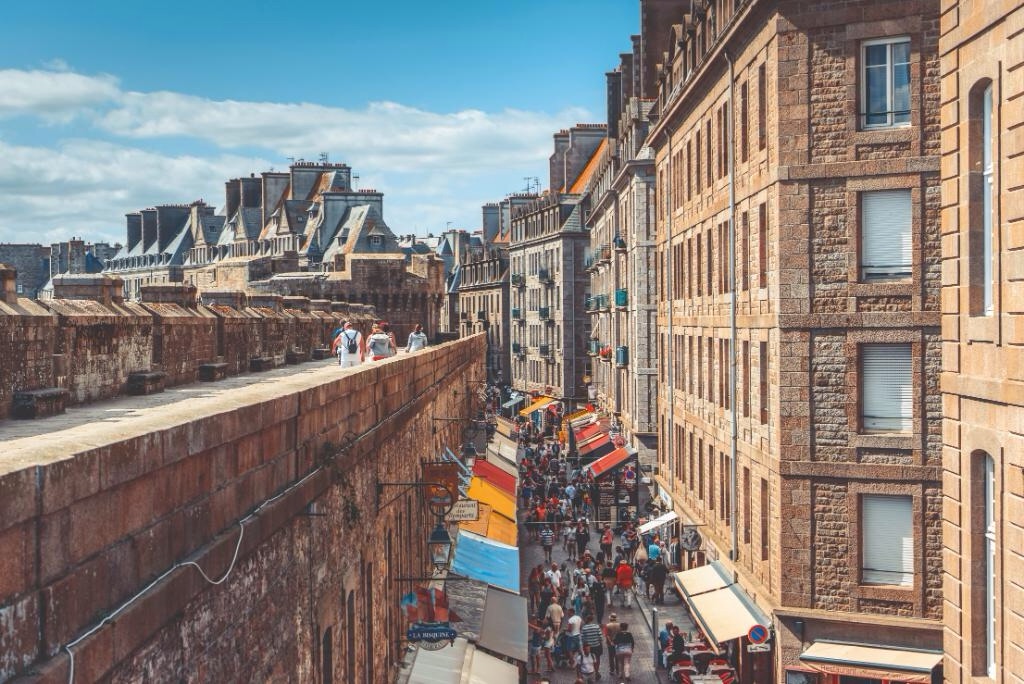
In (questionable?) keeping with the city decision to maintain the architectural integrity, St. Malo highlights included this brutalist-style bathroom, decorated with these tall wooden sticks:
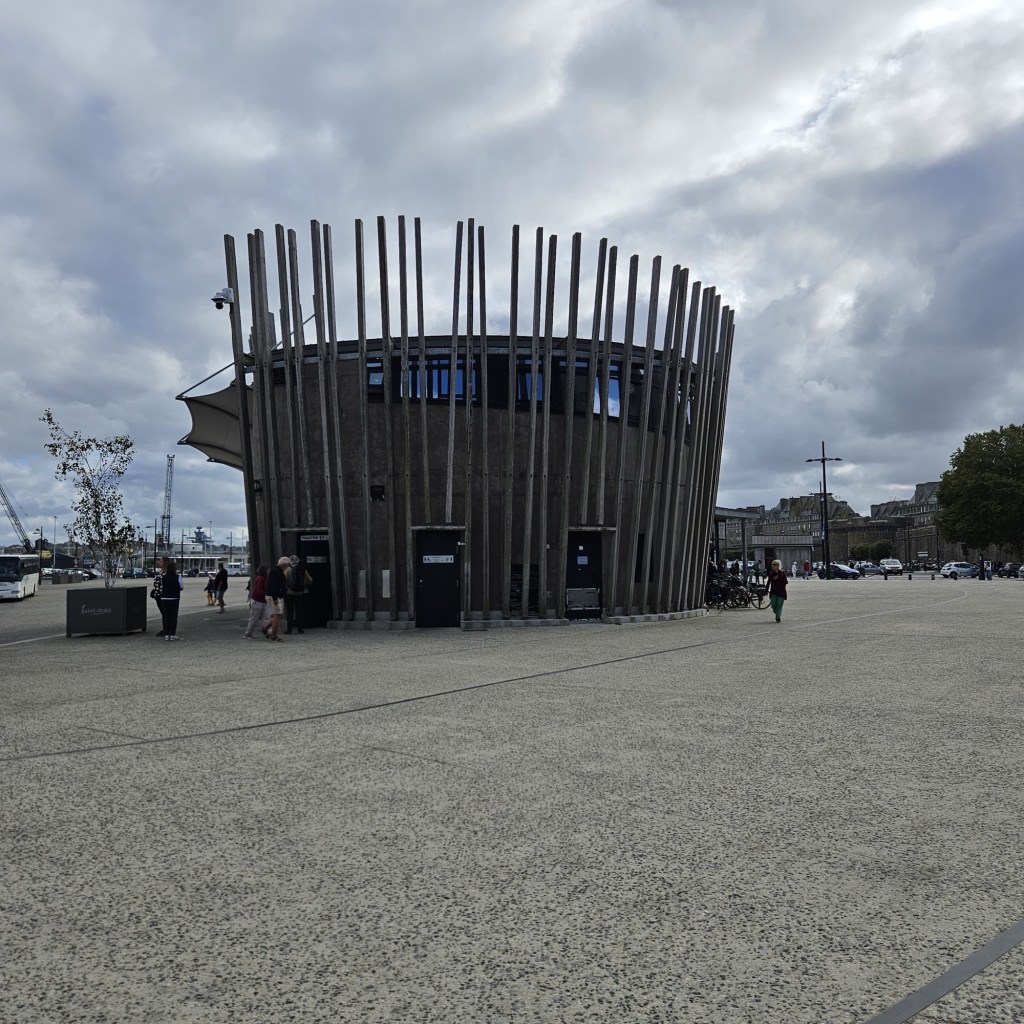
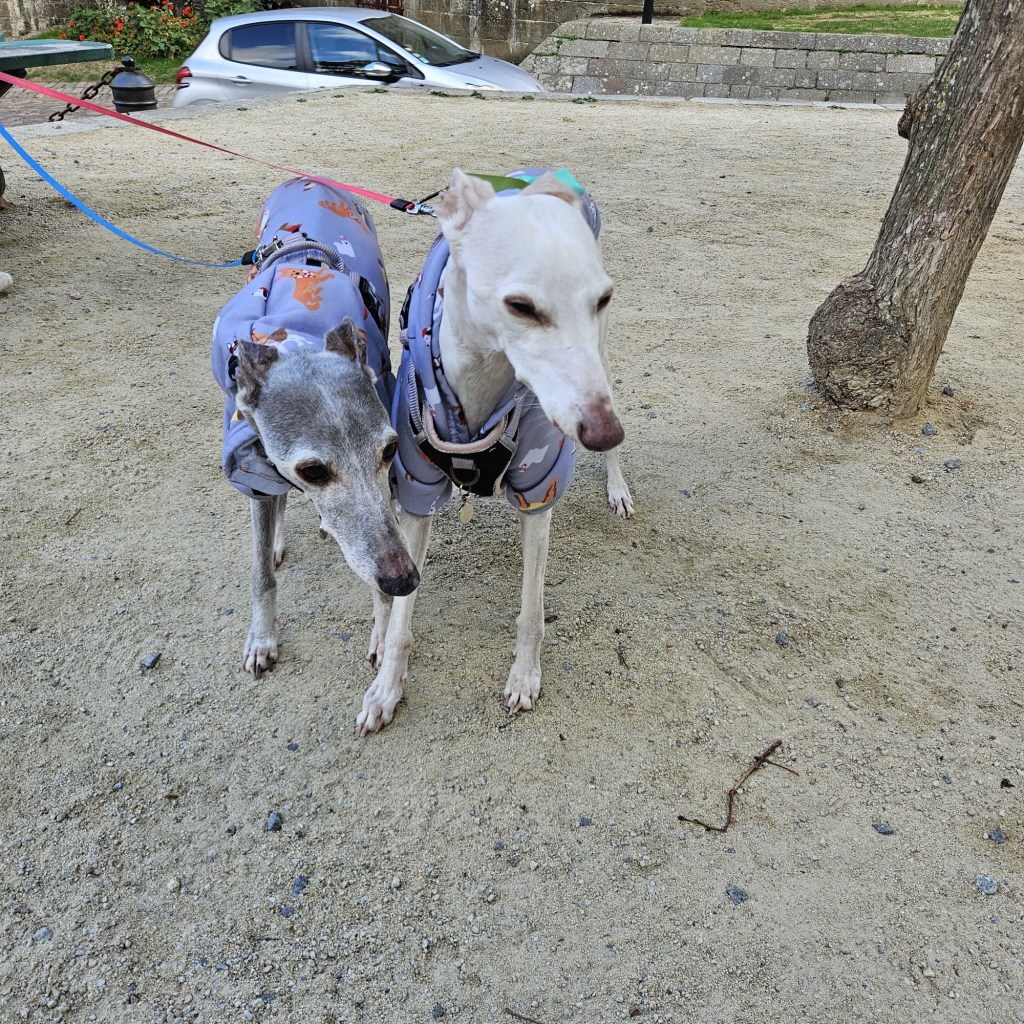
These two friendly whippets:
It turns out that St. Malo is also famous for creating a pastry that I discovered a few years ago called a Kouign-amann. There’s a bakery back home that sells them – and based on doing no research but hearing the word “Amman” in them, which is in Jordan, I decided and long assumed that it’s a Lebanese pastry;)
But – as ever, I’m wrong. The Kouign-amann is from St. Malo. The name translates to butter cake and the batter required to make these is apparently 30% butter – and a special high-fat, salted butter from the Brittany region is required and if maybe this is the reason that the restaurants can’t serve me butter – they need it for these pastries – well I might be okay with that.
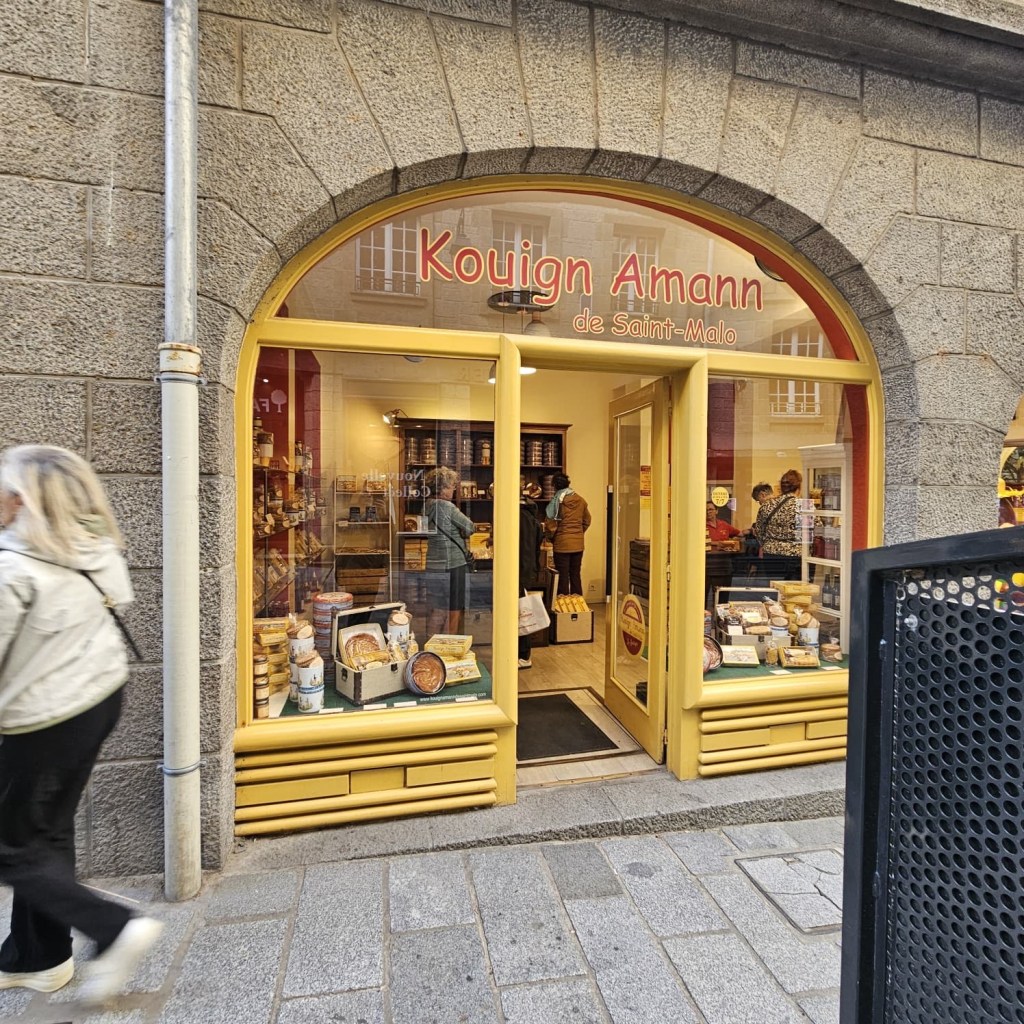
Here’s one of the bakeries:
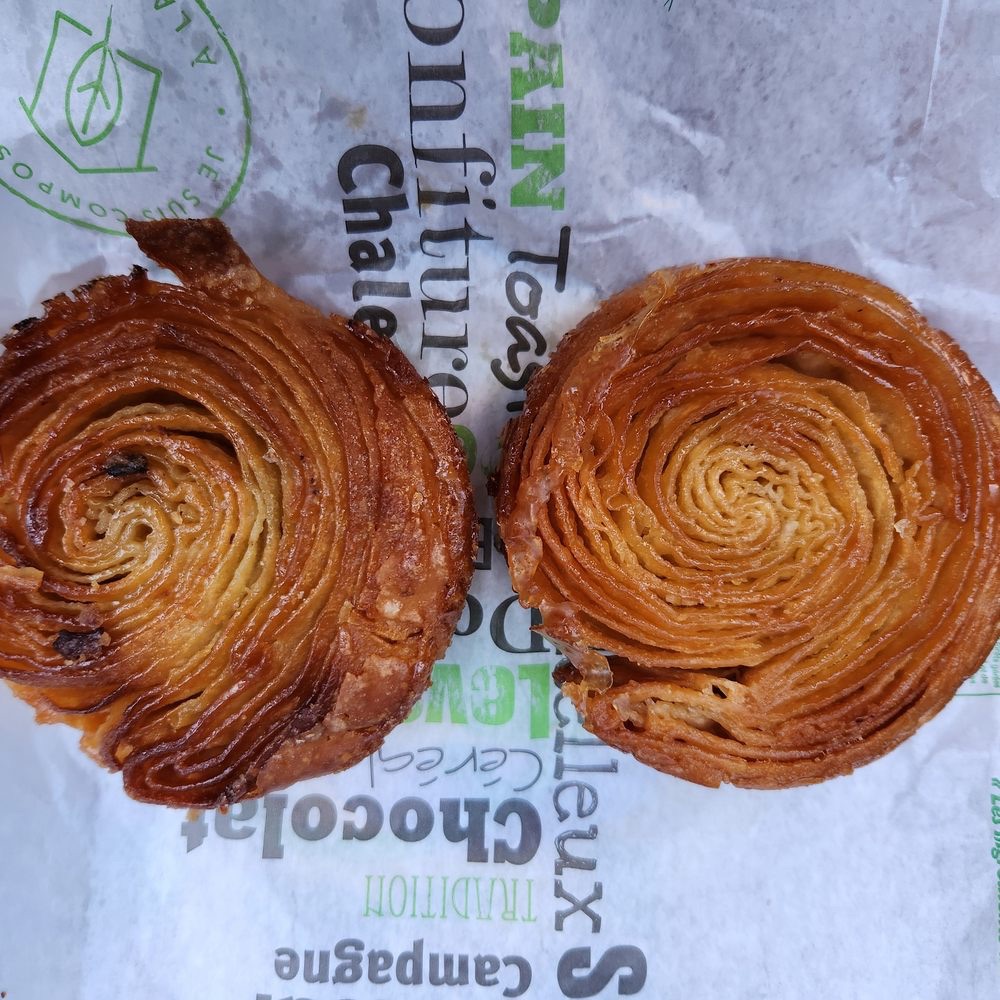
And here are a couple shots of these beautiful treats. This is one of the top baked goods of my entire life. For my fellow Great British Baking Show friends – these pastries display the most impressive lamination I’ve ever seen:
That’s it from Normandy and Brittany. Our amiable little group of 13 – butter-eaters co-existing with non-butter-eaters – is heading down to the Loire Valley so I’ll talk with you in a few days.


Great post, as always. I like Road Scholar a lot but
LikeLike
1. “Obviously”, French bread is so good, that asking for butter is blasphemy, and putting butter onto bread is an act of heresy.
2. “Obviously”, all the butter in the region is going to those scrumptious butter cakes in St. Malo: oohhh myyyy! 🧈
3. “Obviously”, most North Americans have a weakness for air-conditioning, and many hotels in Europe simply humour their visitors with devices which merely tempt and induce forlorn longing.
4. There’s a sticker I often see in streets throughout Germany’s major cities. The sticker is simple, consists of two words and a total of six letters: “FCK NZS”
LikeLiked by 1 person
Henry,
I typed you a response on my phone and then…poof…it disappeared…I think! So here’s attempt two: I agree about the bread and the heresy…but I maintain my allegiance to butter. The kouign-amann was the best one I’ve ever had. I want another one really badly but we’ve moved south from Brittany and I think I’m out of luck. As to your #4 – I’m glad to hear about that. But I’m still so upset to hear about those growing German statistics – and not just Germany, I know…humankind seems to sometimes lack humanity.
Thanks for all your notes!
Valerie
LikeLiked by 1 person
Fantastic, as usual!
LikeLike
Hi Val:
Wonderful post! Good that you were able to solve Great Butter Mystery. We had the same problem finding mustard in the Loire Valley.
On the other hand, the pastries look like they might be habit-forming.
Stef and I have become wary of UNESCO World Heritage Sites. In Dubrovnik you could hardly move in the mass of people. Mont St. Michel seems even more crowded.
I know that wind can be a problem. When in Iceland, I wanted to see Snaefellsjokull, the extinct volcano from which the adventurers started out in Jules Verne’s Journey to the Center of the Earth. Got there okay, but the wind appeared to be gusting 60 knots or more. That, as they say, was the end of that.
Please keep on keeping us posted!
Stan
LikeLiked by 1 person
https://share.google/Ya1KNRnXzuvffWP5y
In reading your welcome post i was reminded of AA Milne’s 1924 poem “The Kings Breakfast. It is beautiful read aloud and this link provides an audio option. After WWI butter was rationed . The moping King laments “I do like a little bit of butter to my bread”. Regarding your post, it was a treat to see you looking so well. We spent the night on Mont Saint-Michel w/ Rick Steves tour in 2022. You arrive as everyone is leaving, have dinner and are up early to start climbing to the top for 6:50am Lauds Prayer. Then after breakfast we climbed to the top again for the tour. We too were horrified at last week’s German election results. Horrible and can not explain. JD Vance has decided all the tax dollars set aside for young single mothers is going to be given to married mothers who stay home w/ their children. (As his Yale Law School educated wife is doing). Something like $9,000 for the stay at home mothers. You asked about out trip. We fly business class SFO to IST and Turkish Air gives you three nights complimentary accommodations. Then we fly TA to Bordeaux where George has qualified for eight day French immersion program. Then we have a week off and will probably go to Sarlat and Beynac. Then we are doing RS one week Paris tour before returning to CA via Istanbul 26 October. Best Byzantine art in the world is in Turkey. Sally Moxley who now lives in Atherton CA
LikeLike
Your trip sounds awesome!!!! The RS Mont Saint Michel trip plan sounds way better – a chance to enjoy it without the crowds. I hope you enjoy Bordeaux. If you have free time, a fast train to Angouleme is a fun day in an unknown city with some really cool and varied architecture. In Bordeaux, the art museum in the converted sub base is not to be missed either.
Take care,
Valerie
LikeLike