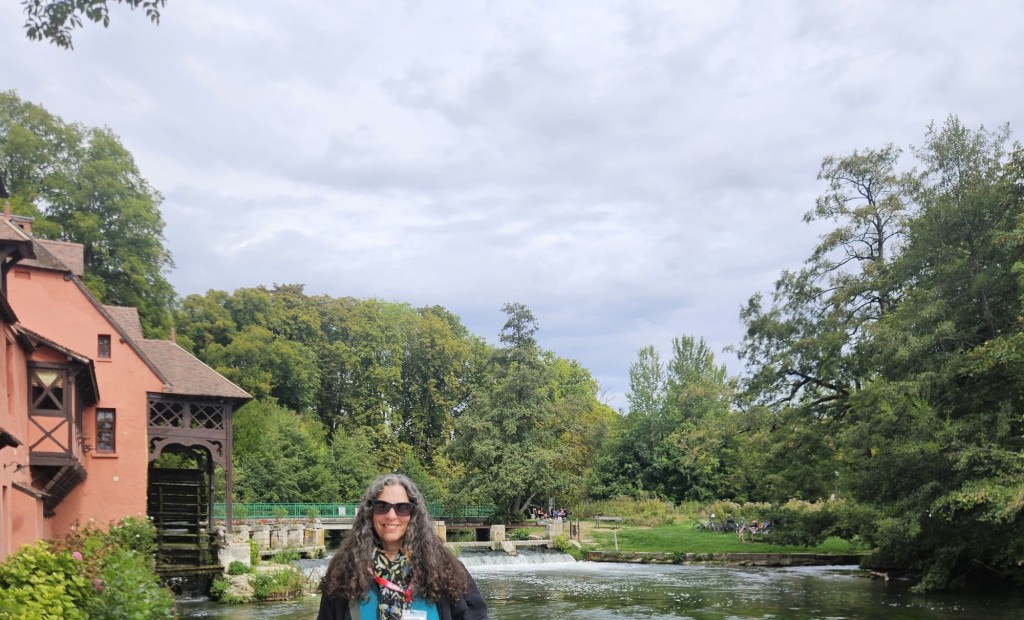
We’re out in the Loire Valley – riding around on our bus – touring a few chateaux. The Loire Valley is full of chateaux – over 300 – mainly the result of the end of the Hundred Years’ War, which sounds like something I’m not going to be able to summarize for you. I can tell you it involved the French, the English, and Edward-the-Something trying to claim a French throne. The Hundred Years’ War is called an intermittent conflict – it actually lasted 116 years – but there were breaks here and there for truces and Black Plague outbreaks.
Somewhere in the midst of the fighting, Charles VII and his court fled to the Loire Valley and they built fortified castles and stayed put for a couple hundred years. Later on, the royalty returned to Paris – and the wealthy continued to be drawn to the Loire Valley – building scores of beautiful chateaux.
(I am omitting some key events here: Joan of Arc, Edward III of England, economic collapse, and the plague deaths of 30 – 60% of France, but I think you get the general idea).
At any rate, the Loire Valley is beautiful and we’ll focus on the grand architecture in a minute but I would be remiss if I did not tell you that Robby – ultimate Gate 1 ambassador – arrived at dinner this evening with 500 grams of butter (over a pound!) for us that he had purchased with his own money, in order to, maybe, get us to focus on the… French history, architecture, landscape…instead of where our next pat of butter is coming from.
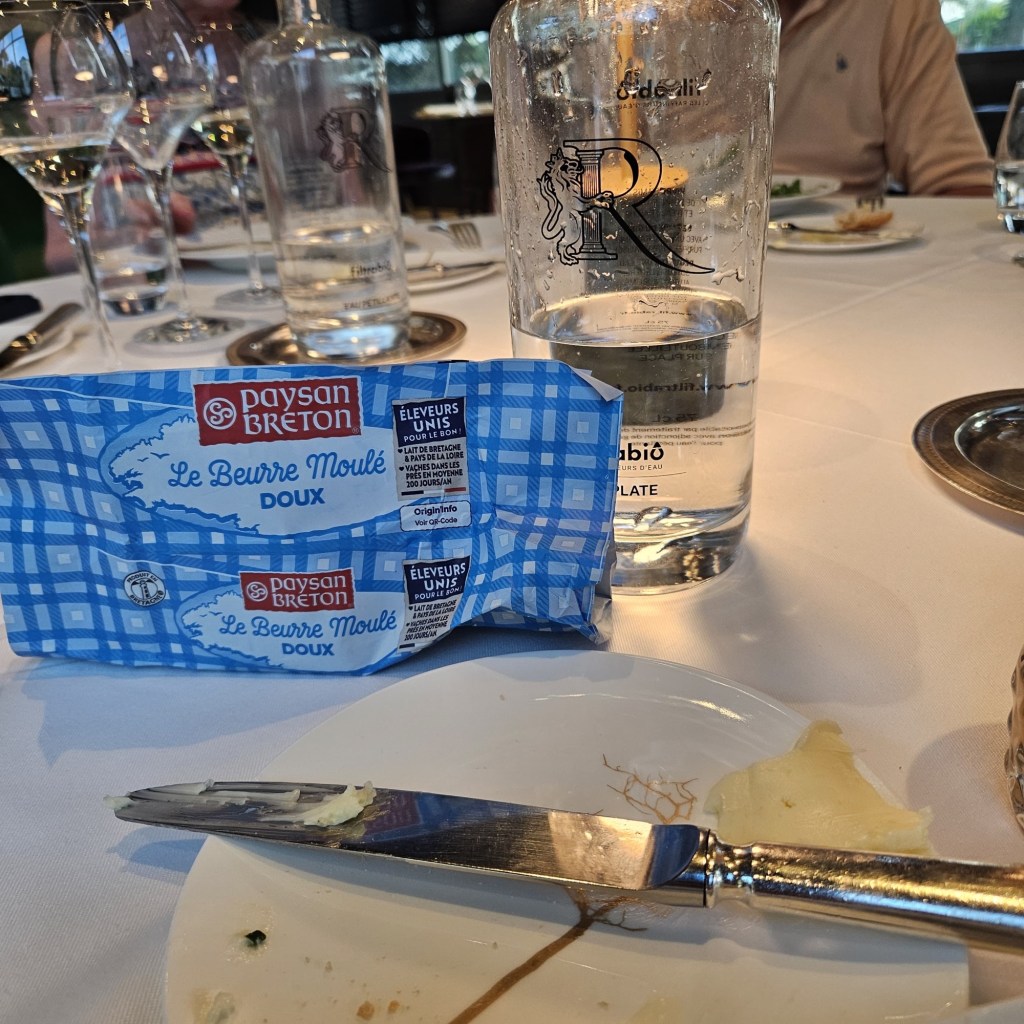
To make everything that much grander, we’re sleeping at Chateau de Rochecotte, a late 18th century home in the village of Saint Patrice. It’s a 4-star formal bastion of elegance. I wish you could have all been in the dining room with us when Robby came to dinner and plopped those butter packages down on the finely-laid table in front of the unhappy wait staff.
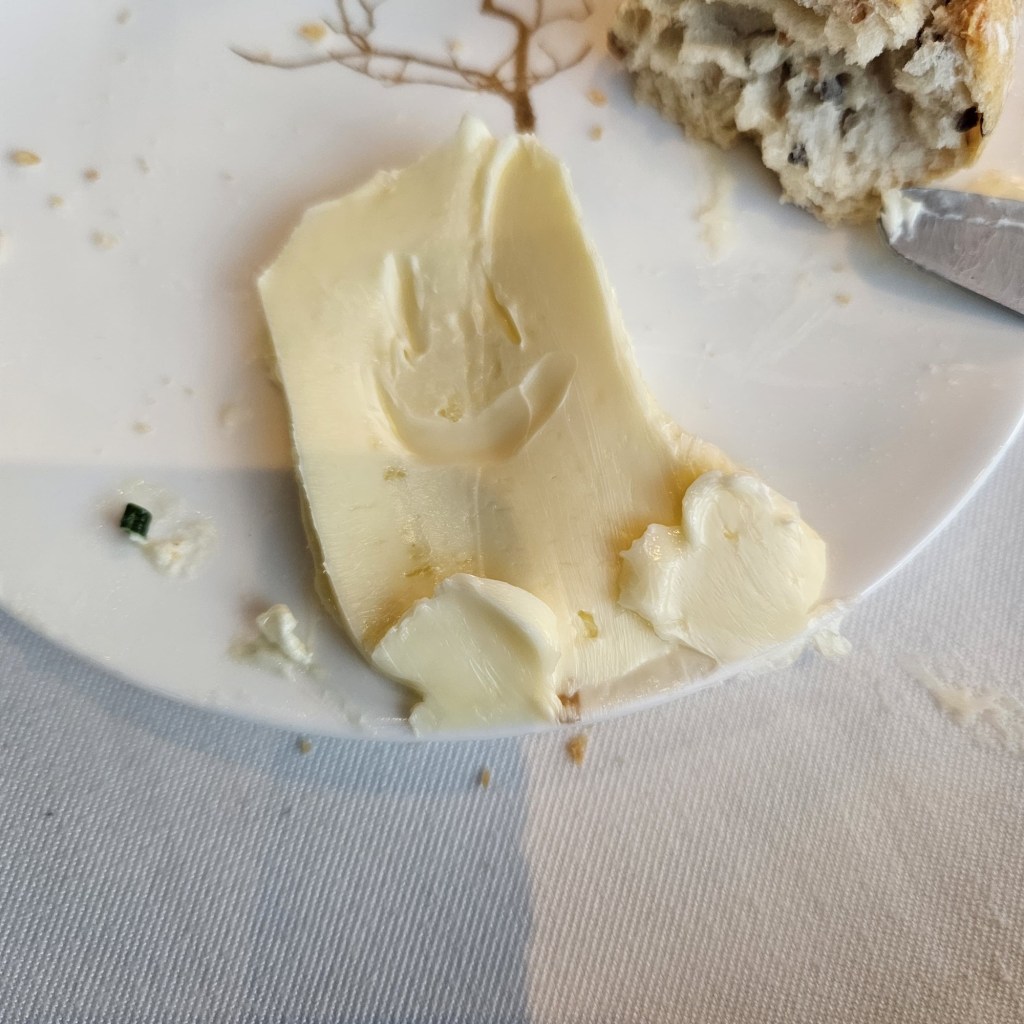
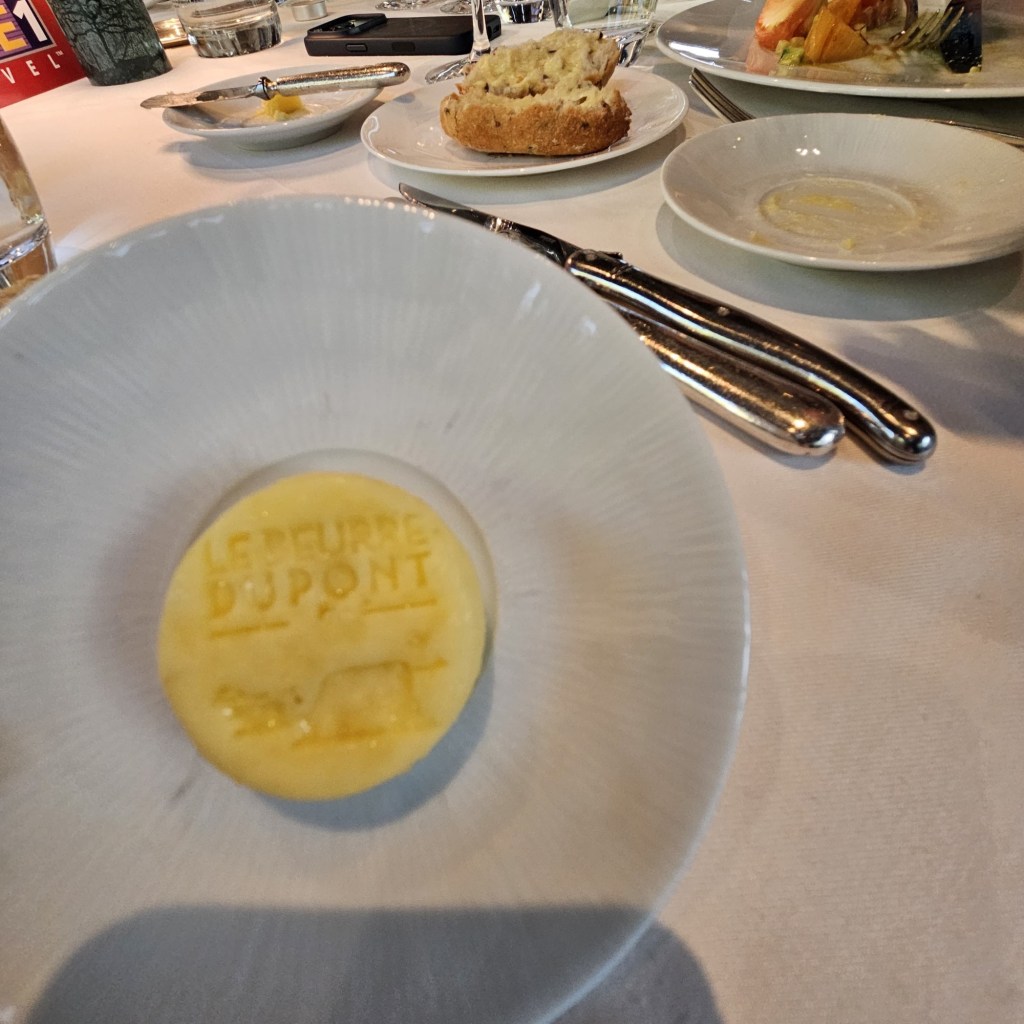
Even worse – Robby bought two kinds of butter – salted and unsalted – and our Gate 1 group, which sports a range of political beliefs about salting butter, was split between two tables, requiring that we pass our butters back and forth. We were careful to move schmears of butter between the tables with a dignified grandeur befitting a chateau atmosphere – one of my tour-mates even stamped some of mine like the French do:
All right – thanks for your patience. Here’s Chateau de Rochecotte, where we spent 2 nights:
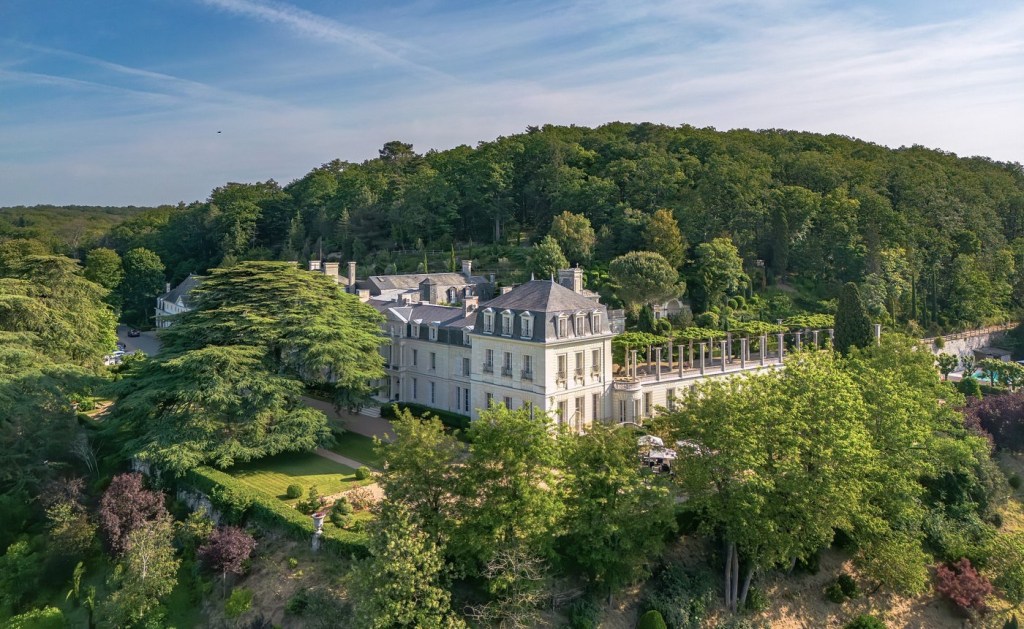
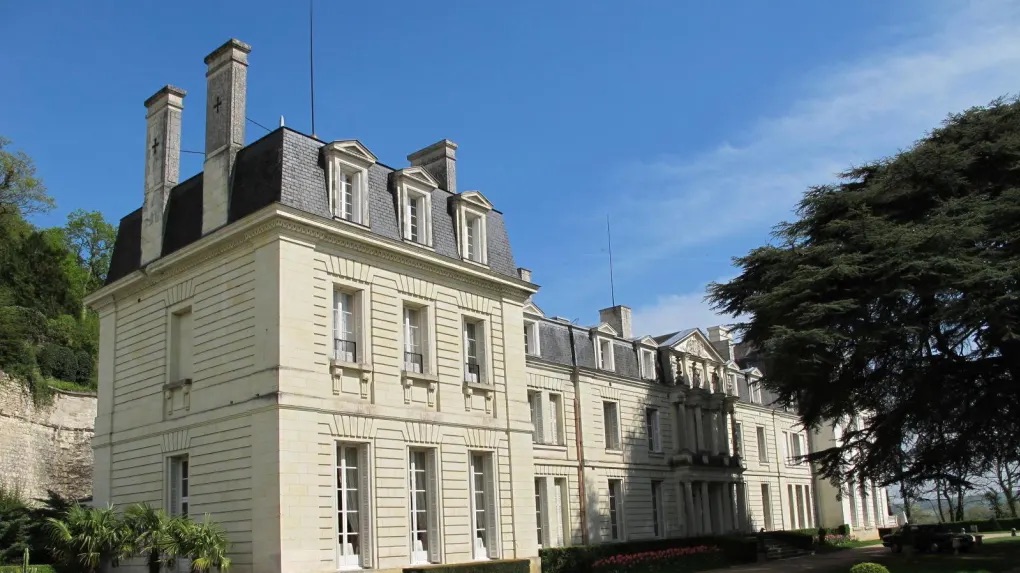
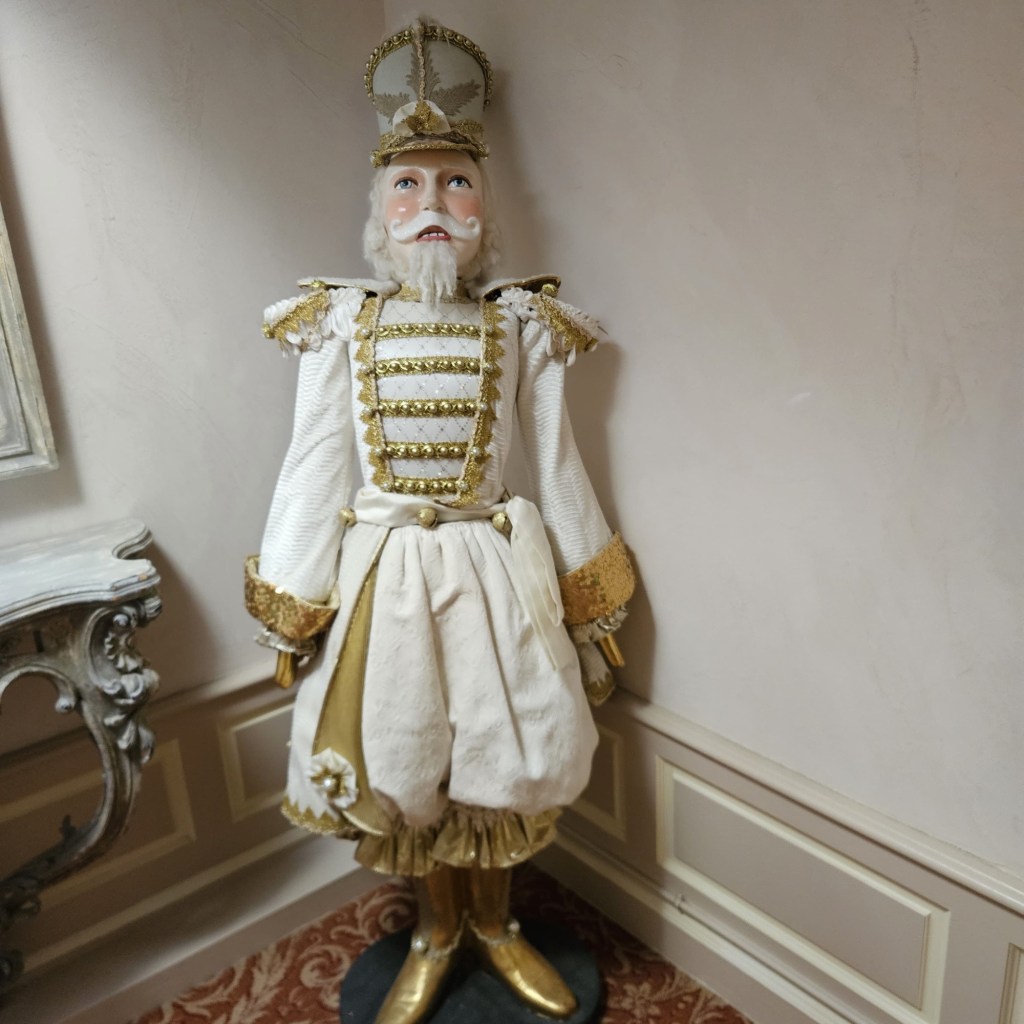
As much as I loved the hotel – the architecture, the refined furniture – I did question the decor outside my single room. It looked like something awful that Ron would try to buy and ship home:
We visited Chateau de Champchevrier – a family house, inhabited by the same family since 1728:
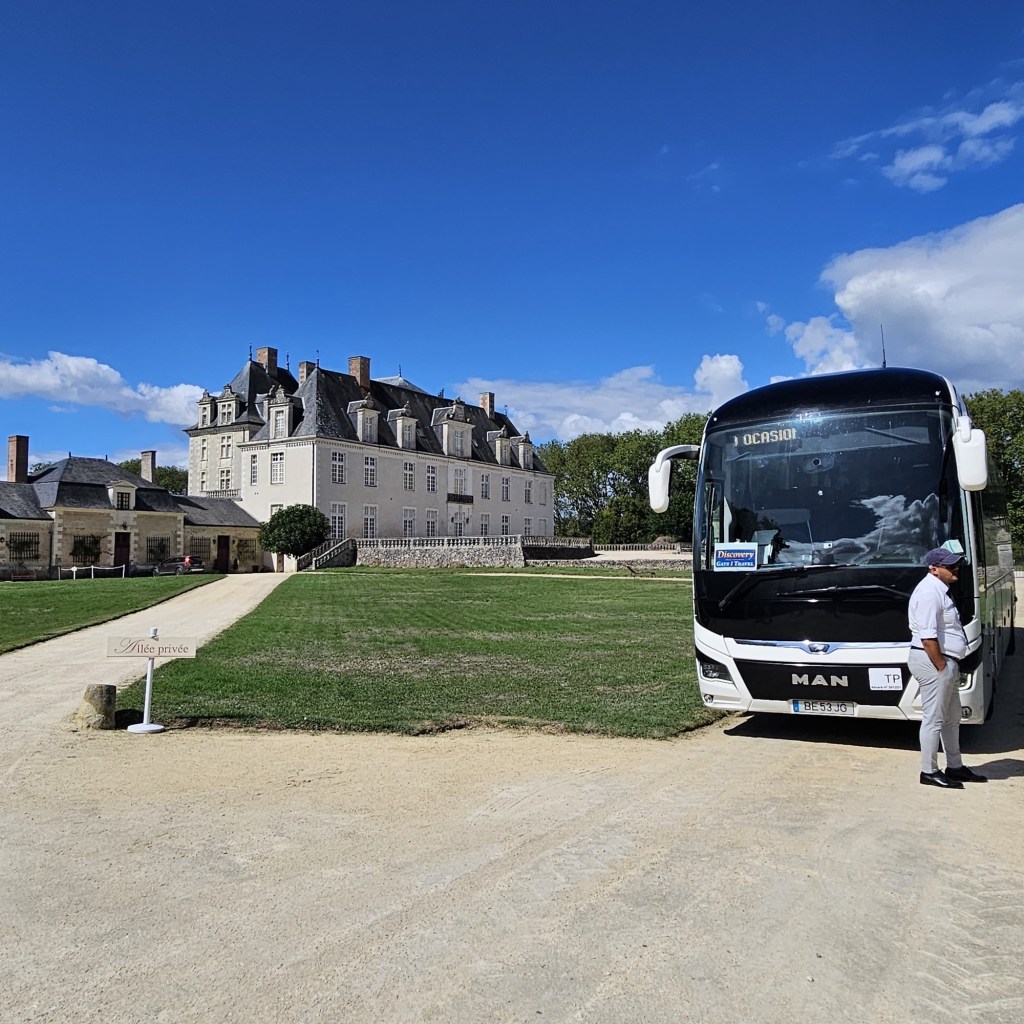
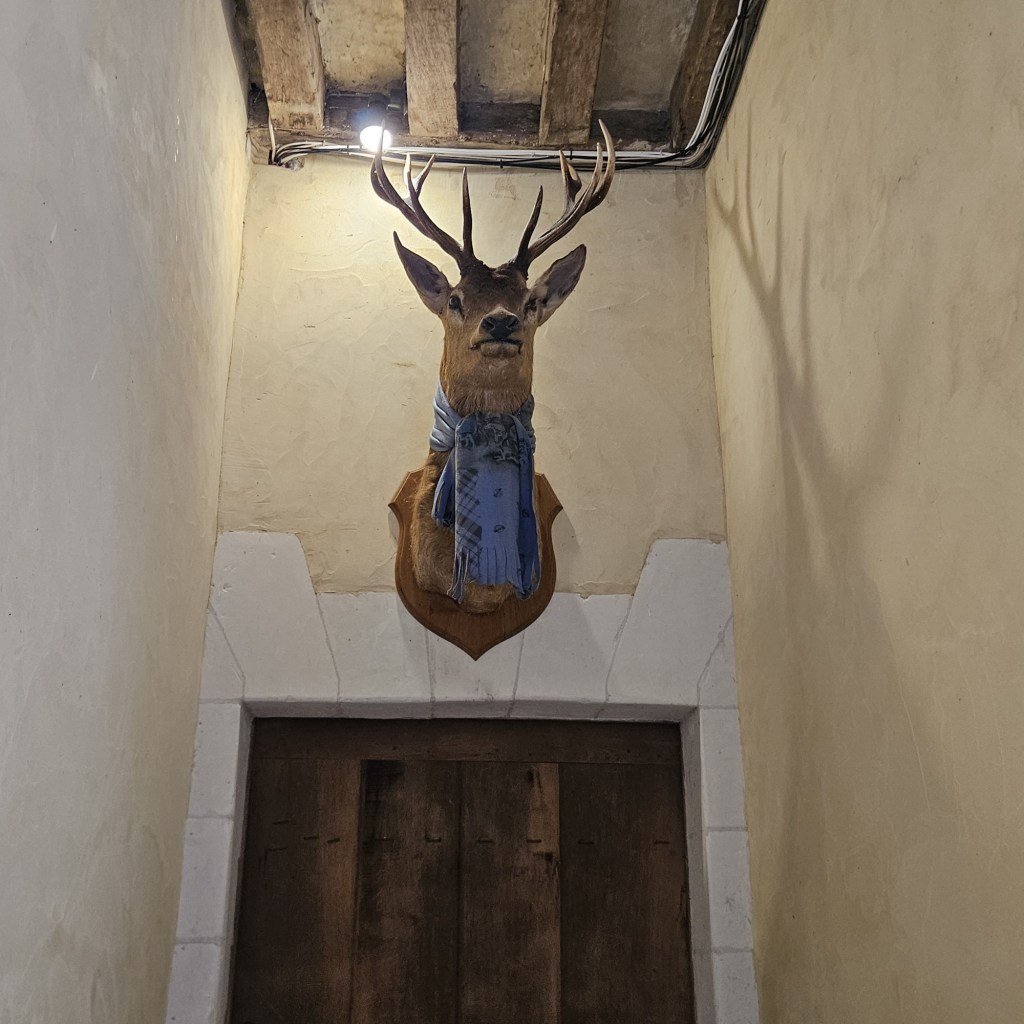
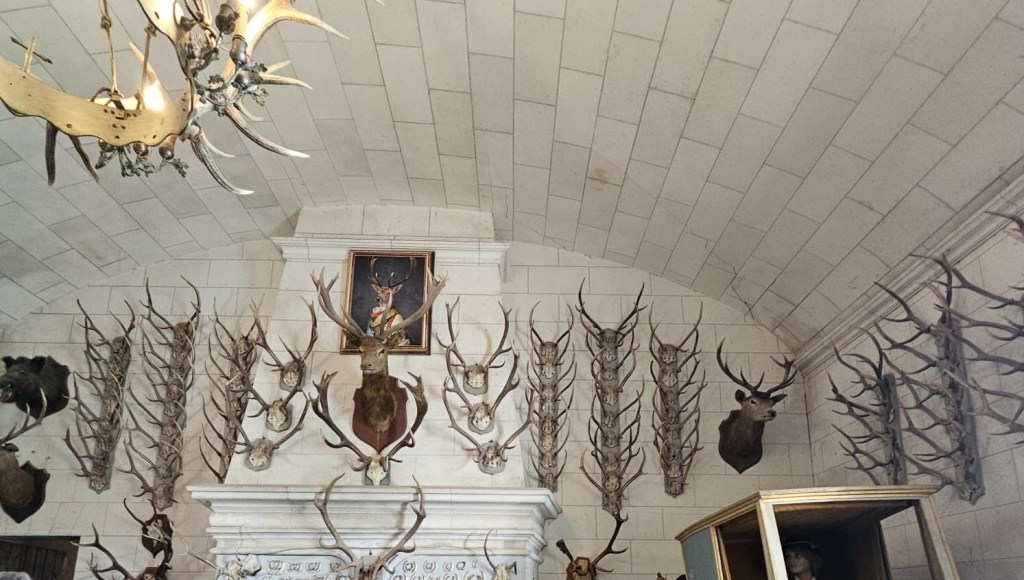
They’re big into hunting there and so there are a lot of dead animal parts:
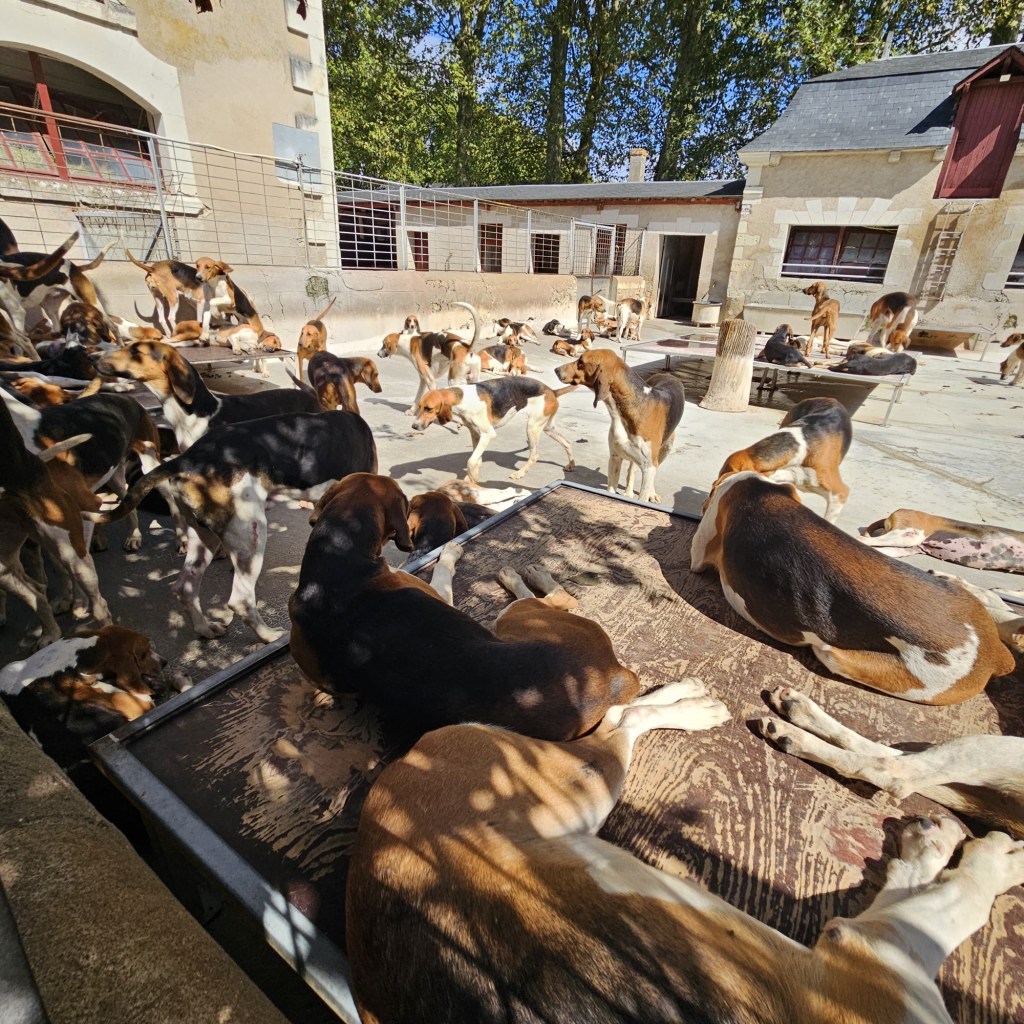
And then over 100 dogs for hunting (still alive):
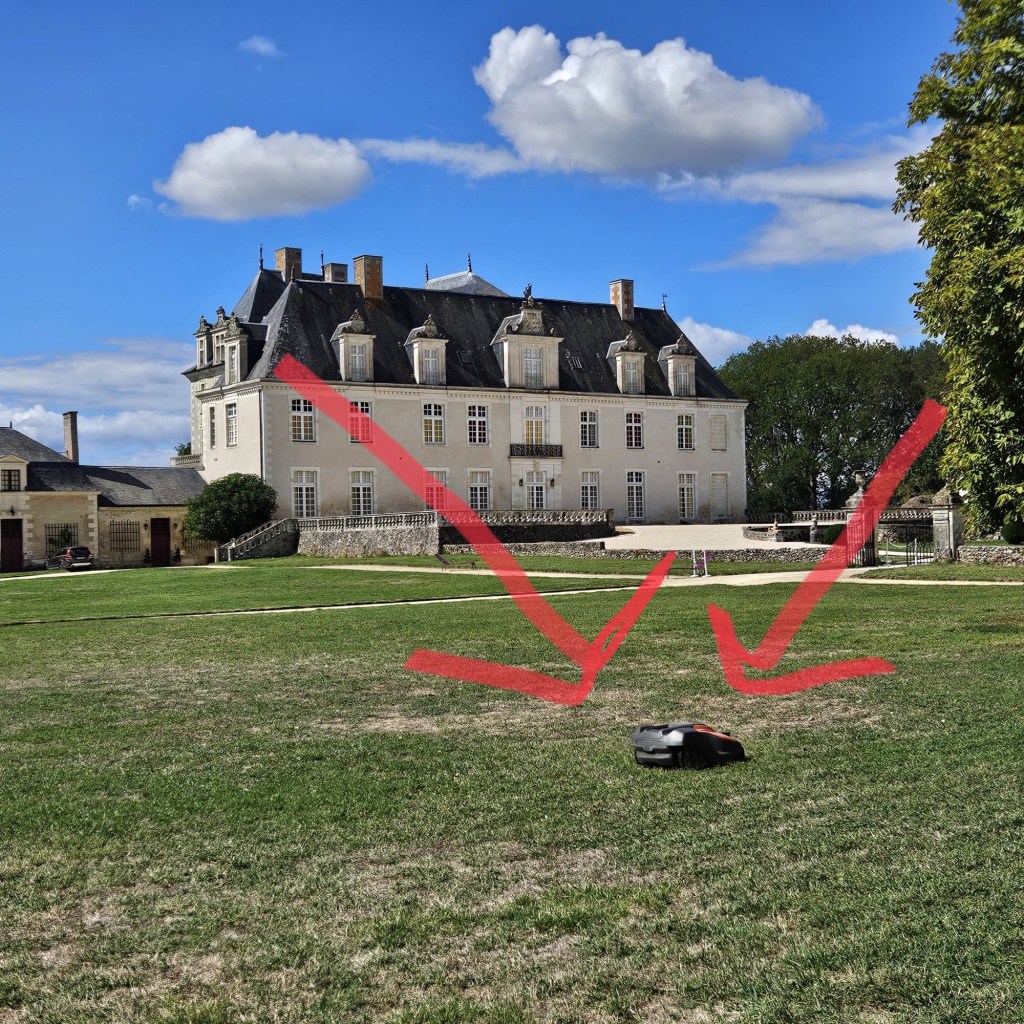
Chateau de Champchevrier is sustained with money from tourists – there’s a small family living there, offering tours, events, and meals. They’ve got a park there, grand outbuildings, and lots of grass, all somehow maintained with the only gardening staff I saw:
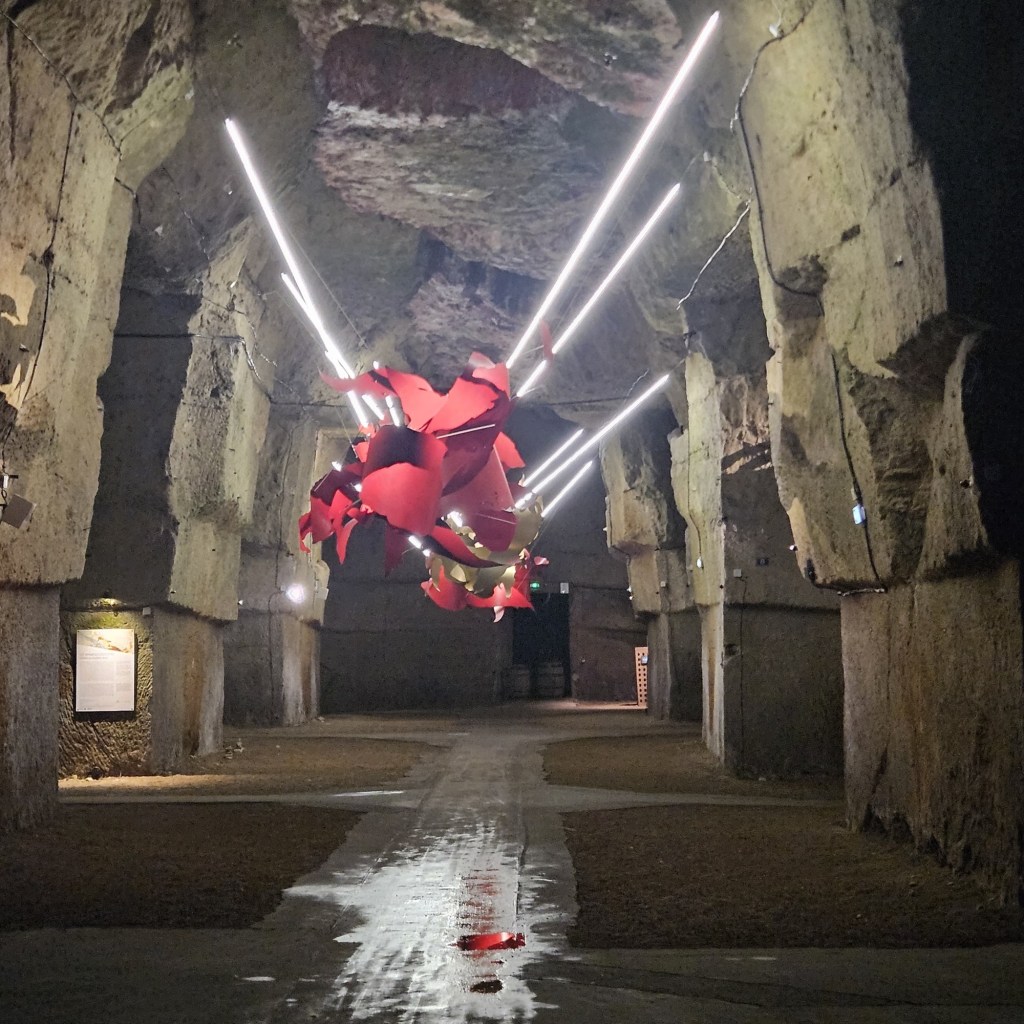
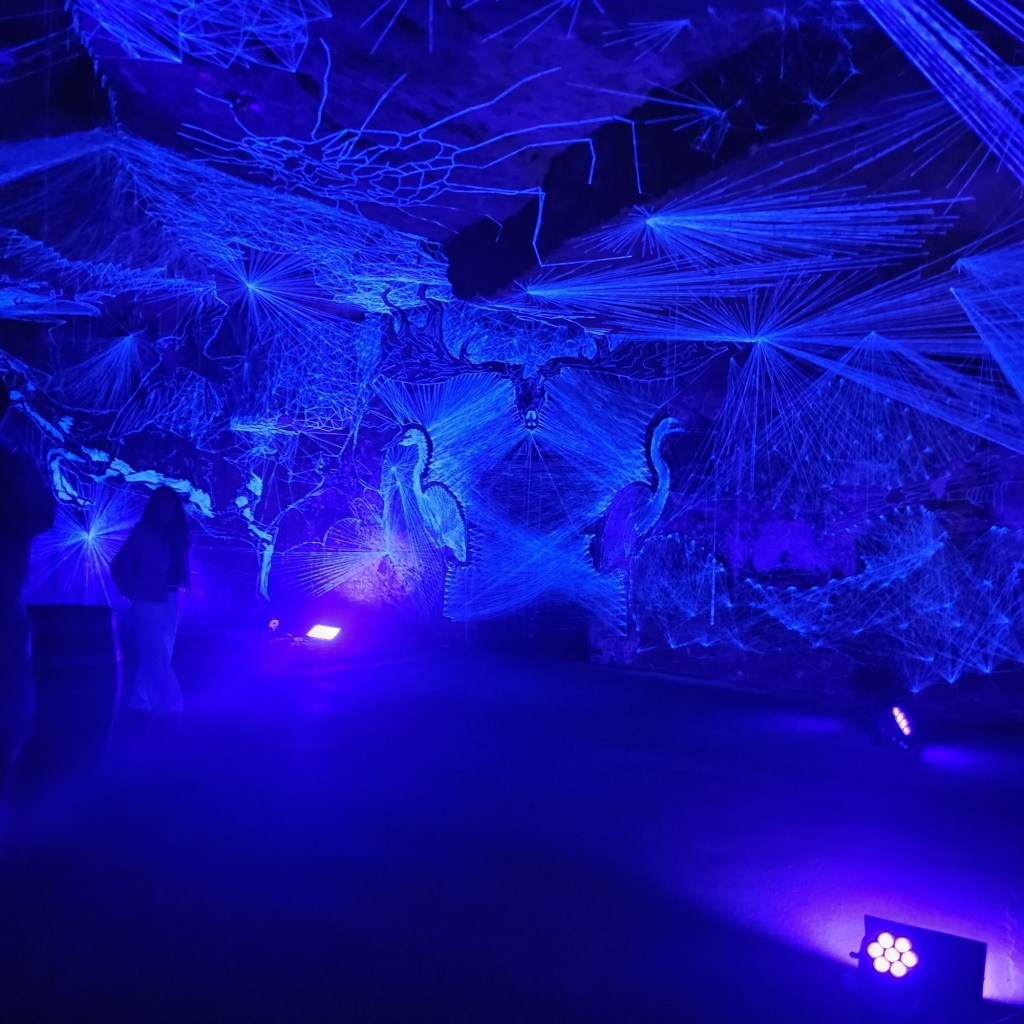
Somewhere on our bus route we stopped at yet another winery…crush the grapes, age them somewhere, come have a sample etc. But the cool thing about this place was that they put some really large art in the empty areas:
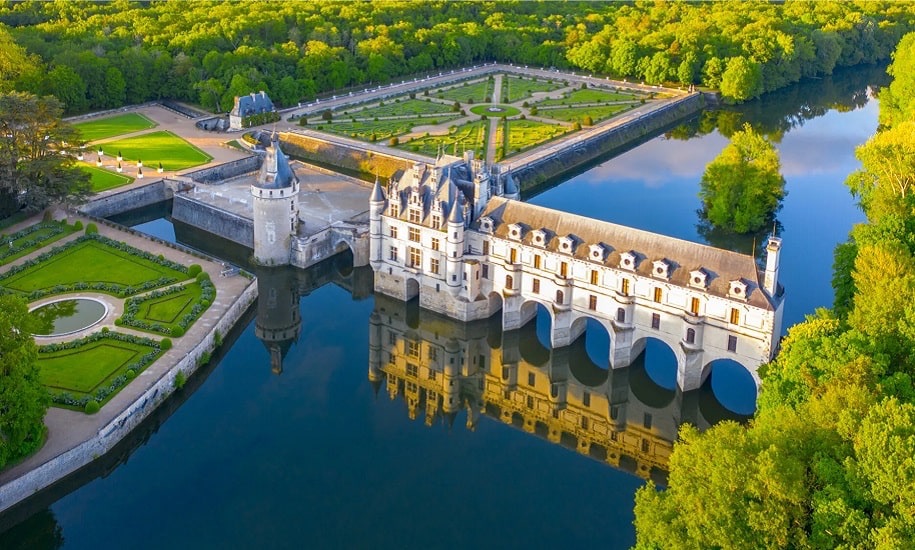
We spent awhile at Chateau de Chenonceau – a 16th century Renaissance castle.
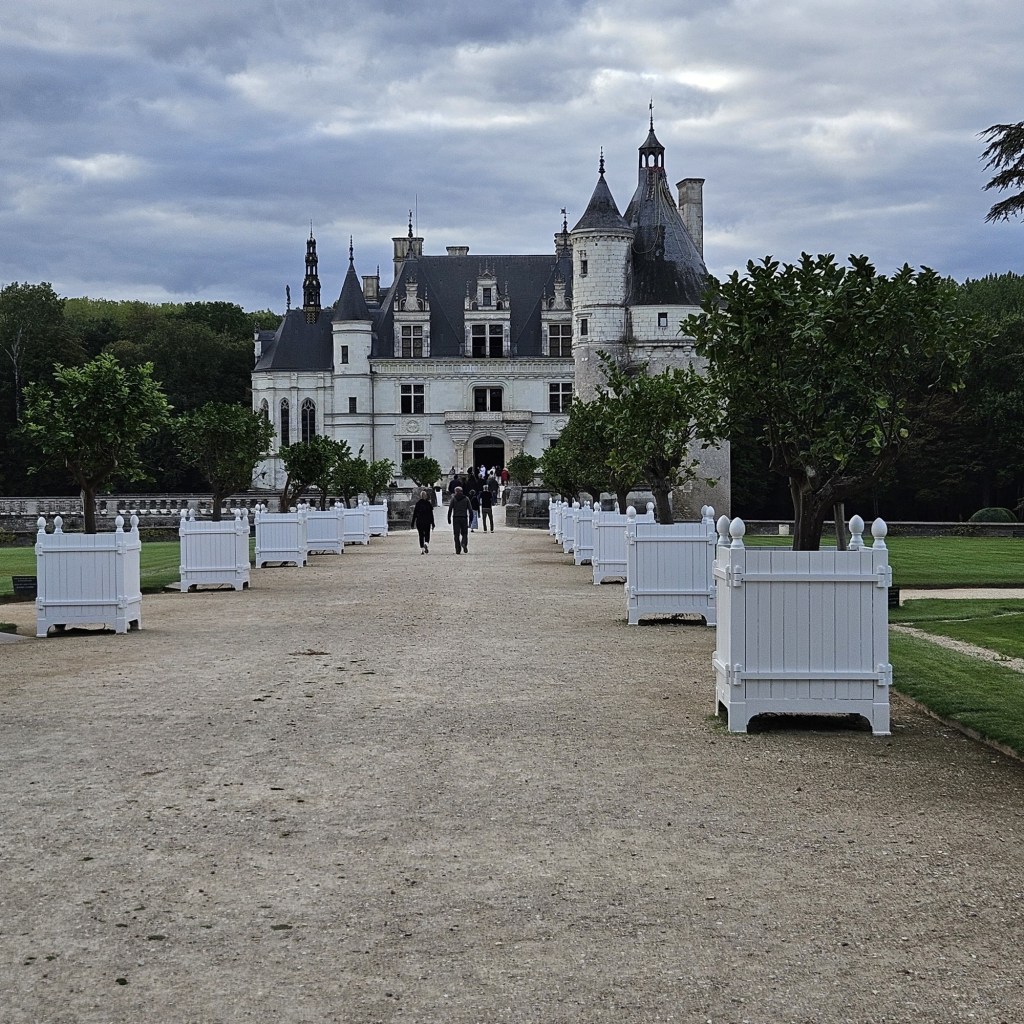
It’s one of my favorites out here – because it was used as an escape route into free France during WW2. The chateau was built over the Cher River – and the Cher River marked the border between Nazi-occupied France and the free zone. The front entrance that you see above was Nazi-occupied. But the “bridge” on the back of the house exited out into the free zone.
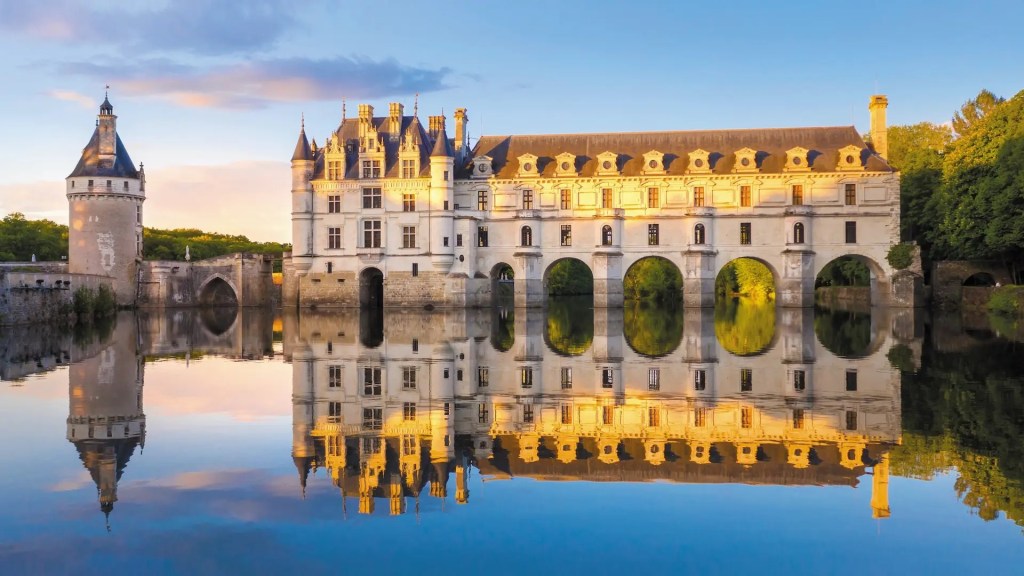
Here’s an interior shot of the passage – it’s called the Grand Gallery and was used as a ballroom:
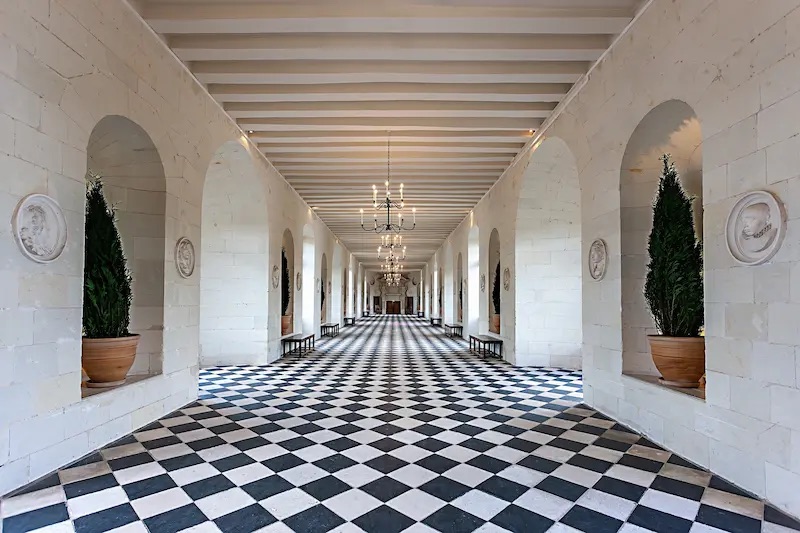
The Grand Gallery was in use as an escape route from about 1940 to 1942. In 1940, France fell and by June, the country was split in two – the Northern German occupied zone and the “Free Zone” in the south. They were separated by a 1200 km Demarcation Line – and the line was the River Cher in that region of France.
Chateau de Chenonceau was already there of course – it was built in the 16th century. It has a long history as the “Ladies’ Castle” – attached to Diane de Poitiers and Catherine de Medicis, who are important in a way I can’t keep track of. But it’s the modern history that interests me. The Menier chocolate family bought the building in 1913 and still owns it. In 1940, the building was managed by Simone Menier – who supported the French Resistance and saw an opportunity to use the Grand Gallery to sneak Jewish people, Resistance fighters, and pilots across the span and into freedom.
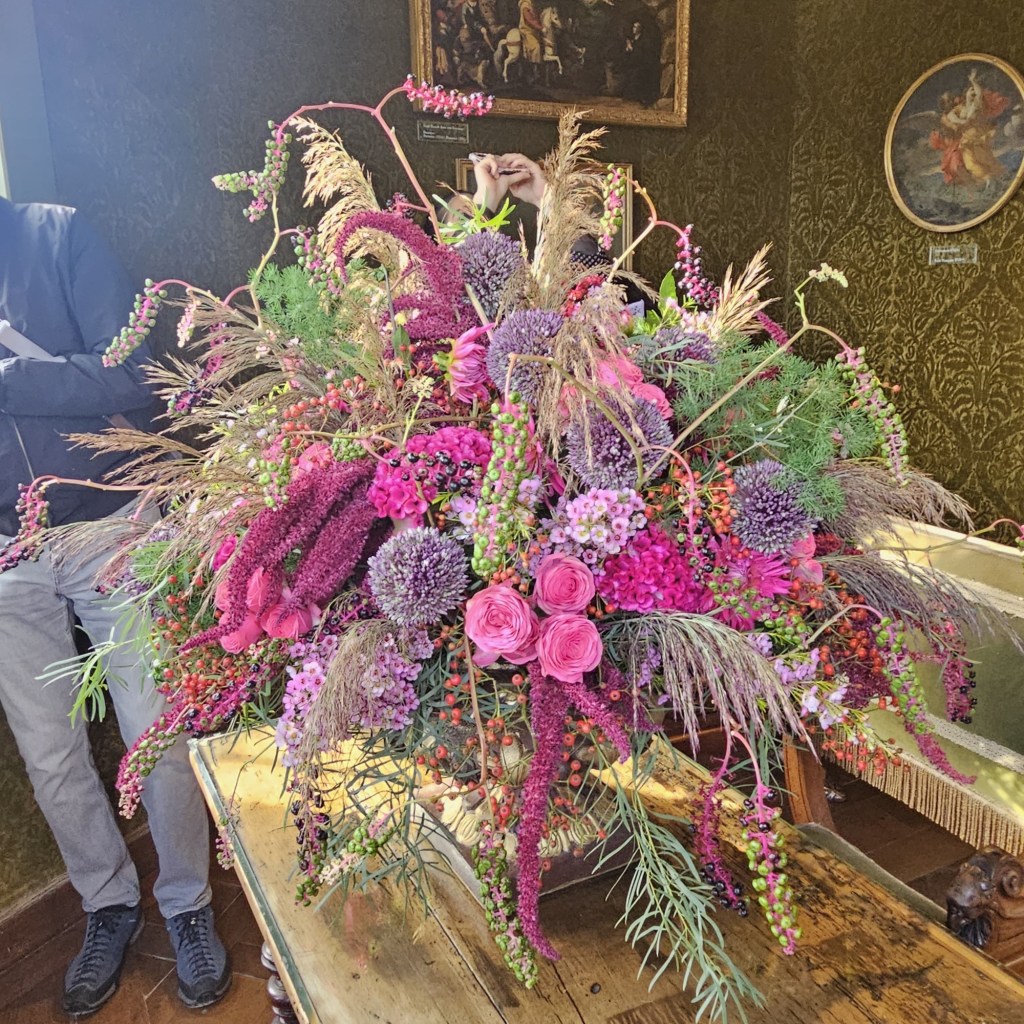
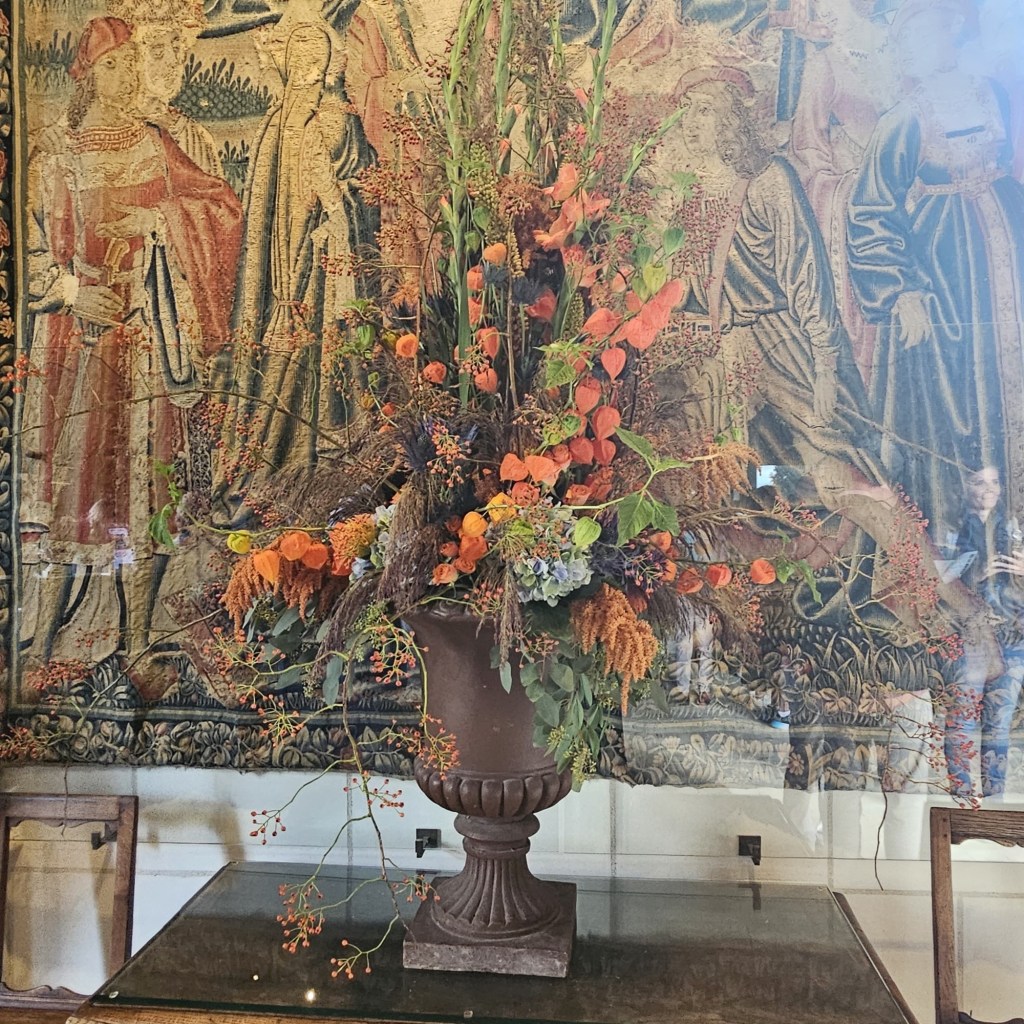
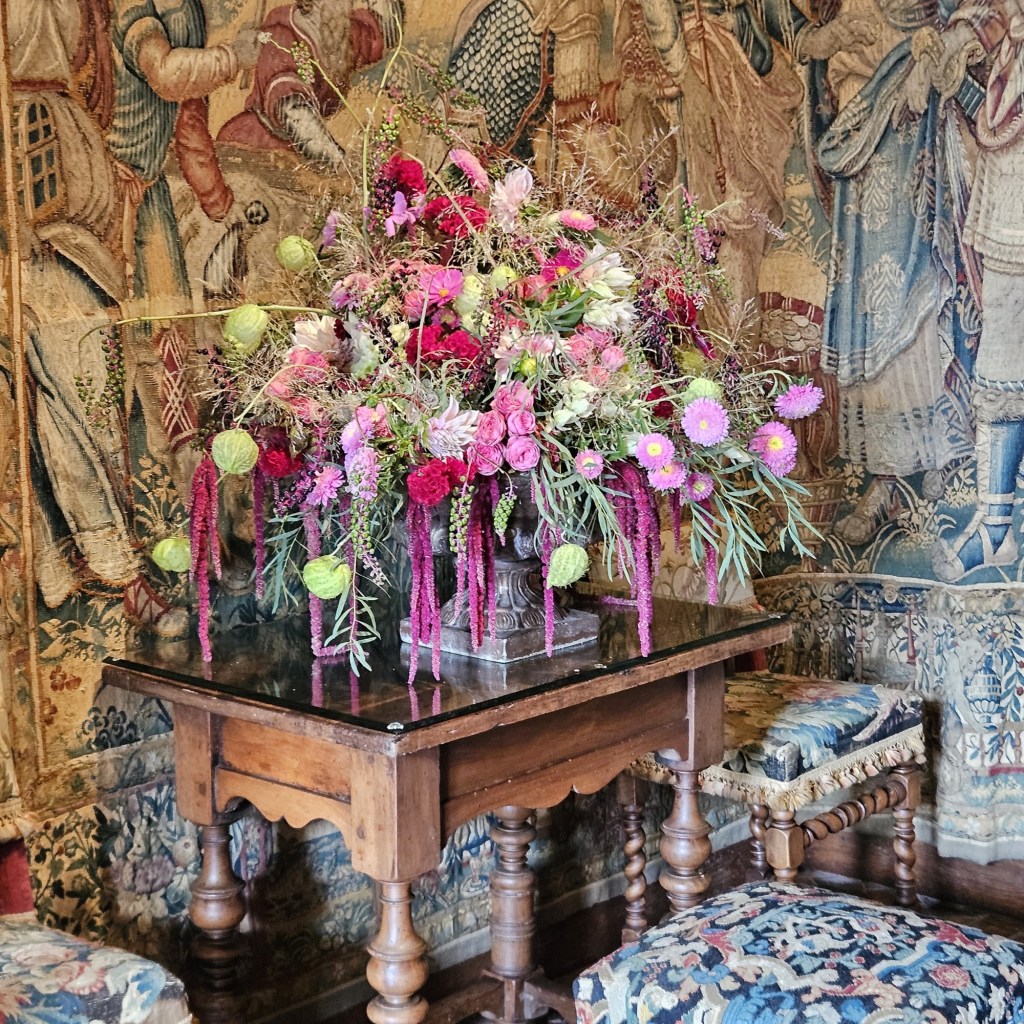
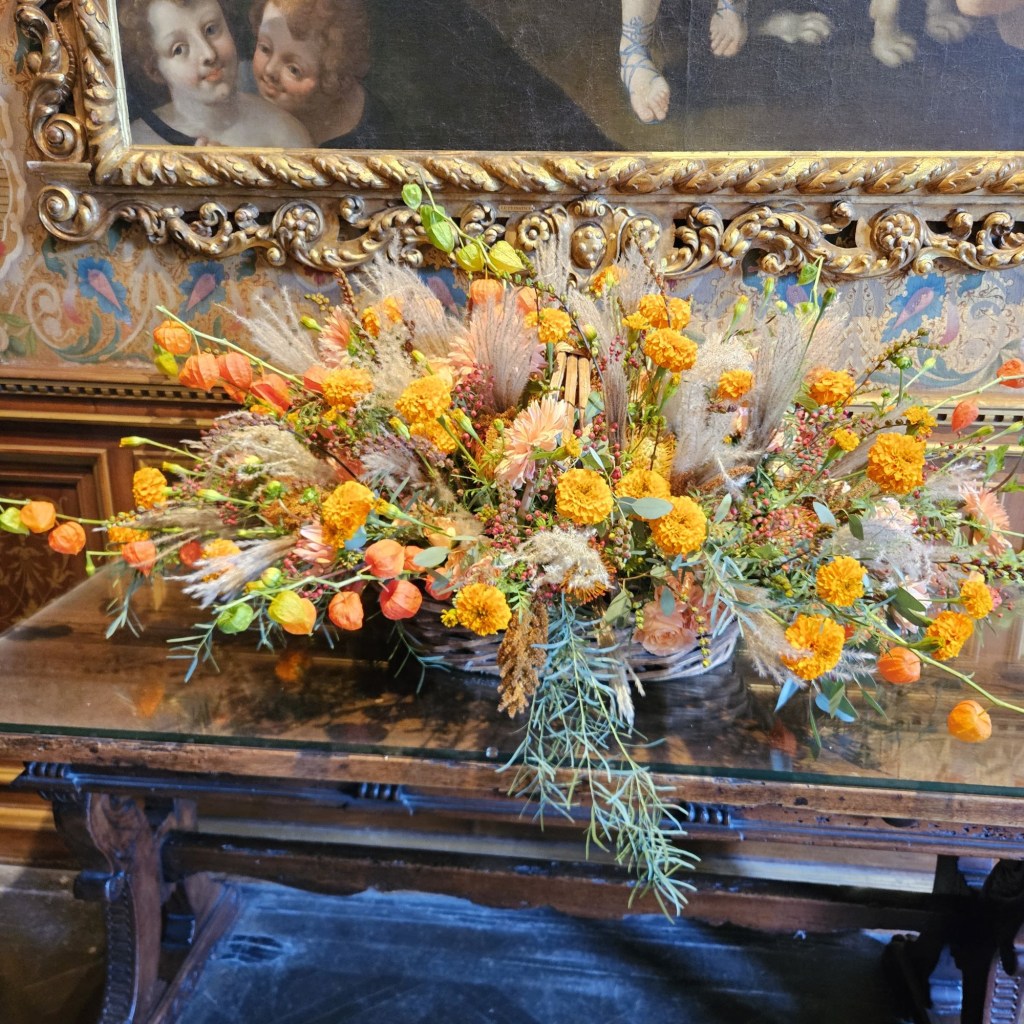
Unlike Chateau de Champchevrier, which manages their gardens with a staff of just one robotic lawnmower, Chateau de Chenonceau seems to have an endless floral budget and the house was adorned with fresh flower displays:
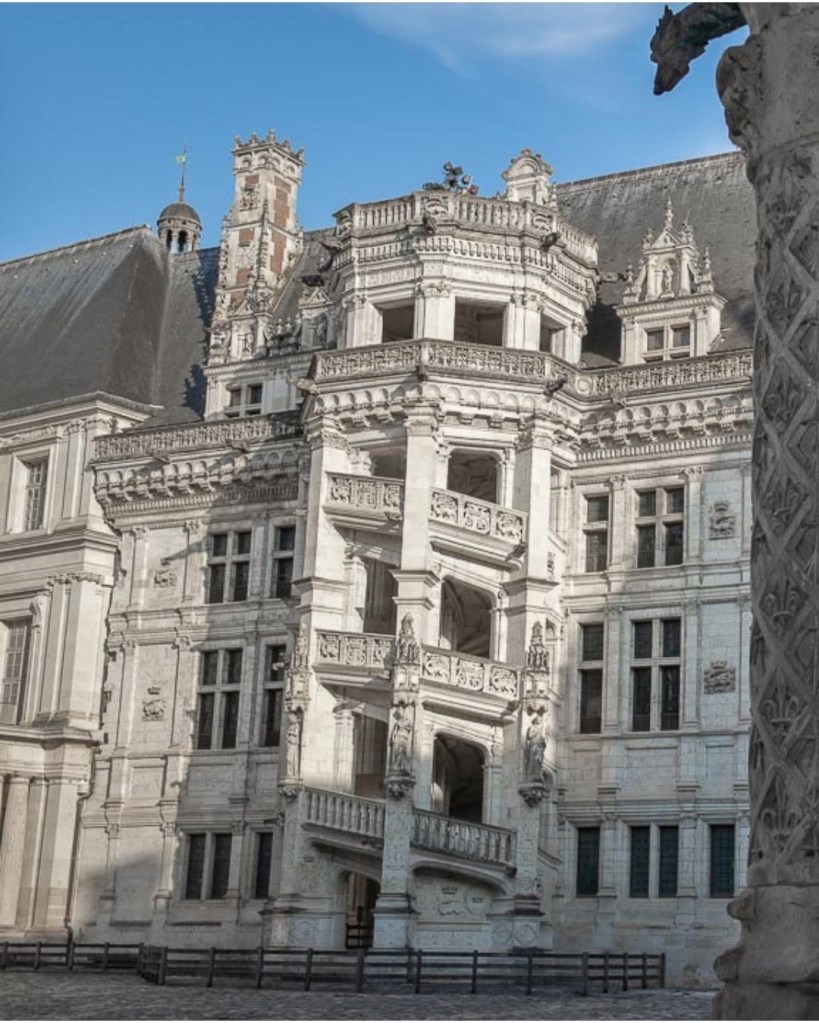
We’ve stopped at many chateaux on our Gate 1 bus. The other one I want to focus on is the Royal Chateau of Blois, surely tied to a lot of historical people, but I was taken with the four different architectural styles visible in the courtyard, spanning from the 13th century to the 17th century – 1) Medieval Fortress (from 1214) and 2) Gothic (1498) – these show up together in the video and pictures – they’re both red brick but the section with the white dormers is the Gothic addition.
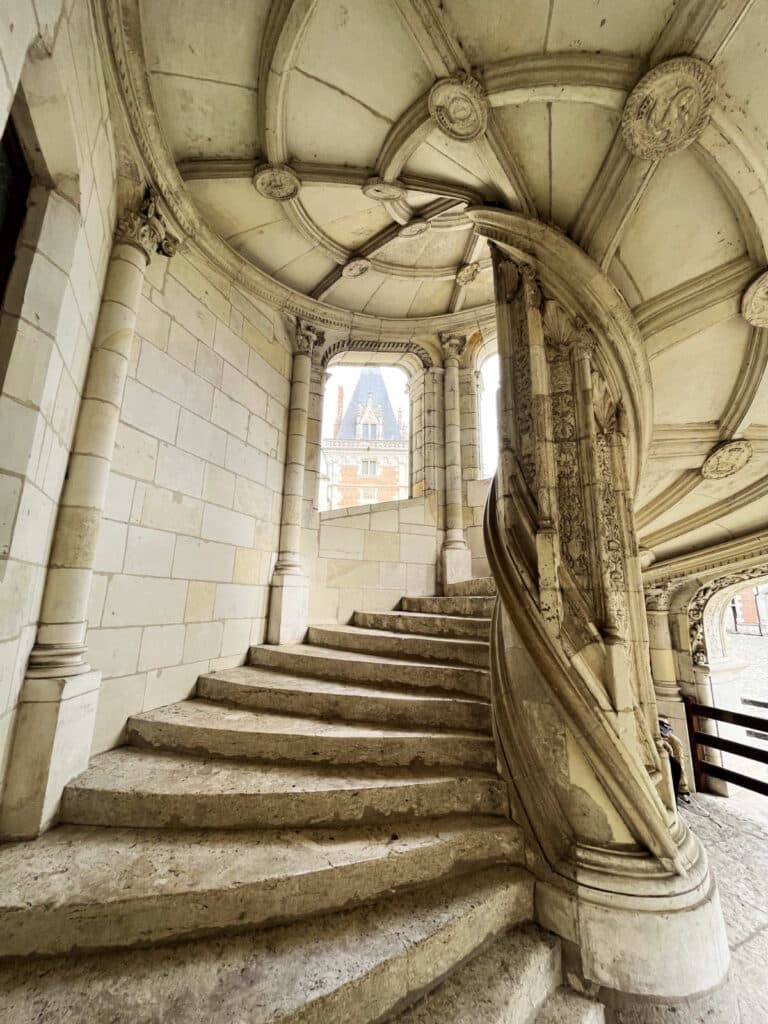
Then the Renaissance (1515) and Classical (1635) are easier to tell apart. The Renaissance section has an exterior octagonal Grand Staircase:
Here’s the best way to see the full grandeur for those of you who will watch a video:
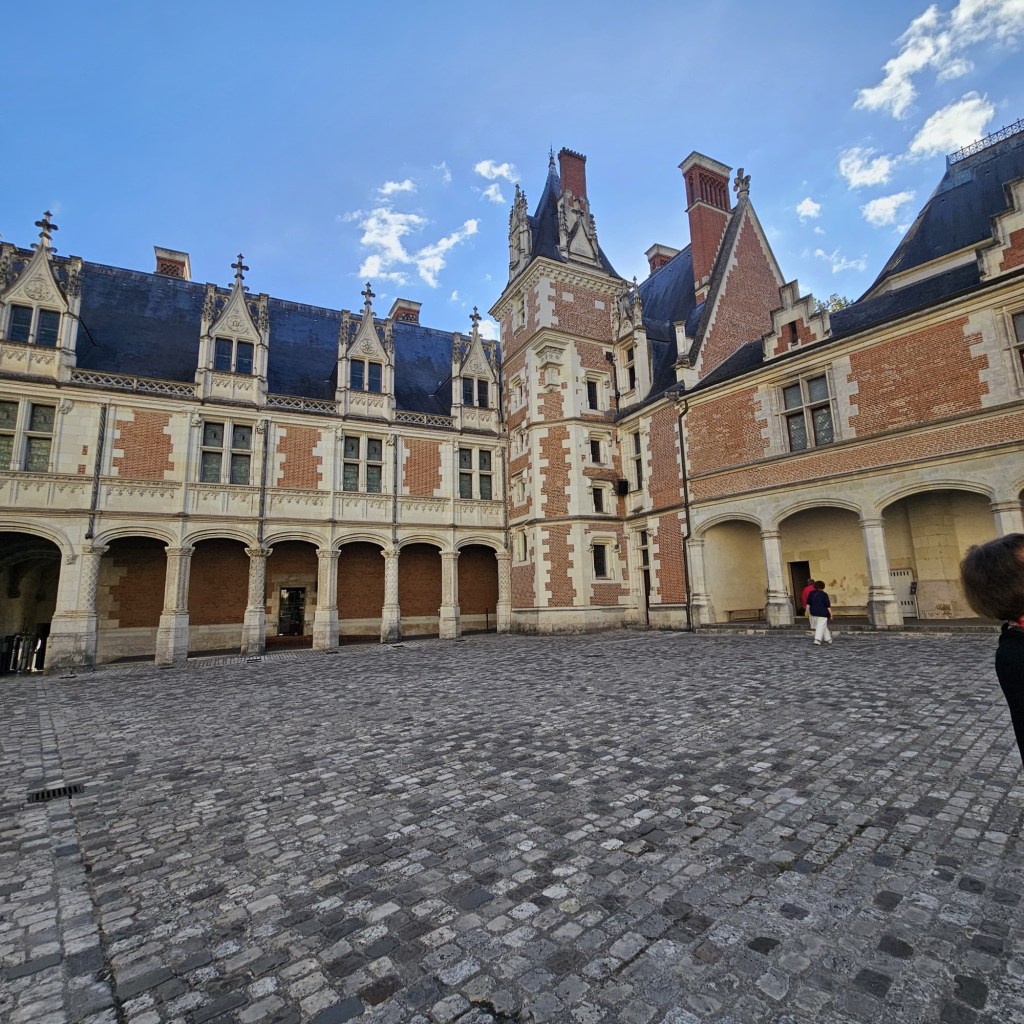
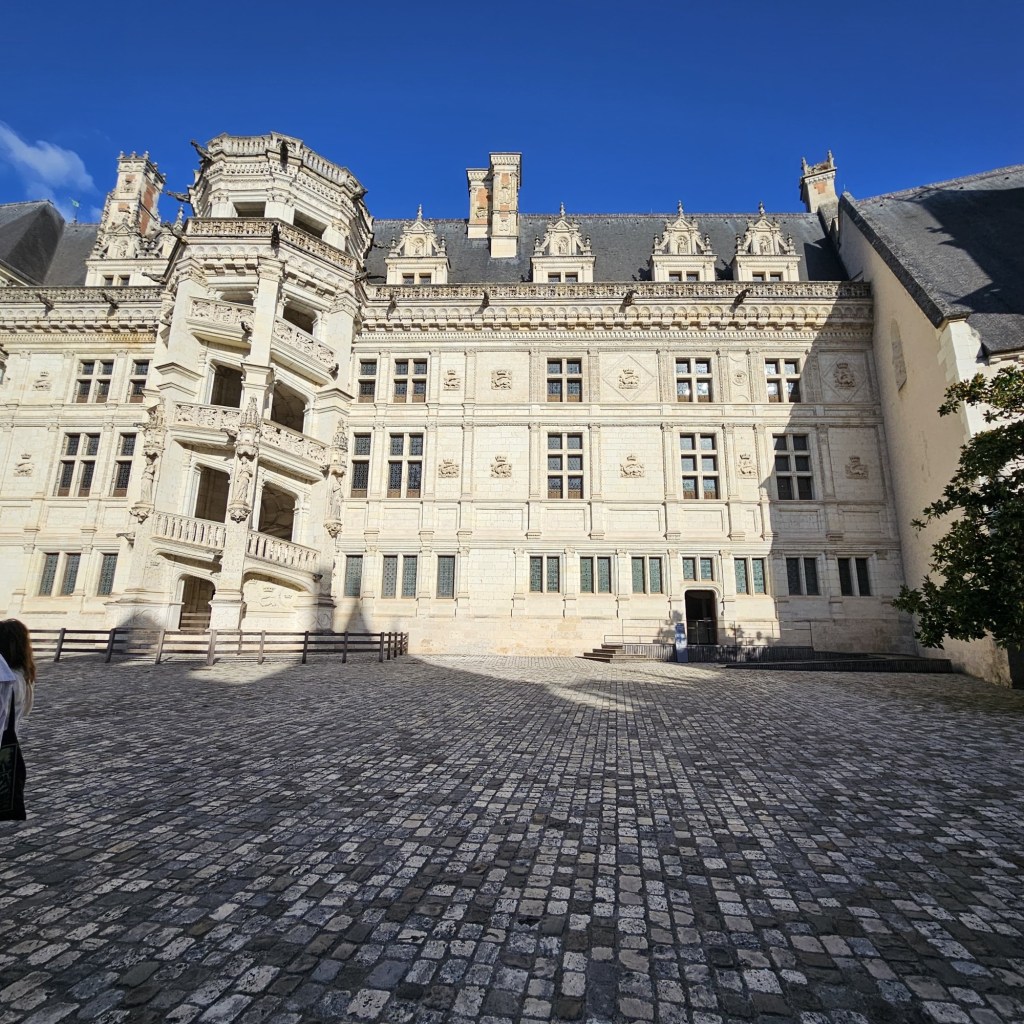
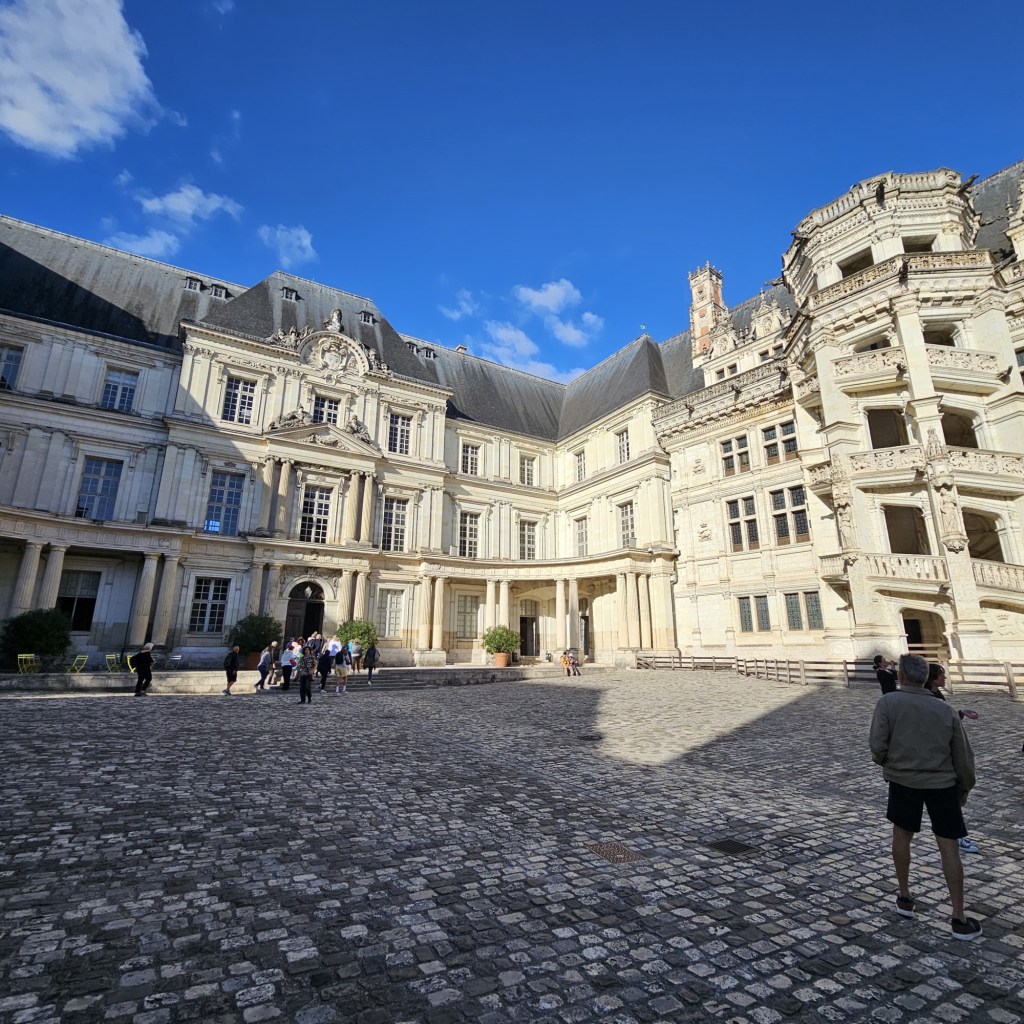
Okay, finally, we got to make a photo stop at Chateau de Chambord (built from 1519 – 1547). I’d love to return and go inside – it’s the largest of all the Loire Valley chateaux:
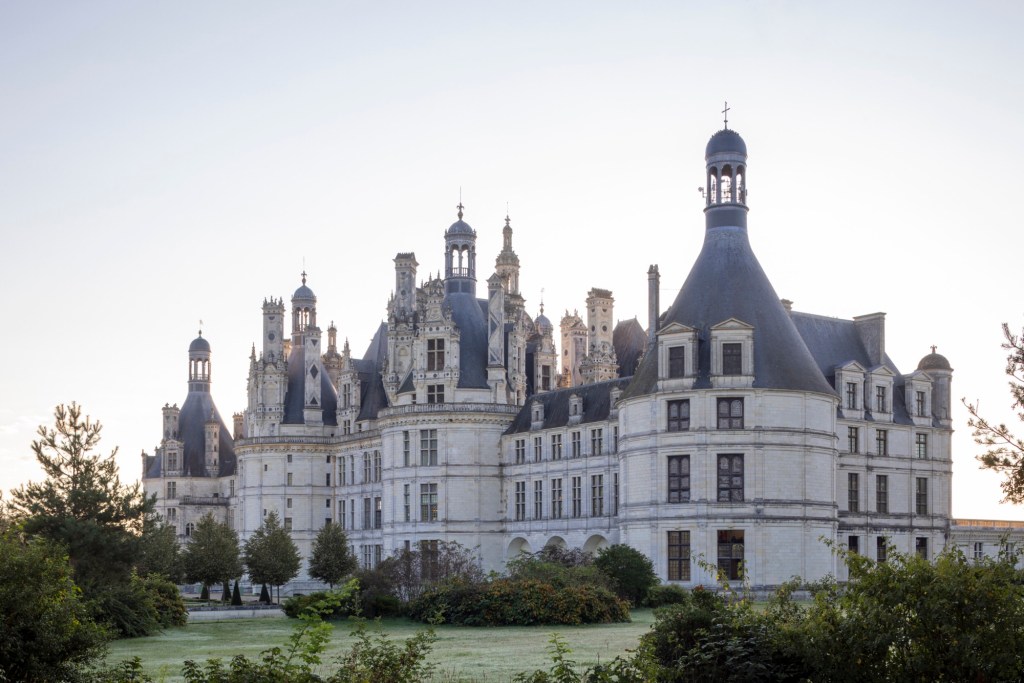
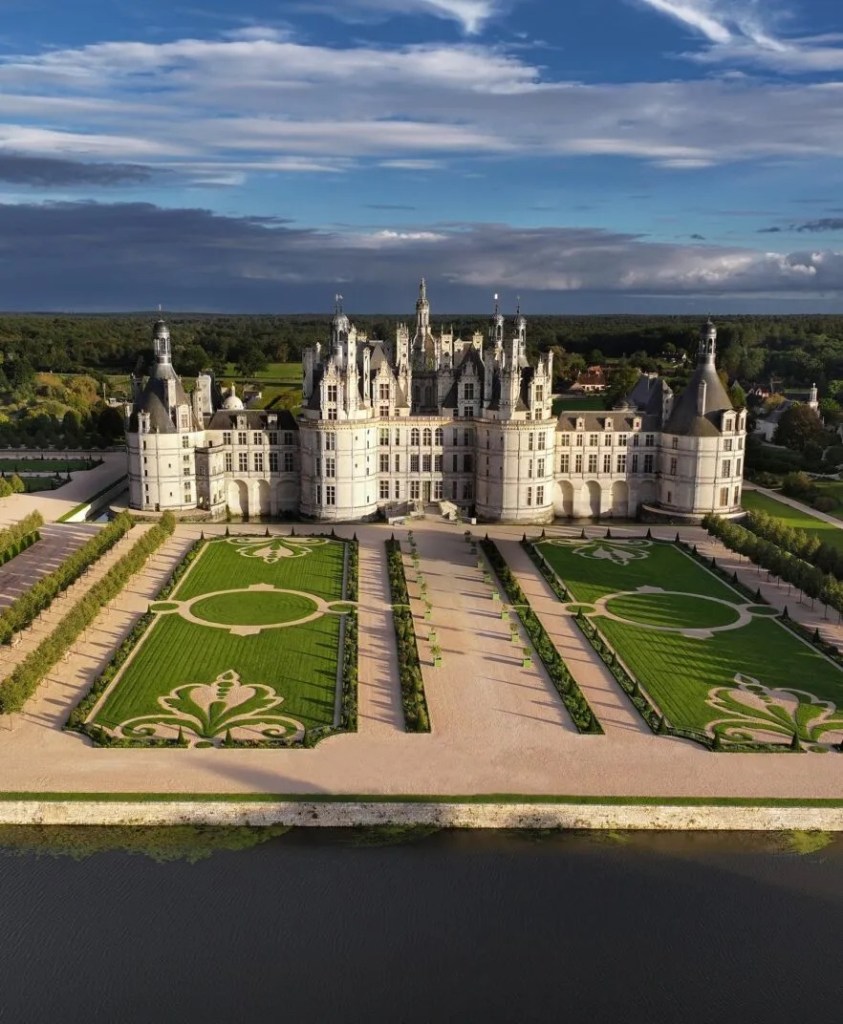
It was built as a hunting lodge by King Francois I, and I can tell you exactly one thing he did – he was a patron of the arts and brought Leonardo da Vinci to France in 1516. Da Vinci took up residence in Amboise and stayed there until his death in 1519. This is the reason that the Louvre has the Mona Lisa when Da Vinci painted it in Florence – he brought the painting with him to Amboise. In full circle, France took the Mona Lisa out of the Louvre in August 1939 and secreted it…on a stretcher in an ambulance…initially out to Chateau Chambord – to be kept safe from the Nazis in a variety of rotating chateaux.
I’m writing this to you on September 11, 2026 – 25 years since 9/11. I’ve been afforded a unique chance to travel this world and just have a general look around. I’m grateful – even though my recent life has been very difficult. And in spite of the fact that I can’t seem to ever grasp hold of the minutiae of history, I do understand the patterns and the flows. They’re always rooted in the same concepts – but sharpened and strengthened by technology and ingenuity.
For all of my searching and seeking – trying to understand history – September 11 is one pivotal American historical moment that I witnessed. Like most of you, I carry the visual memories, and I am still buoyed by the cohesive American solidarity I felt in the days afterward.
It’s hard to make sense of the current American polarization – but my time on this Gate 1 bus makes me a little hopeful. I don’t know – I don’t want to know – the political beliefs of these 12 people. I only know I’m grateful for their fun company and their shared American perspective and cultural knowledge. Despite my constant attempts to get out of the US, I am proudly American.
Never forget.


Viva le buerre!
LikeLiked by 1 person
And yes, may we never forget
LikeLike
Val,
As a Certified Public Pedant, and former medieval history major, I’m constrained to offer a correction. The French king associated with Jeanne d’Arc was Charles VII, not Andrew VII. In fact, there was no King of France called Andrew, VII or otherwise.
Also we were unable to access the video of the Chateau of Blois, to which there was a reference in the text.
Cheers, bonne nuit, and L’Shana Tovah from the both of us!
Stan and Stef
LikeLike
Holy cow – this is EXACTLY why I should not be in charge of this blog! Thank you so much – I have made the correction. Sorry the video won’t open for you – it opens on test from my phone…and in the WordPress App and opens on if you just go to my website – but it doesn’t seem to open if you access the post from an email. Weird.
LikeLike
I always feel so honored to be included as a traveler through your eyes
LikeLike
Thank you, Fred – it’s so nice to hear from you!!!!!!!!!!!
LikeLike